

What does it truly mean when a society’s most vulnerable
are systematically silenced?
And you know, what courage does it take to resist
when even hope seems imprisoned?
Welcome to another deep dive from the NCRI Women’s Committee. The NCRI is a broad coalition of Iranian opposition groups, and its Women’s Committee focuses specifically on advocating for women’s rights and tracking their situation inside Iran. Today, we are taking a really vital look at something deeply concerning the escalation of pressure, these attacks, and just the awful mistreatment faced by political prisoners in Iran, particularly women.
And the conditions? Well, they chillingly echo a dark chapter in history. So our mission today is to unpack this systematic repression. We’ll hear specific accounts disturbing ones of torture and forced confessions. We want to illuminate the dire conditions inside these prisons and also highlight the incredible acts of resistance, people fighting back from behind bars.
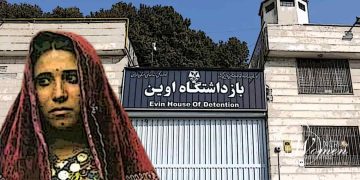
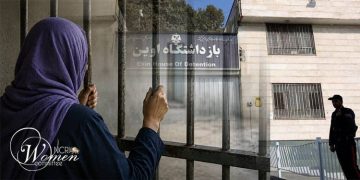
We really want you to graph the gravity of this and understand why there’s such an urgent call for international action right now. What we seem to be witnessing in Iran is, a systematic campaign. It’s intensified repression against political prisoners. We’re hearing about repeated instances of abduction, transfers to unearned locations, and these violent transfers of women from Evin Prison, which, you know, is infamous for political attentions to Qarchak Prison, notorious for its terrible conditions, plus just detaining prisoners in truly inhumane environments. An alarming picture, and it seems to be getting worse.
It really is. And the scope of these abuses is profoundly disturbing. Prisoners are systematically being denied family visits, even phone contact. Crucial access to medical treatment is being withheld. We have documented reports of beatings, actual attacks on prison wards themselves.
And if you look at the broader strategy, these aren’t just random acts, know. These denials, family contact, medical care, they seem to serve this chilling dual purpose. Right, what’s that? Well first, to psychologically isolate prisoners, try to break their will, and second, to physically weaken them. Basically silencing their voices even if they manage to survive.
It’s like a calculated slow motion kind of torture. It bypasses maybe the most overt violence but achieves the same brutal ends. And that brings us to a really critical point. What’s the motive here? Why these tactics now?
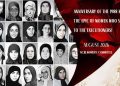
There’s actually a warning coming from inside these prisons. A message saying, a crime is in progress. These abductions, these transfers, they’re seen as potentially laying the groundwork for more executions, maybe even massacres, massacres, which grimly reminds us of the nineteen eighty eight massacre, a terrible period. Thousands executed then, wasn’t it? Political prisoners across Iran.
Exactly. Under direct orders from Khomeini at the time. And what’s so alarming now is how recent statements from state run media seem to echo this. Even the FARS news agency, state run, recently called that nineteen eighty eight massacre 30,000 political prisoners killed. They called it a shining record in fighting terrorism.
Uh-huh. And incredibly suggested it’s time to repeat the successful historical experience. I mean It’s practically an open declaration of intent. It demands attention. And the urgency of this warning, it just can’t be overstated.
Syed, Missouri, he’s a political prisoner. He’s endured twenty five years without a single day of leave. He explicitly warned in a letter from prison. He said, a crime is in progress. He urged people not to be silent to prevent a repeat of 1988.
His plea really underscores that the world needs to see what’s happening and see the resistance too. Okay. So given this alarming general picture, how does this systematic repression actually play out in the lives of individuals? Can you share some specific examples, ones that really show the human cost? Let’s maybe start with torture for false confessions.
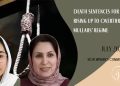
There’s the case of Arghavan Fallahi, she’s only 25. A political prisoner, abducted, moved somewhere unknown, then held in solitary in Tehran’s great prison, Fischer Fier. Yes. Her ordeal is well, it’s profoundly disturbing, and it really reveals the depth of the regime’s coercive tactics. Argavan and three other political prisoners too are reportedly being severely tortured.
They want them to falsely confess to being involved in assassinating two judges, Mohammad Mogayaseh and Ali Razini, an event they claim happened back on 01/19/2025. So they’re trying to pin this on them through torture? It appears so. She managed a brief call June 28, said she was in solitary, didn’t even know where she was exactly. She was first arrested 01/26/2025, right from her home, taken to Evan.
And this isn’t her first encounter with the state. She was arrested before with her father, Nasrola Falahi. Her father is also a political prisoner. Yes. From the nineteen eighties.
He’s currently in Fashofuya too. They were both arrested during the November twenty twenty two uprising. You see this pattern targeting families using torture for these fabricated confessions. It’s a known tactic, trying to legitimize their crackdown. And it’s not just her, you said.
Others are facing similar pressure. That’s right. Bijan Kazimi, Amir Hussain Akbari Monferd, and his father, Mohammad Akbari Monferd. They’re also reported to be in solitary, undergoing torture, trying to force confessions for the very same alleged assassinations. It points to a deliberate strategy, creating narratives that suit the state, you know, regardless of truth.
And these violent transfers you mentioned earlier. Yes. Connecting this to the broader pattern. We see other violent transfers, clearly designed to disorient and punish. Ali Unizi, he’s an elite student from Sharif University.
Beaten, moved from Evan to an unknown location in late June, his whereabouts, still unknown. And then on July 16 in Kazakhzar Prison, they violently tried to remove Syed, Missouri, the same man, twenty five years in prison. The one who wrote the warning letter. Yes. They tried to move him to an unknown location too.
Thankfully, that specific attempt was thwarted, at least temporarily. Other prisoners resisted. They intervened. Incredible bravery from fellow prisoners. Yeah.
Okay. Let’s shift focus a bit. Let’s talk about the conditions, especially for women political prisoners. You mentioned Karchak Prison. Yes.
Karchak. The details are quite revealing and frankly shocking. Around 60 women political prisoners were transferred there from Evan back on June 23. They’re being held in just appalling substandard inhumane conditions. In the prison’s quarantine section, apparently, area used to be for drug addicts.
It was filled with trash, foul smells, rodents, no ventilation. This is dreadful. Absolutely. Now the prisoners themselves incredibly have made efforts to clean it up, but the conditions remain totally unacceptable. It’s a basic human rights violation, and it feels deliberate, you know, creating an unbearable environment.
Can you give us a sense of the scale? What does that look like day to day? Well, to illustrate, for about 60 women, there are only three toilets, three showers. 60 women Yes. The overcrowding is extreme.
Some rooms, maybe 20 square meters, are holding 13 women. It’s impossible to rest, even just to sit properly. Many, especially the elderly and the sick, are forced to sleep on the floor. Just imagine. It’s hard to comprehend.
And then there’s the water contaminated. Widespread infestations of rats, insects. The risk of disease is just soaring. It makes a terrible situation even worse. The indignity, the health risks, it’s overwhelming.
And basic care. Contact with family, medicine. That’s another layer. These women are routinely denied free contact with their families. No access to the library.
Medical services are restricted. Essential medications often denied. Many still haven’t even received their personal belongings, including vital medicines that were left behind when they were abruptly moved from heaven. This isn’t just neglect, it’s systematic deprivation, a tool of psychological and physical torment, designed to strip away agency hope. And the health impacts you mentioned earlier, they sound critical for some specific women.
It really shows the human cost of this neglect. It does. Osor Karbandi for example, she’s experiencing severe physical decline, acute heart problems, hearing loss, neck dist issues, no specialized care. Rayleigh, Rahimi Poor and several other women over 70, they’re suffering from age related ailments obviously, but there are just no proper medical facilities for them. Mollad Safei urgently needs surgery for an abdominal diaphragmatic hernia.
She also has severe vision loss from cataracts. Her medical leave not approved. Just left to suffer. It seems so. Parvind Marisan, diabetes, Parkinson’s, bowel and joint problems left without treatment.
Marion Banu Nasiri has sleep apnea, lung disease, stomach ulcers. She’s reportedly in critical condition because she can’t get her medication. Narges Manzuri, she’s 48, mother of a 15 year old. She went on hunger strike after being punitively transferred to solitary in Korchak. Now she’s suffering severe heart palpitations.
These aren’t just names on a list. These are real people, their lives being systematically endangered. Absolutely. And connecting this to other practices, there are reports of these humiliating unconventional body searches of women who are just visiting political prisoners in central prison Visiting family members. Yes.
Mothers, wives, sisters, daughters, subjected to what are described as vulgar and insulting searches before they can even see their loved ones, it’s causing widespread anger. You have to understand, these searches aren’t about security. They feel like psychological abuse designed to degrade, to deter those family connections which are such a vital lifeline for prisoners. And there was one specific instance you mentioned, heartbreaking. Yes.
A 13 year old girl, completely stripped, subjected to a humiliating search before she could see her father. She was apparently left in tears, couldn’t even speak during the whole visit because of the trauma. A 13 year old child. The trauma inflicted there is just hard to fathom. It really is.
And these actions understandably have led to confrontations. Collective protests by prisoners, they’ve refused daily counts, gather in the prison yard, vowing to continue protesting if officials don’t respond. There was another case you mentioned, Hodemerigenfar, highlighting medical neglect again. Yes, Hoda Mergenthar. In Adelabad Prison, Shiraz.
She’s a 38 year old electronics engineer, held over eight months now without trial. She has an ovarian cyst, needs an urgent ultrasound, specialized external examination. But security officials, the prison judge, they’ve denied her transfer for treatment. Even though she needed care when arrested. Exactly.
She apparently needed post surgery recovery when she was arrested. And now the unsanitary prison environment has caused fungal infections, skin infections, making her condition worse. It’s just calculated deprivation of basic health care. It’s a relentless picture of cruelty and deprivation. Yeah.
Amidst all this darkness, you also mentioned sparks of defiance, incredible acts of resistance from inside. We really do. It’s quite remarkable, actually. We see incredible resilience. For example, despite the immense pressure in Karchak, the women political prisoners there held a symbolic ceremony on 07/09/2025.
They were commemorating the nineteen ninety uprising. They reflected on those difficult days, honored the student resistance, expressed solidarity with victims’ families. Even in those conditions, they find ways to resist, to remember. Yes. It’s a powerful testament to their spirit, using their confinement to remind the world of the broader struggle.
And what’s also deeply significant, a group of female political prisoners in Korchak who are identified as supporters of the MEK. The People’s Mojaheden Organization of Iran. Correct. They issue statement, condemning the forced transfer of Seyed Missouri, condemning the secret abductions of others like Baruz Hassani, Mehdi Hassani, Ali Yunosi, Maris Zafunesi, and they boldly declared this message to the regime. Resistance has taken root in the blood of martyrs and the suffering of prisoners.
You cannot exile it. That’s a direct challenge. Absolutely. It’s not just solidarity. It’s defiance, challenging the regime’s narrative head on.
And the defiance isn’t just statements. Right? There was chanting. Yes. On 07/06/2025, a group of women prisoners in Fardis Prison in Karaj.
They took a huge risk. At the end of a religious ceremony, they started chanting death to Khamenei, curse on Khomeini, and greetings to Hussein. Wow. Openly defying the regime’s core figures like that. Mhmm.
The risk must be immense. It is an incredibly courageous act of open defiance where the consequences are immediate and severe. So what happens to women who lead these acts? What are the consequences? They are immediate and often brutal.
The head of that women’s ward, a person named Kolovand, reportedly severely beat Mazuma Sonambari. Who is she? She is a 37 year old mother from Tabriz. Kolavan accused her of being a main instigator of the chanting. She apparently returned to the ward with severe bruising, difficulty even standing.
Mazuma Sonobari was arrested during the twenty twenty two uprising, sentenced to nine years for MEK membership and anti regime propaganda. She’d already been held in severe isolation for at least a year. Her case just tragically illustrates the regime’s brutal response, even to chanting. Exactly. It shows how threatened they are by any act of defiance, no matter how small it might seem from the outside.
So as we kinda wrap up this deep dive into this harrowing situation, the reality for political prisoners, especially women, it’s dire. It’s systematically designed to break their spirits, their bodies. But, and this is crucial, what we’ve also seen is that even under unimaginable pressure, their spirit of resistance, it remains unbroken. Which raises a really important question for all of us, for the international community. Yes.
The international community really needs to step up. The United Nations, the Special Rapporteur, the Human Rights Council, all international human rights organizations. They must take immediate action. To save the lives of political prisoners in Iran, there really is no time to lose. And one crucial step, something absolutely paramount, is for an independent delegation to be immediately dispatched.
They need to visit Iranian prisons. They need to speak directly with the political prisoners. Face to face. Yes. This is a vital nonnegotiable step.
It just cannot be delayed any longer if we’re gonna prevent a deepening humanitarian crisis and frankly hold the regime accountable. Thank you for joining us on this critical deep dive into the lives and the struggles of political prisoners in Iran. And to learn more about these issues and the ongoing efforts to support these incredibly courageous individuals, we do invite you to visit wncri.org. What we’ve explored today, it’s truly a testament to both systemic cruelty and, the unbreakable spirit of human defiance. It leaves us with a powerful question, doesn’t it?
How can we as a global community ensure that these voices of resistance are not silenced and that justice ultimately prevails against such calculated oppression? Thank you for joining us. Hope to see you next time.