A Life of Defiance and Leadership in Iran’s Struggle for Freedom
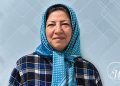
Nasrin Parsian was not just a name among many in Iran’s turbulent modern history—she was a symbol of courage, commitment, and the transformative power of women in the resistance movement.
Born in 1960 in the historic city of Tabriz, Nasrin grew up in a society on the brink of political upheaval. She excelled in her studies and later pursued a degree in Laboratory Sciences at Tabriz University. It was during her final years of high school that she first encountered the ideals of the People’s Mojahedin Organization of Iran (PMOI/MEK). Drawn to their vision of a democratic and free Iran, she joined the movement after thoughtful study, setting the course for a life steeped in activism.
Nasrin Parsian became an active participant in the mass protests that shook Tabriz during the 1979 anti-monarchic revolution. Her role in the revolutionary fervor that led to the downfall of the Shah’s dictatorship marked the beginning of her lifelong resistance against tyranny—first against monarchy, then against the emerging theocracy.
Following the revolution, Nasrin assumed various responsibilities in the northern province of Gilan and later in Tehran. However, the tides turned on June 20, 1981, when the clerical regime launched a brutal crackdown on PMOI supporters.
Targeted for her activism, Nasrin was forced to flee Iran with her infant son, a wrenching decision that underscored both the danger she faced and her unyielding dedication to the cause.
By 1993, she had risen to the ranks of the PMOI’s Leadership Council and took on the responsibility of heading admissions for the National Liberation Army of Iran. She also became a member of the National Council of Resistance of Iran (NCRI), the coalition acting as a parliament-in-exile.
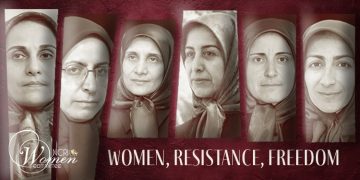
This period marked the brightest chapter of her life—one defined by vision, leadership, and a fierce belief in women’s pivotal role in political change. Nasrin Parsian was instrumental in the organization’s evolution into a woman-led movement, breaking norms and setting a precedent for gender equality in Iranian opposition politics.
Tragically, Nasrin Parsian’s promising journey was cut short in a car accident in October 1993. She was only 33.
Yet her legacy lives on—in the aspirations of a free Iran, in the rising voice of women in resistance, and in the hearts of those who continue to fight for the values she lived and died for.