
Tuesday, February 17, 2026
  • English
  • Français
  • فارسی
  • عربى
PODCASTS
NCRI Women Committee Women Resistance Freedom
  • Home
  • NEWS
    • Women’s News
    • Articles
    • Statements
  • PUBLICATIONS
    • Monthlies
    • Documents
    • Reference Library
  • ABOUT US
    • The NCRI Women’s Committee
    • Gender Equality
    • Women’s Platform
  • MARYAM RAJAVI
    • Maryam Rajavi
    • Maryam Rajavi Speeches
    • The Plan on Women’s Rights and Freedoms
    • Ten-Point Plan for the future of Iran
  • VANGUARDS
    • The Fallen for Freedom
    • Heroines in Chain
    • Women of Iranian Resistance
    • Famous Women
    • Women in History
  • EVENTS
    • IWD Conferences
    • Activities
    • IWD Speeches
    • Solidarity
  • VIDEO
    • Videos
    • IWD Videos
  • PODCAST
  • DONATE
  • CONTACT US
No Result
View All Result
NCRI Women Committee Women Resistance Freedom
  • Home
  • NEWS
    • Women’s News
    • Articles
    • Statements
  • PUBLICATIONS
    • Monthlies
    • Documents
    • Reference Library
  • ABOUT US
    • The NCRI Women’s Committee
    • Gender Equality
    • Women’s Platform
  • MARYAM RAJAVI
    • Maryam Rajavi
    • Maryam Rajavi Speeches
    • The Plan on Women’s Rights and Freedoms
    • Ten-Point Plan for the future of Iran
  • VANGUARDS
    • The Fallen for Freedom
    • Heroines in Chain
    • Women of Iranian Resistance
    • Famous Women
    • Women in History
  • EVENTS
    • IWD Conferences
    • Activities
    • IWD Speeches
    • Solidarity
  • VIDEO
    • Videos
    • IWD Videos
  • PODCAST
  • DONATE
  • CONTACT US
No Result
View All Result
NCRI Women Committee
No Result
View All Result
Home Articles

Suicides among women in Iran tops rates in Middle East

September 10, 2020
in Articles

Suicides among women in Iran tops rates in the Middle East

World Suicide Prevention Day (WSPD) is observed annually on September 10 to promote awareness and increase worldwide commitment and action for the prevention of suicide. Under the clerical regime, Iran stands in first place in the Middle East when it comes to suicides among women.

According to Maryam Abbasi, Suicide Prevention Program Manager at the Ministry of Health and Medical Education, suicides have been on the rise in Iran, increasing by five percent every year.

 A professor of sociology, Zahra Hazrati had announced in Tehran School of Social Sciences in June 2016 that Iran has the highest rating of women’s self-immolation in the Middle East.  Hazrati maintains that approximately 40 percent of the suicides among Iranian people is by self-immolation. (The state-run Borna news agency – September 6, 2019); (Deutsche Welle – June 7, 2015)

Massoud Ghadi Pasha, Deputy Director of the Medical and Laboratory of the Forensic Organization, announced in a press conference that 5,143 persons had committed suicide in Iran from March 2018 to March 2019. This reflects an 8 percent increase from the year before. (The state-run Rokna news agency – June 21, 2020)

Focusing on the rising number of suicides, he stressed, “the uptick in 10 years serves as a serious alarm bell for cultural arenas.”

Mohammad Mehdi Tondgouyan, deputy youths’ affairs in the Ministry of Sports and Youths, asserted that the Greater Tehran Province had the highest rate of suicide in the country. He said that on average, most suicides occur among 25-34-year olds, as well as 35 and above, but that suicides in under-17 groups have been occurring for several years. “According to the latest figures, 212 youngsters under the age of 17 committed suicide.” (The state-run ILNA news agency – August 19, 2018)

Noting that the average international suicide rate is 8 per 100,000 persons, Saeed Madani, a social researcher and criminologist, said, “In some Iranian cities, the average is much higher. For example, in Masjid Soleiman, the average suicide rate stands at 27.2 and in Kermanshah, at 26.2.” (The official IRNA news agency – January 21, 2018)

On numerous occasions, the regime’s officials and experts have acknowledged that suicides are not fully reported and publicized in Iran, and that the figures announced by the Coroner’s Office and other government agencies must be considered minimal.

Despite these statistics, the regime has taken no action to prevent suicides in general, and suicides among women in Iran, in particular. In fact, the regime’s misogynistic policies and laws have served to foment this social ill.

Leading causes of suicides among women in Iran

Among the leading causes of women’s growing depression and despair are the increased pressures and restrictions on Iranian women, obstacles to employment and social activities, marriage laws, and widespread poverty. The increased despair leads to higher suicide rates.

Iranian women have no form of support in the face of misogyny institutionalized in Iranian laws and policies. Instead of removing the structural and discriminatory obstacles and providing equal economic opportunities for women, the Iranian regime reinforces its laws and regulations, which discriminate against and marginalize women.

The Iranian regime’s laws see women as slaves at the disposal of men, and therefore, women ultimately resort to suicide to avoid further pressure in family disputes.

According to a social pathologist, the rate of suicides among women in Iran increased by 66 percent during a 5-year period. (The state-run Khabar Online – November 3, 2017)

Poverty among main contributors to suicides among women in Iran

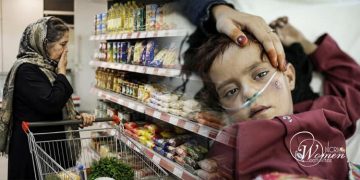
The number of women and girls who committed suicide due to poverty increased last year. The large number of mothers committing suicide is a new phenomenon caused by the immense pressure endured by poor and low-income families in Iran. The following are a few shocking examples:

Poverty among main contributors to suicides among women in Iran

Currently, more than 80 percent of Iranians live under the poverty line and the middle class has all but disappeared. The percentage of people living under the absolute poverty line has increased from 12% in 2017 to 50% and the poverty line stands at 9 million tomans. Meanwhile, Iran sits on a sea of oil, is the world’s second-largest source of natural gas, and is rich in natural resources.

Oppressive marriage laws and forced marriages

In the absence of any form of legal support for young women, forced marriage is another main contributor to suicide. According to the clerical regime’s laws, the legal age of marriage for girls is 13. However, fathers are allowed to authorize their daughters’ marriage under the age 13 after obtaining the consent of a judge. A brief review of some examples highlights the problem.

  • June 19, 2020         Shirin Kamari, 17, ended her life due to forcible marriage
  • June 19, 2020         Sheler Barzanji, 28, self-immolated due to forcible marriage
  • June 30, 2020         Banafsheh, 18, mother of two, married at 11 years old, ended her life by drug overdose after delivering her second child
  • August 3, 2020       Donya Nozari, 18, committed suicide to escape forcible marriage
Donya Nozari
 Donya Nozari
  • Sheler Barzanji
Leila Manzari

Double pressures and restrictions on women in the family

Sharifi Yazdi, a government expert, said, “Although in all parts of the world, girls’ depression is twice as common as that of boys, studies show that girls’ depression in Iranian society has been reported to be up to four times higher. Girls are psychologically more troubled than boys. Also, socially, their participation, communication, and interaction are lower than boys.” (The state-run Salamatnews.com, July 15, 2018)

Such societal and family pressures increase the suicides of women and girls. The following examples highlight the problem:

  • April 5, 2020: Mina Sedaghat committed suicide with a rice pill (aluminum phosphide) due to a dispute with her husband.
  • April 6, 2020: Shadi Asghari, 22, a mother of two, hanged herself due to family problems.
  • April 24, 2020: Sarina Ghafouri, 25, mother of a child, committed suicide shortly after her divorce.
  • April 24, 2020: Manij Ghaderi, 26, hanged herself due to family problems.
  • April 30, 2020: 15-year-old Rozita hanged herself due to rape and unwanted pregnancy.
  • April 29, 2020 till May 1, 2020: Shaghayegh Moradi, 30, committed suicide through rice pills due to family disputes.
  • April 29, 2020 till May 1, 2020: Hawjin Majidi, 25, committed suicide with rice pills due to family problems.
  • April 30, 2020: Leghah Ghaderi, 50, set herself on fire due to family problems and died 5 days later.
  • May 4, 2020: Parvin Fartoot, 50, set herself on fire due to family problems.
  • May 25, 2020: Parvar Alipour hanged herself due to family problems.
  • June 3, 2020: Ala Anbari, 14, hanged herself.
  • June 4, 2020: Shahla Haji, 22, hanged herself due to family problems.
  • June 8, 2020: Nahieh Emami committed suicide with rice pills due to family problems.
  • June 11, 2020: 22-year-old Rojin Fallahi hanged herself due to family disputes.
  • June 13, 2020: Zeinab Majidifar set herself on fire due to family problems.
  • June 17, 2020: Simin Rashidi hanged herself.
  • June 18, 2020: Mina Samimi committed suicide with a rice pill due to a dispute with her husband.
  • June 18, 2020: A young woman from Sanandaj jumped off the top of a building due to family disputes.
  • June 23, 2020: A 13-year-old girl committed suicide due to not obtaining the necessary points to continue her studies in the field of experimental sciences.
  • July 24, 2020: Zahra Namdari, the mother of a child, hanged herself due to family problems.
  • July 21, 2020: A 15-year-old girl jumped off a bridge.
  • August 5, 2020: A 17-year-old girl jumped off a bridge.
  • August 6, 2020: 4 teenage girls committed suicide at the same time.
  • August 7, 2020: A 17-year-old girl from Tehran ended her life by jumping from a three-story building.
  • September 3, 2020: Dr. Leila Manzari, psychologist and university professor, self-immolated after a court ruling gave her daughter’s custody to her ex-husband.

Covid-19 pandemic sparking suicides among women in Iran

In the context of the widespread Coronavirus outbreak and the regime’s inaction, grieving the sudden loss of loved ones has increased the rate of depression among Iranian women, some of whom even commit suicide.

On April 9, 2020, a 53-year-old woman committed suicide by using rice pills. She did so after her husband died of the Coronavirus; her son committed suicide due to depression caused by his father’s death. (The state-run Rokna news agency, April 12, 2020)

Direct connection of suicide to oppressive laws against women

An example of these suicides that spread to the media and shook the world was the death of Sahar Khodayari because of self-immolation.

This 29-year-old woman set herself on fire on September 2, 2019, after leaving the courthouse. More than 90 percent of her burns went untreated, which led to her death after just one week.

The young woman had been arrested for trying to enter a stadium to watch football. The regime’s judiciary accused her of “insulting public decency” and “insulting law enforcement officers” and sentenced her to 6 months in prison. Sahar reacted to these misogynistic laws and the unfair judicial process by setting herself on fire.

Amnesty International stated on September 10, 2019, “What happened to Sahar Khodayari is heart-breaking and exposes the impact of the Iranian authorities’ appalling contempt for women’s rights in the country. Her only ‘crime’ was being a woman in a country where women face discrimination that is entrenched in law and plays out in the most horrific ways imaginable in every area of their lives, even sports. “To our knowledge, Iran is the only country in the world that stops and punishes women seeking to enter football stadiums. This discriminatory ban must end immediately.”

The U.S. Department of State also reacted and wrote of Sahar Khodayari’s death on September 12, 2019, “The tragic death of #BlueGirl Sahar Khodayari is further proof of the fact that the biggest victims of this regime are the Iranian people themselves.”
Tags: PovertyThe girl childViolence against women
ShareTweetPinShareSendShare

Related Posts

Schools Under Security Siege: Ideological Scrutiny Follow Nationwide Protests

February 13, 2026
Schools Under Security Siege: Ideological Scrutiny Follow Nationwide Protests

In the aftermath of the nationwide protests in January 2026, schools across Iran have reportedly become sites of heightened security presence and ideological scrutiny. Educational institutions are increasingly...

Read moreDetails

From Tehran to Berlin: Women, Resistance, and a Nation at a Tipping Point

February 8, 2026
From Tehran to Berlin: Women, Resistance, and a Nation at a Tipping Point

From Tehran to Berlin: Women, Resistance, and a Nation at a Tipping Point. We're looking at a systemic calculated shift in strategy by the regime. Welcome to another...

Read moreDetails

Iran: Systematic Crackdown on Doctors and Medical Personnel Following January 2026 Protests

February 4, 2026
Iran: Systematic Crackdown on Doctors and Medical Personnel

In the aftermath of the nationwide protests of January 2026 in Iran, the clerical regime turned hospitals into instruments of repression and killing: deliberately cutting off ventilators, blocking...

Read moreDetails

Writer Saghar Seifollahi Killed After Baton Blows to the Head by Security Forces

February 2, 2026
Writer Saghar Seifollahi Killed After Baton Blows to the Head by Security Forces

Saghar Seifollahi, a writer and a graduate in mechanical engineering, was killed after suffering severe blows to the head during a violent pursuit and arrest by security forces....

Read moreDetails

January 2026 Report: Women at the Core of the Uprising

January 31, 2026
January 2026 Report: Women at the Core of the Uprising

Women at the Core of the Uprising: Iranian Women and the January 2026 Protests In January 2026, the entire country of Iran became the scene of an uprising...

Read moreDetails
Next Post

Health of political prisoners in Evin and Kerman prisons deteriorating

Documents

Iranian women Who Lost Their Lives in Iran’s January 2026 Uprising

Iranian Women Who Lost Their Lives in Iran’s January 2026 Uprising

January 25, 2026

Names That Must Not Be Forgotten Iranian women played a central and courageous role in the January 2026 uprising, standing...

More than 400 Prominent Women Demand Halt to Iran Execution of Political Prisoner Zahra Tabari

More than 400 Prominent Women Demand Halt to Iran Execution of Political Prisoner Zahra Tabari

December 25, 2025

More than 400 prominent women from across the globe, among them Nobel Prize winners, former presidents and prime ministers, parliamentarians,...

The Gendered Dimensions of the Water Crisis in Iran: Impacts on Women’s Health, Livelihoods, and Security

The Gendered Dimensions of the Water Crisis in Iran: Impacts on Women’s Health, Livelihoods, and Security

October 12, 2025

How Iranian Women Shoulder the Heavy Burden of a Deepening Crisis Download Italian Version The water crisis in Iran has...

Monthlies

January 2026 Report: Women at the Core of the Uprising
Monthlies

January 2026 Report: Women at the Core of the Uprising

January 31, 2026
December 2025 Report: A Year in Review: Iranian Women’s Resistance Against Religious Dictatorship
Monthlies

December 2025 Report: A Year in Review: Iranian Women’s Resistance Against Religious Dictatorship

January 5, 2026
November 2025 Report: Under the Clerical Regime, Nowhere Is Safe for Women in Iran
Monthlies

November 2025 Report: Under the Clerical Regime, Nowhere Is Safe for Women in Iran

November 30, 2025
October 2025 Report: Death Sentence for a Female Political Prisoner The Resistance of Female Political Prisoners Inspires Iranian Women and Girls in Their Struggle Against the Regime of Executions and Massacre
Monthlies

October 2025 Report: Death Sentence for a Female Political Prisoner

October 31, 2025

Articles

Death of Robabeh Masouri, Mother of Prominent Political Prisoner Saeed Masouri

Death of Robabeh Masouri, Mother of Prominent Political Prisoner Saeed Masouri

February 16, 2026

Systematic Denial of Basic Rights to Supporters of the PMOI On Sunday, February 14, 2026, Mrs. Robabeh Masouri, mother of...

Medical Staff Face Ongoing Detention for Treating Uprising Injuries

Medical Staff Face Ongoing Detention for Treating Uprising Injuries

February 12, 2026

Amid a continuing crackdown following Iran’s nationwide protests, reports indicate that numerous medical staff and members of the medical community...

Iranians March and Rally in Berlin, Calling for Democracy and Rejecting All Forms of Dictatorship

Iranians March and Rally in Berlin, Calling for Democracy and Rejecting All Forms of Dictatorship

February 7, 2026

Iranians March and Rally in Berlin - On Saturday, February 7, 2026, marking the anniversary of the 1979 anti-monarchical revolution,...

The Fallen for Freedom

Sonya Salehi-Rad was killed on January 8, 2026, during the nationwide popular protests in Shiraz
The Fallen for Freedom

Sonya Salehi-Rad

February 10, 2026
Arezoo Abedi was killed on January 9, 2026, during the nationwide popular protests
The Fallen for Freedom

Arezoo Abedi

February 10, 2026
Arnika Dabbagh, from Gorgan, was killed on January 9, 2026
The Fallen for Freedom

Arnika Dabbagh

February 7, 2026
Maedeh Moradi Kia, a resident of Tehran, was killed on January 9, 2026
The Fallen for Freedom

Maedeh Moradi Kia

February 7, 2026

ABOUT US

NCRI Women Committee

We work extensively with Iranian women outside the country and maintain a permanent contact with women inside Iran. The Women’s Committee is actively involved with many women’s rights organizations and NGO’s and the Iranian diaspora.
The committee is a major source of much of the information received from inside Iran with regards to women. Attending UN Human Rights Council meetings and other international or regional conferences on women’s issues and engaging in a relentless battle against the Iranian regime’s misogyny are part of the activities of members and associates of the committee.

CATEGORIES

  • Activities
  • Articles
  • Documents
  • Famous Women
  • Heroines in Chain
  • IWD Conferences
  • IWD Speeches
  • IWD Videos
  • Maryam Rajavi
  • Maryam Rajavi Speeches
  • Monthlies
  • Podcast
  • Reference Library
  • Solidarity
  • Statements
  • The Fallen for Freedom
  • Videos
  • Women in History
  • Women in Leadership
  • Women of Iranian Resistance
  • Women's News

BROWSE BY TAG

Child marriage coronavirus education execution forced hijab Gender Gap Generation Equality Honor killings Iran Teachers Maryam Akbari Monfared Nurses Plan on Women's Rights and Freedoms Poverty Prisoners Protests rural women Saba Kord Afshari The girl child Violence against women Women's Leadership Women Heads of Household Zeinab Jalalian

The copyright of all the material published on this website has been registered under © 2016 the Women’s Committee of the National Council of Resistance of Iran. To obtain permission to copy, redistribute or publish the material published on this website, you should write to the NCRI Women’s Committee. Please include the link of the original article on our website, women.ncr-iran.org.

Welcome Back!

Login to your account below

Forgotten Password?

Retrieve your password

Please enter your username or email address to reset your password.

Log In

Add New Playlist

No Result
View All Result
  • Home
  • News
    • Women’s News
    • Articles
    • Statements
  • Publications
    • Monthlies
    • Documents
    • Reference Library
  • About Us
    • The NCRI Women’s Committee
    • Gender Equality
    • Women’s Platform
  • Maryam Rajavi
    • Maryam Rajavi
    • Maryam Rajavi Speeches
    • Ten Point Plan for Iran
    • The Plan on Women’s Rights and Freedoms
  • Vanguards
    • The Fallen for Freedom
    • Heroines in Chain
    • Women of Iranian Resistance
    • Famous Women
    • Women in History
  • Events
    • IWD Conferences
    • Activities
    • IWD Speeches
    • Solidarity
  • Video
    • Videos
    • IWD Videos
  • Podcast
  • Donate
  • Contact us
  • فارسی
  • عربی
  • Français

The copyright of all the material published on this website has been registered under © 2016 the Women’s Committee of the National Council of Resistance of Iran. To obtain permission to copy, redistribute or publish the material published on this website, you should write to the NCRI Women’s Committee. Please include the link of the original article on our website, women.ncr-iran.org.