
Monday, March 9, 2026
  • English
  • Français
  • فارسی
  • عربى
PODCASTS
NCRI Women Committee Women Resistance Freedom
  • Home
  • NEWS
    • Women’s News
    • Articles
    • Statements
  • PUBLICATIONS
    • Monthlies
    • Documents
    • Reference Library
  • ABOUT US
    • The NCRI Women’s Committee
    • Gender Equality
    • Women’s Platform
  • MARYAM RAJAVI
    • Maryam Rajavi
    • Maryam Rajavi Speeches
    • The Plan on Women’s Rights and Freedoms
    • Ten-Point Plan for the future of Iran
  • VANGUARDS
    • The Fallen for Freedom
    • Heroines in Chain
    • Women of Iranian Resistance
    • Famous Women
    • Women in History
  • EVENTS
    • IWD Conferences
    • Activities
    • IWD Speeches
    • Solidarity
  • VIDEO
    • Videos
    • IWD Videos
  • PODCAST
  • DONATE
  • CONTACT US
No Result
View All Result
NCRI Women Committee Women Resistance Freedom
  • Home
  • NEWS
    • Women’s News
    • Articles
    • Statements
  • PUBLICATIONS
    • Monthlies
    • Documents
    • Reference Library
  • ABOUT US
    • The NCRI Women’s Committee
    • Gender Equality
    • Women’s Platform
  • MARYAM RAJAVI
    • Maryam Rajavi
    • Maryam Rajavi Speeches
    • The Plan on Women’s Rights and Freedoms
    • Ten-Point Plan for the future of Iran
  • VANGUARDS
    • The Fallen for Freedom
    • Heroines in Chain
    • Women of Iranian Resistance
    • Famous Women
    • Women in History
  • EVENTS
    • IWD Conferences
    • Activities
    • IWD Speeches
    • Solidarity
  • VIDEO
    • Videos
    • IWD Videos
  • PODCAST
  • DONATE
  • CONTACT US
No Result
View All Result
NCRI Women Committee
No Result
View All Result
Home Articles
feminization of poverty

Feminization of poverty on the rise, not eradicated in Iran

October 16, 2018
in Articles

The International Day for the Eradication of Poverty on October 17 offers an opportunity to glance over the magnitude and feminization of poverty in Iran.

Iran is a country sitting on a sea of oil. Iran holds the world’s second largest natural gas reserves. Its natural resources are abundant, and the country has access to open sea in the north and south. Yet more than 80 percent of the nation lives below the poverty line, and the middle class has essentially disappeared.

The absolute poverty rate in Iran has risen from 12 percent in 2017 to 50 percent this year, with a poverty line of nearly 6 million toumans (approx. $460), this year.

Poverty is growing by the day as the ruling regime’s damaging policies have led to the closure of factories and production units, and the destruction of agriculture, leading to increasing unemployment. At the same time, soaring prices and inflation had already diminished the public’s purchasing power, even before the coutry’s currency suffered a free fall in summer.

In such conditions, women suffer from double discrimination institutionalized in the country’s laws and social norms. Facing multiple barriers to employment, women are the most vulnerable social strata.

For example, 82 percent of the 3.6 million female heads of household have no decent jobs and live under the poverty line without receiving any government support. The high divorce rate in Iran has also been adding to the number of these women.

Thus women constitute the poorest sector of Iranian society so much that the state media and officials have acknowledged “feminization of poverty” in the country.


Causes of growth and feminization of poverty

Economic instability is the main cause of growing poverty in Iran. As a consequence, most women are driven to low-pay jobs in the private service sectors, where businesses recruit more women to pay less to their workers.

Women have to do difficult work in the service sector. They become physically ill over time due to hard labor while not receiving their meager wages regularly or completely.

Zahra Shojaii, secretary general of the so-called reformist women’s assembly, has stressed on feminization of poverty in Iran. She says, “Poverty has become feminized. Social ailments, suicide, runaway girls, addiction, and a rising number of female prisoners are some of the issues we face.” (The state-run dustaan.com, June 20, 2018)


Gender discrimination and women’s unemployment

The unemployment rate for women with higher education presently stands at 23%, while the rate for men is 11%. (The state-run Fars news agency – June 20, 2018) These watered-down figures indicate a male-dominated job market where women who have struggled and overcome various barriers to achieve higher education, do not reap the fruit of their academic credentials. They do not reach their career goals and the financial independent they seek.

Women face special obstacles in employment by the private and public sectors where they are easily excluded because of being married or having children. In addition to serious scarcity of job opportunities for women in the public sector, men enjoy priority over women in new employments.

Only 15% of Iran’s employed population are women, 20% of whom are working without wages while men working without wages account for only 2.4%. Also, 45 percent of Iranian women have no income. (The state-run fartaknews.com, June 16, 2018)

Institutionalized discrimination against women’s employment and gender segregation rules at the work place are among the most important reasons for women’s minute participation in the Iranian job market.


Growing numbers of female heads of household

Government executives and officials often point to gender discrimination and poverty without tackling them.

The deputy for strategic reviews in the presidential Directorate for Women and Family Affairs, asserted that, “Discrimination and inequality, lack of employment, as well as women’s social security and unemployment, are considered as the three main problems of women heads of household. Consequently, women have no freedoms, no freedom of choice, and no dignified social status. Poverty and economic privations top the list of women’s problems.” (The official IRNA news agency – January 15, 2017)

The number of female heads of household is rising due to the soaring divorce rate and plunging marriage rate in Iran. According to the latest statistics, there are 3.6 million women heads of household in Iran, only 200,000 of whom are covered by the National Welfare Organization, receiving a small monthly aid which is less than 10% of the poverty line.

More than 80 percent of the women heads of household in Iran are over 50. Along with their children, they become victims of various social damages due to lack of funds.

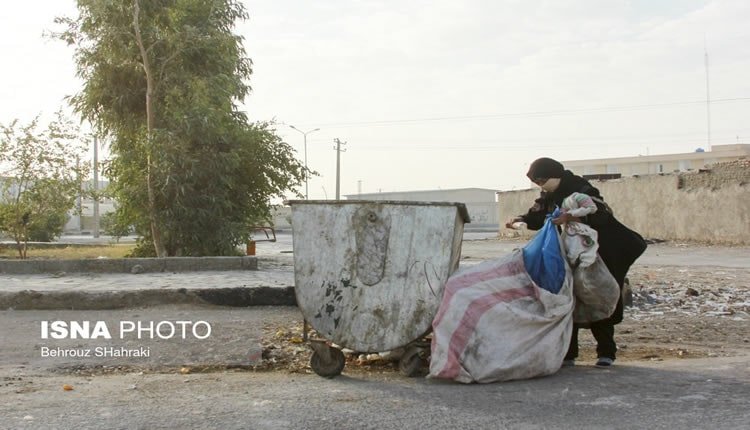
Feminization of poverty has brought about various social ailments for women and children, abandoning and selling their children and even unborn infants, selling their body organs, homelessness and sleeping on the streets, panhandling and sifting through the garbage to find things to eat or sell, just to name a few.

A 23-year-old woman advertised sale of her kidney with an O+ blood type. A note on the ad read, “For God’s sake, do not rip the ad. I really need the money. Please understand!”
ShareTweetPinShareSendShare

Related Posts

Elisabetta Zamparutti at IWD 2026: The Courage of Iranian Resistance Women to Sacrifice Their Lives for Freedom

March 9, 2026
Elisabetta Zamparutti at IWD 2026: The Courage of Iranian Resistance Women to Sacrifice Their Lives for Freedom

On Saturday, February 21, 2026, on the eve of March 8, International Women’s Day, the NCRI Women’s Committee hosted an international conference in Paris entitled “Women’s Leadership: An...

Read moreDetails

Karen Smith at IWD 2026: The Future of Iran: Rule of Law, Gender Equality, and Women’s Leadership

March 8, 2026
Karen Smith at IWD 2026: The Future of Iran: Rule of Law, Gender Equality, and Women’s Leadership

On Saturday, February 21, 2026, on the eve of March 8, International Women’s Day, the NCRI Women’s Committee hosted an international conference in Paris entitled “Women’s Leadership: An...

Read moreDetails

A Report to CSW70: Gender-Based Discrimination Under Iranian Law

March 8, 2026
A Report to CSW70: Gender-Based Discrimination Under Iranian Law

Structural Inequality and State-Sanctioned Oppression of Women Gender-Based Discrimination Under Iranian Law” is the title of the NCRI Women’s Committee’s report to CSW70, as it focuses on “Ensuring...

Read moreDetails

Maryam Rajavi Discusses Iran’s Transitional Roadmap in Interview with Frankfurter Rundschau

March 8, 2026
Maryam Rajavi Discusses Iran’s Transitional Roadmap in Interview with Frankfurter Rundschau

Maryam Rajavi, the President-elect of the National Council of Resistance of Iran, said in an interview with the German newspaper Frankfurter Rundschau that political change in Iran must...

Read moreDetails

Iran’s Historic Transition: Why Women Must Lead the New Republic

March 8, 2026
Iran’s Historic Transition: Why Women Must Lead the New Republic

Iran’s Historic Transition: Why Women Must Lead the New Republic. Welcome to another episode of the NCRI Women’s Committee Podcast. Since our previous episode, significant developments have taken...

Read moreDetails
Next Post
Iranian women

Iranian women partake in the protests of various social sectors

Leave a Reply Cancel reply

Your email address will not be published. Required fields are marked *

Documents

A Report to CSW70: Gender-Based Discrimination Under Iranian Law

A Report to CSW70: Gender-Based Discrimination Under Iranian Law

March 8, 2026

Structural Inequality and State-Sanctioned Oppression of Women Gender-Based Discrimination Under Iranian Law” is the title of the NCRI Women’s Committee’s...

Annual Report 2026: From Protests, to Uprising, and the Role of Iranian Women

Annual Report 2026: From Protests, to Uprising, and the Role of Iranian Women

March 3, 2026

On the eve of International Women’s Day 2026, the NCRI Women’s Committee presents its Annual Report 2026, offering a recap...

Iranian women Who Lost Their Lives in Iran’s January 2026 Uprising

Iranian Women Who Lost Their Lives in Iran’s January 2026 Uprising

January 25, 2026

Names That Must Not Be Forgotten Iranian women played a central and courageous role in the January 2026 uprising, standing...

Monthlies

January 2026 Report: Women at the Core of the Uprising
Monthlies

January 2026 Report: Women at the Core of the Uprising

January 31, 2026
December 2025 Report: A Year in Review: Iranian Women’s Resistance Against Religious Dictatorship
Monthlies

December 2025 Report: A Year in Review: Iranian Women’s Resistance Against Religious Dictatorship

January 5, 2026
November 2025 Report: Under the Clerical Regime, Nowhere Is Safe for Women in Iran
Monthlies

November 2025 Report: Under the Clerical Regime, Nowhere Is Safe for Women in Iran

November 30, 2025
October 2025 Report: Death Sentence for a Female Political Prisoner The Resistance of Female Political Prisoners Inspires Iranian Women and Girls in Their Struggle Against the Regime of Executions and Massacre
Monthlies

October 2025 Report: Death Sentence for a Female Political Prisoner

October 31, 2025

Articles

Maryam Rajavi Discusses Iran’s Transitional Roadmap in Interview with Frankfurter Rundschau

Maryam Rajavi Discusses Iran’s Transitional Roadmap in Interview with Frankfurter Rundschau

March 8, 2026

Maryam Rajavi, the President-elect of the National Council of Resistance of Iran, said in an interview with the German newspaper...

March 8: International Women's Day and the Leading Role of Iranian Women in the Struggle for Freedom

March 8: International Women’s Day and the Leading Role of Iranian Women in the Struggle for Freedom

March 6, 2026

March 8 is celebrated worldwide as International Women's Day, a day that honors over a century of women's fight for...

A Free Iran Starts with Women in Charge

A Free Iran Starts with Women in Charge

March 5, 2026

Maryam Rajavi’s movement puts women in leadership and demands equality as a foundation, not a slogan — a direct assault...

The Fallen for Freedom

Sonya Salehi-Rad was killed on January 8, 2026, during the nationwide popular protests in Shiraz
The Fallen for Freedom

Sonya Salehi-Rad

February 10, 2026
Arezoo Abedi was killed on January 9, 2026, during the nationwide popular protests
The Fallen for Freedom

Arezoo Abedi

February 10, 2026
Arnika Dabbagh, from Gorgan, was killed on January 9, 2026
The Fallen for Freedom

Arnika Dabbagh

February 7, 2026
Maedeh Moradi Kia, a resident of Tehran, was killed on January 9, 2026
The Fallen for Freedom

Maedeh Moradi Kia

February 7, 2026

ABOUT US

NCRI Women Committee

We work extensively with Iranian women outside the country and maintain a permanent contact with women inside Iran. The Women’s Committee is actively involved with many women’s rights organizations and NGO’s and the Iranian diaspora.
The committee is a major source of much of the information received from inside Iran with regards to women. Attending UN Human Rights Council meetings and other international or regional conferences on women’s issues and engaging in a relentless battle against the Iranian regime’s misogyny are part of the activities of members and associates of the committee.

CATEGORIES

  • Activities
  • Articles
  • Documents
  • Famous Women
  • Heroines in Chain
  • IWD Conferences
  • IWD Speeches
  • IWD Videos
  • Maryam Rajavi
  • Maryam Rajavi Speeches
  • Monthlies
  • Podcast
  • Reference Library
  • Solidarity
  • Statements
  • The Fallen for Freedom
  • Videos
  • Women in History
  • Women in Leadership
  • Women of Iranian Resistance
  • Women's News

BROWSE BY TAG

Child marriage coronavirus education execution forced hijab Gender Gap Generation Equality Honor killings Iran Teachers Maryam Akbari Monfared Nurses Plan on Women's Rights and Freedoms Poverty Prisoners Protests rural women Saba Kord Afshari The girl child Violence against women Women's Leadership Women Heads of Household Zeinab Jalalian

The copyright of all the material published on this website has been registered under © 2016 the Women’s Committee of the National Council of Resistance of Iran. To obtain permission to copy, redistribute or publish the material published on this website, you should write to the NCRI Women’s Committee. Please include the link of the original article on our website, women.ncr-iran.org.

Welcome Back!

Login to your account below

Forgotten Password?

Retrieve your password

Please enter your username or email address to reset your password.

Log In

Add New Playlist

No Result
View All Result
  • Home
  • News
    • Women’s News
    • Articles
    • Statements
  • Publications
    • Monthlies
    • Documents
    • Reference Library
  • About Us
    • The NCRI Women’s Committee
    • Gender Equality
    • Women’s Platform
  • Maryam Rajavi
    • Maryam Rajavi
    • Maryam Rajavi Speeches
    • Ten Point Plan for Iran
    • The Plan on Women’s Rights and Freedoms
  • Vanguards
    • The Fallen for Freedom
    • Heroines in Chain
    • Women of Iranian Resistance
    • Famous Women
    • Women in History
  • Events
    • IWD Conferences
    • Activities
    • IWD Speeches
    • Solidarity
  • Video
    • Videos
    • IWD Videos
  • Podcast
  • Donate
  • Contact us
  • فارسی
  • عربی
  • Français

The copyright of all the material published on this website has been registered under © 2016 the Women’s Committee of the National Council of Resistance of Iran. To obtain permission to copy, redistribute or publish the material published on this website, you should write to the NCRI Women’s Committee. Please include the link of the original article on our website, women.ncr-iran.org.