The Global Gender Gap report, covering a total of 142 countries this year, measures gaps between women and men in four key areas: political empowerment, economic participation and opportunity, educational attainment, and health and survival.
The 20 countries at the bottom of the 2014 list, in order from the lowest-ranked, are Yemen, Pakistan, Chad, Syria, Mali, Iran, Cote d’Ivoire, Lebanon, Jordan, Morocco, Guinea, Mauritania, Saudi Arabia, Egypt, Oman, Ethiopia, Algeria, Turkey, Bahrain and Tunisia.
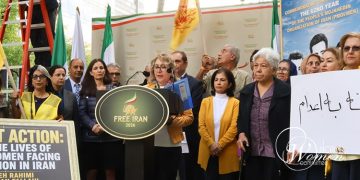
What is ironic is that the Iranian regime, in the sixth lowest position on this year’s index, is currently a member of the U.N.’s Commission on the Status of Women, a 45-member body that deals with gender equality and the advancement of women. What kind of example this would be for women’s rights is truly a concern for many.
In the four sub-indexes of the survey, Iran placed 139th out of the 142 countries in economic participation and opportunity; 135th in political empowerment; 104th in educational attainment; and 89th in health and survival.
Despite Iran’s poor performance in this and other measures of women’s wellbeing, the Iranian regime insists that it treats women fairly.