
Thursday, October 22, 2026
  • English
  • Français
  • فارسی
  • عربى
PODCASTS
NCRI Women Committee Women Resistance Freedom
  • Home
  • NEWS
    • Women’s News
    • Articles
    • Statements
  • PUBLICATIONS
    • Monthlies
    • Documents
    • Reference Library
  • ABOUT US
    • The NCRI Women’s Committee
    • Gender Equality
    • Women’s Platform
  • MARYAM RAJAVI
    • Maryam Rajavi
    • Maryam Rajavi Speeches
    • The Plan on Women’s Rights and Freedoms
    • Ten-Point Plan for the future of Iran
  • VANGUARDS
    • Fallen Trailblazers of Iran’s Freedom
    • Fallen Heroes of Iran Uprisings
    • Heroines in Chain
    • Women of Iranian Resistance
    • Famous Women
    • Women in History
  • EVENTS
    • IWD Conferences
    • Activities
    • IWD Speeches
    • Solidarity
  • VIDEO
    • Videos
    • IWD Videos
  • PODCAST
  • DONATE
  • CONTACT US
No Result
View All Result
NCRI Women Committee
No Result
View All Result
Home Heroines in Chain
Back to the General Ward: Breaking the Prisoners’ Silence

Leila Arfaei

Back to the General Ward: Breaking the Prisoners’ Silence

October 21, 2026
in Heroines in Chain

Prison Memoirs of Azam Haj-Heydari from The Price of Being Human — Part Twenty-Eight

In this installment of her prison memoir, Azam Haj-Heydari recounts another transfer to the general ward. After months of intimidation, threats, and repression, a heavy, deathly silence had settled over the prisoners. Azam Haj-Heydari spent a total of five years in the prisons of Khomeini’s regime, enduring severe torture and pressure. Here, she describes how she and other newly arrived prisoners tried to break that silence in the general ward and restore communication and a sense of solidarity among the women.

Her account shows how the prisoners resisted the clerical regime’s efforts to impose fear and passivity. Their resistance took the form of laughter, conversation, and even a simple childhood game. The game of ye ghol do ghol became a way for the women to reclaim joy and life in a place where the regime’s agents sought to reduce them to silence.

This is the story of how that silence was broken: of women who, even behind bars and under constant threat, refused to let prison strip life of all its meaning.

Transferred Back to the General Ward

Toward the end of 1984, about three months after our transfer to Evin and the hellish conditions they had imposed on us, it seemed that their methods had begun to exhaust their own henchmen. They also appeared to have concluded that gathering all the prisoners in one place had been a mistake. Both Fakour[1] and Halvaei[2] had voiced this conclusion amid their usual shouting and bluster.

In any case, they decided to disperse us again. One day, they came and read out our names in groups of ten or fifteen, distributing us among different wards on the upper and lower floors. I was among a group of ten transferred to Ward 2 Upper.

Before they took us away, one of Halvaei’s thugs came to the ward entrance and started threatening us. “When you get to your new ward, you’d better follow the rules! Anyone who doesn’t is going to regret it!” He went on threatening us in the same vein.

When we entered the ward, we were talking and laughing together. But then we encountered the silence of the ward—the silence of the prisoners who had already been there—and for a moment, we wondered whether we were doing something unusual. We looked at their silent faces, unable to make sense of their stillness. Nobody walked around the ward. Nobody spoke to anyone or laughed. The oppressive silence was so pervasive that it silenced us, too.

They assigned a few of us to each room. After putting down our bags and the few belongings we had, we walked around the ward. I went over to look at the television which was on. Qarā’ati,[3] a cleric known for his televised religious lectures, was speaking. His nonsense made me feel sick, so I turned and walked away.

On my way back, I saw “M,” whom I already knew. She quietly came over and whispered in my ear, “Azam, do you know the rule here? When Qarā’ati speaks, everyone has to sit quietly and listen.”

I burst out laughing. Several of the newly arrived women standing near me started laughing, too. “M,” who clearly hadn’t expected us to react that way, panicked when she saw that the situation had got out of hand and everyone’s attention had turned toward us. She hurried back to her place and sat down.

When it was time to eat, we saw that everyone collected their food, sat in their assigned places and ate alone. I ignored this custom, sat down in front of one of the women, and began eating with her. One of the traitors, who was supposedly in charge of the room, came over and said, “Go sit in your own place!”

“Does everyone have their name written on a seat?” I asked.

“No. I decide where everyone sits!”

I ignored her and continued eating my lunch. The others who had arrived with me did the same. In practice, we had already overturned the rules the executioners had imposed on the ward.

I asked someone why things were like this. Why did everyone sit motionless, silent, and stiff as statues? She explained how the traitors had made life unbearable for the other prisoners. Every day, they would find an excuse to bring in the assault squad, which would beat the women to a pulp. The traitors would also pick fights and wage psychological warfare every day, supposedly in the name of enforcing the rules. And so on. This was what all their efforts had produced.

But these explanations were no justification for us, the new arrivals. We had managed to break the regime’s strategy in other wards, too. We discussed it among ourselves and agreed that we had a responsibility to disrupt the graveyard-like atmosphere here. But how?

First, we had to break the silence. We simply didn’t know how to speak in hushed tones or whisper. We didn’t know how to laugh quietly. We were ill-mannered! Wasn’t that just great?

Gradually, we saw the ice beginning to melt. The other women started warming to us, talking with us, and joining in. Here and there, they also began chatting and laughing among themselves. But that still wasn’t enough.

One day, Narges returned from interrogation carrying a handful of small stones. She poured them into the middle of the room and said, “Azam, come on, let’s play ye ghol do ghol!”[4]

At first, I was a little surprised. Ye ghol do ghol? In a political prison?!

Leila Arfaei, who had burst into loud laughter, chimed in. Leila was a young PMOI supporter who was executed by firing squad in October 1982, at seventeen years old. “She’s right! Let’s go back to our childhood. Then, when we grow up, just imagine what great PMOI members we’ll become!”

I agreed, and we sat down to play. There were five of us at first: Leila, Mehri Hajinejad, Mahboubeh, Narges, and me. After we had played for a while, five more women joined us. We formed two teams of five and competed against each other.

The room erupted. Laughter, delighted shrieks, and cheers filled the entire ward. At the other end of the room, two of the traitors sat there looking as sour as poison, glaring at us and muttering curses under their breath. But they didn’t dare come over and break up the game.

Eventually, they realized it was either them or us, and they got to their feet. One of them turned to me and, using the same crude, debased language of the clerics that she had picked up from the interrogators, threatened me:

“You hypocrite, you’re the one who started this! Watch yourself!”

The other woman hurled an insult at Narges. But Narges was so absorbed in the game and caught up in the moment that she didn’t even notice. The two of them left the room.

I paid them no attention. I remembered what Hengameh had said and thought to myself: You can go to hell! What else can you do to us that you haven’t already done? Do whatever the hell you want!

To be continued…


[1] Fakour: The memoir names this prison official only by the surname Fakour.

[2] Halvaei: The reference is likely to Mojtaba Halvaei Asgar, an Evin Prison official. Human-rights documentation identifies him as head of security at Evin by 1988 and records accounts of his involvement in interrogations and beatings. The available evidence does not establish his precise position at the time of this 1984 incident.

[3] Mohsen Qarā’ati: An Iranian Shiite cleric known for televised religious instruction, particularly his Quran commentary program Lessons from the Quran. His television appearances became a familiar part of state religious broadcasting.

[4] Ye ghol do ghol: A traditional Persian children’s game, usually played with five small stones. Players toss one stone into the air while picking up others from the ground, then catch the tossed stone before it falls. The game progresses through increasingly difficult rounds. The name refers to stages involving collecting one stone, then two at a time.


ShareTweetPinShareSendShareShare

Related Posts

Denial of Medical Care to Female Prisoners Poses Serious Health Risks

October 21, 2026
Denial of Medical Care to Female Prisoners Poses Serious Health Risks

Denial of medical care to female prisoners in Iran continues to raise serious concerns as reports indicate that several incarcerated women suffering from severe and potentially life-threatening illnesses...

Read moreDetails

Femicide in Iran: When the Law Grants Killers Impunity Instead of Protecting Women

October 21, 2026
Femicide in Iran: When the Law Grants Killers Impunity Instead of Protecting Women

Welcome to another episode of podcasts of the Women's Committee of the National Council of Resistance of Iran. I'm really glad you're joining us today even though, well,...

Read moreDetails

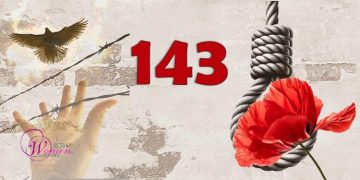
No to Execution Tuesdays Campaign in Week 143: Prisoners Strike in 66 Prisons

October 20, 2026
No to Execution Tuesdays Campaign in Week 143: Prisoners Strike in 66 Prisons

In its 143rd week, the No to Execution Tuesdays Campaign once again voiced its opposition to the issuance and implementation of death sentences and the deprivation of the...

Read moreDetails

From a Strategic Paradigm Shift to a Vanguard Movement

October 19, 2026
The Journey of women's leadership in the Iranian Resistance

The Journey of Women’s Leadership in the Iranian Resistance The period between October 18 and October 22 marks a pivotal milestone in the history of the Iranian Resistance...

Read moreDetails

Hunger in Iran: Women and Children Pay the Price

October 19, 2026
Hunger in Iran: Women and Children Pay the Price

Poverty and malnutrition now affect workers, retirees, teachers, nurses and middle-class families. Rising living costs have pushed millions into deprivation. Government-linked reports in 2026 cited over 262,000 children...

Read moreDetails

Documents

Sign the Petition: Demand Urgent International Action to Protect Women Prisoners in Iran Iran: Political Prisoner Used as Leverage Against Her Imprisoned Brother

Sign the Petition: Demand Urgent International Action to Protect Women Prisoners in Iran

September 20, 2026

Iran's Women Prisoners: A Human Rights Emergency Demanding Immediate International Action September 2026 To: The UN High Commissioner for Human...

Call for Immediate Action to Halt the Death Sentence of Arghavan Fallahi

Sign our Statement to Halt the Death Sentence of 25-Year-Old Political Prisoner Arghavan Fallahi

July 10, 2026

Statement Calling for Immediate Action to Halt the Death Sentence of 25-Year-Old Political Prisoner Arghavan Fallahi We express our profound...

The Ineffectiveness of Population Policies in Iran: Economy, Aging, and the Overlooked Rights of Women

The Ineffectiveness of Population Policies in Iran: Economy, Aging, and the Overlooked Rights of Women

July 10, 2026

Abstract: A compilation of official data, media reports, and disclosures published in April, May, and June 2026 demonstrates that Iran...

Monthlies

September 2026 Report: The Crisis of Education in Iran Threatens Schoolgirls’ Fundamental Rights and Future
Monthlies

September 2026 Report: The Crisis of Education in Iran Threatens Schoolgirls’ Fundamental Rights and Future

September 30, 2026
August 2026 Report: The Epic of Women Who Said 'No' to the Executioners!
Monthlies

August 2026 Report: The Epic of Women Who Said ‘No’ to the Executioners!

September 1, 2026
July 2026 Report: Death Sentences for Women Rising Up to Overthrow the Mullahs' Regime
Monthlies

July 2026 Report: Death Sentences for Women Rising Up to Overthrow the Mullahs’ Regime

July 31, 2026
June 2026 Report: Working Iranian Women Erased from Labor Market
Monthlies

June 2026 Report: Working Iranian Women Erased from Labor Market

July 5, 2026

Articles

The Journey of women's leadership in the Iranian Resistance

From a Strategic Paradigm Shift to a Vanguard Movement

October 19, 2026

The Journey of Women’s Leadership in the Iranian Resistance The period between October 18 and October 22 marks a pivotal...

Femicide in Iran: When the Law Grants Killers Impunity Instead of Protecting Women

Femicide in Iran: When the Law Grants Killers Impunity Instead of Protecting Women

October 18, 2026

One week, several victims: The true face of violence against women in Iran Femicide in Iran: In just a few...

Poverty- When Mothers Manage Hunger: Shrinking Food Budgets for Women and Children in Iran

When Mothers Manage Hunger: Shrinking Food Budgets for Women and Children in Iran

October 15, 2026

Poverty and deprivation move from the margins to the mainstream For many countries, World Food Day and the International Day...

The Fallen for Freedom

Noushin Namvar: A Woman’s Glorious Battle for Liberation
Fallen Trailblazers of Iran’s Freedom

Noushin Namvar: A Woman’s Glorious Battle for Liberation

October 3, 2026
Mojgan Mahdavi: From U.S. Academia to the Frontlines of the Iranian Resistance
Fallen Trailblazers of Iran’s Freedom

Mojgan Mahdavi: From U.S. Academia to the Frontlines of the Iranian Resistance

August 21, 2026
Nasrin Shahrabi: A Lifetime Dedicated to Fighting Religious Fascism in Iran
Fallen Trailblazers of Iran’s Freedom

Nasrin Shahrabi: A Lifetime Dedicated to Fighting Religious Fascism in Iran

August 19, 2026
The Unbroken Smile: How Sara Mokhtar, a Former Airline Executive Became the Vanguard of the Iranian Resistance
Fallen Trailblazers of Iran’s Freedom

The Unbroken Smile: How a Former Airline Executive Became the Vanguard of the Iranian Resistance

June 28, 2026

ABOUT US

NCRI Women Committee

We work extensively with Iranian women outside the country and maintain a permanent contact with women inside Iran. The Women’s Committee is actively involved with many women’s rights organizations and NGO’s and the Iranian diaspora.
The committee is a major source of much of the information received from inside Iran with regards to women. Attending UN Human Rights Council meetings and other international or regional conferences on women’s issues and engaging in a relentless battle against the Iranian regime’s misogyny are part of the activities of members and associates of the committee.

CATEGORIES

  • Activities
  • Articles
  • Documents
  • Fallen Heroes of Iran Uprisings
  • Fallen Trailblazers of Iran’s Freedom
  • Famous Women
  • Heroines in Chain
  • IWD Conferences
  • IWD Speeches
  • IWD Videos
  • Maryam Rajavi
  • Maryam Rajavi Speeches
  • Monthlies
  • Podcast
  • Reference Library
  • Solidarity
  • Statements
  • Videos
  • Women in History
  • Women in Leadership
  • Women of Iranian Resistance
  • Women's News

BROWSE BY TAG

Child marriage coronavirus education execution forced hijab Gender Gap Generation Equality Honor killings Iran Teachers Maryam Akbari Monfared Nurses Plan on Women's Rights and Freedoms Poverty Prisoners Protests rural women Saba Kord Afshari The girl child Violence against women Women's Leadership Women Heads of Household Zeinab Jalalian

The copyright of all the material published on this website has been registered under © 2016 the Women’s Committee of the National Council of Resistance of Iran. To obtain permission to copy, redistribute or publish the material published on this website, you should write to the NCRI Women’s Committee. Please include the link of the original article on our website, https://wncri.org

Welcome Back!

Login to your account below

Forgotten Password?

Retrieve your password

Please enter your username or email address to reset your password.

Log In

Add New Playlist

No Result
View All Result
  • Home
  • News
    • Women’s News
    • Articles
    • Statements
  • Publications
    • Monthlies
    • Documents
    • Reference Library
  • About Us
    • The NCRI Women’s Committee
    • Gender Equality
    • Women’s Platform
  • Maryam Rajavi
    • Maryam Rajavi
    • Maryam Rajavi Speeches
    • Ten Point Plan for Iran
    • The Plan on Women’s Rights and Freedoms
  • Vanguards
    • Fallen Trailblazers of Iran’s Freedom
    • Fallen Heroes of Iran Uprisings
    • Heroines in Chain
    • Women of Iranian Resistance
    • Famous Women
    • Women in History
  • Events
    • IWD Conferences
    • Activities
    • IWD Speeches
    • Solidarity
  • Video
    • Videos
    • IWD Videos
  • Podcast
  • DONATE
  • Contact us
  • فارسی
  • عربی
  • Français

The copyright of all the material published on this website has been registered under © 2016 the Women’s Committee of the National Council of Resistance of Iran. To obtain permission to copy, redistribute or publish the material published on this website, you should write to the NCRI Women’s Committee. Please include the link of the original article on our website, https://wncri.org