
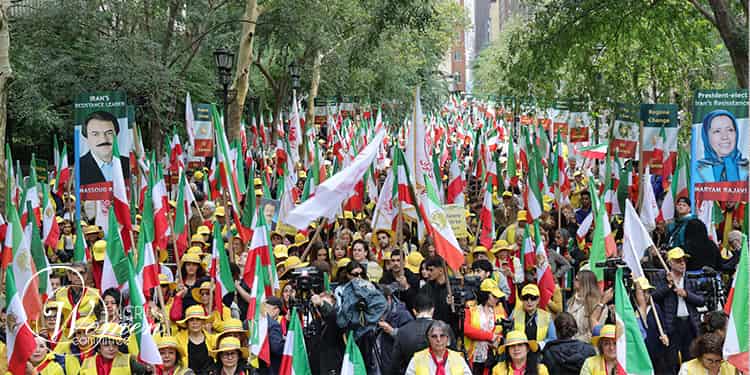
NEW YORK, Sept. 22, 2026 – Thousands of freedom-loving Iranians and supporters of the Iranian Resistance gathered outside United Nations headquarters for two days, to protest the reception of Masoud Pezeshkian, arguing that the Iranian regime’s president does not represent the people of Iran.
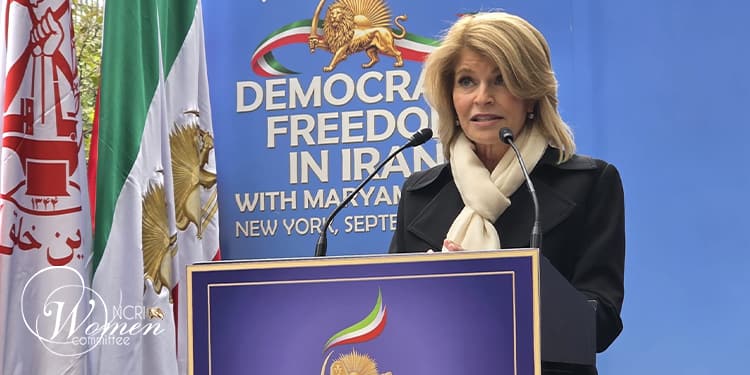
At this gathering, Carla Sands, the U.S. Ambassador to Denmark and the Faroe Islands from 2017 to 2021, was also in attendance and delivered a speech. The full text of her speech is provided below:
I’m thrilled to stand in front of the United Nations and speak before thousands of you who have come from all across the United States to tell the world that Iran’s seat at the United Nations belongs to the people of Iran, not their repressive rulers.
We’re gathered here today to stand with the proud nation of Iran, which has strived for its freedom and democracy for decades. We stand with the Iranians whose struggle for freedom is inseparable from peace and tranquility around the world and, as such, serves American national security.
For decades, the Iranian regime has threatened citizens around the world. It has taken foreign nationals hostage and used them as bargaining chips. It has financed terrorism, pursued nuclear weapons, exported instability, and fueled war and conflict throughout the Middle East. Nations around the world and the American people deserve a policy that ends this threat, not one that merely manages it from crisis to crisis. President Trump has made it clear that the Iranian regime must never be allowed to obtain a nuclear weapon or threaten the United States and its allies without paying a price.
The past few months have shown that military action certainly weakens the regime, but only the indigenous force on the ground can deliver lasting change and peace. The lasting solution lies in supporting the Iranian people and their organized resistance in bringing about change from within Iran. And that’s why we stand with the people of Iran, who reject both the dictatorship of the Shah and the religious dictatorship of the mullahs.
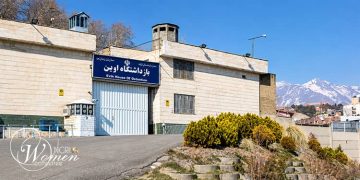
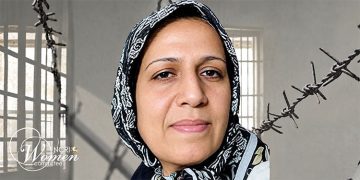
We stand with the courageous Resistance Units confronting repression inside Iran. And we stand with the political prisoners who continue to resist despite torture, solitary confinement, and the threat of execution. Over the past few weeks, these political prisoners have courageously sent messages from prison defending their desire to support the main Iranian opposition movement as it marks its sixty-first anniversary of fighting first the Shah’s dictatorship and then the ruthless mullahs ruling Iran.
We honor the memory of all who sacrificed their lives for Iran’s freedom, and we stand with the families of the victims. In honoring their sacrifice, we must also recognize the central role of the People’s Mojahedin Organization of Iran, the MEK. You are Iran’s leading opposition movement, and you’ve carried forward an unbroken struggle against dictatorship for 61 years. The MEK’s members have endured imprisonment, executions, massacres, terrorist attacks, and a relentless campaign of demonization. And yet the MEK has survived, expanded, and continued its struggle because it’s rooted in a profound commitment to freedom. It’s built an organized movement capable of confronting the regime—and you have.
On September 6th, the organization entered its sixty-first year of struggle, and its members elected Mrs. Mahnaz Meimanat as the new Secretary General of the People’s Mojahedin Organization of Iran. I can only imagine how deeply that news must have angered the mullahs ruling Iran. But for the women of Iran, it offered one more reason for hope, pride, and renewed confidence in their own strength. Her election is another powerful demonstration of the continuity, resilience, and organization of the Iranian resistance and, importantly, the central role that women have played.
Against a Misogynistic Regime, 10 Consecutive Women Have Led the MEK as Secretary General
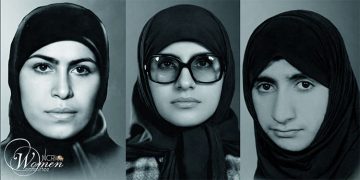
Since 1989, the MEK has been led by 10 successive women serving as Secretary General. Think of that: 10 successive female Secretaries General over more than three decades. The record is extraordinary. And in a country where the ruling theocracy has systematically sought to restrict women’s rights and opportunities, the contrast could hardly be more striking.
But this election has a clear message: while the mullahs are the most barbaric and misogynistic entity in the history of the world, the force fighting them is led by fierce female leaders. And this, by itself, is enough to demonstrate that the clerical regime is doomed to be brought down by a committed resistance—a movement the mullahs have failed to destroy, silence, or push aside.
But it also demonstrates the irreplaceable and historic role of Mrs. Rajavi in making this happen. She’s not only a political leader with superb capabilities, and not only a leader with a vision for her nation and her generation, but also an inspirational leader with the ability and commitment to shatter historic obstacles and resonate beyond her nation, her gender, her generation, and her culture. She’s amazing.
The people of Iran are not asking foreign armies to fight on their behalf. They’re asking the democratic world to recognize their right to fight tyranny and determine their own future. The vision of that future is embodied in Mrs. Maryam Rajavi’s 10-point plan: a democratic and secular republic based on free elections, the separation of religion and state, equality between women and men, respect for ethnic and religious minorities, the abolition of Sharia law, and a non-nuclear republic—an Iran at peace with the world.
What Is the International Community’s Choice? Stand with the Executioners or Those Facing the Gallows?
And this is not merely a vision for a free Iran; it’s the practical answer to one of America’s most enduring national security challenges. A free, democratic, and non-nuclear Iran would not only end over a century of monarchical and theocratic dictatorships, but it would also no longer finance terrorism, threaten its neighbors, take Americans hostage, or destabilize the region. Such an Iran would become a partner for peace instead of a source of war.
The choice before the international community is clear: stand with the executioners or those facing the gallows? Stand with a failed dictatorship or with an organized democratic resistance? Stand with the past or with the future?
Today, we stand with the people of Iran. We stand with the Resistance Units. We stand with the MEK and its sixty-one-year struggle for freedom. We stand with Maryam Rajavi and her democratic 10-point plan. And we look forward to the day when the people of Iran establish a free republic, and when the United States and a free Iran can finally stand together as partners in peace, security, and friendship.