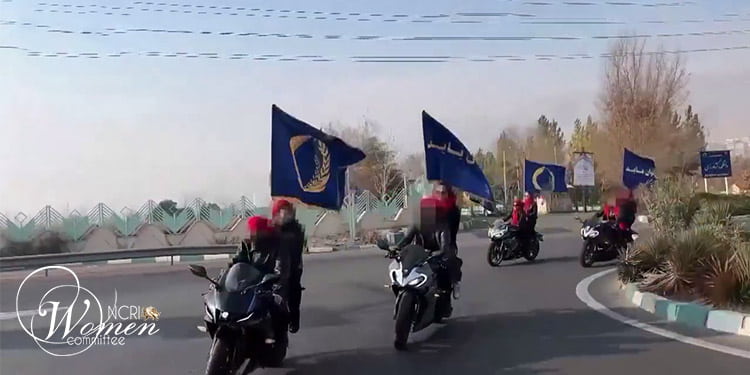
Iranian women and youth are not passive victims of repression—they are the primary leaders and true architects of change.
In Iran, International Youth Day on August 12 serves as a powerful testament to a fearless generation that leads the charge for freedom and equality, confronting one of the world’s most brutal authoritarian regimes.
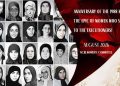
At the forefront of this ongoing struggle for fundamental freedoms and the right to life stand Iran’s young women and girls. They do not seek minor reform or superficial policy tweaks; by directly confronting misogynistic laws and state security apparatuses, they have demonstrated an uncompromising resolve to break free from tyranny. This courage draws from a deep historic lineage. Concurrently marking the anniversary of the 1988 massacre—in which 30,000 political prisoners were executed, a significant portion of whom were idealist young women fighting for freedom—today’s generation of young women proves that the banner of that historical resistance flies higher than ever in their hands.
Vanguard of the January 2026 Uprising
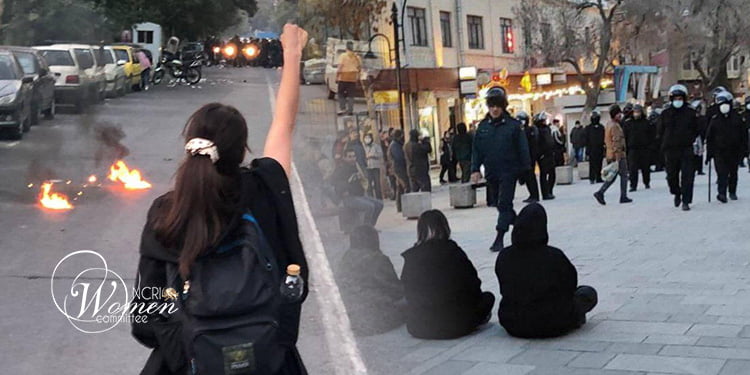
Field evidence proves that the prominent presence of young women and girls on the front lines of protests is no accident; it is the driving engine of the entire movement. During the nationwide uprising of January 2026, Iran’s courageous women—especially young girls—played a decisive, vocal, and leading role. From spearheading street demonstrations and leading chants to organizing nightly protests and turning funeral gatherings into acts of defiance, they stepped up as the movement’s field commanders.
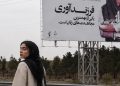
The network of Resistance Units and young women shattered the barrier of fear and raised the cost of suppression for the regime by transmitting key directives and linking localized protests into a unified nationwide wave. An eyewitness from Enghelab Street in Tehran captured the defiance:
“You have no idea what our young women are achieving; they are taking complete control of the streets and tearing down street barriers…”
Parallel accounts from Shiraz documented young women leading from the front with uncompromising resolve, shouting “Death to the dictator,” driving the demonstrations forward, and rallying the public to hold the streets.
Because of this pivotal leadership in educational institutions, female student dormitories were among the primary targets raided by security forces and plainclothes operatives in a desperate attempt to sever this artery of awareness and dissent. The sheer scale of this crackdown, as documented by the National Council of Resistance of Iran (NCRI), resulted in the arrest of over 50,000 individuals between December 28, 2025, and January 14, 2026, alone—a significant portion of whom are women, youth, and students subjected to enforced disappearance and severe torture.
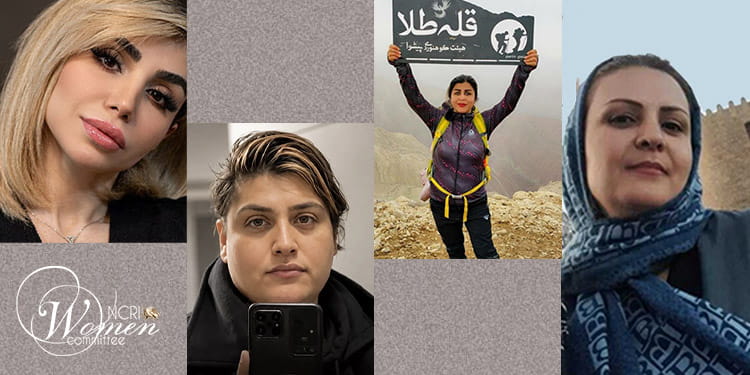
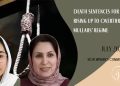
Yet the judiciary’s fear of this vanguard leadership exposed itself in the severity of its sentences. The legal cases against protesters detained during the January 2026 uprising stand as direct proof of this systematic retribution:
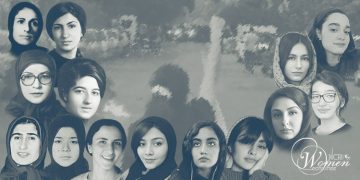
- Mahnaz Chardoli, arrested during the January 2026 uprising, was sentenced to death and 10 years in prison.
- Bita Hemmati, another protester from January 2026, was sentenced to death and confiscation of assets following months of intense interrogation and pressure.
- Maryam Hodavand, detained during the January uprising, faces the death penalty in Evin Prison under a similar harsh sentence.
- Mahboubeh Shabani in Mashhad faces charges of “moharebeh” (enmity against God) and the risk of execution in Vakilabad Prison simply for providing first aid and transporting wounded protesters to medical facilities.
These fabricated cases prove that the misogynistic regime views young women as the single greatest existential threat to its survival—a generation that, fully aware of every risk, has bravely transformed university campuses and city streets into bastions of resistance.
Defying Terror, Fueling Resistance
The regime responded to this extraordinary courage and devotion with the most blatant forms of brutality. The repressive machinery deployed its full arsenal: firing live ammunition directly at protesters, conducting mass arrests, inflicting severe torture in detention centers, and handing down maximum judicial penalties designed to instill fear.
Following the January uprising, the regime once again exploited the heightened tension and regional conflict imposed on the country as a smoke screen to intensify domestic repression. With public attention diverted toward regional developments and under the cover of internet blackouts, security apparatuses escalated street surveillance and militarized public spaces, placing the daily lives of women and youth under extreme pressure.
Concurrently, the judiciary weaponized charges such as “collaboration with hostile states,” “moharebeh” (enmity against God), and “propaganda against the regime” to justify mass detentions under the guise of “national security,” striving to manufacture an atmosphere of terror and forestall renewed uprisings.
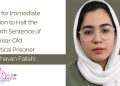
A prime example of this systematic repression is the case of Arghavan Fallahi, a 25-year-old political prisoner who was sentenced to death in July 2026 after facing months of solitary confinement and severe torture. Furthermore, to break the spirit of prisoners nearing the end of their sentences, the judiciary systematically opens fabricated new cases to extend their imprisonment. This tactic was demonstrated in the case of political prisoner Forough Taghipour, who received an additional one-year prison sentence simply for issuing a congratulatory statement on Student Day.
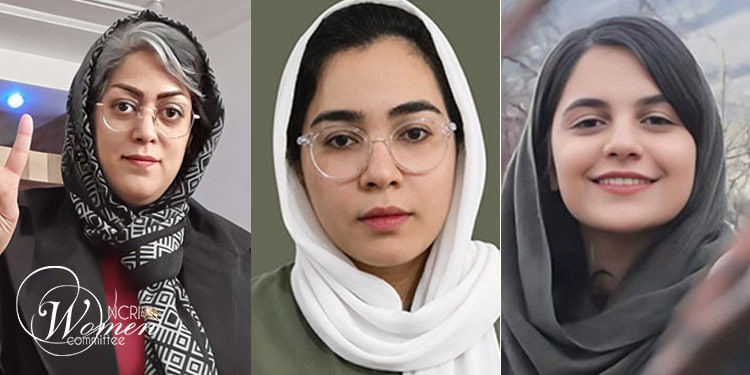
Yet the voices of young women remain un-silenced even from behind bars and under the shadow of the gallows. A courageous message from political prisoner Parisa Kamali from inside prison highlights this unyielding defiance:
“The fascist regime of the mullahs tries to prolong its survival by instilling fear through relentless executions and massacres, but it has sorely miscalculated. We have transcended the fear of a bitter death and are fueled by rage. We firmly believe the day will come when the death penalty has no place in our country’s constitution… No to executions; toward a free and prosperous Iran.”
Instruments of intimidation have lost their potency against the resolve of Iranian women and youth. Neither intense repression, prolonged solitary confinement, and torture, nor the exploitation of war conditions, relentless legal frame-ups, and the threat of execution have succeeded in breaking the will of this generation.
International Youth Day: A Vow to Build a Courageous Future
International Youth Day on August 12 serves as a defining moment to remind the world who is actively shaping Iran’s future. Confronted by systemic challenges—discriminatory laws, poverty, unemployment, structural marginalization, and the constant threat of arrest and execution—Iranian women and youth stand resilient, steadfastly refusing the role of passive victims.
The stark reality today is that Iranian women and youth are the primary leaders and architects of change. They stand firm to prove that in Iran, August 12 is a day to renew a solemn vow to the martyrs who sacrificed their lives—from the summer of 1988 to the January 2026 uprising. It is an unwavering declaration that no force on earth can turn back a generation that has awakened to its own power, awareness, and courage.
By bearing the heaviest burdens, Iranian women and youth have challenged medieval-era laws directly on the streets, setting a global precedent for agency, courage, and resilience. They have proven that tomorrow’s Iran will be built on freedom, gender equality, justice, and the separation of religion and state—a future forged through the blood and sacrifice of a generation that fears no obstacle in its pursuit of liberty.
The Generation That Rewrote History
International Youth Day is a tribute to a generation that became the beacon of freedom during the darkest chapter of Iran’s modern history. By standing tall against live bullets, enduring imprisonment and torture, and rejecting tyranny in all its forms, Iran’s women and youth have proven that they are the true architects of tomorrow’s Iran.
From the heart of Iran, their message to the world on International Youth Day is loud and clear: Iranian women and youth have not surrendered, they have not backed down, and they will never lower the banner of resistance until every apparatus of oppression is dismantled and a free, equal society is realized.