
Thursday, May 28, 2026
  • English
  • Français
  • فارسی
  • عربى
PODCASTS
NCRI Women Committee Women Resistance Freedom
  • Home
  • NEWS
    • Women’s News
    • Articles
    • Statements
  • PUBLICATIONS
    • Monthlies
    • Documents
    • Reference Library
  • ABOUT US
    • The NCRI Women’s Committee
    • Gender Equality
    • Women’s Platform
  • MARYAM RAJAVI
    • Maryam Rajavi
    • Maryam Rajavi Speeches
    • The Plan on Women’s Rights and Freedoms
    • Ten-Point Plan for the future of Iran
  • VANGUARDS
    • The Fallen for Freedom
    • Heroines in Chain
    • Women of Iranian Resistance
    • Famous Women
    • Women in History
  • EVENTS
    • IWD Conferences
    • Activities
    • IWD Speeches
    • Solidarity
  • VIDEO
    • Videos
    • IWD Videos
  • PODCAST
  • DONATE
  • CONTACT US
No Result
View All Result
NCRI Women Committee Women Resistance Freedom
  • Home
  • NEWS
    • Women’s News
    • Articles
    • Statements
  • PUBLICATIONS
    • Monthlies
    • Documents
    • Reference Library
  • ABOUT US
    • The NCRI Women’s Committee
    • Gender Equality
    • Women’s Platform
  • MARYAM RAJAVI
    • Maryam Rajavi
    • Maryam Rajavi Speeches
    • The Plan on Women’s Rights and Freedoms
    • Ten-Point Plan for the future of Iran
  • VANGUARDS
    • The Fallen for Freedom
    • Heroines in Chain
    • Women of Iranian Resistance
    • Famous Women
    • Women in History
  • EVENTS
    • IWD Conferences
    • Activities
    • IWD Speeches
    • Solidarity
  • VIDEO
    • Videos
    • IWD Videos
  • PODCAST
  • DONATE
  • CONTACT US
No Result
View All Result
NCRI Women Committee
No Result
View All Result
Home Heroines in Chain
Turning Survival into Resistance - by Azam Haj Heydari, Part 8

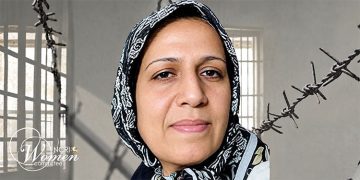
Parvin Koohi

Turning Survival into Resistance

May 28, 2026
in Heroines in Chain

Prison Memoirs of Azam Haj Heydari from the book The Price of Being Human — Part Eight

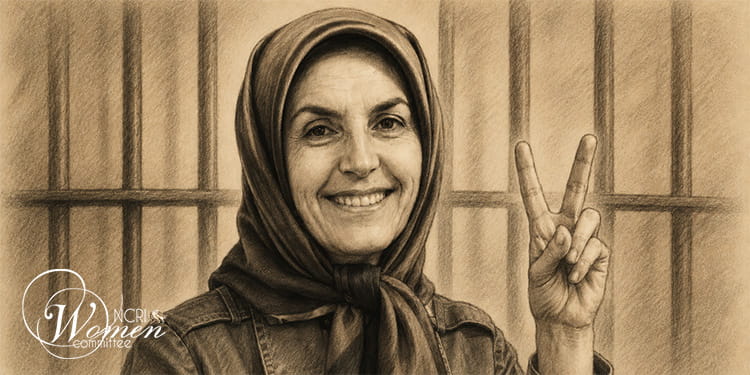
In this installment of the prison memoirs of Azam Haj Heydari, published in The Price of Being Human, the author recounts the creative forms of resistance prisoners developed under the harsh and suffocating conditions of prison, and how they defied the schemes of the notorious torturer Asadollah Lajevardi through collective morale-building and solidarity.

At the time, Azam was a young teacher in her early twenties who had entered the path of resistance. She spent five years imprisoned in the Judiciary’s Temporary Detention Center, Evin Prison, Qezel Hesar Prison, and Gohardasht Prison, where she endured brutal torture at the hands of the Guards.

Keeping Our Spirits Alive

We turned even the harshest routines of prison life into opportunities for laughter, energy, and human connection.

One of the events that became strangely lively and festive in prison was bath day. Tuesdays were the days when our ward received hot water. Organizing the shower schedule and deciding who should go first was difficult and sensitive work. There were always around thirty prisoners who had been severely tortured, whose wounds were still fresh. Cold water intensified their pain and often infected their injuries, so they had to bathe first while the hot water lasted.

After them came the older, weaker, and sick prisoners who could not tolerate the freezing water.

The rest of us bathed in cold water — in the freezing mountain climate of Evin, where even in summer the running water felt icy. In winter, the cold penetrated straight to the bone.

Yet somehow the prisoners turned even this into a noisy and joyful ritual. Together, counting “one, two, three,” we would rush under the freezing showers and bathe as quickly as possible.

Alone, I do not think anyone would have had the courage or motivation to do it. But as a collective, not only did we overcome our fear of the cold water, bathing itself became an act of resistance and even a form of recreation.

Gradually our bodies adapted. We became stronger against the cold and no longer got sick as easily as we had in the beginning.

Meals — though the food itself was terrible — also became occasions for collective humor and warmth. The prisoners jokingly called the food cart “the carnival of joy.” They managed to eat the meagre and tasteless meals with such laughter and playfulness that it made the hellish conditions more bearable.

The executioners and their informers burned with rage when they saw this. They were furious because none of the pressure they imposed seemed capable of crushing us.

Another important morale-building activity was exercise.

Exercise Was Forbidden: An Important Morale-building Activity

Exercise was forbidden, but every day we secretly worked out in groups — morning, noon, and night — depending on conditions. Sometimes thirty or forty prisoners exercised together. When surveillance became too strict, we exercised individually in bathrooms, toilets, or hidden corners, performing workout routines out of sight of the Guards and informers.

At the end of the group exercises, we gathered together. If conditions allowed, we joined hands and shouted slogans. If not, we simply ended with a collective cheer.

Every day the executioners devised new methods to break us. Every day we found ways to counter them.

One program that Asadollah Lajevardi especially insisted upon was taking prisoners to a hall they called the “Hosseiniyeh.” There, prisoners were filmed so the regime could broadcast the footage on television and pretend that all political prisoners had repented and converted to Khomeini’s ideology under Lajevardi’s guidance.

But despite all the threats, beatings, and lashings, Lajevardi never managed to force more than a small minority of prisoners into participating in this spectacle.

Many prisoners found excuses to avoid going altogether. Others went only to exchange news with prisoners from other wards.

The first time I was taken to this absurd performance was in 1981.

Male and female prisoners were seated in separate sections divided by a curtain about one meter high. We could still partially see each other, and many prisoners searched anxiously for brothers or relatives they knew were imprisoned there too.

As soon as the cameras started rolling, the women immediately pulled their chadors tightly over their faces so no filming could capture them. The men lowered their hats over their eyes and bowed their heads.

The entire scene became ridiculous. Anyone watching the footage would immediately realize what was really happening.

Eventually Lajevardi himself stormed in.

Unable to order the women to uncover themselves, he instead screamed obscenities at the men, shouting for them to lift their heads and remove their hats.

“You bastards are always so proud and upright,” he yelled in his foul language. “What happened? Why are you suddenly so submissive here?”

Hearing this, we quietly enjoyed watching the executioner’s frustration and helplessness.

That day they offered unlimited tea to everyone. Usually nobody drank it because it smelled strongly of camphor and was nauseating. Instead, we agreed to take as many sugar cubes as possible back to the ward.

Sugar was extremely valuable in prison. Since we lacked nutritious food, we used sugar water to revive prisoners returning from torture or suffering from severe weakness.

Everyone stuffed sugar cubes into their pockets and clothes. When we emptied them out back in the ward, we had almost an entire bucket full.

The sugar cubes felt like spoils captured from the enemy in battle.

For days afterward we laughed together, retelling funny stories about Lajevardi and his cronies losing control and becoming enraged after their propaganda event had failed so badly.

Another recurring event during the first months in Ward 240 was that prisoners who had been savagely tortured were sometimes mistakenly brought into our ward.

They had been tortured with such medieval brutality that even we, who had become accustomed to horrifying scenes, were shaken by the sight of them.

One afternoon around three o’clock, I was walking through the ward when prison guards carried in a prisoner on something resembling a stretcher.

Her entire body was bruised. She was so swollen she looked twice the size of a normal person.

Some prisoners recognized her immediately and said, “That’s Parvin Koohi.”

When I saw her condition, I burst into tears. I wanted to go speak with her, but the others told me she was unconscious and unable to respond.

A short while later, the loudspeaker repeatedly summoned Parvin Koohi to the ward office.

But she was unconscious. She could neither hear nor move.

Finally, the Guards entered, hurriedly removed her from the ward, and took her away again.

Apparently, they had brought her into the general ward by mistake.

To be continued…

ShareTweetPinShareSendShare

Related Posts

Iran Regime Sentences 2 Political Prisoner Sisters to 16 Years in Prison

May 28, 2026
Iran Regime Sentences 2 Political Prisoner Sisters to 16 Years in Prison

The Iranian regime has sentenced two imprisoned sisters, Kimia Davoudi and Tara Davoudi, to a combined 16 years in prison following their arrest during the nationwide protests of...

Read moreDetails

Iran: Two Female Political Prisoners Sentenced to 53 Years in Prison

May 28, 2026
Iran: Two Female Political Prisoners Sentenced to 53 Years in Prison

On Saturday, May 23, 2026, judicial authorities in Iran’s Semnan province announced a combined sentence of 53 years in prison for two political prisoners, Leila Ramezani and Fatemeh...

Read moreDetails

“No to Executions Tuesdays”: Female Prisoners Barred from Phone Calls

May 26, 2026
“No to Executions Tuesdays”: Female Prisoners Barred from Phone Calls

In the 122nd week of the protest campaign “No to Executions Tuesdays,” political prisoners in 56 prisons across Iran launched another hunger strike on Tuesday, May 26, 2026,...

Read moreDetails

Iran Regime Strips Five Female Political Prisoners of Phone Call Rights

May 25, 2026
Iran Regime Strips Five Female Political Prisoners of Phone Call Rights

The Iranian regime has punitively barred five female political prisoners held in Evin Prison from making phone calls. Since yesterday, Golrokh Iraee, Zahra Safaei, Marzieh Farsi, Shiva Esmaili,...

Read moreDetails

Iran: A Woman Prisoner Executed in Ardabil Prison

May 24, 2026
Iran Executes Woman Prisoner in Ardabil Prison

In the early hours of Wednesday, May 20, 2026, Iranian regime authorities executed a woman prisoner identified as 28-year-old Asma Zarei at Ardabil Prison. Asma Zarei had been...

Read moreDetails
Next Post
Iran Regime Sentences 2 Political Prisoner Sisters to 16 Years in Prison

Iran Regime Sentences 2 Political Prisoner Sisters to 16 Years in Prison

Documents

Crushed by Design: Structural Crises and Inequitable Policies Push Female-Headed Households to the Edge

Crushed by Design: Structural Crises and Inequitable Policies Push Female-Headed Households to the Edge

May 18, 2026

Introduction Life for the Iranian people under the religious dictatorship is fraught with hardship and peril from every perspective. Whether...

A Report to CSW70: Gender-Based Discrimination Under Iranian Law

A Report to CSW70: Gender-Based Discrimination Under Iranian Law

March 8, 2026

Structural Inequality and State-Sanctioned Oppression of Women Gender-Based Discrimination Under Iranian Law” is the title of the NCRI Women’s Committee’s...

Annual Report 2026: From Protests, to Uprising, and the Role of Iranian Women

Annual Report 2026: From Protests, to Uprising, and the Role of Iranian Women

March 3, 2026

On the eve of International Women’s Day 2026, the NCRI Women’s Committee presents its Annual Report 2026, offering a recap...

Monthlies

April 2026 Report: Mass Arrests of Women: Targeted Repression in Time of Crisis
Monthlies

April 2026 Report: Mass Arrests of Women in Iran

April 30, 2026
March 2026 Report: How Iranian Women Are Shaping the Resistance
Monthlies

March 2026 Report: Courage Under Fire

April 3, 2026
January 2026 Report: Women at the Core of the Uprising
Monthlies

January 2026 Report: Women at the Core of the Uprising

January 31, 2026
December 2025 Report: A Year in Review: Iranian Women’s Resistance Against Religious Dictatorship
Monthlies

December 2025 Report: A Year in Review: Iranian Women’s Resistance Against Religious Dictatorship

January 5, 2026

Articles

Aziz Rezaei: Mother of Resistance, Teacher of Steadfastness

Aziz Rezaei: Mother of Resistance, Teacher of Steadfastness

May 22, 2026

In the contemporary history of Iran, there are names that live not merely as memories, but as paths. The name...

Iranian student Shabnam Madadzadeh recounts prison abuse: My brother was tortured before my eyes

Iranian Student Recounts Prison Abuse: My Brother Was Tortured before My Eyes

May 14, 2026

On May 10, 2026, the Daily Mail published an interview with Iranian student Shabnam Madadzadeh, a former political prisoner, member...

The Commercial Complex Death Trap: When Corruption and Rente Burn Iranian Women to Ashes

The Commercial Complex Death Trap: When Corruption and Rente Burn Iranian Women to Ashes

May 10, 2026

On the evening of Tuesday, May 5, 2026, the Arghavan commercialcomplex in Shahriar County, west of Tehran, became a death...

The Fallen for Freedom

White-Clad in the Line of Fire: Samin Rostami
The Fallen for Freedom

White-Clad in the Line of Fire: Samin Rostami

May 20, 2026
Killed by Two Bullets to the Heart and Leg: Fatemeh Abdollahi
The Fallen for Freedom

Killed by Two Bullets to the Heart and Leg: Fatemeh Abdollahi

May 17, 2026
Fereshteh Azhadi: A Life of Resistance, Sacrifice, and Unyielding Commitment
The Fallen for Freedom

Fereshteh Azhadi

May 1, 2026
Mahin Khiabani: A Life of Defiance Until the Final Breath
The Fallen for Freedom

Mahin Khiabani

May 1, 2026

ABOUT US

NCRI Women Committee

We work extensively with Iranian women outside the country and maintain a permanent contact with women inside Iran. The Women’s Committee is actively involved with many women’s rights organizations and NGO’s and the Iranian diaspora.
The committee is a major source of much of the information received from inside Iran with regards to women. Attending UN Human Rights Council meetings and other international or regional conferences on women’s issues and engaging in a relentless battle against the Iranian regime’s misogyny are part of the activities of members and associates of the committee.

CATEGORIES

  • Activities
  • Articles
  • Documents
  • Famous Women
  • Heroines in Chain
  • IWD Conferences
  • IWD Speeches
  • IWD Videos
  • Maryam Rajavi
  • Maryam Rajavi Speeches
  • Monthlies
  • Podcast
  • Reference Library
  • Solidarity
  • Statements
  • The Fallen for Freedom
  • Videos
  • Women in History
  • Women in Leadership
  • Women of Iranian Resistance
  • Women's News

BROWSE BY TAG

Child marriage coronavirus education execution forced hijab Gender Gap Generation Equality Honor killings Iran Teachers Maryam Akbari Monfared Nurses Plan on Women's Rights and Freedoms Poverty Prisoners Protests rural women Saba Kord Afshari The girl child Violence against women Women's Leadership Women Heads of Household Zeinab Jalalian

The copyright of all the material published on this website has been registered under © 2016 the Women’s Committee of the National Council of Resistance of Iran. To obtain permission to copy, redistribute or publish the material published on this website, you should write to the NCRI Women’s Committee. Please include the link of the original article on our website, women.ncr-iran.org.

Welcome Back!

Login to your account below

Forgotten Password?

Retrieve your password

Please enter your username or email address to reset your password.

Log In

Add New Playlist

No Result
View All Result
  • Home
  • News
    • Women’s News
    • Articles
    • Statements
  • Publications
    • Monthlies
    • Documents
    • Reference Library
  • About Us
    • The NCRI Women’s Committee
    • Gender Equality
    • Women’s Platform
  • Maryam Rajavi
    • Maryam Rajavi
    • Maryam Rajavi Speeches
    • Ten Point Plan for Iran
    • The Plan on Women’s Rights and Freedoms
  • Vanguards
    • The Fallen for Freedom
    • Heroines in Chain
    • Women of Iranian Resistance
    • Famous Women
    • Women in History
  • Events
    • IWD Conferences
    • Activities
    • IWD Speeches
    • Solidarity
  • Video
    • Videos
    • IWD Videos
  • Podcast
  • Donate
  • Contact us
  • فارسی
  • عربی
  • Français

The copyright of all the material published on this website has been registered under © 2016 the Women’s Committee of the National Council of Resistance of Iran. To obtain permission to copy, redistribute or publish the material published on this website, you should write to the NCRI Women’s Committee. Please include the link of the original article on our website, women.ncr-iran.org.