
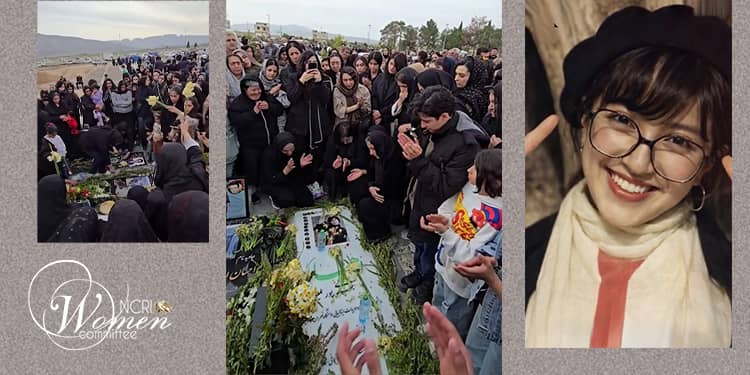
Fortieth day commemorations of uprising victims was held on February 16 and 17 with large memorial ceremonies and protest gatherings across multiple cities.
Far from being solely acts of mourning, these events evolved into powerful displays of sustained public anger and political defiance. Notably, women played a leading and highly visible role throughout.
In numerous cities, women stood at the front lines, organizing gatherings, and leading chants. Their prominent presence once again underscored the decisive role women continue to play in preserving the memory of those killed and in sustaining the momentum of dissent.
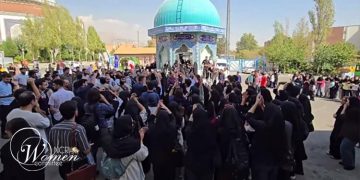
A memorial ceremony marking the fortieth day since the death of Zahra (Raha) Bahlouli Pour, an Italian language student at the University of Tehran, was held in her hometown of Firouzabad, in Fars Province. The commemoration drew a significant presence of women and girls.
In Gonabad (a city in northeastern Iran), a large crowd gathered to mark the fortieth day since the death of Negar Ajam, one of the uprising’s victims. Women and young people held her photographs aloft while chanting anti-government slogans.
In Noorabad Mamasani, the memorial for Parisa Lashgari was similarly marked by strong participation from women and girls, transforming the ceremony into a powerful expression of solidarity and resilience.
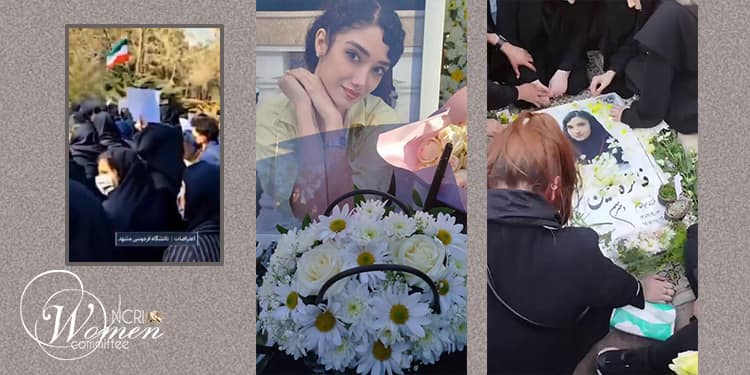
In Tehran, mourners commemorated Ayda Heydari, a medical student at the University of Tehran. A large portrait placed at her gravesite, surrounded by flowers, became the focal point of chants such as, “This fallen flower is a gift to the homeland.” Participants helped transform her memory into a symbol of resistance.
Simultaneously ceremonies marking the fortieth day of the fallen in the January uprising were held at both the University of Tehran and Ferdowsi University of Mashhad.
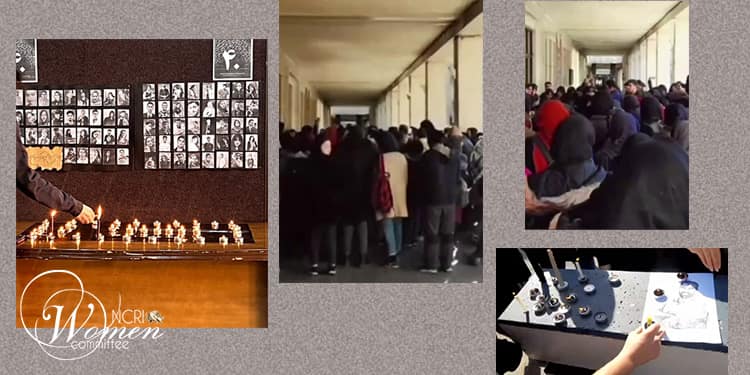
At Behesht-e Zahra cemetery in Tehran, families and young people assembled in groups, chanting the names of the fallen. Among the slogans heard were:
- “We swear by the blood of our comrades, we will stand until the end.”
- “For everyone killed, a thousand will rise.”
- “After years of crimes, death to this rule.”
In Mashhad, despite a heavy security presence and the effective lockdown of Vakilabad Boulevard and surrounding areas, groups of protesters gathered in clusters of several dozen people, chanting slogans against regime. One of the most striking moments was the defiance of a lone woman who stood face-to-face with security forces, chanting against repression. During the memorial for Hamid Mahdavi, a brave firefighter killed during the protests, participants chanted: “We did not give our lives to compromise or to praise a murderous leader.”
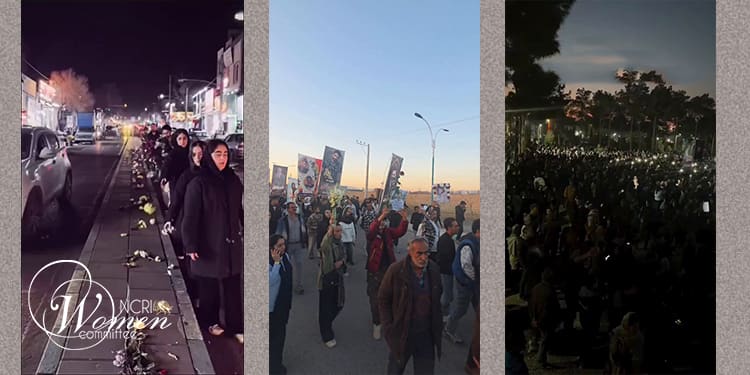
In Abdanan, security forces reportedly opened fire toward protesters as gatherings continued. Nevertheless, demonstrators, including women who remained visibly present, refused to disperse. Fortieth day commemoration for Alireza Seidi was also held in the city, where participants voiced slogans against the ruling establishment.
In Zanjan, large crowds attended the fortieth day commemoration of Ilya Ojaghloo, with chants of “This fallen flower has become a gift to the homeland” echoing through the gathering. Similar ceremonies and protests were reported in Hashtgerd, Lahijan, and Najafabad in Isfahan province.
In Najafabad, memorials for several victims evolved into an extended nighttime protest. Families, especially grieving mothers and women relatives stood prominently among the crowd, chanting slogans such as: “Tanks, cannons, and machine guns no longer work.”
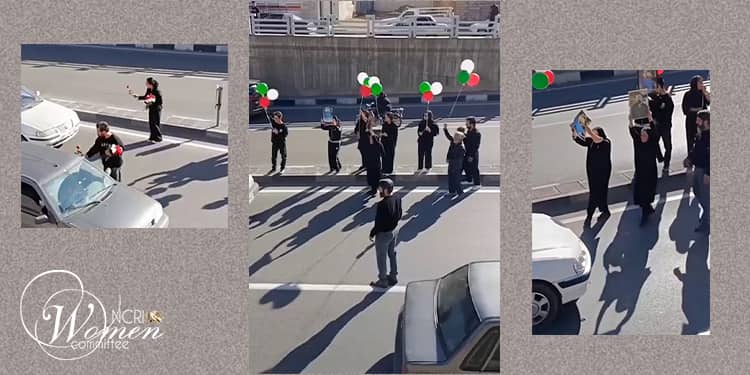
Meanwhile, family and friends of Saeed Tavakolian gathered at the site where he was killed, distributing flowers and balloons in his memory. The ceremony, marked by the visible presence of women relatives, blended grief with quiet but unmistakable protest.
Collectively, these fortieth-day commemorations demonstrated that such ceremonies are not merely rituals of mourning. They have become platforms for political expression and sustained public outrage against the ruling regime with women emerging as central actors in both remembrance and resistance.