

Nancy Grace Roman (May 16, 1925 – December 25, 2018) was a pioneering American astronomer whose vision and determination transformed space science. Widely celebrated as the “Mother of Hubble”, Roman played a crucial role in establishing the Hubble Space Telescope, one of the most significant astronomical instruments in history, and laid the groundwork for modern space-based astronomy.
Born in Dayton, Ohio, Roman showed an early passion for the stars. She earned a Ph.D. in astronomy from the University of Chicago, where she focused on stellar parallax and the brightness of stars, contributing vital insights to the understanding of our galaxy. Despite facing the barriers of a male-dominated field in the mid-20th century, Roman’s persistence and expertise allowed her to break through traditional gender roles in science.
In 1959, Roman joined NASA, becoming one of the first female executives at the agency. Her leadership in the Astronomy and Astrophysics Division was instrumental in promoting space-based telescopes as a way to explore the universe beyond Earth’s atmosphere. She championed projects that led directly to the launch of the Hubble Space Telescope in 1990, ensuring that astronomers worldwide could observe the cosmos with unprecedented clarity.
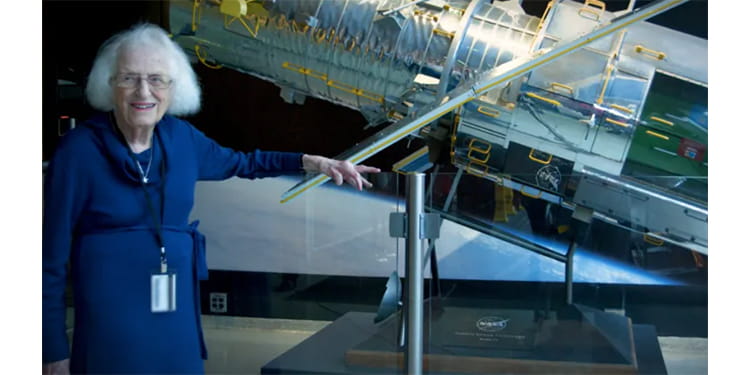
Beyond Hubble, Roman was a tireless advocate for women in science. She mentored generations of young scientists and consistently emphasized that women could excel in scientific research and leadership, leaving a lasting legacy that transcends her astronomical achievements.
Her contributions earned her numerous honors, including the NASA Exceptional Scientific Achievement Medal and induction into the Women in Technology International Hall of Fame. Roman’s life and work continue to inspire astronomers, engineers, and advocates for gender equality in STEM fields.
Nancy Grace Roman remains a beacon in the history of astronomy, remembered not only for her groundbreaking work in space telescopes but also for her unwavering commitment to expanding opportunities for women in science. Her vision literally helped humanity reach the stars.