
Saturday, April 25, 2026
  • English
  • Français
  • فارسی
  • عربى
PODCASTS
NCRI Women Committee Women Resistance Freedom
  • Home
  • NEWS
    • Women’s News
    • Articles
    • Statements
  • PUBLICATIONS
    • Monthlies
    • Documents
    • Reference Library
  • ABOUT US
    • The NCRI Women’s Committee
    • Gender Equality
    • Women’s Platform
  • MARYAM RAJAVI
    • Maryam Rajavi
    • Maryam Rajavi Speeches
    • The Plan on Women’s Rights and Freedoms
    • Ten-Point Plan for the future of Iran
  • VANGUARDS
    • The Fallen for Freedom
    • Heroines in Chain
    • Women of Iranian Resistance
    • Famous Women
    • Women in History
  • EVENTS
    • IWD Conferences
    • Activities
    • IWD Speeches
    • Solidarity
  • VIDEO
    • Videos
    • IWD Videos
  • PODCAST
  • DONATE
  • CONTACT US
No Result
View All Result
NCRI Women Committee Women Resistance Freedom
  • Home
  • NEWS
    • Women’s News
    • Articles
    • Statements
  • PUBLICATIONS
    • Monthlies
    • Documents
    • Reference Library
  • ABOUT US
    • The NCRI Women’s Committee
    • Gender Equality
    • Women’s Platform
  • MARYAM RAJAVI
    • Maryam Rajavi
    • Maryam Rajavi Speeches
    • The Plan on Women’s Rights and Freedoms
    • Ten-Point Plan for the future of Iran
  • VANGUARDS
    • The Fallen for Freedom
    • Heroines in Chain
    • Women of Iranian Resistance
    • Famous Women
    • Women in History
  • EVENTS
    • IWD Conferences
    • Activities
    • IWD Speeches
    • Solidarity
  • VIDEO
    • Videos
    • IWD Videos
  • PODCAST
  • DONATE
  • CONTACT US
No Result
View All Result
NCRI Women Committee
No Result
View All Result
Home Articles
Iranian hospital interns are dying - an unjust end for the brightest and most elite students in Iran

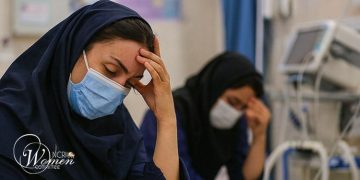
Dr. Anita Shahrasbi (left) and Dr. Monireh Foroughi

Iranian hospital interns are dying – an unjust end for the brightest and most elite students in Iran

December 14, 2021
in Articles

According to official statistics, about 11 Iranian hospital residents died since March 2021 due to stress at work, its consequences, and the difficulties of daily life (The state-Run ISNA news agency – November 3, 2021).

By acknowledging that this tragedy continues, ISNA wrote, “For sure, we can say that this number will be increasing.” The flawed education system, low wages, and lack of insurance make it impossible for medical students in Iran to have a clear and bright future. Thus, recent suicides and deaths of hospital interns have drawn more attention in Iran’s news and media.

Several government news agencies have reported that the residents died due to COVID-19. However, other media outlets have reported that the deaths were suicides. In a letter to the regime’s Minister of Health, the Council of Iranian Medical Students reported the suicide of four medical assistants in Tehran during the 2 weeks in May 2021 (The state-run ROKNA news agency – May 4, 2021).

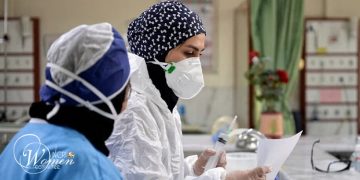
Exhausting work and long shifts are among the reasons that hospital interns commit suicide. Under the clerical regime’s rule, the Iranian Ministry of Health perceives its people as a cheap and expendable labor force. As a result, the flawed system leads Iran’s brightest and most elite students to treat depression only (The state-Run Sharq newspaper – September 14, 2021).

Anahita Shahrasbi

On September 9, 2021, Anahita Shahrasbi, a medical intern at Tehran’s Sina Hospital, died of cardiac arrest after experiencing intense pressure as part of her work in the COVID-19 emergency room (The public relations website of Tehran University of Medical Sciences – September 14, 2021).

The lack of adequate medical staff continues to increase workloads on medical interns; this female medical professional was the 10th person to die in less than 6 months since the beginning of 2021.

Monireh Foroughi

Monireh Foroughi, a Ph.D. student in Obstetrics and Gynecology at Tehran’s Beheshti University of Medical Sciences, was the 11th intern to die this year. There are conflicting reports about Dr. Foroughi’s death: some attribute it to the COVID-19 pandemic, others to the tragic suicide of medical interns (ISKAnews website – October 31, 2021).

In response to Dr. Foroughi’s death, Haniyeh Radkhah, an internal medicine specialist and a member of the faculty of the University of Tehran, posted on Instagram: “Suicide, cardiac arrest, immigration, and depression, this was not supposed to be the end of our story. We were supposed to be the smiling flowers, the children of Iran …. but we are not … You provided your children with a transfer abroad and a quota of medical expertise and exemption from plans and a future work. But for us … for the children of the people, what will you do? It is not acceptable that death be our end, and the earth covers our many wishes…”

Another friend of Monireh Foroughi’s wrote to Alireza Zali, the President of Beheshti University of Medical Sciences, “We were prepared to lavish her with flowers (i.e., in her wedding), but now we have to prepare ourselves to go lavish her grave with those flowers. What do you want to film with your bodyguards and cameras, standing here at her grave? Did you ever listen to her when she was alive?” (ISKAnews Website – October 31, 2021).

At least three other hospital interns were confirmed to have committed suicide before Monireh Foroughi. How painful can this be that even the title “Suicide Serials” has made headlines in state media?

Countless night shifts

Countless night shifts

Speaking about the issues facing medical personnel, Dr. Mahdiar Saeidian stated, “The minimum shift for our hospital interns and nurses should be 24 hours and sometimes up to 32 hours. But during the COVID-19 pandemic, there are no planning for the shifts. Thus, the hospital interns are forced to take longer than usual shifts. However, by law, hospital interns may not work longer than 12 shifts per month. This issue is not being observed in the country. The medical science universities change the law at their whim and do not observe it.” (The state-Run ISNA news agency – November 3, 2021).

According to a directive issued by the Ministry of Health, a hospital intern must work 24 hours a day, 12 days a month, and stay in the hospital for the remaining 18 days from early morning until 6 p.m. The salary for a single medical intern is 2.7 million Tomans ($90); for married interns, the salary is 3.2 million Tomans ($106).

Hospital interns are exploited in Iran

Hospital interns are exploited in Iran

Hospital interns in Iran have the lowest salaries and benefits despite the massive workload on them.  According to the medical code, the interns have a legal responsibility, yet they work as much or even more than a professor does. Therefore, hospital interns are considered a free labor force and are paid approximately 6,500 Tomans (21 cents) per working hour.

Due to the shortage of general physicians, the Ministry of Health assigns their duties to hospital interns, exploiting them and making them work harder. By using this tactic, the Health Ministry mitigates the problem of the lack of medical personnel. The Ministry of Health is singularly unconcerned about paying medical interns a living wage, nor does it care about their health.

In developed countries, working hours for doctors and other hospital staff are a critical topic because overwork can cause life-changing mistakes.

Medical interns in other countries are subject to labor laws and have insurance. But Iranian medical interns – even those with COVID – must pay for even a simple CT scan out of their own pockets. This is due to the Ministry of Health’s negligence and mismanagement. Given these conditions, many medical graduates migrate to neighboring countries or Europe and the United States.

A government official acknowledged that 900 young members of the university faculty of sciences and 3,000 physicians had migrated to other countries since March 2021 (The state-run Etemad newspaper – December 12, 2021).

Female interns face additional problems

Female interns face additional problems

In addition to work pressure, female medical interns endure all kinds of violence, simply for being women.

Hospital interns are usually middle-aged, and many are married with children. As mothers, they suffer a more complex situation and endure additional pressures in Iran’s patriarchal society. These mothers spend multiple consecutive days away from their children due to their long shifts. When they do return home after long shifts, they still need to do all the housework.

In May 2021, reports emerged about the mass resignation of first-year women medical interns from one of Tehran’s medical science hospitals. Earlier, other female interns from Iran and Shiraz Medical Science Universities had also withdrawn from their programs because their demands had been ignored.

In their resignation letters, the women wrote, “We try not to get sick, but there is nothing we can do as no one cares. Most of us have recurrent urinary tract infections. We do not have the opportunity to drink enough fluids. We do not have time to go to the bathroom, and that is how bacteria and other infections invade our bodies. We continue to work even when we have fever. We bite our lips, but we cannot take a day off.”

Female interns are warned not to get pregnant once they are hired. Those who get pregnant do not enjoy any reduction in working hours or monthly shifts, despite their physical condition. Like other medical interns, they have to endure long shifts and working hours until the last months of their pregnancies. Female medical interns are only entitled to 2 months of maternity leave.

Some of the female interns who resigned have described the hierarchy of interns as a new form of slavery and an insult to humanity.

In the Iranian medical system, the conditions for first-year medical interns are not the same as for those in their second, third, and fourth years. First-years are discriminated against. First-year interns are under a lot of pressure: they have multiple shifts and work in the hospital 21 days a month at night. Because the private sector is growing, most professors spend less time training hospital interns. Thus, most of the psychological and work pressure is placed on first-year interns.

“Extra shift,” said one of the women in the Obstetrics and Gynecology department. She continued, “We are exhausted. Our patients have become our own victims because of our insomnia and hunger. Because we have not completed our medical lessons. One victim was a newborn whose arm broke at birth.”
Tags: coronavirusGeneration EqualityNurses
ShareTweetPinShareSendShare

Related Posts

Annual Report 2026: From Protests, to Uprising, and the Role of Iranian Women

March 3, 2026
Annual Report 2026: From Protests, to Uprising, and the Role of Iranian Women

On the eve of International Women’s Day 2026, the NCRI Women’s Committee presents its Annual Report 2026, offering a recap of events in 2025 as related to women’s...

Read moreDetails

Vanity Fair Italia Interviews Azar Karimi: The Courage and Resilience of Iranian Women in the Face of Repression

February 16, 2026
Vanity Fair Italia Interviews Azar Karimi

The Italian magazine “Vanity Fair Italia” published an interview with Azar Karimi, spokesperson for the Iranian Youth Association in Italy, in its issue dated 14 February 2026. The...

Read moreDetails

In Memory of Saltanat Ramim (Mother Hajar)

February 3, 2026
In Memory of Saltanat Ramim (Mother Hajar)

A Life of Endurance, Courage, and Unyielding Faith in Freedom Saltanat Ramim, known to all as Mother Hajar, passed away on February 1, 2026, in exile in Albania...

Read moreDetails

January 2026 Report: Women at the Core of the Uprising

January 31, 2026
January 2026 Report: Women at the Core of the Uprising

Women at the Core of the Uprising: Iranian Women and the January 2026 Protests In January 2026, the entire country of Iran became the scene of an uprising...

Read moreDetails

Iranian Women Who Lost Their Lives in Iran’s January 2026 Uprising

January 25, 2026
Iranian women Who Lost Their Lives in Iran’s January 2026 Uprising

Names That Must Not Be Forgotten Iranian women played a central and courageous role in the January 2026 uprising, standing shoulder to shoulder with men—and often at the...

Read moreDetails
Next Post
Soghra Khodadadi deprives Zahra Safaei of urgent care

Qarchak warden Soghra Khodadadi deprives Zahra Safaei of urgent medical care

Documents

A Report to CSW70: Gender-Based Discrimination Under Iranian Law

A Report to CSW70: Gender-Based Discrimination Under Iranian Law

March 8, 2026

Structural Inequality and State-Sanctioned Oppression of Women Gender-Based Discrimination Under Iranian Law” is the title of the NCRI Women’s Committee’s...

Annual Report 2026: From Protests, to Uprising, and the Role of Iranian Women

Annual Report 2026: From Protests, to Uprising, and the Role of Iranian Women

March 3, 2026

On the eve of International Women’s Day 2026, the NCRI Women’s Committee presents its Annual Report 2026, offering a recap...

Iranian women Who Lost Their Lives in Iran’s January 2026 Uprising

Iranian Women Who Lost Their Lives in Iran’s January 2026 Uprising

January 25, 2026

Names That Must Not Be Forgotten Iranian women played a central and courageous role in the January 2026 uprising, standing...

Monthlies

March 2026 Report: How Iranian Women Are Shaping the Resistance
Monthlies

March 2026 Report: Courage Under Fire

April 3, 2026
January 2026 Report: Women at the Core of the Uprising
Monthlies

January 2026 Report: Women at the Core of the Uprising

January 31, 2026
December 2025 Report: A Year in Review: Iranian Women’s Resistance Against Religious Dictatorship
Monthlies

December 2025 Report: A Year in Review: Iranian Women’s Resistance Against Religious Dictatorship

January 5, 2026
November 2025 Report: Under the Clerical Regime, Nowhere Is Safe for Women in Iran
Monthlies

November 2025 Report: Under the Clerical Regime, Nowhere Is Safe for Women in Iran

November 30, 2025

Articles

Iran detains women and girls: torture and detention without legal clarity

Iran Regime Arrests Women and Girls: Torture and Detention without Legal Clarity

April 22, 2026

Amid a growing wave of arrests targeting women and teenage girls across multiple Iranian cities, numerous reports have emerged detailing...

Wave of Arrests Targeting Women and Minors Amid Wartime in Iran

Wave of Arrests Targeting Women and Minors Amid Wartime in Iran

April 10, 2026

Following an intensified crackdown amid the recent war, multiple reports indicate a sharp rise in arrests across Iran, with women...

Mothers Who Gave Their Lives for Freedom during January 2026 Uprising in Iran

They Went Knowing: Mothers Who Died for the Future of All Children

April 6, 2026

Among those killed during the January 2026 uprising in Iran there are mothers whose names stand out—women who took to...

The Fallen for Freedom

Sholeh Sotoudeh (Pregnant)
The Fallen for Freedom

Sholeh Sotoudeh “Shot Dead Alongside Her Unborn Child”

April 19, 2026
Ghazal Aghaei Lindi was killed on January 9, 2026
The Fallen for Freedom

Ghazal Aghaei Lindi

April 16, 2026
Farzaneh Tavakkoli, a resident of Arak, was killed on January 9, 2026
The Fallen for Freedom

Farzaneh Tavakkoli

April 13, 2026
Shabnam Ferdowsi was killed on January 8, 2026, during the nationwide protests
The Fallen for Freedom

Shabnam Ferdowsi

April 12, 2026

ABOUT US

NCRI Women Committee

We work extensively with Iranian women outside the country and maintain a permanent contact with women inside Iran. The Women’s Committee is actively involved with many women’s rights organizations and NGO’s and the Iranian diaspora.
The committee is a major source of much of the information received from inside Iran with regards to women. Attending UN Human Rights Council meetings and other international or regional conferences on women’s issues and engaging in a relentless battle against the Iranian regime’s misogyny are part of the activities of members and associates of the committee.

CATEGORIES

  • Activities
  • Articles
  • Documents
  • Famous Women
  • Heroines in Chain
  • IWD Conferences
  • IWD Speeches
  • IWD Videos
  • Maryam Rajavi
  • Maryam Rajavi Speeches
  • Monthlies
  • Podcast
  • Reference Library
  • Solidarity
  • Statements
  • The Fallen for Freedom
  • Videos
  • Women in History
  • Women in Leadership
  • Women of Iranian Resistance
  • Women's News

BROWSE BY TAG

Child marriage coronavirus education execution forced hijab Gender Gap Generation Equality Honor killings Iran Teachers Maryam Akbari Monfared Nurses Plan on Women's Rights and Freedoms Poverty Prisoners Protests rural women Saba Kord Afshari The girl child Violence against women Women's Leadership Women Heads of Household Zeinab Jalalian

The copyright of all the material published on this website has been registered under © 2016 the Women’s Committee of the National Council of Resistance of Iran. To obtain permission to copy, redistribute or publish the material published on this website, you should write to the NCRI Women’s Committee. Please include the link of the original article on our website, women.ncr-iran.org.

Welcome Back!

Login to your account below

Forgotten Password?

Retrieve your password

Please enter your username or email address to reset your password.

Log In

Add New Playlist

No Result
View All Result
  • Home
  • News
    • Women’s News
    • Articles
    • Statements
  • Publications
    • Monthlies
    • Documents
    • Reference Library
  • About Us
    • The NCRI Women’s Committee
    • Gender Equality
    • Women’s Platform
  • Maryam Rajavi
    • Maryam Rajavi
    • Maryam Rajavi Speeches
    • Ten Point Plan for Iran
    • The Plan on Women’s Rights and Freedoms
  • Vanguards
    • The Fallen for Freedom
    • Heroines in Chain
    • Women of Iranian Resistance
    • Famous Women
    • Women in History
  • Events
    • IWD Conferences
    • Activities
    • IWD Speeches
    • Solidarity
  • Video
    • Videos
    • IWD Videos
  • Podcast
  • Donate
  • Contact us
  • فارسی
  • عربی
  • Français

The copyright of all the material published on this website has been registered under © 2016 the Women’s Committee of the National Council of Resistance of Iran. To obtain permission to copy, redistribute or publish the material published on this website, you should write to the NCRI Women’s Committee. Please include the link of the original article on our website, women.ncr-iran.org.