

Introduction
In Iran under the occupation of the fundamentalist mullahs, women have faced serious and life-changing limitations.
In addition to misogynist laws that consider a woman’s worth, life and testimony half of a man’s, women also face prohibitions from participation in social activities and obtaining jobs, that make their daily lives even more difficult. According to the Iranian Law, women are not allowed to hold certain jobs such as presidency, judgeship and working in the armed forces, and the number of jobs women are allowed to hold is decreasing by day with new bans being announced frequently.
The mullahs in Iran speak daily against the employment of women and encourage them to stay home and urge the men to keep their spouses at home. The fatwa and orders of the mullahs are the major source of the harassment and aggravation of women in Iran. The lawmakers also try to limit the education of Iranian women in order to prevent them from participating in the job market.
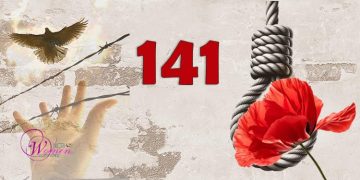
The official harassment, biased laws and limitations imposed on the education and employment of Iranian women, have resulted in a participation index of 141 among 145 countries for Iranian women, based on the statistics of the World Economic Forum[1]. Even the Iranian officials admit that less than three percent of Iranian women participate in political and management jobs[2].
Higher Education
The Iranian regime has systematically restricted women’s education since coming to power 37 years ago. Hossein Hosseini, Khamenei’s representative in Mazandaran University, expressed his serious concerns and worries about the fact that 70% of the students in that university were females![3]
Jafar Sobhani, another Iranian mullah stated: “Raise your daughters as house-masters. The main job of a woman is to strengthen the family union and your daughters should learn to do their job in the best way possible”.[4]
Iranian women have tried to resist the bias and misogyny imposed on them by increasing participation in the higher education to increase their chances of employment. As a result of their efforts, the number of female college students surpassed that of male students. In 2003, 65% of those entering universities were women. Such advancement was of course not tolerated by the Iranian officials and soon suggestions were made to limit the number of women by imposing gender-based quota at the universities.
In February of 2006, a bill was proposed to the Iranian parliament to reduce the number of women entering the universities, deeming the increasing number of women in colleges as “dangerous” for the country and “inappropriate” for the families[5]. The Iranian “Supreme Revolutionary Council” ordered the government to include a program to “take appropriate measures to guide women at the universities to find majors appropriate with family responsibilities”. The bill was ironically named, “Promotion of women’s participation in higher education!”[6]
The efforts by the Iranian regime to eliminate women from higher education were intensified in 2012, when women were officially banned from studying in 77 majors and a cap was put in place for women who were allowed to study in other majors[7]. Majors where women’s participation is either banned or restricted include political sciences, English language and literature, paleontology, restoration of historical buildings, counseling, general psychology, social work, geography and urban planning, geography and rural planning, tourism, geomorphology, government management, industrial management, business management, tourism management, hotel management, accounting, applied statistics, applied mathematics, theoretical physics, nuclear physics, electrical engineering, civil engineering, computer engineering, mechanical engineering, agricultural engineering, chemistry, chemical engineering, industrial engineering, railroad engineering, metallurgical engineering, engineering of natural resources-pastures and water resources, mining engineering, naval engineering-ship manufacturing, naval electronic communications, material engineering-industrial metallurgical engineering, mechanized agriculture and water, technology of vegetable production, technology of pastures and water, biology and botany , educational sciences-education technology, handcrafts and carpet specialist. [8]
This process continued onto the next year. Women were deprived of most of mathematical and technical sciences with 36 fields. The situation for women became even worse in 2013. On the order of the minister of education, gender segregation was intensified and the number of universities with only male or female students increased to 29.[9]
In 2014, some 47 universities rejected female students in various fields. Gender-based quotas strongly favored male students. The number of gender-based majors reached 215, as a result of government policies.[10]
The Iranian parliament passed in December 2015, Article 5 of the bill on Evaluation and Admission of Students for Complementary Education, emphasizing that the quotas ratified by the Supreme Revolutionary Council and the parliament to limit the number of women and the majors they can study, in the higher education system are still valid[11].
The state-run IRNA News Agency published a graph which shows how women have been gradually eliminated from higher education in Iran. As a result of the restrictions imposed on women, the number of female students in the universities has been reduced by 7% since 2008. During Rouhani’s presidency this number has been reduced to 45.5% compared to 49% during Ahmadinejad’s presidency. The statistics presented by the Iranian regime’s official news agency should be considered as a propaganda effort for political consumptions, attempting to cover up women’s exclusion and marginalization in Iranian society and the real figures are expected to be even worse.
Translation of the graph published by IRNA showing the decline in women’s university admission
Legal Obstacles to Women’s Employment
The visions of the Iranian regime on women’s employment are summarized in this quote from Khamenei: “What is the logic behind involving women in areas that inflict hardship on them while God has created women for certain areas of life. Employment is not a major concern for women.”[12]
The same logic can be found in the official Iranian laws. According to Article 18 of the Civil Code protecting the family, “A husband can, with the approval of the court, prohibit his wife from any employment that would conflict with the well-being of the family or would damage her or his honor.” [13]
The Iranian laws officially guarantee exclusion of women. Women cannot be elected as the president, cannot be judges, or employed in the army and in the main branches of the police force. Item 115 of the Iranian Constitution declares that the president should be elected from among political and religious “men”. [14]
The guidelines for appointment of judges in the judiciary system states: “Judges should be elected from among men who have the following qualifications…”
Mousavi Tabrizi, the Prosecutor of the Revolutionary Courts in 1980s, explained Khomeini’s stance: “Till the last day of his life, the founder of the Islamic Republic officially did not allow women to sit on the seat of judgeship.” [15]
Similarly, membership of the Assembly of Experts is exclusively for men. Although this has not been written out clearly in the law, it is implied and no woman has been appointed to the assembly in the past 37 years. None of the 16 women who had signed up as candidates this year, were allowed to participate in the election for the Assembly of Experts.[16] According to the Sharia of the fundamentalists ruling Iran, women can only guide women, therefore women cannot be appointed to the high assembly of experts. Heads of the three government branches should also be elected from among men.[17]
In July 2013, the Iranian parliament tabled another major bill to facilitate complete exclusion of women from the workforce. The alleged reason was to increase the Iranian population! Item 9 of the bill, sets employment priorities for all government and non-government sectors as the following:[18]
- Men who have children
- Married men without children
- Women with children
The Iranian parliament put further restrictions on women’s employment by passing the bill of “protecting hijab and chastity” on January 3, 2016. Item 5 of this new bill limits women’s employment to businesses that have segregated work environment and women can only work from 7 am to 10 pm.
The next bill that was passed on February 1st, 2016, was called “the bill to reduce the working hours of women who have special conditions”. Rouhani’s deputy for Women and Family Affairs admitted that the bill would result in gradual elimination of women from the workforce. [19]
More Hurdles for Women’s Employment!
Women’s employment situation is getting worse by day. More than 65% of Iranian women are unemployed. 85.9% of women under 30 do not have any jobs. In some areas, women’s unemployment is nearing 100%.[20]
The state-run donya-e-eqtesad.com published a graph demonstrating that women in Iran have the highest unemployment index in the world![21]
Translation of the graph published by donya-e-eqtesad.com 21
Women’s unemployment index has gone up, partly because of the wave of expulsions of women from the workforce. An average of 100,000 women get fired every year. In 2014-2015, 47,000 out of 145,000 women who had taken a six-month maternity leave of absence were fired.[22] Not only women get fired from work for no reason, their employment has also been more restricted. According to government orders in 2014, only 16 of 2700 job opportunities were allocated to women.
The Department of Education employs one woman per every five men.[23] From the 3,703 individuals selected by the ministry through the employment exam, 3,073 were men and 630 were women.[24]
The Governor of Bushehr, Mohammad Hossein Jahanbakhsh, called for prohibiting women from being employed as office secretaries.[25] Hadi Moayeri Nejad, head of Tehran’s Union of Real Estate Agents, announced that, “Female agents and counselors should not be employed in real state agencies!”[26]
In a written order, Tehran’s Mayor asked municipality directors to hire only men. [27]
Women were also banned from working in coffee shops as announced by Tehran’s police chief, Khalil Helali.[28]
Although women are not officially banned from engagement in singing, playing music, acting, sports and international competitions, the Ministry of Guidance prevents women from participating in such activities in other ways.
There have been numerous incidents when hooligans raided theatres to disrupt a play featuring actresses. In another instance, Tehran’s Symphonic Orchestra was not allowed to go on stage with female members. A major controversy was raised because of the rumor of a woman singing solo in a religious occasion concert. With women’s intensified participation in sports, there was the incident of the team’s captain being prevented from taking part in international competitions because her husband did not allow her to leave the country. Frequently, the news of such incidents are reported by the press and media, indicating women’s de facto deprivation from engaging in athletic and artistic activities, as well.
Consequences of Iran’s Misogynist Policies
Iranian government officials admit that their policies have resulted in increased poverty among Iranian women. A considerable percentage of homeless, addicts and beggar populations in Iran are now female, and the increase in the prostitution rate is unprecedented.
Most recently, Sussan Bastani, deputy for strategic studies in Rouhani’s presidential directorate for Women and Family Affairs, admitted: “Two million girls have graduated from Iran’s universities in the past 20 years. However, unemployment rate among women has increased. Women’s economic partnership has also dropped from 39.5 to 27 percent.”[29]
Women who are heads of their households are in a direr situation. In Iran, at least 3 million women are the primary breadwinners of the family.[30] 82% of those women are unemployed and are considered below the poverty line by the government. Only a small number of them are covered by the Iranian Welfare Organization. They each get paid about $20 per month, which is 10% of the minimum wage.[31] The base salary for a worker is about $200, when the poverty line is about $600.[32] An official in Kermanshah admitted: “Often we witness women who head their households, taking desperate measures and resorting to unconventional methods to provide the needs of their families. One such method is selling their kidneys!”[33]
The calamitous situation of Iranian women under the mullahs’ regime can be elucidated with two examples to show how obstacles for women’s employment and education, laws on gender segregation and etc. impose double pressure on women in earning a living for their families.
- Ozra is 37, but looks like she is in her 50s. She heads her household and has two children. She says: “Since 2001, I sell merchandise on the streets of Yasuj to survive. Every day I get out at 8 am and get back home at 7 p.m.” Ozra suffers from lung disease and pain in her legs, which cost her more than $100 a month.[34]
- Maryam, 34, is waiting for her last test results that will allow her sell her kidney. Her landlord has allowed Maryam, her 10-year old daughter and her elderly mother, to delay the rent payment for a few more days. After that, they all have to live on the streets. Maryam also took care of her mentally ill brother before he was transferred to a mental hospital.
Maryam’s mother said: “We were working and cleaning schools. They fired us after 12 years when my husband died. I had no income and no insurance. My brother wed Maryam to a 70-year old man when she was only 15. Maryam’s hands and body were burnt in an accident. Now the jobs available for Maryam are taking care of people in the hospitals at nights and cleaning houses of wealthy people on the condition that she covers her hands.” [35]
[1] The state-run ISNA news agency, November 23, 2015
[2] The state-run ISNA news agency, May 22, 2015
[3] The state-run IRNA news agency, October 4, 2015
[4] The state-run hawzahnews.com, May 8, 2015
[5] The state-run khabaronline website, May 28, 2012
[6] Official website of the Iranian parliament (rc.majlis.ir), October 18, 2015
[7] The state-run Tabnak website, August 9, 2012
[8] The state-run khabaronline website, August 7, 2012
[9] The state-run khabaronline website, August 14, 2012; the state-run Tasnim news agency, April 16, 2013
[10] Daneshjoonews.com and the state-run Tabnak website, August 6, 2014
[11] The official website of the Iranian parliament ICANA, February 18, 2016
[12] The official website of Khamenei, April 19, 2014
[13] Research Center, official website of the parliament, ratified code for Protection of the Family
[14] Research Center, official website of the parliament, Constitution of the Islamic Republic of Iran
[15] The state-run Khabaronline, March 11, 2012
[16] The state-run Aftabnews website, January 26, 2016
[17] The state-run Javanonline newspaper, November 4, 2015
[18] The state-run hamshahrionline, April 9, 2014
[19] The state-run Mehr news agency, February 1, 2016; The state-run donya-e-eqtesad.com, February 3, 2016
[20] The state-run Mehr news agency, January 1, 2016; the state-run Tabnak website, January 5, 2016
[21] The state-run donya-e-eqtesad.com website, September 29, 2015
[22] The state-run ISNA news agency, June 30, 2015; the state-run entekhab.ir website, August 1, 2015
[23] The state-run Tabnak website, August 9, 2015
[24] The state-run Arman newspaper, August 9, 2015
[25] The state-run 598 news analysis website, April 9, 2012
[26] The state-run khabaronline website, December 17, 2013
[27] The state-run Asriran.com, July 9, 2014
[28] The state-run Fararu.com website, August 31, 2014
[29] The state-run ISNA news agency, February 13, 2016
[30] The state-run Resalat newspaper, January 28, 2016
[31] The official IRNA news agency, November 22, 2015
[32] The state-run Fars news agency, January 11, 2016
[33] The state-run Mehr news agency, October 8, 2015
[34] The state-run Mehr news agency, December 19, 2015
[35] The state-run Mehr news agency, October 8, 2015