Wednesday, April 29, 2026
  • English
  • Français
  • فارسی
  • عربى
PODCASTS
NCRI Women Committee Women Resistance Freedom
  • Home
  • NEWS
    • Women’s News
    • Articles
    • Statements
  • PUBLICATIONS
    • Monthlies
    • Documents
    • Reference Library
  • ABOUT US
    • The NCRI Women’s Committee
    • Gender Equality
    • Women’s Platform
  • MARYAM RAJAVI
    • Maryam Rajavi
    • Maryam Rajavi Speeches
    • The Plan on Women’s Rights and Freedoms
    • Ten-Point Plan for the future of Iran
  • VANGUARDS
    • The Fallen for Freedom
    • Heroines in Chain
    • Women of Iranian Resistance
    • Famous Women
    • Women in History
  • EVENTS
    • IWD Conferences
    • Activities
    • IWD Speeches
    • Solidarity
  • VIDEO
    • Videos
    • IWD Videos
  • PODCAST
  • DONATE
  • CONTACT US
No Result
View All Result
NCRI Women Committee Women Resistance Freedom
  • Home
  • NEWS
    • Women’s News
    • Articles
    • Statements
  • PUBLICATIONS
    • Monthlies
    • Documents
    • Reference Library
  • ABOUT US
    • The NCRI Women’s Committee
    • Gender Equality
    • Women’s Platform
  • MARYAM RAJAVI
    • Maryam Rajavi
    • Maryam Rajavi Speeches
    • The Plan on Women’s Rights and Freedoms
    • Ten-Point Plan for the future of Iran
  • VANGUARDS
    • The Fallen for Freedom
    • Heroines in Chain
    • Women of Iranian Resistance
    • Famous Women
    • Women in History
  • EVENTS
    • IWD Conferences
    • Activities
    • IWD Speeches
    • Solidarity
  • VIDEO
    • Videos
    • IWD Videos
  • PODCAST
  • DONATE
  • CONTACT US
No Result
View All Result
NCRI Women Committee
No Result
View All Result
Home Articles
Stop state-sponsored violence against women in Iran

Stop state-sponsored violence against women in Iran

November 23, 2019
in Articles

November 25 marks the International Day to Eliminate Violence Against Women. This is a good opportunity to briefly review the conduct of the Iranian clerical regime and its state-sponsored violence against women in Iran.

The mullahs’ regime in Iran is inherently misogynous. This means that the regime invigorates its forces and its policies around subjugation of women and gender discrimination.

Two hallmarks of violence against women in Iran are: 1. it is state-sponsored, and 2. it is institutionalized in the law and promoted by it.

Consequently, Iran has one of the highest statistics on violence against women. Officials admit that violence against women has had a drastic rise in recent years. While admitting that the latest research done on violence against women in Iran was done 14 years ago, regime’s experts have revealed that 66% of Iranian women have experienced violence in their lifetime.

The regime’s social researchers and experts also admit that the legal, judicial and disciplinary structures are set up in a way that men permit themselves to use force and violence against women. (The official IRNA news agency – July 18, 2019)

Violence against women in Iran compulsory veil
A girl is attacked in a park for flouting the compulsory veil

Constitution, Civil and Penal Codes

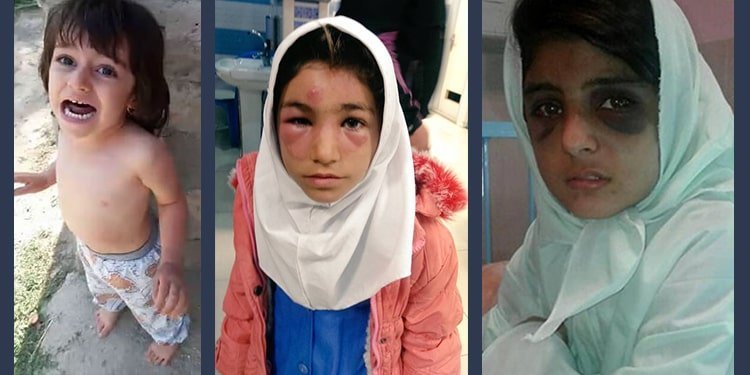
The clerical regime’s constitution and laws promote force early marriages, child abuse, domestic violence, and honor killings.

The legal age of marriage for girls in Iran is 13 and the father is allowed to wed his daughter even below this age with the approval a court judge. Last year, the mullahs’ parliament turned down the proposed bill to increase the age of marriage for girls to 16, saying it contradicted religious teachings.

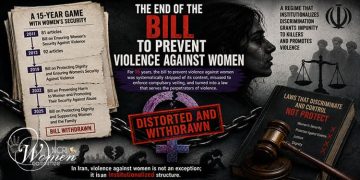
The proposed bill to prevent violence against women was stalled eight years in the mullahs’ parliament and judiciary. Finally, in September, the Judiciary passed the bill to the government to be later adopted by the parliament.

The Judiciary changed the bill’s name to “Protection, Dignity and Provision of Security for Mesdames Against Violence.” It removed at least 41 articles of the original bill and re-wrote it in five chapters and 77 articles. (The official IRNA news agency – September 17, 2019)

Some experts say a major deficiency in the new bill is replacing the word “women” with “Mesdames” which refers only to married women. Therefore, girls under 18, single women, victims of social ills and those subjected to such harms, are not covered by this bill.

Neither does the bill criminalize sexual harassment, rape, and sexual exploitation of women and it does not contain any punishment for the assailants.

Another serious problem is the lack of effective and sufficient guarantees in the bill to prevent violence against women or counter it. The bill has totally turned a blind eye on the state-sponsored violence against women to enforce the compulsory veil, as the main systematic form of VAW.


The Iranian Act to Protect Children and Adolescents (2002) does not criminalize physical abuse and does not mention sexual abuse.

The Constitution recognizes the father as the person who owns the blood of his child, thereby condoning honor killings by fathers.
violence against women in Iran Child abuse


Enforcing the compulsory veil, the main form of VAW in Iran

State-sponsored violence to impose the compulsory veil are the most common form of violence against women in Iran. The Commander of the State Security Force, Hossein Ashtari, acknowledged in September 2016, that his forces arrest at least 2,000 women every day in cities across the country, for flouting the veil. These arrests are accompanied by force and violence.

More than domestic violence, Iranian women are exposed to violence directed against them by the clerical regime’s forces everywhere, every day, and round the clock.

violence against women every hour

The mullahs’ parliament published a report in July 2018 admitting that more than 70% of Iranian women do not believe in the compulsory veil and are considered “improperly veiled.” More than 85% of the “improperly veiled” do not approve of government intervention to

enforce the veil.

Yet, every year, the security forces’ measures to confront Iranian women’s opposition to the compulsory veil become tougher and more violent.

The arrest in late June of a young woman, 15, in a park in Tehran for not observing the veil during a water-gun game with her friends outraged the public.

state-sponsored violence against women in Iran
A 15 year old girl is violently arrested by State Security Force for not observing the veil while playing water-gun in a park

Tehran’s Police also announced improper-veiling and removing the veil are examples of evident social crimes. (The state-run ROKNA news agency – June 1, 2019)

UN experts issued a statement in which they said 32 women had been arrested in 2018 for protesting the mandatory Hijab. At least 10 women were imprisoned for this reason, the experts said.

The clerical regime also launched new plans – Nazer 1 and 2 – to step up its crackdown on women under the pretext of dealing with improper veiling.

Khamenei’s deputy in the General Staff of the Armed Forces, Mostafa Izadi, also announced that the Assembly to Promote Virtue and Forbid Evil has 30,000 members in 26 provinces who send their reports every six months to the person of the supreme leader. (The official IRNA news agency – September 30, 2019)


Executions, mistreatment of female prisoners

Iran is the only country in the world that executes so many women.

97 women have been executed during Rouhani’s tenure, 11 of them between November 2018 and November 2019.

Many of those executed are women who were victims of domestic violence and committed murder in self-defense.

Political prisoners are systematically abused and brutalized to force them into making false confessions, cooperating with the regime, or giving their information.

Saba Kord Afshari was imprisoned and tortured for months to cooperate with the regime. They even arrested her mother to further pressure her. Once they did not succeed, they gave her a sentence of 24 years in prison.

violence against women in Iran flogging

Over the past year, the regime also handed down many flogging sentences of 74 to 148 lashes for women activists this year including for Atefeh Rangriz, Parisa Rafii, Nahid Khodajoo, Marzieh Amiri, Nasrin Javadi, Sepideh Farhan, Nasrin Sotoudeh, among others.

At least in one case, 74 lashes were carried out for Sufi woman Elham Ahmadi after she finished her sentence and before being released from prison.

At least in two cases, women activists were brutalized in their prison cells. And in another case, all prisoners of wards 1 and 2 of Qarchak Prison were brutalized and deprived of food and water for demanding medical treatment for a sick prisoner. The guards lobber tear and pepper gas into their cells.


Early marriages

Another common form of violence against women in Iran is early marriage. Because of the law and the legal age of marriage which is 13 and because of poverty, the number of early marriages has increased in recent years.

The Iranian census organization released new statistics on early marriages in Iran according to which, 234,000 marriages of girl children under 15 years of age were officially registered by this organization from March 2017 to March 2018 (Persian year 1396). 194 of these were marriages of girl children under 10 years old. (The state-run Iran daily newspaper – October 30, 2019)

Ali Kazemi, advisor to the legal deputy of the Judiciary Branch, announced in March 2019, that between 5 to 600,000 girl children get married every year (in Iran). This figure relates to officially registered marriages and does not include those which were not officially registered. (The state-run daily Entekhab – March 4, 2019)
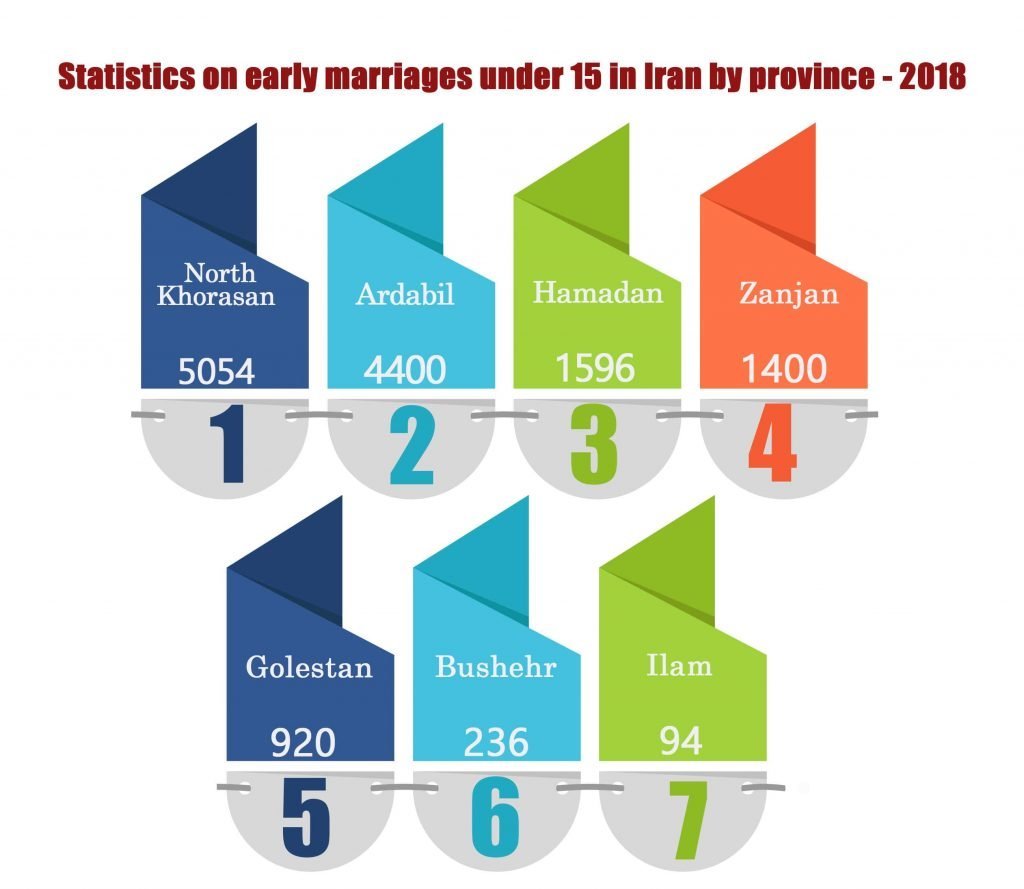
violence against women in Iran early marriages

Honor killings and domestic violence

Iran saw new, unprecedented forms of honor killings over the past year. This form of domestic violence is due to the patriarchal culture promoted by the regime and also the hangings that are carried out in front of the public eyes.

There were numerous instances over the past year where a husband hanged his own wife.

Monireh Abou, 35 and eight-months pregnant was hanged by her husband in Bukan.

Maryam Mohebbi, mother of two, was hanged by her husband in Songhor for coming home late.

Maryam Bakhtiai, 29, was hanged by her brother in Dehloran and subsequently beheaded.

Shiba Kamran, 21, was set alight by her parents-in-law in Urmia.


Last March one of the regime’s officials admitted that 98 percent of those who refer to the social emergencies are women who have been battered at home. Reza Jafari, head of Social Emergencies, said 15% of these women have higher education. (The state-run Fars news agency – April 14, 2019)

Nevertheless, official refuse to announce clear and accurate statistics.
In Tehran, the general director of the Coroner’s Office announced that 16,420 cases of domestic violence against wives was referred to different centers of the Coroner’s Office. He said Tehran ranks 6th on violence against women in Iran. (The official IRNA news agency – July 24, 2019)
721 cases of violence against wives were reported in 2018, just in the province of Boyerahmad and Kohgiluyeh. (The state-run ISNA news agency – May 15, 2019)

In only one of the districts in this province called Dishmuk, 11 women self-immolated in just six months.


The final word

More in-depth review of violence against women in Iran and its causes, does not fit in this brief article.

These days, as the world is preparing to celebrate Beijing +25 and every country is reporting on their positive steps towards gender equality and respect for women’s rights, Iranian people and women are rising up against Iran’s ruling regime. As the regime has confessed, Iranian women are leading the protests in more than 170 cities across the country seeking to establish the pluralist rule of a democratic government based on gender equality and popular sovereignty.

At the same time, the Iranian regime is viciously cracking down on the populace for their legitimate demands and protest to fuel price hikes. At least 13 women have been identified among those killed.

The final word is that the root cause of virtually all problems in Iran and particularly the problems of women, is the totalitarian and misogynous regime ruling the country. And the solution is in regime change as cried out by the people of Iran in their recent uprising.

Until then, the international community should take effective measures to stop slaughters, torture and violations of the basic rights of the Iranian people and women.

 

Tags: Violence against women
Share108TweetPinShareSendShare

Related Posts

Fatemeh Abbasi, Shot While Sheltering Protesters, Dies from Her Injuries

March 19, 2026
Fatemeh Abbasi, Shot While Sheltering Protesters, Dies from Her Injuries

Fatemeh Abbasi, a resident of Isfahan, has died after weeks of suffering from severe injuries sustained during January 2026 protests in the city. She had been shot by...

Read moreDetails

Report by Sara Hossain, Warns of Escalating Repression and Human Rights Violations in Iran

March 18, 2026
Report by Sara Hossain, Chair of the Independent International Fact-Finding Mission, Warns of Escalating Repression and Human Rights Violations in Iran

At the sixty-first session of the United Nations Human Rights Council, Sara Hossain, Chair of the Independent International Fact-Finding Mission on Iran, presented a comprehensive report outlining a...

Read moreDetails

Nahal Ahoo Ghalandari Killed in Khorramabad After Celebrating Death of Khamenei

March 12, 2026
Nahal Ahoo Ghalandari Killed in Khorramabad After Celebrating

Nahal Ahoo Ghalandari, a young woman from Khorramabad, was shot and killed by members of Iran’s Basij militia after she reportedly celebrated news of the death of Khamenei....

Read moreDetails

A Report to CSW70: Gender-Based Discrimination Under Iranian Law

March 8, 2026
A Report to CSW70: Gender-Based Discrimination Under Iranian Law

Structural Inequality and State-Sanctioned Oppression of Women Gender-Based Discrimination Under Iranian Law” is the title of the NCRI Women’s Committee’s report to CSW70, as it focuses on “Ensuring...

Read moreDetails

Annual Report 2026: From Protests, to Uprising, and the Role of Iranian Women

March 3, 2026
Annual Report 2026: From Protests, to Uprising, and the Role of Iranian Women

On the eve of International Women’s Day 2026, the NCRI Women’s Committee presents its Annual Report 2026, offering a recap of events in 2025 as related to women’s...

Read moreDetails
Next Post
International Day of Eliminiation

International Day to Eliminate VAW - Nov 25

Leave a Reply Cancel reply

Your email address will not be published. Required fields are marked *

Documents

A Report to CSW70: Gender-Based Discrimination Under Iranian Law

A Report to CSW70: Gender-Based Discrimination Under Iranian Law

March 8, 2026

Structural Inequality and State-Sanctioned Oppression of Women Gender-Based Discrimination Under Iranian Law” is the title of the NCRI Women’s Committee’s...

Annual Report 2026: From Protests, to Uprising, and the Role of Iranian Women

Annual Report 2026: From Protests, to Uprising, and the Role of Iranian Women

March 3, 2026

On the eve of International Women’s Day 2026, the NCRI Women’s Committee presents its Annual Report 2026, offering a recap...

Iranian women Who Lost Their Lives in Iran’s January 2026 Uprising

Iranian Women Who Lost Their Lives in Iran’s January 2026 Uprising

January 25, 2026

Names That Must Not Be Forgotten Iranian women played a central and courageous role in the January 2026 uprising, standing...

Monthlies

March 2026 Report: How Iranian Women Are Shaping the Resistance
Monthlies

March 2026 Report: Courage Under Fire

April 3, 2026
January 2026 Report: Women at the Core of the Uprising
Monthlies

January 2026 Report: Women at the Core of the Uprising

January 31, 2026
December 2025 Report: A Year in Review: Iranian Women’s Resistance Against Religious Dictatorship
Monthlies

December 2025 Report: A Year in Review: Iranian Women’s Resistance Against Religious Dictatorship

January 5, 2026
November 2025 Report: Under the Clerical Regime, Nowhere Is Safe for Women in Iran
Monthlies

November 2025 Report: Under the Clerical Regime, Nowhere Is Safe for Women in Iran

November 30, 2025

Articles

O Mothers of Iran: A Manifesto of Unyielding Resistance

O Mothers of Iran: A Manifesto of Unyielding Resistance to Misogynistic Barbarity

April 28, 2026

Through the deeply moving story of the Ebrahimpour family, Massoumeh Raouf delivers, with Ô Mères d’Iran (O Mothers of Iran),...

Iran detains women and girls: torture and detention without legal clarity

Iran Regime Arrests Women and Girls: Torture and Detention without Legal Clarity

April 22, 2026

Amid a growing wave of arrests targeting women and teenage girls across multiple Iranian cities, numerous reports have emerged detailing...

Wave of Arrests Targeting Women and Minors Amid Wartime in Iran

Wave of Arrests Targeting Women and Minors Amid Wartime in Iran

April 10, 2026

Following an intensified crackdown amid the recent war, multiple reports indicate a sharp rise in arrests across Iran, with women...

The Fallen for Freedom

Sholeh Sotoudeh (Pregnant)
The Fallen for Freedom

Sholeh Sotoudeh “Shot Dead Alongside Her Unborn Child”

April 19, 2026
Ghazal Aghaei Lindi was killed on January 9, 2026
The Fallen for Freedom

Ghazal Aghaei Lindi

April 16, 2026
Farzaneh Tavakkoli, a resident of Arak, was killed on January 9, 2026
The Fallen for Freedom

Farzaneh Tavakkoli

April 13, 2026
Shabnam Ferdowsi was killed on January 8, 2026, during the nationwide protests
The Fallen for Freedom

Shabnam Ferdowsi

April 12, 2026

ABOUT US

NCRI Women Committee

We work extensively with Iranian women outside the country and maintain a permanent contact with women inside Iran. The Women’s Committee is actively involved with many women’s rights organizations and NGO’s and the Iranian diaspora.
The committee is a major source of much of the information received from inside Iran with regards to women. Attending UN Human Rights Council meetings and other international or regional conferences on women’s issues and engaging in a relentless battle against the Iranian regime’s misogyny are part of the activities of members and associates of the committee.

CATEGORIES

  • Activities
  • Articles
  • Documents
  • Famous Women
  • Heroines in Chain
  • IWD Conferences
  • IWD Speeches
  • IWD Videos
  • Maryam Rajavi
  • Maryam Rajavi Speeches
  • Monthlies
  • Podcast
  • Reference Library
  • Solidarity
  • Statements
  • The Fallen for Freedom
  • Videos
  • Women in History
  • Women in Leadership
  • Women of Iranian Resistance
  • Women's News

BROWSE BY TAG

Child marriage coronavirus education execution forced hijab Gender Gap Generation Equality Honor killings Iran Teachers Maryam Akbari Monfared Nurses Plan on Women's Rights and Freedoms Poverty Prisoners Protests rural women Saba Kord Afshari The girl child Violence against women Women's Leadership Women Heads of Household Zeinab Jalalian

The copyright of all the material published on this website has been registered under © 2016 the Women’s Committee of the National Council of Resistance of Iran. To obtain permission to copy, redistribute or publish the material published on this website, you should write to the NCRI Women’s Committee. Please include the link of the original article on our website, women.ncr-iran.org.

Welcome Back!

Login to your account below

Forgotten Password?

Retrieve your password

Please enter your username or email address to reset your password.

Log In

Add New Playlist

No Result
View All Result
  • Home
  • News
    • Women’s News
    • Articles
    • Statements
  • Publications
    • Monthlies
    • Documents
    • Reference Library
  • About Us
    • The NCRI Women’s Committee
    • Gender Equality
    • Women’s Platform
  • Maryam Rajavi
    • Maryam Rajavi
    • Maryam Rajavi Speeches
    • Ten Point Plan for Iran
    • The Plan on Women’s Rights and Freedoms
  • Vanguards
    • The Fallen for Freedom
    • Heroines in Chain
    • Women of Iranian Resistance
    • Famous Women
    • Women in History
  • Events
    • IWD Conferences
    • Activities
    • IWD Speeches
    • Solidarity
  • Video
    • Videos
    • IWD Videos
  • Podcast
  • Donate
  • Contact us
  • فارسی
  • عربی
  • Français

The copyright of all the material published on this website has been registered under © 2016 the Women’s Committee of the National Council of Resistance of Iran. To obtain permission to copy, redistribute or publish the material published on this website, you should write to the NCRI Women’s Committee. Please include the link of the original article on our website, women.ncr-iran.org.