

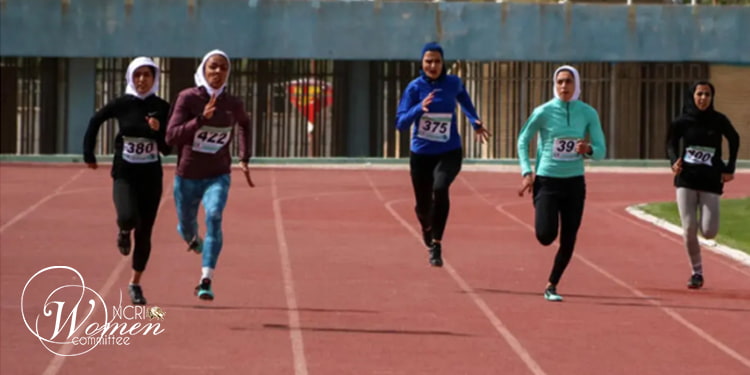
At a time when the country’s economy has collapsed and people are struggling without basic necessities like water, electricity, gas, and food, the regime is cracking down on women instead of offering solutions to these pressing daily crises. Women have been barred from using the outdoor facilities of the Keshvari sports complex in Tehran and are now restricted to indoor halls. According to a report published by Rouydad24 on October 25, 2026, the new restrictions took effect at the beginning of the Iranian month of Aban.
The measure represents yet another manifestation of the misogynistic regime’s policy of gender segregation and the systematic restriction of women’s rights. Beyond denying women equal access to sports facilities, the policy places their health, safety, and athletic development at risk.
Under the new directive, women athletes are no longer permitted to train on the outdoor tracks and open grounds of the complex. Instead, they are limited to designated hours and locations inside an indoor facility. Officials have justified the measure on the grounds of observing “moral and social standards,” a term commonly used by the Iranian regime to enforce compulsory veiling and expand gender segregation policies targeting women.
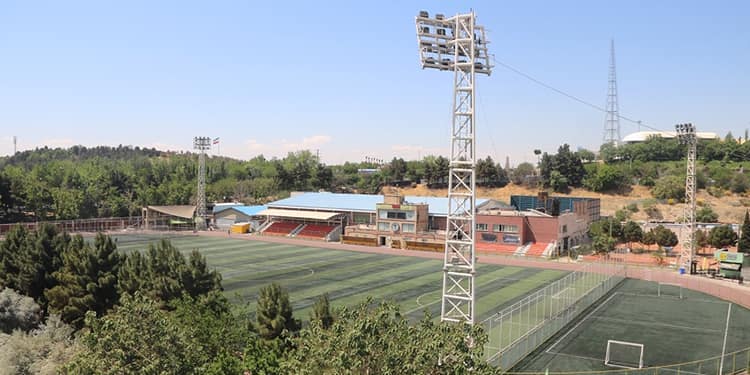
The move follows a series of measures aimed at restricting women’s access to public and sports facilities. Just days earlier, reports had surfaced regarding the temporary closure of sports complexes over alleged violations of compulsory hijab regulations. Rather than easing such restrictions, the authorities have now imposed a new layer of discrimination by effectively excluding women from outdoor athletic spaces.
Women athletes and coaches have condemned the decision as arbitrary and harmful. They point out that many sports, particularly track and field events, require training in open-air environments under standard conditions. Professional and specialized training cannot simply be transferred to indoor facilities without compromising performance and preparation. Athletes argue that decision-makers have ignored the technical requirements of women’s sports and imposed restrictions that directly undermine training quality.
As a result, many women may be forced to continue their workouts in parks and other public spaces. Such locations lack proper sports infrastructure and often fail to provide adequate security for women. This not only deprives female athletes of professional training conditions but also exposes them to additional safety and health risks.
Concerns have also been raised about the indoor facility designated for women’s use. Reports indicate that the available equipment does not meet the standards required for several athletic disciplines. Moreover, concentrating a large number of athletes in a limited indoor space reduces training opportunities and increases the risk of sports-related injuries. Under these circumstances, women’s health and athletic progress become the first casualties of this discriminatory policy.
In addition to its discriminatory impact, the decision has a significant financial dimension. Available information suggests that before the implementation of the new restrictions, women were able to use the outdoor facilities through an annual membership fee. Now, however, they are required to pay substantially higher fees to access indoor facilities.
According to the published fee structure, the cost of using the indoor facility is several times higher than the previous arrangement. This change has dramatically increased revenue for the facility’s management. Consequently, a policy justified under the banner of morality and social regulations appears in practice to have become a mechanism for generating greater income.
The financial burden falls particularly heavily on young women, teenage athletes, and low-income families. Many female athletes already struggle with the costs of sports equipment, clothing, transportation, and training expenses. The additional fees may force some of them to reduce or even abandon their athletic activities altogether.
The latest restrictions once again demonstrate that compulsory hijab and gender segregation are not merely tools for controlling women’s appearance. They are broader mechanisms used by the Iranian regime to curtail women’s participation in public life and deny them equal opportunities. By restricting access to sports facilities, jeopardizing women’s health and athletic advancement, and simultaneously creating new sources of revenue for regime-affiliated institutions, these policies further expose the discriminatory nature of the regime’s treatment of women.