


Few names resonate through the halls of American history as powerfully as Susan B. Anthony. A fearless reformer, educator, and suffragist, Anthony dedicated her life to one of humanity’s most essential causes — the fight for women’s equality. Her tireless advocacy not only transformed the course of the women’s suffrage movement but also redefined the very meaning of democracy in the United States.
Early Life and Influences
Susan Brownell Anthony was born on February 15, 1820, in Adams, Massachusetts, into a family steeped in Quaker traditions of equality and social justice. Her parents, Daniel and Lucy Anthony, encouraged independent thought and moral conviction — values that became the foundation of her activism. As a child, Susan developed a sharp sense of justice, questioning why women were denied the same rights and education as men.
The Educator Turned Reformer
Before becoming a national leader, Susan B. Anthony worked as a teacher. Confronted with wage discrimination, earning a fraction of what her male counterparts made, she began to see women’s inequality as a systemic issue. Her early experiences in education ignited her lifelong mission: to challenge laws and customs that silenced women.
By the 1850s, Susan B. Anthony was working alongside some of the era’s most influential reformers, including Elizabeth Cady Stanton, with whom she formed a legendary partnership that would reshape American history.
The Fight for Women’s Rights
In an age when women could not vote, own property after marriage, or speak freely in public forums, Susan B. Anthony emerged as a trailblazer for equality. Together with Stanton, she co-founded the National Woman Suffrage Association (NWSA) in 1869, an organization devoted to securing women’s right to vote through a federal constitutional amendment.
Anthony traveled tirelessly across the United States, delivering speeches, organizing conventions, and confronting lawmakers. Her unflinching courage and eloquence earned her both admiration and fierce opposition. In 1872, she famously cast an illegal vote in the presidential election in Rochester, New York. Arrested and fined $100, Anthony refused to pay, declaring, “Resistance to tyranny is obedience to God.”
This act of defiance became a defining moment in the suffrage movement, turning her into a symbol of civil disobedience and moral strength.
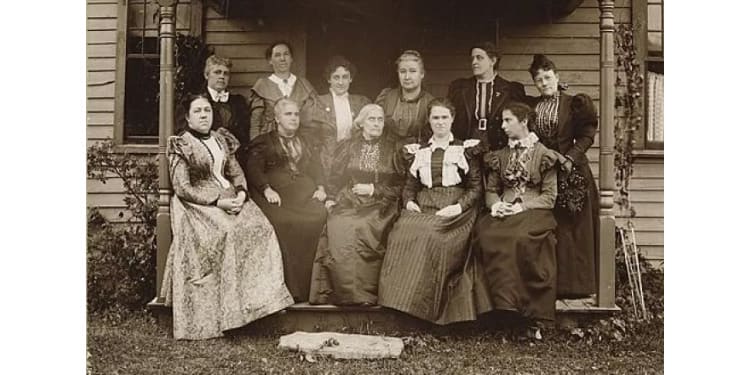
Legacy and Lasting Impact
Susan B. Anthony’s determination never wavered, even though she did not live to see the victory she fought for. She died in 1906, fourteen years before the 19th Amendment, granting women the right to vote, was ratified in 1920. The amendment was later known as the Susan B. Anthony Amendment, a fitting tribute to her life’s work.
Her legacy endures not only in American law but in the conscience of every movement that demands justice, equality, and representation. From her portrait on the U.S. dollar coin to countless memorials and schools bearing her name, Susan B. Anthony remains a timeless reminder that progress is born from courage.
Susan B. Anthony’s life was a testament to conviction, perseverance, and unyielding hope. She changed the course of history, proving that one determined voice can inspire generations. In an era still grappling with equality, her message remains as vital as ever: “Men, their rights, and nothing more; women, their rights, and nothing less.”