
Wednesday, April 22, 2026
  • English
  • Français
  • فارسی
  • عربى
PODCASTS
NCRI Women Committee Women Resistance Freedom
  • Home
  • NEWS
    • Women’s News
    • Articles
    • Statements
  • PUBLICATIONS
    • Monthlies
    • Documents
    • Reference Library
  • ABOUT US
    • The NCRI Women’s Committee
    • Gender Equality
    • Women’s Platform
  • MARYAM RAJAVI
    • Maryam Rajavi
    • Maryam Rajavi Speeches
    • The Plan on Women’s Rights and Freedoms
    • Ten-Point Plan for the future of Iran
  • VANGUARDS
    • The Fallen for Freedom
    • Heroines in Chain
    • Women of Iranian Resistance
    • Famous Women
    • Women in History
  • EVENTS
    • IWD Conferences
    • Activities
    • IWD Speeches
    • Solidarity
  • VIDEO
    • Videos
    • IWD Videos
  • PODCAST
  • DONATE
  • CONTACT US
No Result
View All Result
NCRI Women Committee Women Resistance Freedom
  • Home
  • NEWS
    • Women’s News
    • Articles
    • Statements
  • PUBLICATIONS
    • Monthlies
    • Documents
    • Reference Library
  • ABOUT US
    • The NCRI Women’s Committee
    • Gender Equality
    • Women’s Platform
  • MARYAM RAJAVI
    • Maryam Rajavi
    • Maryam Rajavi Speeches
    • The Plan on Women’s Rights and Freedoms
    • Ten-Point Plan for the future of Iran
  • VANGUARDS
    • The Fallen for Freedom
    • Heroines in Chain
    • Women of Iranian Resistance
    • Famous Women
    • Women in History
  • EVENTS
    • IWD Conferences
    • Activities
    • IWD Speeches
    • Solidarity
  • VIDEO
    • Videos
    • IWD Videos
  • PODCAST
  • DONATE
  • CONTACT US
No Result
View All Result
NCRI Women Committee
No Result
View All Result
Home Heroines in Chain
Face to Face with the Beast (17)

Face to Face with the Beast (17)

September 25, 2025
in Heroines in Chain

From the memoir by Hengameh Haj Hassan – Part 17

In Part 16 of Face to Face with the Beast, Hengameh Haj Hassan described her transfer into the “cage” system in Ghezelhesar Prison, a project designed by the prison authorities to break down prisoners’ resistance and force them into repentance.

In this new part, she recounts the long, suffocating days and nights inside the cage and the constant psychological torture.

⚠️ Cautionary note: The following memoir contains descriptions of torture, psychological abuse, and violence experienced by political prisoners in Iran. Reader discretion is advised.

Days and Nights in the Cage

The daily broadcast of the Quran, the call to prayer, and the news at noon—blared through loudspeakers—had one unintended benefit: I could keep track of the date and count the days. That alone was a major advantage. The rest of the time, there was nothing but silence. At first, I didn’t realize the effect this silence had, but gradually I understood: it was an effective form of torture, a constant pressure that disrupted the brain.

Nothing tormented me more than the blindfold. Why wouldn’t they just take off this damned blindfold? It cut me off completely from the outside world and forced me to retreat inward. They had deprived us of our most vital sense—sight, the main link to the outside. I told myself: without this blindfold, I could endure this place for a hundred years. But with it, my nerves were shattered.

During prayer, when we were briefly allowed to remove the blindfold, I could see the guard tower from a window. I would stare at the Pasdar[1] posted there, envious of his ability to see everything. Even in sleep, the blindfold had to remain.

The worst part was when I developed insomnia. A flood of thoughts would overwhelm me: this situation would never end; there was no way out. I was exhausted and longed for the moment I could lie down, but when it came, sleep eluded me. I tossed and turned in a dark, endless tunnel with no exit until, suddenly, dawn came again. Another day. And I thought, God, how will I survive this day in such exhaustion?
Face to Face with the Beast (17)
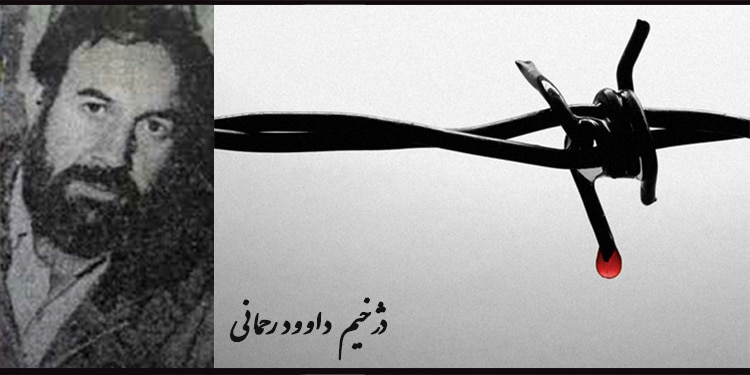
Haj Davood Rahmani

One night, suddenly, one of the girls screamed, speaking nonsense while crying and laughing. It wasn’t the first time someone had lost their mental balance. That jolted me: this was exactly what Haj Davood [2] wanted—to push us into madness through blindfolds, silence, and constant pressure. I told myself: I must sleep at night, or I’ll lose my mind too.

I was afraid of myself—afraid I wouldn’t endure, that I’d collapse, that I’d fall to my knees before the torturers and betray everything. Would I become one of those disgusting creatures who, for the sake of comfort and survival, sacrifice everyone else? God, no! Didn’t You say You never burden a soul beyond its capacity? Don’t You see I am at the limit of mine? Didn’t You promise that You are closer to us than our jugular vein? Didn’t You promise that if we call, You will answer? So help me, God! Help me!

And then, a kind of calm would wash over me. I told myself: Hengameh, you don’t want to become like those traitors, do you? Could you? No! Then be strong. Resist. Find a way to sleep at night. The enemy wants you broken and desperate to surrender. And if you give in, they won’t stop until they drag you all the way down into the swamp of betrayal and crime.

So, I decided: no more thinking, only focus on sleeping. I began counting—trees from my street, windows of our house, panes of glass, the dormitory windows from my student days, the hospital wards where I had worked. I just kept counting until, without realizing it, I fell asleep. I had defeated the insomnia.

The days were endless. To cope, I divided them into parts, especially since we were woken up so early—5 or 6 a.m.—to sit in our cages.

Sometimes, I grew exhausted from all the thinking and talking to myself. If I rested my head on my knees, I’d doze off—but the female guard would strike me on the head: “No sleeping!” Sometimes, while lost in thought, I’d suddenly be struck, my head slammed against the wall, leaving me dazed and disoriented like I’d been electrocuted.
Face to Face with the Beast by Hengameh Haj Hassan (16)
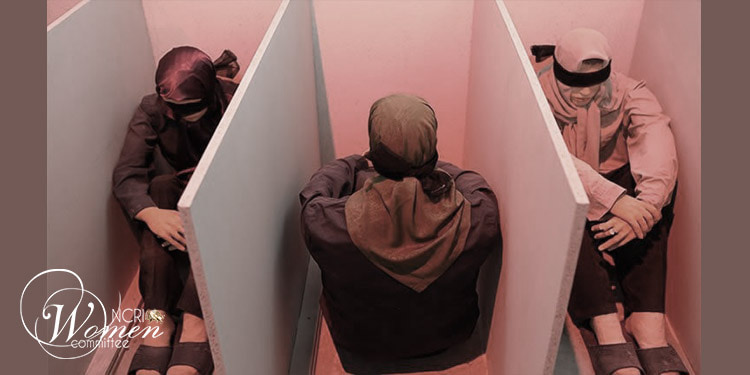
Recreation of the Cage, Museum of the Iranian Resistance

We had to sit in such a way that our heads didn’t rise above the half-meter-high wooden planks forming the cage walls. If they did, cables, punches, and kicks from the guards would rain down on us. For taller prisoners like me, it meant constant physical strain.

Even while eating, silence was enforced. If a spoon clinked against a plate, they accused you of communicating in Morse code with the neighboring cage, and beatings followed. At every moment, we waited for an attack. The sense of danger and insecurity created permanent anxiety. Seconds stretched into hours. I wondered, God, how much longer can I endure?

I resolved that if I felt I was losing my sanity, I would kill myself. I devised a plan: to set myself on fire with the small kerosene stove used by the female guards. It was always lit, with fuel and flame.

Every day Haj Davood came to “check his machine” and taunted us: “No one will come to save you. Not even your dear Massoud.[3] Unless you yourselves decide to repent and become human beings.”

In the torturer’s twisted vocabulary, “decide for yourselves” meant surrender. And “become human” meant become an informer, a collaborator.

Each day, based on reports from the tavvabs[4] or his own plan, Haj Davood selected prisoners to be taken out, beaten, and forced to repent. Others were tortured in their cages on the spot. Sometimes he came silently, suddenly attacking one person with fists and boots.

Once, I heard a loud crack—the sickening sound of my neighbor’s skull hitting the wall—followed by Haj Davood’s furious voice screaming, “Still not human?!” Then silence. No more sound from her.

Another time, I was the target. Without warning, a massive blow to my head knocked me senseless; my vision darkened, my neck crumpled into my chest. Through the fog, I heard Haj Davood roaring as his giant fists kept crashing down.

And in that moment, I thought how merciless this enemy is, how much hatred he has for us. But strangely, with every blow, I felt more determined, more resolved.


[1] Pasdar — a member of the Revolutionary Guard Corps (IRGC), known in Persian as Sepah-e Pasdaran

[2] Haj Davood Rahmani — the notorious warden of Ghezelhesar Prison in the early 1980s, infamous for designing the “cage” (ghafas) system, a method of psychological and physical torture.

[3] Refers to Massoud Rajavi, the leader of the People’s Mojahedin Organization of Iran (PMOI/MEK), who had himself spent years in prison under the Shah’s regime.

[4] Tavvab (literally “repenter”) — a prisoner who, under torture, agreed to collaborate with prison authorities, often acting as an informant against fellow inmates.

ShareTweetPinShareSendShare

Related Posts

“No to Executions Tuesdays” Campaign Marks 117th Week Across 56 Prisons

April 21, 2026
“No to Executions Tuesdays” Campaign Marks 117th Week Across 56 Prisons

Amid escalating protests over the use of capital punishment and growing public concern about the situation of political prisoners in Iran, the “No to Executions Tuesdays” campaign has...

Read moreDetails

Sholeh Sotoudeh “Shot Dead Alongside Her Unborn Child”

April 19, 2026
Sholeh Sotoudeh (Pregnant)

Sholeh Sotoudeh, a native of Langerud, was shot and killed by regime agents during nationwide public demonstrations in January 2026 while she was pregnant with her third child....

Read moreDetails

Kurdish Female Fighters among Three Killed in Iranian Regime’s Strikes

April 17, 2026
Kurdish female fighters among three killed in Iran strikes

Three Iranian Kurds, including two Kurdish female fighters, were killed in drone and rocket strikes in Iraq’s northern Kurdistan region on Friday, April 17, according to the Kurdistan...

Read moreDetails

Ghazal Aghaei Lindi

April 16, 2026
Ghazal Aghaei Lindi was killed on January 9, 2026

Ghazal Aghaei Lindi was killed on January 9, 2026, during nationwide protests, after being struck by live ammunition fired by the regime’s repressive forces in front of the...

Read moreDetails

Young Female Kurdish Fighter Killed in Drone Attack by Revolutionary Guards

April 15, 2026
Ghazal Mowlan, Komala Peshmerga, killed in IRGC drone attack

Ghazal Mowlan, a member of the Peshmerga forces of the Komala Party of Iranian Kurdistan, has died on April 15, 2026 from severe injuries sustained during a drone...

Read moreDetails
Next Post
Women Political Prisoners Hold Protest, Commemorate Somayeh Rashidi

Women Political Prisoners Hold Protest, Commemorate Somayeh Rashidi

Documents

A Report to CSW70: Gender-Based Discrimination Under Iranian Law

A Report to CSW70: Gender-Based Discrimination Under Iranian Law

March 8, 2026

Structural Inequality and State-Sanctioned Oppression of Women Gender-Based Discrimination Under Iranian Law” is the title of the NCRI Women’s Committee’s...

Annual Report 2026: From Protests, to Uprising, and the Role of Iranian Women

Annual Report 2026: From Protests, to Uprising, and the Role of Iranian Women

March 3, 2026

On the eve of International Women’s Day 2026, the NCRI Women’s Committee presents its Annual Report 2026, offering a recap...

Iranian women Who Lost Their Lives in Iran’s January 2026 Uprising

Iranian Women Who Lost Their Lives in Iran’s January 2026 Uprising

January 25, 2026

Names That Must Not Be Forgotten Iranian women played a central and courageous role in the January 2026 uprising, standing...

Monthlies

March 2026 Report: How Iranian Women Are Shaping the Resistance
Monthlies

March 2026 Report: Courage Under Fire

April 3, 2026
January 2026 Report: Women at the Core of the Uprising
Monthlies

January 2026 Report: Women at the Core of the Uprising

January 31, 2026
December 2025 Report: A Year in Review: Iranian Women’s Resistance Against Religious Dictatorship
Monthlies

December 2025 Report: A Year in Review: Iranian Women’s Resistance Against Religious Dictatorship

January 5, 2026
November 2025 Report: Under the Clerical Regime, Nowhere Is Safe for Women in Iran
Monthlies

November 2025 Report: Under the Clerical Regime, Nowhere Is Safe for Women in Iran

November 30, 2025

Articles

Mothers Who Gave Their Lives for Freedom during January 2026 Uprising in Iran

They Went Knowing: Mothers Who Died for the Future of All Children

April 6, 2026

Among those killed during the January 2026 uprising in Iran there are mothers whose names stand out—women who took to...

Amid the harshest trials and tribulations, your inspiring voice made my steps more steadfast

Amid the harshest trials and tribulations, your inspiring voice made my steps more steadfast

April 5, 2026

A letter from Vahid Bani Amerian to Aziz, the mother of the martyred Rezaeis Ms. Zahra Norouzi, who is known...

Ferdows Mahboubi (Mother Mosanna): 50 Years of Dedication to PMOI

Ferdows Mahboubi (Mother Mosanna): 50 Years of Dedication to PMOI

April 2, 2026

Ferdows Mahboubi (Mother Mosanna), one of the steadfast supporters of the People's Mojahedin Organization of Iran (PMOI), passed away in...

The Fallen for Freedom

Sholeh Sotoudeh (Pregnant)
The Fallen for Freedom

Sholeh Sotoudeh “Shot Dead Alongside Her Unborn Child”

April 19, 2026
Ghazal Aghaei Lindi was killed on January 9, 2026
The Fallen for Freedom

Ghazal Aghaei Lindi

April 16, 2026
Farzaneh Tavakkoli, a resident of Arak, was killed on January 9, 2026
The Fallen for Freedom

Farzaneh Tavakkoli

April 13, 2026
Shabnam Ferdowsi was killed on January 8, 2026, during the nationwide protests
The Fallen for Freedom

Shabnam Ferdowsi

April 12, 2026

ABOUT US

NCRI Women Committee

We work extensively with Iranian women outside the country and maintain a permanent contact with women inside Iran. The Women’s Committee is actively involved with many women’s rights organizations and NGO’s and the Iranian diaspora.
The committee is a major source of much of the information received from inside Iran with regards to women. Attending UN Human Rights Council meetings and other international or regional conferences on women’s issues and engaging in a relentless battle against the Iranian regime’s misogyny are part of the activities of members and associates of the committee.

CATEGORIES

  • Activities
  • Articles
  • Documents
  • Famous Women
  • Heroines in Chain
  • IWD Conferences
  • IWD Speeches
  • IWD Videos
  • Maryam Rajavi
  • Maryam Rajavi Speeches
  • Monthlies
  • Podcast
  • Reference Library
  • Solidarity
  • Statements
  • The Fallen for Freedom
  • Videos
  • Women in History
  • Women in Leadership
  • Women of Iranian Resistance
  • Women's News

BROWSE BY TAG

Child marriage coronavirus education execution forced hijab Gender Gap Generation Equality Honor killings Iran Teachers Maryam Akbari Monfared Nurses Plan on Women's Rights and Freedoms Poverty Prisoners Protests rural women Saba Kord Afshari The girl child Violence against women Women's Leadership Women Heads of Household Zeinab Jalalian

The copyright of all the material published on this website has been registered under © 2016 the Women’s Committee of the National Council of Resistance of Iran. To obtain permission to copy, redistribute or publish the material published on this website, you should write to the NCRI Women’s Committee. Please include the link of the original article on our website, women.ncr-iran.org.

Welcome Back!

Login to your account below

Forgotten Password?

Retrieve your password

Please enter your username or email address to reset your password.

Log In

Add New Playlist

No Result
View All Result
  • Home
  • News
    • Women’s News
    • Articles
    • Statements
  • Publications
    • Monthlies
    • Documents
    • Reference Library
  • About Us
    • The NCRI Women’s Committee
    • Gender Equality
    • Women’s Platform
  • Maryam Rajavi
    • Maryam Rajavi
    • Maryam Rajavi Speeches
    • Ten Point Plan for Iran
    • The Plan on Women’s Rights and Freedoms
  • Vanguards
    • The Fallen for Freedom
    • Heroines in Chain
    • Women of Iranian Resistance
    • Famous Women
    • Women in History
  • Events
    • IWD Conferences
    • Activities
    • IWD Speeches
    • Solidarity
  • Video
    • Videos
    • IWD Videos
  • Podcast
  • Donate
  • Contact us
  • فارسی
  • عربی
  • Français

The copyright of all the material published on this website has been registered under © 2016 the Women’s Committee of the National Council of Resistance of Iran. To obtain permission to copy, redistribute or publish the material published on this website, you should write to the NCRI Women’s Committee. Please include the link of the original article on our website, women.ncr-iran.org.