
Wednesday, January 14, 2026
  • English
  • Français
  • فارسی
  • عربى
PODCASTS
NCRI Women Committee Women Resistance Freedom
  • Home
  • NEWS
    • Women’s News
    • Articles
    • Statements
  • PUBLICATIONS
    • Monthlies
    • Documents
    • Reference Library
  • ABOUT US
    • The NCRI Women’s Committee
    • Gender Equality
    • Women’s Platform
  • MARYAM RAJAVI
    • Maryam Rajavi
    • Maryam Rajavi Speeches
    • The Plan on Women’s Rights and Freedoms
    • Ten-Point Plan for the future of Iran
  • VANGUARDS
    • The Fallen for Freedom
    • Heroines in Chain
    • Women of Iranian Resistance
    • Famous Women
    • Women in History
  • EVENTS
    • IWD Conferences
    • Activities
    • IWD Speeches
    • Solidarity
  • VIDEO
    • Videos
    • IWD Videos
  • PODCAST
  • DONATE
  • CONTACT US
No Result
View All Result
NCRI Women Committee Women Resistance Freedom
  • Home
  • NEWS
    • Women’s News
    • Articles
    • Statements
  • PUBLICATIONS
    • Monthlies
    • Documents
    • Reference Library
  • ABOUT US
    • The NCRI Women’s Committee
    • Gender Equality
    • Women’s Platform
  • MARYAM RAJAVI
    • Maryam Rajavi
    • Maryam Rajavi Speeches
    • The Plan on Women’s Rights and Freedoms
    • Ten-Point Plan for the future of Iran
  • VANGUARDS
    • The Fallen for Freedom
    • Heroines in Chain
    • Women of Iranian Resistance
    • Famous Women
    • Women in History
  • EVENTS
    • IWD Conferences
    • Activities
    • IWD Speeches
    • Solidarity
  • VIDEO
    • Videos
    • IWD Videos
  • PODCAST
  • DONATE
  • CONTACT US
No Result
View All Result
NCRI Women Committee
No Result
View All Result
Home Articles
Ideological Screening in Teacher Recruitment: Medieval Constraints

Ideological Screening in Teacher Recruitment: Medieval Constraints in Iran’s Education System

November 10, 2024
in Articles
Share on FacebookShare on Twitter

Iran’s education system, overseen by the Ministry of Education under the clerical regime, faces an acute teacher shortage while also imposing strict, ideologically driven requirements on teacher candidates.

Reports highlight the Iranian regime’s medieval-style selection criteria, which exclude candidates based on lifestyle choices, social media activity, and ideological compliance rather than educational qualifications.

As a result, many qualified individuals are barred from teaching roles, exacerbating the staffing crisis in public schools, where over 85% of Iran’s students are educated. This report provides an overview of these restrictive practices and their impact on Iran’s educational landscape.

Ideological Screening of Candidates

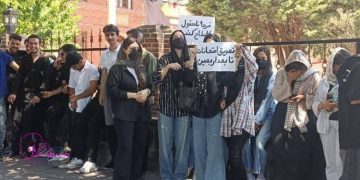
On October 27, 2024, student teachers and prospective employees protested the Education Ministry’s recruitment process, alleging discrimination and invasive questioning. Candidates reported that screening went beyond professional assessments, instead delving into personal and ideological aspects of their lives.

Many were disqualified for actions considered inappropriate under the regime’s standards, such as reading philosophy books, wearing nail polish, sporting mustaches, or failing to attend regime-sanctioned gatherings like Friday prayers.

Other criteria for disqualification included personal social media activity, with candidates disqualified for “liking” certain posts.

For women, failing to wear the traditional chador during exams or allowing hair to show under a scarf was enough to exclude them from consideration. Male candidates were reportedly judged for physical appearance, such as having tattoos or unconventional hairstyles, grouped under the infamous “Code 19,” a category within the Ministry’s guidelines targeting behaviors and appearances that deviate from regime expectations.

Historic Hardline Practices

This extreme vetting harks back to practices from the 1980s, as noted by Mohammad Heydari Varjani, a former official in the Islamic Student Association at Tehran’s Farhangian University, which trains future teachers. He emphasized that the level of ideological scrutiny in education recruitment has intensified in recent years. Yet, despite these practices, the current Minister of Education has remained silent on the controversy.

The enforcement of such policies has coincided with a national teacher shortage that has left Iranian schools with a deficit of over 176,000 educators. The regime’s exclusionary criteria, combined with widespread ideological disqualifications, aggravate this shortage, as politically targeted disqualifications remove a substantial number of potential teachers.

Ideological Screening in Teacher Recruitment: Medieval Constraints

Broader Impacts on Iran’s Education System

The nationwide shortage of qualified teachers is further compounded by economic challenges and the regime’s antagonistic approach toward education professionals.

According to the spokesperson for Iran’s Coordinating Council of Teacher Associations, between 2022 and 2023, at least 80 teachers were forced out of the education system, either through dismissals or coerced retirements. Teacher unions argue that this exodus of experienced educators is detrimental to the quality of education.

Teacher salaries in Iran remain insufficient, averaging around 16 million tomans per month (approximately $320), a meager income compared to inflation and living costs in the country. In response to rising discontent, the administration of former regime President Ebrahim Raisi had promised wage increases through a “ranking law” intended to raise teacher salaries based on experience. However, union leaders, including the Coordinating Council of Teacher Associations, have expressed dissatisfaction with the implementation, noting that the policy has failed to deliver the promised economic relief.

Increased Repression of Teacher Activism

Amid growing discontent, the Iranian regime has increased pressure on activist teachers, many of whom have been threatened, summoned, or even imprisoned for speaking out.

These tactics reflect the regime’s broader response to social unrest and economic protests across various sectors, including healthcare, industry, and education. In early October 2024, the Council of Teacher Associations warned against escalating crackdowns on teacher protests, especially those led by retirees facing delays in pension payouts.

In response to mounting discontent, the Revolutionary Guard Corps (IRGC) has reportedly directed economic ministries to prepare for a “war economy.” This approach includes expanding control over citizens’ lives, enforcing strict dress codes in government offices, and reinforcing compliance with religious norms.

For example, the Promotion of Virtue and Prevention of Vice Headquarters recently issued dress code instructions for public institutions, with specific mandates on men’s hairstyles and women’s attire, including requirements for neck coverings and prohibitions on high boots or visible nail polish. This crackdown seeks to reinforce strict social standards across all state-controlled institutions, including education.

The Iranian regime’s restrictive policies within its education system underline a fundamental challenge: a government grappling with a massive teacher shortage yet unwilling to prioritize educational qualifications over ideological conformity in hiring practices.

The Ministry of Education’s disqualifications based on personal appearance, lifestyle, and ideology illustrate the degree to which the regime imposes control over its citizens. While these measures aim to align teachers with regime values, they have eroded public trust in the education system and contributed to a deteriorating learning environment.
Tags: educationIran Teachers
ShareTweetPinShareSendShare

Related Posts

Carbon monoxide poisoning hits girls’ school in Babol

November 20, 2025
Carbon monoxide poisoning hits girls’ school in Babol

On Wednesday morning, November 19, a leak in the school’s heating system caused carbon monoxide poisoning in several students at a girls’ school in the city of Babol....

Read moreDetails

Massoumeh Asgari: Ongoing Detention in Evin Prison as Health Worsens

November 10, 2025
Massoumeh Asgari: Ongoing Detention in Evin Prison as Health Worsens

Massoumeh Asgari, a retired teacher and political prisoner, remains incarcerated in Tehran’s Evin Prison despite suffering from multiple physical and psychological illnesses. The 60-year-old detainee continues to be...

Read moreDetails

Forough Khosravi, Teacher, Sentenced to 15 Years in Prison

November 3, 2025
Forough Khosravi, Teacher, Sentenced to 15 Years in Prison

Forough Khosravi, a schoolteacher from Behbahan in Iran’s Khuzestan province, has been sentenced to 15 years in prison by the Iranian judiciary. The verdict was issued on Sunday,...

Read moreDetails

Kowkab Badaghi and Her Husband Brutalized in Front of Their Young Child

October 15, 2025
Kowkab Badaghi and Her Husband Brutalized in Front of Their Young Child

On Monday, October 13, 2025, Kowkab Badaghi, a teachers’ rights activist in the city of Izeh, was subjected to a violent raid by security forces. Nine plainclothes agents...

Read moreDetails

Shahrbanoo Asadi, Highschool Teacher, Dismissed from Education Ministry

October 4, 2025
Shahrbanoo Asadi, Highschool Teacher, Dismissed from Education Ministry

In a controversial ruling, the Administrative Court of Justice upheld the dismissal of Shahrbanoo Asadi, a Persian language and literature teacher in high schools of District 2 of...

Read moreDetails
Next Post
Mahrokh Khani, 35, Hanged in the Central Prison of Tabriz

Mahrokh Khani, 35, Hanged in the Central Prison of Tabriz

Documents

More than 400 Prominent Women Demand Halt to Iran Execution of Political Prisoner Zahra Tabari

More than 400 Prominent Women Demand Halt to Iran Execution of Political Prisoner Zahra Tabari

December 25, 2025

More than 400 prominent women from across the globe, among them Nobel Prize winners, former presidents and prime ministers, parliamentarians,...

The Gendered Dimensions of the Water Crisis in Iran: Impacts on Women’s Health, Livelihoods, and Security

The Gendered Dimensions of the Water Crisis in Iran: Impacts on Women’s Health, Livelihoods, and Security

October 12, 2025

How Iranian Women Shoulder the Heavy Burden of a Deepening Crisis Download Italian Version The water crisis in Iran has...

The Failure of Iran's Population Growth Law Despite the Repression of Women A Glance at a Costly and Ineffective Policy

The Failure of Iran’s Population Growth Law Despite the Repression of Women

August 24, 2025

A Glance at a Costly and Ineffective Policy The “Youthful Population Law” in Iran vs. Women’s Human Rights Following a...

Monthlies

December 2025 Report: A Year in Review: Iranian Women’s Resistance Against Religious Dictatorship
Monthlies

December 2025 Report: A Year in Review: Iranian Women’s Resistance Against Religious Dictatorship

January 5, 2026
November 2025 Report: Under the Clerical Regime, Nowhere Is Safe for Women in Iran
Monthlies

November 2025 Report: Under the Clerical Regime, Nowhere Is Safe for Women in Iran

November 30, 2025
October 2025 Report: Death Sentence for a Female Political Prisoner The Resistance of Female Political Prisoners Inspires Iranian Women and Girls in Their Struggle Against the Regime of Executions and Massacre
Monthlies

October 2025 Report: Death Sentence for a Female Political Prisoner

October 31, 2025
September 2025 Report: One Woman Executed Every 4 Days in Iran
Monthlies

September 2025 Report: One Woman Executed Every 4 Days in Iran

September 30, 2025

Articles

Nationwide Iran Uprising Expands to 207 Cities

Nationwide Iran Uprising Expands to 207 Cities; Protesters’ Morale Remains High Despite Bloody Crackdown

January 13, 2026

On Tuesday, January 13, 2026, the nationwide Iran uprising entered its third week, spreading to at least 207 cities and...

Internet Shutdown and Suppression Orders: Death Toll Surpasses 3,000

Internet Shutdown and Suppression Orders: Death Toll Surpasses 3,000

January 12, 2026

Partial list of women detained during the nationwide uprising The People’s Mojahedin Organization of Iran (PMOI/MEK) announced today, January 12,...

Iran Nationwide Uprising Spreads to 200 Cities as Violent Crackdown Intensifies

Iran Nationwide Uprising Spreads to 200 Cities as Violent Crackdown Intensifies

January 11, 2026

On Saturday night, January 10, 2026, the fourteenth day of Iran’s nationwide uprising, dozens of cities across the country witnessed...

The Fallen for Freedom

Robina Aminian Art student killed during the 2026 Iran Uprising
The Fallen for Freedom

Robina Aminian

January 13, 2026
Akram Peargazi
The Fallen for Freedom

Akram Peargazi

January 13, 2026
In Memory of Zohreh Bani Jamali
The Fallen for Freedom

In Memory of Zohreh Bani Jamali

November 20, 2025
Fatemeh Farshchian
The Fallen for Freedom

Fatemeh Farshchian

September 11, 2025

ABOUT US

NCRI Women Committee

We work extensively with Iranian women outside the country and maintain a permanent contact with women inside Iran. The Women’s Committee is actively involved with many women’s rights organizations and NGO’s and the Iranian diaspora.
The committee is a major source of much of the information received from inside Iran with regards to women. Attending UN Human Rights Council meetings and other international or regional conferences on women’s issues and engaging in a relentless battle against the Iranian regime’s misogyny are part of the activities of members and associates of the committee.

CATEGORIES

  • Activities
  • Articles
  • Documents
  • Famous Women
  • Heroines in Chain
  • IWD Conferences
  • IWD Speeches
  • IWD Videos
  • Maryam Rajavi
  • Maryam Rajavi Speeches
  • Monthlies
  • Podcast
  • Reference Library
  • Solidarity
  • Statements
  • The Fallen for Freedom
  • Videos
  • Women in History
  • Women in Leadership
  • Women of Iranian Resistance
  • Women's News

BROWSE BY TAG

Child marriage coronavirus education execution forced hijab Gender Gap Generation Equality Honor killings Iran Teachers Maryam Akbari Monfared Nurses Plan on Women's Rights and Freedoms Poverty Prisoners Protests rural women Saba Kord Afshari The girl child Violence against women Women's Leadership Women Heads of Household Zeinab Jalalian

The copyright of all the material published on this website has been registered under © 2016 the Women’s Committee of the National Council of Resistance of Iran. To obtain permission to copy, redistribute or publish the material published on this website, you should write to the NCRI Women’s Committee. Please include the link of the original article on our website, women.ncr-iran.org.

Welcome Back!

Login to your account below

Forgotten Password?

Retrieve your password

Please enter your username or email address to reset your password.

Log In

Add New Playlist

No Result
View All Result
  • Home
  • News
    • Women’s News
    • Articles
    • Statements
  • Publications
    • Monthlies
    • Documents
    • Reference Library
  • About Us
    • The NCRI Women’s Committee
    • Gender Equality
    • Women’s Platform
  • Maryam Rajavi
    • Maryam Rajavi
    • Maryam Rajavi Speeches
    • Ten Point Plan for Iran
    • The Plan on Women’s Rights and Freedoms
  • Vanguards
    • The Fallen for Freedom
    • Heroines in Chain
    • Women of Iranian Resistance
    • Famous Women
    • Women in History
  • Events
    • IWD Conferences
    • Activities
    • IWD Speeches
    • Solidarity
  • Video
    • Videos
    • IWD Videos
  • Podcast
  • Donate
  • Contact us
  • فارسی
  • عربی
  • Français

The copyright of all the material published on this website has been registered under © 2016 the Women’s Committee of the National Council of Resistance of Iran. To obtain permission to copy, redistribute or publish the material published on this website, you should write to the NCRI Women’s Committee. Please include the link of the original article on our website, women.ncr-iran.org.