Tuesday, May 19, 2026
  • English
  • Français
  • فارسی
  • عربى
PODCASTS
NCRI Women Committee Women Resistance Freedom
  • Home
  • NEWS
    • Women’s News
    • Articles
    • Statements
  • PUBLICATIONS
    • Monthlies
    • Documents
    • Reference Library
  • ABOUT US
    • The NCRI Women’s Committee
    • Gender Equality
    • Women’s Platform
  • MARYAM RAJAVI
    • Maryam Rajavi
    • Maryam Rajavi Speeches
    • The Plan on Women’s Rights and Freedoms
    • Ten-Point Plan for the future of Iran
  • VANGUARDS
    • The Fallen for Freedom
    • Heroines in Chain
    • Women of Iranian Resistance
    • Famous Women
    • Women in History
  • EVENTS
    • IWD Conferences
    • Activities
    • IWD Speeches
    • Solidarity
  • VIDEO
    • Videos
    • IWD Videos
  • PODCAST
  • DONATE
  • CONTACT US
No Result
View All Result
NCRI Women Committee Women Resistance Freedom
  • Home
  • NEWS
    • Women’s News
    • Articles
    • Statements
  • PUBLICATIONS
    • Monthlies
    • Documents
    • Reference Library
  • ABOUT US
    • The NCRI Women’s Committee
    • Gender Equality
    • Women’s Platform
  • MARYAM RAJAVI
    • Maryam Rajavi
    • Maryam Rajavi Speeches
    • The Plan on Women’s Rights and Freedoms
    • Ten-Point Plan for the future of Iran
  • VANGUARDS
    • The Fallen for Freedom
    • Heroines in Chain
    • Women of Iranian Resistance
    • Famous Women
    • Women in History
  • EVENTS
    • IWD Conferences
    • Activities
    • IWD Speeches
    • Solidarity
  • VIDEO
    • Videos
    • IWD Videos
  • PODCAST
  • DONATE
  • CONTACT US
No Result
View All Result
NCRI Women Committee
No Result
View All Result
Home Articles
Amnesty International

Amnesty International: Two years after ‘Woman Life Freedom’ uprising, impunity for crimes reigns supreme

September 14, 2024
in Articles

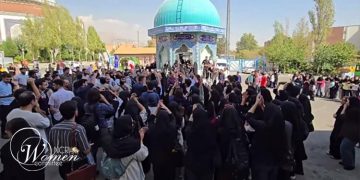
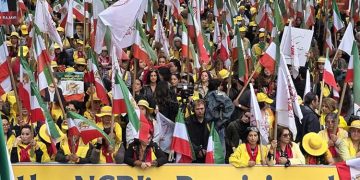
On the second anniversary of the 2022 Iran uprising sparked by the death in custody of Mahsa Jina Amini, Amnesty International published a comprehensive report on September 11, 2024, the full text of which appears below:

People in Iran continue to endure the devastating consequences of the authorities’ brutal crackdown on the “Woman Life Freedom” uprising amid systematic impunity for crimes under international law, Amnesty International said today, ahead of the two-year anniversary of the protests that saw people across Iran challenge decades of oppression and gender-based discrimination.

No effective, impartial and independent criminal investigations have taken place into the serious human rights violations and crimes under international law by Iranian authorities during and in the aftermath of the nationwide protests of September-December 2022, including security forces’ extensive and unlawful use of force and firearms. Security forces fired assault rifles, shot guns loaded with metal pellets and teargas canisters, and severely beat protesters with batons, resulting in the unlawful killing of hundreds of protesters and bystanders, including scores of children, and life-changing injuries to many more. The authorities have sought to silence relatives seeking truth and justice for the unlawful killings of their loved ones through arbitrary detention, unjust prosecution, death threats and other relentless harassment.

Two years on, the authorities have also further escalated their assault on human rights, waging a “war on women and girls” through an increasingly violent crackdown on those defying draconian compulsory veiling laws and have intensified their use of the death penalty to silence dissent.

“The anniversary of the ‘Woman Life Freedom’ uprising is a haunting reminder that countless people in Iran are still reeling from the consequences of the authorities’ brutal crackdown. Victims, survivors and their relatives continue to be denied truth, justice and reparation for crimes under international law and other grave human rights violations committed by Iranian officials during and in the aftermath of the uprising,” said Diana Eltahawy, Amnesty International’s Deputy Regional Director for the Middle East and North Africa.

“The Iranian authorities have spent the past two years waging a propaganda campaign of denial and distortion to conceal evidence of their crimes and attempting to intimidate survivors and victims’ families into silence. With no prospect for independent and impartial investigations domestically, it is imperative that states initiate criminal investigations into the crimes committed by the Iranian authorities through their domestic prosecution offices under the principle of universal jurisdiction.”

Amnesty International

Intensified ‘war on women’

As part of their ongoing efforts to quash the powerful women’s rights movement against compulsory veiling that intensified following the death in custody of Mahsa/Jina Amini and the “Woman Life Freedom” uprising, Iranian authorities launched a new nationwide campaign called the “Noor Plan” in April 2024. Since, there has been a visible increase of security patrols on foot, motorbikes, car and police vans in public spaces to enforce compulsory veiling.

The crackdown has also included dangerous car chases to stop women drivers on the road, mass confiscation of their vehicles, imprisonment, as well as flogging and other penalties amounting to torture and other cruel, inhuman or degrading treatment or punishment.

On 22 July 2024, agents from Iran’s police force fired lethal ammunition at a car 31-year-old Arezou Badri was travelling in, leaving her gravely injured. According to media reports the agents were seeking to confiscate the car as part of enforcing compulsory veiling laws.

In August 2024, a disturbing video circulated on social media showing multiple agents violently assaulting two 14-year-old girls who had removed their headscarves. One of the girls, Nafas Hajisharif, said in a media interview: “They were pulling me by my hair, shouting at me and cursing…when they took me inside the van, they threw me onto the floor. One female agent hit me, put her knee on my throat, and hit my head hard. My head was stuck between the seats, and they were kicking the side of my torso.”

The all-out assault on women and girls who claim their human rights to freedom of expression, peaceful assembly, religion, belief and autonomy, is being carried out by various state entities. The enforcers of Iran’s degrading and discriminatory compulsory veiling laws include the Moral Security Police (police amniat-e akhlaghi), traffic police, prosecution offices, courts, the Ministry of Intelligence, the Revolutionary Guards, including its Basij forces, and plainclothes agents.

Meanwhile, Iran’s parliament is nearing the adoption of a “Bill to Support the Culture of Chastity and Hijab”, which aims to legalize the authorities’ intensified assault on women and girls who defy compulsory veiling.

Ramped up use of the death penalty

Since the “Woman Life Freedom” uprising, Iranian authorities have doubled down on their use of the death penalty, with 2023 seeing the highest number of executions for eight years, as the authorities resorted to use of the death penalty as a tool of oppression to terrorize the public, including the persecuted Baluchi ethnic minority who have been disproportionately impacted by executions.

Authorities have arbitrarily executed 10 men since December 2022 in relation to the September-December 2022 protests, including Reza (Gholamreza) Rasaei who was executed in secret on 6 August 2024.

The executions were carried out following grossly unfair sham trials which relied on “confessions” extracted under torture and other ill-treatment, including sexual violence, that were not independently and impartially investigated.

Over a dozen people remain at risk of execution or being sentenced to death in connection with the protests, including Mojahed Kourkouri.

This escalation includes the use of the death penalty against women on politically motivated charges. Human rights defender Sharifeh Mohammadi and Kurdish civil society activist Pakhshan Azizi were recently convicted of “armed rebellion against the state” (baghi) and sentenced to death by Revolutionary Courts in separate cases, solely due to their peaceful activism. Alarming reports indicate they were subjected to torture and other ill-treatment in detention. At least two other women, Wrisha Moradi and Nasim Gholami Simiyari, have also been tried for “armed rebellion against the state” (baghi) in separate cases.

Weaponizing sexual violence 

Over the past two years, the authorities have continued to deny that officials subjected those detained during the protests to torture and other ill-treatment, including rape and other forms of sexual violence.

During the uprising, Iran’s security and intelligence forces committed widespread torture and other ill-treatment against detained protesters. In December 2023, Amnesty International detailed the harrowing use of rape, including gang rape, and other forms of sexual violence by Iranian authorities as they sought to crush protests and terrorize and punish protesters, including children as young as 12.

In March 2024, the High Council for Human Rights of the Islamic Republic of Iran, which is not an independent body and sits within the judiciary, responded to Amnesty International’s investigation stating that Iran’s judiciary had investigated complaints and “found that in 28 out of 31 provinces, no complaints were filed under the headings of rape, assault and sexual harassment.” Amnesty International, however, has consistently documented how prosecution and judicial authorities have dismissed or covered up evidence of sexual violence, including complaints by survivors.

In the three provinces where officials said they had received allegations of sexual violence by intelligence and security forces, authorities claimed that these individuals pretended to be law enforcement agents. However, an October 2022 leaked official document from the Deputy Prosecutor of Tehran acknowledged that two suspected perpetrators of rape of protesters were Revolutionary Guards agents, and advised to classify the case as “completely secret”.

Crisis of systemic impunity

Iranian officials suspected of criminal responsibility for crimes under international law and other human rights violations have continued to evade justice.

In March 2024, the “Special Committee for Examining the Unrest of 2022”, a non-judicial and biased committee established by the late president to facilitate the official campaign of denial, distortion and cover-up, published its report. The committee claimed that security forces had “acted responsibly” in response to the protests, despite their consistent and well-documented use of unlawful force, including lethal force.

The UN Human Rights Council extended the mandate of the UN Fact-Finding Mission on Iran (FFMI) in April 2024, but Iranian authorities persist in refusing to cooperate with the independent body and deny its members access to the country.

Amnesty International echoes the recommendations of the FFMI to all states to initiate criminal investigations into Iranian officials reasonably suspected of crimes under international law under the principle of universal jurisdiction, regardless of whether or not the accused is present in their territory, and to open “structural investigations into the general situation linked to the protests of 2022 without an identified suspect.

Tags: forced hijabProtestsViolence against women
ShareTweetPinShareSendShare

Related Posts

120th Week of the “No to Executions Tuesdays” Campaign

May 12, 2026
120th Week of the “No to Executions Tuesdays” Campaign: Continued Pressure on Female Political Prisoners in Iran

Continued Pressure on Female Political Prisoners in Iran In the 120th week of the “No to Executions Tuesdays” campaign, political prisoners across 56 prisons in Iran once again...

Read moreDetails

“No to Executions Tuesdays” Campaign Continues Across 56 Iranian Prisons Despite Intensifying Restrictions

May 5, 2026
“No to Executions Tuesdays” Campaign Continues Across 56 Iranian Prisons Despite Intensifying Restrictions

In the 119th consecutive week of the “No to Executions Tuesdays” campaign, political prisoners in 56 prisons across Iran staged a coordinated hunger strike on Tuesday, May 5,...

Read moreDetails

Iranian Nurses Braved Fire with Defiance During January 2026 Uprising

May 3, 2026
Iranian nurses’ defiance in January 2026 uprising

In the blood-stained annals of the January 2026 uprising, Iran’s healthcare professionals stood witness to a stark battle between human dignity and sheer depravity. As the clerical regime,...

Read moreDetails

Female Inmates Join Week 118 of Hunger Strike Despite Threats

April 28, 2026
Female Inmates Join Week 118 of Hunger Strike Despite Threats

Female Inmates Join Week 118 of Hunger Strike Despite Threats The “No to Executions Tuesdays” campaign has announced that, in its 118th consecutive week, prisoners in 56 facilities...

Read moreDetails

Iran’s Healthcare Workers Continue Protest for Second Day

April 25, 2026
Protest by healthcare workers in Yazd entered a second consecutive day

Protests by healthcare workers in Yazd, the capital of a key central province in Iran, entered a second consecutive day on Saturday, April 25. Employees of the provincial...

Read moreDetails
Next Post
2022 Iran Uprising: Iranian Women at the Heart of the Struggle for Freedom

2022 Iran Uprising: Iranian Women at the Heart of the Struggle for Freedom

Documents

Crushed by Design: Structural Crises and Inequitable Policies Push Female-Headed Households to the Edge

Crushed by Design: Structural Crises and Inequitable Policies Push Female-Headed Households to the Edge

May 18, 2026

Introduction Life for the Iranian people under the religious dictatorship is fraught with hardship and peril from every perspective. Whether...

A Report to CSW70: Gender-Based Discrimination Under Iranian Law

A Report to CSW70: Gender-Based Discrimination Under Iranian Law

March 8, 2026

Structural Inequality and State-Sanctioned Oppression of Women Gender-Based Discrimination Under Iranian Law” is the title of the NCRI Women’s Committee’s...

Annual Report 2026: From Protests, to Uprising, and the Role of Iranian Women

Annual Report 2026: From Protests, to Uprising, and the Role of Iranian Women

March 3, 2026

On the eve of International Women’s Day 2026, the NCRI Women’s Committee presents its Annual Report 2026, offering a recap...

Monthlies

April 2026 Report: Mass Arrests of Women: Targeted Repression in Time of Crisis
Monthlies

April 2026 Report: Mass Arrests of Women in Iran

April 30, 2026
March 2026 Report: How Iranian Women Are Shaping the Resistance
Monthlies

March 2026 Report: Courage Under Fire

April 3, 2026
January 2026 Report: Women at the Core of the Uprising
Monthlies

January 2026 Report: Women at the Core of the Uprising

January 31, 2026
December 2025 Report: A Year in Review: Iranian Women’s Resistance Against Religious Dictatorship
Monthlies

December 2025 Report: A Year in Review: Iranian Women’s Resistance Against Religious Dictatorship

January 5, 2026

Articles

Iranian student Shabnam Madadzadeh recounts prison abuse: My brother was tortured before my eyes

Iranian Student Recounts Prison Abuse: My Brother Was Tortured before My Eyes

May 14, 2026

On May 10, 2026, the Daily Mail published an interview with Iranian student Shabnam Madadzadeh, a former political prisoner, member...

The Commercial Complex Death Trap: When Corruption and Rente Burn Iranian Women to Ashes

The Commercial Complex Death Trap: When Corruption and Rente Burn Iranian Women to Ashes

May 10, 2026

On the evening of Tuesday, May 5, 2026, the Arghavan commercialcomplex in Shahriar County, west of Tehran, became a death...

Iranian nurses’ defiance in January 2026 uprising

Iranian Nurses Braved Fire with Defiance During January 2026 Uprising

May 3, 2026

In the blood-stained annals of the January 2026 uprising, Iran’s healthcare professionals stood witness to a stark battle between human...

The Fallen for Freedom

Killed by Two Bullets to the Heart and Leg: Fatemeh Abdollahi
The Fallen for Freedom

Killed by Two Bullets to the Heart and Leg: Fatemeh Abdollahi

May 17, 2026
Fereshteh Azhadi: A Life of Resistance, Sacrifice, and Unyielding Commitment
The Fallen for Freedom

Fereshteh Azhadi

May 1, 2026
Mahin Khiabani: A Life of Defiance Until the Final Breath
The Fallen for Freedom

Mahin Khiabani

May 1, 2026
Sholeh Sotoudeh (Pregnant)
The Fallen for Freedom

Sholeh Sotoudeh “Shot Dead Alongside Her Unborn Child”

April 19, 2026

ABOUT US

NCRI Women Committee

We work extensively with Iranian women outside the country and maintain a permanent contact with women inside Iran. The Women’s Committee is actively involved with many women’s rights organizations and NGO’s and the Iranian diaspora.
The committee is a major source of much of the information received from inside Iran with regards to women. Attending UN Human Rights Council meetings and other international or regional conferences on women’s issues and engaging in a relentless battle against the Iranian regime’s misogyny are part of the activities of members and associates of the committee.

CATEGORIES

  • Activities
  • Articles
  • Documents
  • Famous Women
  • Heroines in Chain
  • IWD Conferences
  • IWD Speeches
  • IWD Videos
  • Maryam Rajavi
  • Maryam Rajavi Speeches
  • Monthlies
  • Podcast
  • Reference Library
  • Solidarity
  • Statements
  • The Fallen for Freedom
  • Videos
  • Women in History
  • Women in Leadership
  • Women of Iranian Resistance
  • Women's News

BROWSE BY TAG

Child marriage coronavirus education execution forced hijab Gender Gap Generation Equality Honor killings Iran Teachers Maryam Akbari Monfared Nurses Plan on Women's Rights and Freedoms Poverty Prisoners Protests rural women Saba Kord Afshari The girl child Violence against women Women's Leadership Women Heads of Household Zeinab Jalalian

The copyright of all the material published on this website has been registered under © 2016 the Women’s Committee of the National Council of Resistance of Iran. To obtain permission to copy, redistribute or publish the material published on this website, you should write to the NCRI Women’s Committee. Please include the link of the original article on our website, women.ncr-iran.org.

Welcome Back!

Login to your account below

Forgotten Password?

Retrieve your password

Please enter your username or email address to reset your password.

Log In

Add New Playlist

No Result
View All Result
  • Home
  • News
    • Women’s News
    • Articles
    • Statements
  • Publications
    • Monthlies
    • Documents
    • Reference Library
  • About Us
    • The NCRI Women’s Committee
    • Gender Equality
    • Women’s Platform
  • Maryam Rajavi
    • Maryam Rajavi
    • Maryam Rajavi Speeches
    • Ten Point Plan for Iran
    • The Plan on Women’s Rights and Freedoms
  • Vanguards
    • The Fallen for Freedom
    • Heroines in Chain
    • Women of Iranian Resistance
    • Famous Women
    • Women in History
  • Events
    • IWD Conferences
    • Activities
    • IWD Speeches
    • Solidarity
  • Video
    • Videos
    • IWD Videos
  • Podcast
  • Donate
  • Contact us
  • فارسی
  • عربی
  • Français

The copyright of all the material published on this website has been registered under © 2016 the Women’s Committee of the National Council of Resistance of Iran. To obtain permission to copy, redistribute or publish the material published on this website, you should write to the NCRI Women’s Committee. Please include the link of the original article on our website, women.ncr-iran.org.