
Monday, March 9, 2026
  • English
  • Français
  • فارسی
  • عربى
PODCASTS
NCRI Women Committee Women Resistance Freedom
  • Home
  • NEWS
    • Women’s News
    • Articles
    • Statements
  • PUBLICATIONS
    • Monthlies
    • Documents
    • Reference Library
  • ABOUT US
    • The NCRI Women’s Committee
    • Gender Equality
    • Women’s Platform
  • MARYAM RAJAVI
    • Maryam Rajavi
    • Maryam Rajavi Speeches
    • The Plan on Women’s Rights and Freedoms
    • Ten-Point Plan for the future of Iran
  • VANGUARDS
    • The Fallen for Freedom
    • Heroines in Chain
    • Women of Iranian Resistance
    • Famous Women
    • Women in History
  • EVENTS
    • IWD Conferences
    • Activities
    • IWD Speeches
    • Solidarity
  • VIDEO
    • Videos
    • IWD Videos
  • PODCAST
  • DONATE
  • CONTACT US
No Result
View All Result
NCRI Women Committee Women Resistance Freedom
  • Home
  • NEWS
    • Women’s News
    • Articles
    • Statements
  • PUBLICATIONS
    • Monthlies
    • Documents
    • Reference Library
  • ABOUT US
    • The NCRI Women’s Committee
    • Gender Equality
    • Women’s Platform
  • MARYAM RAJAVI
    • Maryam Rajavi
    • Maryam Rajavi Speeches
    • The Plan on Women’s Rights and Freedoms
    • Ten-Point Plan for the future of Iran
  • VANGUARDS
    • The Fallen for Freedom
    • Heroines in Chain
    • Women of Iranian Resistance
    • Famous Women
    • Women in History
  • EVENTS
    • IWD Conferences
    • Activities
    • IWD Speeches
    • Solidarity
  • VIDEO
    • Videos
    • IWD Videos
  • PODCAST
  • DONATE
  • CONTACT US
No Result
View All Result
NCRI Women Committee
No Result
View All Result
Home Articles
The 1988 massacre, the greatest unpunished crime against humanity

The 1988 massacre, the greatest unpunished crime against humanity

August 5, 2021
in Articles

The final days of July every year mark the start of the 1988 massacre of 30,000 political prisoners in Iran upon a decree by the mullahs’ supreme leader at the time, Ruhollah Khomeini. A crime against humanity is described as the worst since the World War II, a crime that the people of Iran “will neither forgive, nor forget.”

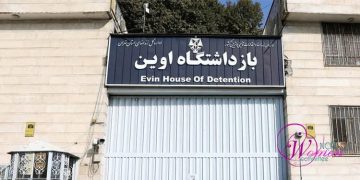
The latest list of victims compiled indicates that the 1988 massacre took place in at least 110 cities. The most intense killings of the 1988 massacre began in Evin and Gohardasht prisons and were specifically aimed at PMOI members.

An extensive wave of political arrests was also launched in various cities right after the announcement of the ceasefire in the Iran-Iraq war, arresting over 10,000 persons.

Another part of the massacre was the emergency trials of supporters of the PMOI/MEK in western Iran as well as young men and women from other provinces who had gone to western regions to aid the PMOI/MEK.

Iranian opposition leader Maryam Rajavi said the massacre was “a blood-drenched encounter between the Middle Ages and future generations, the generations that created the 1979 revolution, who represented a nation committed to having a society based on freedom and equality.”

The Iranian authorities have refused to provide families the addresses of the graves of those executed. They have destroyed the mass graves.

Although, the location of the victims’ tombs is not known, but their memories live on, in the hearts of millions of Iranians.


The 1988 massacre

Geoffrey Robertson QC, former United Nations judge and renowned human rights lawyer, who has investigated this crime against humanity, describes the massacre as the following:

Late in July 1988 as the war with Iraq was ending, prisons in Iran that were crammed with opponents suddenly went into lockdown.

All family visits were canceled, television and radios switched off. Prisoners were kept in their cells, not allowed exercise or trips to the hospitals.

The only permitted visitation was from a delegation, turbaned and bearded, which came in black government BMW’s. A religious judge, a public prosecutor, and an intelligence chief.

Before them were paraded briefly and individually, almost every prisoner, and then thousands of them who were being jailed for adherence to the MEK.
The delegation had but one question for these young men and women, most of them detained since 1981, merely for taking part in street protests or possession of political reading material. And although they did not know it, on their answer their life would depend. Those who (confirmed their) continuing affiliation with the MEK were blindfolded and ordered to join a line that led straight to the gallows.

They were hung from cranes 4 at a time, or in groups of 6, from ropes hanging from the front of the stage of the assembly hall. Some were taken to army barracks at night, directed to make their wills, and then shot by firing squad. Their bodies were doused with disinfectant, packed in refrigerator trucks, and buried at night in mass graves.

Months later their families, desperate for information about their children, would be handed a plastic bag with their few possessions. They would be refused any information about the location of the graves and ordered never to mourn them in public. By mid-August 1988, thousands of prisoners had been killed in this manner by the state. Without trial, without appeal and utterly without mercy.


Young women’s inspiring resistance

crime against humanity
Sakineh Delfi

In the heat of this carnage, in one of the wards of the Prison of Ahvaz, two blood-thirsty mullahs by the names of Jazayeri and Abdollahi bellowed, “You must make up your mind. Khomeini is on one side and Massoud Rajavi (the Leader of the Iranian Resistance) is on the other. Which side are you on?”

From the end of the hall, a young woman cried out, “Long live Massoud, down with Khomeini.” She was Sakineh Delfi, 26, a heroine from Abadan.
Upon hearing her cry, the Revolutionary Guards attacked her and badly brutalized her. The next morning, 349 of the 350 inmates in this ward were hanged.

The victims were young, energetic, knowledgeable, full of pride, beautiful and selfless, who bravely confronted the ruling despots. Many of them had finished serving their sentences. They defended freedom and embodied Iranian nation’s dignity.

It has been known that prisoners, including female prisoners, were firm and resilient and inspired resistance despite knowing the fact that they would have to go through the horrifying experience of rape before being hanged. But they said “NO” to the executioners.


Unpunished crime against humanity

According to Geoffrey Robertson, “The killing of prisoners is the worst of all war crimes; it has been for hundreds of years. The prisoner is utterly at the mercy of the state. That is why international law, from the 15th century, has given a special protection to prisoners of war… The liber code in 1863, in America, America’s war code, made it absolutely criminal to kill a surrendered prisoner. The Geneva conventions in 1949, the basis of international law, make it an international crime to kill a prisoner.”

A former UN Judge and President of the Sierra Leone Court, Mr. Robertson said: “There have been three heinous and hideous examples of that since the Second World War.

“The first was the Japanese army that war marched, death marched, 7,000 American soldiers to their deaths in 1946. What happened to the Japanese commanders who ordered that crime? They were tried, and they were convicted, and they were executed.

“The second example was Srebrenica, in 1992 when 7,000 Muslim men and boys were killed. What happened to those commanders who gave the orders, to Milošević and Karadzic? They are on trial at The Hague at this time. They were punished and will be punished.

“The third, the worst example, came in 1988 when thousands of upon thousands of prisoners who were in the first-place members of the MEK, then they came to the atheists, for the communists, for the liberals. People who were in prison for their politics, many of them had served their sentences; they’d been arrested in 1981 and were being held in prison although they finished their sentence, were killed, monstrously, and this is why, this dreadful act has never been punished.”


End impunity of perpetrators

The regime ruling Iran has evaded publishing the information and details of the massacre of political prisoners in 1988 but has remained immune from international accountability.

The perpetrators of this crime against humanity, who were deeply involved in the bloody slaughter of the innocent prisoners, are now in control of the state.

The highest officials in charge of this crime and members of the Death Committees are among the senior officials presently running this regime, including the regime’s Chief Justice and head of the Judiciary, the Head of the Supreme Court and the so-called Justice Minister. All of them, however, are immune.

A number of them, including the mullahs’ supreme leader Ali Khamenei, defend the 1988 massacre. They even say that they are proud of it. And still, they enjoy impunity.

In a report published in December 2018, Amnesty International examined the 1988 massacre in Iran. It wrote, “Iran is facing a crisis of impunity… The succession of atrocities in Iran is intractably linked to the impunity that has been enjoyed by the Iranian authorities.”

Morgan Ortagus, the spokesperson of the United States State Department, in a video message on Twitter, recently said: “July 19th marks the anniversary of the start of Iran’s so-called death commissions on the orders of Ayatollah Khomeini. These commissions reportedly forcibly disappeared and extra judicially executed thousands of political dissident prisoners. The current head of the Iranian judiciary and current minister of justice have both been identified as former members of these death commissions. The Iranian judiciary is widely perceived to lack independence and fair trial guarantees. And the revolutionary courts are particularly egregious in ordering violations of human rights. All Iranian officials who commit human rights violations or abuses should be held accountable. The United States calls on the international community to conduct independent investigations and do provide accountability and justice for the victims of these horrendous violations of human rights, organized by the Iranian regime.”


Time to hold regime leaders accountable

The time has come for the international community to end three decades of impunity for the clerical regime leaders in Iran and to hold them accountable for their crimes.

The time has come for referring the dossier of human rights violations in Iran, particularly the executions of the 1980s and the 1988 massacre, to the UN Security Council.

The time has come for Khamenei and his accomplices to face justice for committing crimes against humanity.

The time has come for the United Nations to launch an international fact-finding mission on the 1988 massacre in Iran.

How could the world tolerate sitting in the United Nations side by side with those directly involved in the massacre of tens of thousands of prisoners? How could they negotiate and do commerce with them? This is a travesty for human rights.
Tags: Generation EqualityPrisonersViolence against women
ShareTweetPinShareSendShare

Related Posts

A Report to CSW70: Gender-Based Discrimination Under Iranian Law

March 8, 2026
A Report to CSW70: Gender-Based Discrimination Under Iranian Law

Structural Inequality and State-Sanctioned Oppression of Women Gender-Based Discrimination Under Iranian Law” is the title of the NCRI Women’s Committee’s report to CSW70, as it focuses on “Ensuring...

Read moreDetails

Qarchak Prison: Women Prisoners Face Water Shortage and Uncertainty Amid War

March 5, 2026
Women Prisoners in Qarchak Prison Face Water Shortage and Uncertainty Amid War

Reports received indicate that Qarchak Prison in Varamin, which holds female prisoners, is facing a critical situation under current wartime conditions. A number of staff members from various...

Read moreDetails

Evin Prison: Air Strikes Raise Alarm Over Inmates’ Safety

March 4, 2026
Female Political Prisoners in Evin Prison Express Solidarity with Qezel Hesar Hunger Strike Against Executions

In the early hours of Tuesday, March 3, 2026, areas surrounding Imam Hossein University in Tehran and part of the perimeter wall of Evin Prison were targeted during...

Read moreDetails

Annual Report 2026: From Protests, to Uprising, and the Role of Iranian Women

March 3, 2026
Annual Report 2026: From Protests, to Uprising, and the Role of Iranian Women

On the eve of International Women’s Day 2026, the NCRI Women’s Committee presents its Annual Report 2026, offering a recap of events in 2025 as related to women’s...

Read moreDetails

Maryam Deris and Fariba Hosseini Continue Their Hunger Strike; Lives of Two Political Prisoners at Risk

February 27, 2026
Maryam Deris and Fariba Hosseini Continue Their Hunger Strike

The physical condition of Maryam Deris and Fariba Hosseini, two political prisoners currently on hunger strike in Adel Abad Prison in Shiraz, has been reported as critical, heightening...

Read moreDetails
Next Post
Three Iranian women receive a total prison sentence of 16 years and 8 months

Three Iranian women receive prison sentences of 16 years and 8 months

Documents

A Report to CSW70: Gender-Based Discrimination Under Iranian Law

A Report to CSW70: Gender-Based Discrimination Under Iranian Law

March 8, 2026

Structural Inequality and State-Sanctioned Oppression of Women Gender-Based Discrimination Under Iranian Law” is the title of the NCRI Women’s Committee’s...

Annual Report 2026: From Protests, to Uprising, and the Role of Iranian Women

Annual Report 2026: From Protests, to Uprising, and the Role of Iranian Women

March 3, 2026

On the eve of International Women’s Day 2026, the NCRI Women’s Committee presents its Annual Report 2026, offering a recap...

Iranian women Who Lost Their Lives in Iran’s January 2026 Uprising

Iranian Women Who Lost Their Lives in Iran’s January 2026 Uprising

January 25, 2026

Names That Must Not Be Forgotten Iranian women played a central and courageous role in the January 2026 uprising, standing...

Monthlies

January 2026 Report: Women at the Core of the Uprising
Monthlies

January 2026 Report: Women at the Core of the Uprising

January 31, 2026
December 2025 Report: A Year in Review: Iranian Women’s Resistance Against Religious Dictatorship
Monthlies

December 2025 Report: A Year in Review: Iranian Women’s Resistance Against Religious Dictatorship

January 5, 2026
November 2025 Report: Under the Clerical Regime, Nowhere Is Safe for Women in Iran
Monthlies

November 2025 Report: Under the Clerical Regime, Nowhere Is Safe for Women in Iran

November 30, 2025
October 2025 Report: Death Sentence for a Female Political Prisoner The Resistance of Female Political Prisoners Inspires Iranian Women and Girls in Their Struggle Against the Regime of Executions and Massacre
Monthlies

October 2025 Report: Death Sentence for a Female Political Prisoner

October 31, 2025

Articles

Maryam Rajavi Discusses Iran’s Transitional Roadmap in Interview with Frankfurter Rundschau

Maryam Rajavi Discusses Iran’s Transitional Roadmap in Interview with Frankfurter Rundschau

March 8, 2026

Maryam Rajavi, the President-elect of the National Council of Resistance of Iran, said in an interview with the German newspaper...

March 8: International Women's Day and the Leading Role of Iranian Women in the Struggle for Freedom

March 8: International Women’s Day and the Leading Role of Iranian Women in the Struggle for Freedom

March 6, 2026

March 8 is celebrated worldwide as International Women's Day, a day that honors over a century of women's fight for...

A Free Iran Starts with Women in Charge

A Free Iran Starts with Women in Charge

March 5, 2026

Maryam Rajavi’s movement puts women in leadership and demands equality as a foundation, not a slogan — a direct assault...

The Fallen for Freedom

Sonya Salehi-Rad was killed on January 8, 2026, during the nationwide popular protests in Shiraz
The Fallen for Freedom

Sonya Salehi-Rad

February 10, 2026
Arezoo Abedi was killed on January 9, 2026, during the nationwide popular protests
The Fallen for Freedom

Arezoo Abedi

February 10, 2026
Arnika Dabbagh, from Gorgan, was killed on January 9, 2026
The Fallen for Freedom

Arnika Dabbagh

February 7, 2026
Maedeh Moradi Kia, a resident of Tehran, was killed on January 9, 2026
The Fallen for Freedom

Maedeh Moradi Kia

February 7, 2026

ABOUT US

NCRI Women Committee

We work extensively with Iranian women outside the country and maintain a permanent contact with women inside Iran. The Women’s Committee is actively involved with many women’s rights organizations and NGO’s and the Iranian diaspora.
The committee is a major source of much of the information received from inside Iran with regards to women. Attending UN Human Rights Council meetings and other international or regional conferences on women’s issues and engaging in a relentless battle against the Iranian regime’s misogyny are part of the activities of members and associates of the committee.

CATEGORIES

  • Activities
  • Articles
  • Documents
  • Famous Women
  • Heroines in Chain
  • IWD Conferences
  • IWD Speeches
  • IWD Videos
  • Maryam Rajavi
  • Maryam Rajavi Speeches
  • Monthlies
  • Podcast
  • Reference Library
  • Solidarity
  • Statements
  • The Fallen for Freedom
  • Videos
  • Women in History
  • Women in Leadership
  • Women of Iranian Resistance
  • Women's News

BROWSE BY TAG

Child marriage coronavirus education execution forced hijab Gender Gap Generation Equality Honor killings Iran Teachers Maryam Akbari Monfared Nurses Plan on Women's Rights and Freedoms Poverty Prisoners Protests rural women Saba Kord Afshari The girl child Violence against women Women's Leadership Women Heads of Household Zeinab Jalalian

The copyright of all the material published on this website has been registered under © 2016 the Women’s Committee of the National Council of Resistance of Iran. To obtain permission to copy, redistribute or publish the material published on this website, you should write to the NCRI Women’s Committee. Please include the link of the original article on our website, women.ncr-iran.org.

Welcome Back!

Login to your account below

Forgotten Password?

Retrieve your password

Please enter your username or email address to reset your password.

Log In

Add New Playlist

No Result
View All Result
  • Home
  • News
    • Women’s News
    • Articles
    • Statements
  • Publications
    • Monthlies
    • Documents
    • Reference Library
  • About Us
    • The NCRI Women’s Committee
    • Gender Equality
    • Women’s Platform
  • Maryam Rajavi
    • Maryam Rajavi
    • Maryam Rajavi Speeches
    • Ten Point Plan for Iran
    • The Plan on Women’s Rights and Freedoms
  • Vanguards
    • The Fallen for Freedom
    • Heroines in Chain
    • Women of Iranian Resistance
    • Famous Women
    • Women in History
  • Events
    • IWD Conferences
    • Activities
    • IWD Speeches
    • Solidarity
  • Video
    • Videos
    • IWD Videos
  • Podcast
  • Donate
  • Contact us
  • فارسی
  • عربی
  • Français

The copyright of all the material published on this website has been registered under © 2016 the Women’s Committee of the National Council of Resistance of Iran. To obtain permission to copy, redistribute or publish the material published on this website, you should write to the NCRI Women’s Committee. Please include the link of the original article on our website, women.ncr-iran.org.