Monday, June 8, 2026
  • English
  • Français
  • فارسی
  • عربى
PODCASTS
NCRI Women Committee Women Resistance Freedom
  • Home
  • NEWS
    • Women’s News
    • Articles
    • Statements
  • PUBLICATIONS
    • Monthlies
    • Documents
    • Reference Library
  • ABOUT US
    • The NCRI Women’s Committee
    • Gender Equality
    • Women’s Platform
  • MARYAM RAJAVI
    • Maryam Rajavi
    • Maryam Rajavi Speeches
    • The Plan on Women’s Rights and Freedoms
    • Ten-Point Plan for the future of Iran
  • VANGUARDS
    • The Fallen for Freedom
    • Heroines in Chain
    • Women of Iranian Resistance
    • Famous Women
    • Women in History
  • EVENTS
    • IWD Conferences
    • Activities
    • IWD Speeches
    • Solidarity
  • VIDEO
    • Videos
    • IWD Videos
  • PODCAST
  • DONATE
  • CONTACT US
No Result
View All Result
NCRI Women Committee Women Resistance Freedom
  • Home
  • NEWS
    • Women’s News
    • Articles
    • Statements
  • PUBLICATIONS
    • Monthlies
    • Documents
    • Reference Library
  • ABOUT US
    • The NCRI Women’s Committee
    • Gender Equality
    • Women’s Platform
  • MARYAM RAJAVI
    • Maryam Rajavi
    • Maryam Rajavi Speeches
    • The Plan on Women’s Rights and Freedoms
    • Ten-Point Plan for the future of Iran
  • VANGUARDS
    • The Fallen for Freedom
    • Heroines in Chain
    • Women of Iranian Resistance
    • Famous Women
    • Women in History
  • EVENTS
    • IWD Conferences
    • Activities
    • IWD Speeches
    • Solidarity
  • VIDEO
    • Videos
    • IWD Videos
  • PODCAST
  • DONATE
  • CONTACT US
No Result
View All Result
NCRI Women Committee
No Result
View All Result
Home Articles
Remembering 30000 political prisoners killed in the 1988 massacre in Iran

Victims of the 1988 massacre- From left, Monireh Rajavi, Ashraf Ahmadi, Hamidreza Hemmat, Nasrin Shojaii, and Roshan Bolbolian

1988 Massacre : Those who met their appointment with FREEDOM

July 28, 2021
in Articles

1988 Massacre: Those who met their appointment with FREEDOM

On the anniversary of the 1988 massacre of 30,000 political prisoners in Iran

The 1988 massacre of over 30,000 political prisoners in Iran has been described as the worst crime against humanity since World War II. [1]

33 years after this genocide, the Iranian regime still refuses to acknowledge the executions, or provide any information as to how many prisoners were killed.

Based on eyewitness accounts of survivors, the massacre had been prepared for from at least a year before. The order for the massacre came from Khomeini directly in the form of a religious decree (fatwa), calling for the execution of all who remained steadfast in their support for the opposition People’s Mojahedin of Iran.[2]

A so-called Amnesty Commission (better known among prisoners as the Death Commission) asked a simple question from every prisoner: do you still support the PMOI/MEK? Those who answered yes were executed, even if they had already finished serving their original sentence.[3] None of the victims had any new activities while in detention and many of them were 15 or 16 years of age at the time of original arrest and prosecution.

The executions started in the last week of July, peaking on July 28 until August 14, and continuing onto autumn and even the following year in some places.

Naturally, the vast majority of the victims were members and supporters of the PMOI/MEK, but the order extended to other groups in later stages.

Prisoners were hanged in groups, sometimes 10 to 15 at a time, and later transported out of prison by dump trucks, and buried in unmarked mass graves. There was no mercy on anyone, even young girls and pregnant women.

Khomeini’s haste to execute was so abhorrent many of his closest confidantes had doubts about it. Hossein Ali Montazeri, Khomeini’s heir apparent and the country’s second highest authority at the time, urged for leniency and a slowdown.[4]

In a book of memoirs published in December 2000, Montazeri pointed out the vicious tortures practiced especially against young girls and women before execution during the 1988 massacre.

In a famous letter to Khomeini which led to his ouster, Montazeri wrote, “If you probably insist on your decision, at least order (the three-man Death Commission) to base their rulings on unanimous vote not that of the majority. And women should also be made exceptions, especially women who have children. And finally, the execution of several thousand people in several days will backfire.”

From this letter we can understand the role and impact of women in the prisons of those days. They were firm and resilient and inspired resistance despite knowing the fact that they would have to go through the horrifying experience rape before being hanged. But they said NO to the executioners.

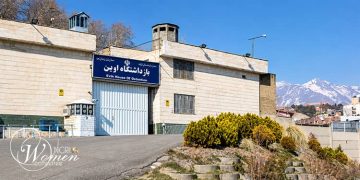
It has been reported that 80 percent of PMOI women detained in the Women’s Ward 3 of Evin Prison had been massacred by September 1988. They included Monireh Rajavi, who had two small daughters and was executed only because she was the sister of the Iranian Resistance’s Leader Massoud Rajavi. There was also Ashraf Ahmadi, a political prisoner from the Shah’s time, with four children. The victims also included a wide range of people from various professions, including PMOI’s female candidates for parliamentary elections Fatemeh Zare’ii from Shiraz, and Zohreh Ainol-Yagheen from Isfahan. Dr. Hamideh Sayyahi and Dr. Shourangiz Karimian, along with her sister, and National Volleyball Team player Forouzan Abdi were among those executed in the 1988 massacre.

An audio clip just recently released by Montazeri’s family on his website, also reveals dreadful details about the massacre of women. The tape recording from Mr. Montazeri’s meeting with members of the Death Commission, includes an example about the execution of a 15-year-old girl who had been taken to prison only two days before to break her resistant brother but since she did not denounce her executed brother, she was executed, as well.

The tape also includes reference to the execution of a pregnant woman in Isfahan.

The overall picture of the 1988 massacre is totally inadequate because the massacre was extensive, carried out in prisons all across the country. In some instances, there was not any survivor. The clerical regime dealt with every information regarding the massacre as top secret, not allowing any leaks.

So, what is known about the massacre has been extracted and pieced together from the limited number of reports by survivors and families who were called to collect the bodies of their loved ones,[5] as well as from scattered acknowledgments made by the regime’s former officials as noted in this article.

The other side of this crime against humanity is of course, the steadfastness of a generation of prisoners who did not buckle under the threat of death and defended their identity which was akin to their nation’s freedom. They thus sealed their nation’s right to freedom of choice and thought, and turned this great crime against humanity into an epical humane epitome of human grace and grit which makes every conscientious human being humble before its magnificence.

The Iranian Resistance has renewed its call for the international prosecution of all perpetrators of the 1988 massacre and crime against humanity in Iran, who are still in power and hold important positions of authority. They include Ali Khamenei (then President under Khomeini), Hassan Rouhani (then assistant to the acting Commander-in-Chief of the Armed Forces), and members of the death commission, Mostafa Pour-Mohammadi (former Minister of Interior and Minister of Justice under Hassan Rouhani), Hossein-Ali Nayyeri (head of the Supreme Disciplinary Court for Judges under Rouhani), Morteza Eshraqi (then Prosecutor), and Ebrahim Raisi (member of the Assembly of Experts, former head of the Astan Qods-e Razavi foundation, former Chief of the Judiciary, and the clerical regime’s incoming president).

[1] A former Intelligence Ministry deputy recorded a video clip in 2008, in which he revealed that the clerical regime had massacred some 33,700 political prisoners and buried them in mass graves. According to Reza Malek, there are between 170 to 190 mass graves across the country.

[2] “Whoever at any stage continues to belong to the (PMOI/MEK) must be executed,” Khomeini’s fatwa read.

[3] Khomeini assigned a three-member so-called “Amnesty Commission”, who held summary trials and actually interrogated prisoners to determine their fate.

The questions were focused on whether the inmate continued to have any allegiances to the PMOI/MEK. If the prisoners were not willing to fully collaborate with the regime against the PMOI/MEK, it was viewed as a sign of sympathy to the organization and the sentence was immediate execution.

[4] Montazeri was ousted and placed under house arrest until his death in 2009, for his protests against the massacre.

[5] A report from Shiraz indicated: “When we the rumors of the massacres spread among the public, we referred to the prison. Executioners told us, ‘What did you expect, that we serve you sweets and candies? We killed 860 people at once in one day! Now, if you hold a funeral, we will raze down your house as well.’ “

Tags: Generation EqualityPrisonersViolence against women
Share12TweetPinShareSendShare

Related Posts

Athletes Who Won Their Championship on the Battlefield for Freedom

June 7, 2026
Athletes Who Won Their Championship on the Battlefield for Freedom

In most countries, when athletes step onto national or international stages, they channel their efforts into fair competition, pursuing medals, records, and championship titles. In Iran, however, a...

Read moreDetails

Iran: Women Arrested Across Multiple Cities as Crackdown Continues

June 4, 2026
Iran: Women Arrested Across Multiple Cities as Crackdown Continues

As the clerical regime in Iran intensifies its repression of dissent following nationwide protests, authorities have expanded their campaign against women, teachers, and artists. From arbitrary arrests and...

Read moreDetails

“No to Executions Tuesdays” Campaign: Continued Pressure on Female Prisoners

June 2, 2026
“No to Executions Tuesdays” Campaign: Continued Pressure on Female Prisoners

Marking the 123rd week of the protest campaign “No to Executions Tuesdays” political prisoners in 56 prisons across Iran launched another hunger strike on Tuesday, June 2, 2026,...

Read moreDetails

Iran: Imprisoned Christian Convert Marks Seventh Day of Hunger Strike

June 1, 2026
Iran: Female Imprisoned Christian Convert Marks Seventh Day of Hunger Strike

Ghazal Marzban, a Christian convert imprisoned in Evin Prison, has entered the seventh day of a hunger strike in protest to the lengthy prison sentence imposed on her....

Read moreDetails

May 2026 Report: The Enduring Resistance of Iranian Women

May 31, 2026
May 2026 Report: The Enduring Resistance of Iranian Women

Political Prisoners Remain Defiant Despite Escalating Crackdowns and Inhumane Conditions May 2026 Report: From the Frontlines to the Prison Cells Monthly May2026_ENDownload New Casualties Confirmed from the January...

Read moreDetails
Next Post
Mothers of Iran martyrs declare support for Khuzestan, as protests continue

Mothers of Iran martyrs declare support for Khuzestan as protests continue

Leave a Reply Cancel reply

Your email address will not be published. Required fields are marked *

Documents

Crushed by Design: Structural Crises and Inequitable Policies Push Female-Headed Households to the Edge

Crushed by Design: Structural Crises and Inequitable Policies Push Female-Headed Households to the Edge

May 18, 2026

Introduction Life for the Iranian people under the religious dictatorship is fraught with hardship and peril from every perspective. Whether...

A Report to CSW70: Gender-Based Discrimination Under Iranian Law

A Report to CSW70: Gender-Based Discrimination Under Iranian Law

March 8, 2026

Structural Inequality and State-Sanctioned Oppression of Women Gender-Based Discrimination Under Iranian Law” is the title of the NCRI Women’s Committee’s...

Annual Report 2026: From Protests, to Uprising, and the Role of Iranian Women

Annual Report 2026: From Protests, to Uprising, and the Role of Iranian Women

March 3, 2026

On the eve of International Women’s Day 2026, the NCRI Women’s Committee presents its Annual Report 2026, offering a recap...

Monthlies

May 2026 Report: The Enduring Resistance of Iranian Women
Monthlies

May 2026 Report: The Enduring Resistance of Iranian Women

May 31, 2026
April 2026 Report: Mass Arrests of Women: Targeted Repression in Time of Crisis
Monthlies

April 2026 Report: Mass Arrests of Women in Iran

April 30, 2026
March 2026 Report: How Iranian Women Are Shaping the Resistance
Monthlies

March 2026 Report: Courage Under Fire

April 3, 2026
January 2026 Report: Women at the Core of the Uprising
Monthlies

January 2026 Report: Women at the Core of the Uprising

January 31, 2026

Articles

Athletes Who Won Their Championship on the Battlefield for Freedom

Athletes Who Won Their Championship on the Battlefield for Freedom

June 7, 2026

In most countries, when athletes step onto national or international stages, they channel their efforts into fair competition, pursuing medals,...

Marjane Satrapi Dies at 56 as a Defiant Voice Against the Iranian Regime

Marjane Satrapi Dies at 56 as a Defiant Voice Against the Iranian Regime

June 5, 2026

Marjane Satrapi, the prominent Iranian-French author and filmmaker, passed away in Paris at the age of 56. She was the...

In Memory of Carol Fontaine: A Steadfast Advocate for Iranian Women and the Struggle for Freedom

In Memory of Carol Fontaine: A Steadfast Advocate for Iranian Women and the Struggle for Freedom

June 2, 2026

The Iranian Resistance has lost one of its loyal friends and valued supporters. Carol Fontaine, a courageous human rights advocate...

The Fallen for Freedom

Nasim Pouraghaei was killed on the evening of January 8, 2026
The Fallen for Freedom

Nasim Pouraghaei

June 6, 2026
Setayesh Shafiei, The Girl Who Was the Sun
The Fallen for Freedom

Setayesh Shafiei, The Girl Who Was the Sun

June 4, 2026
White-Clad in the Line of Fire: Samin Rostami
The Fallen for Freedom

White-Clad in the Line of Fire: Samin Rostami

May 20, 2026
Killed by Two Bullets to the Heart and Leg: Fatemeh Abdollahi
The Fallen for Freedom

Killed by Two Bullets to the Heart and Leg: Fatemeh Abdollahi

May 17, 2026

ABOUT US

NCRI Women Committee

We work extensively with Iranian women outside the country and maintain a permanent contact with women inside Iran. The Women’s Committee is actively involved with many women’s rights organizations and NGO’s and the Iranian diaspora.
The committee is a major source of much of the information received from inside Iran with regards to women. Attending UN Human Rights Council meetings and other international or regional conferences on women’s issues and engaging in a relentless battle against the Iranian regime’s misogyny are part of the activities of members and associates of the committee.

CATEGORIES

  • Activities
  • Articles
  • Documents
  • Famous Women
  • Heroines in Chain
  • IWD Conferences
  • IWD Speeches
  • IWD Videos
  • Maryam Rajavi
  • Maryam Rajavi Speeches
  • Monthlies
  • Podcast
  • Reference Library
  • Solidarity
  • Statements
  • The Fallen for Freedom
  • Videos
  • Women in History
  • Women in Leadership
  • Women of Iranian Resistance
  • Women's News

BROWSE BY TAG

Child marriage coronavirus education execution forced hijab Gender Gap Generation Equality Honor killings Iran Teachers Maryam Akbari Monfared Nurses Plan on Women's Rights and Freedoms Poverty Prisoners Protests rural women Saba Kord Afshari The girl child Violence against women Women's Leadership Women Heads of Household Zeinab Jalalian

The copyright of all the material published on this website has been registered under © 2016 the Women’s Committee of the National Council of Resistance of Iran. To obtain permission to copy, redistribute or publish the material published on this website, you should write to the NCRI Women’s Committee. Please include the link of the original article on our website, women.ncr-iran.org.

Welcome Back!

Login to your account below

Forgotten Password?

Retrieve your password

Please enter your username or email address to reset your password.

Log In

Add New Playlist

No Result
View All Result
  • Home
  • News
    • Women’s News
    • Articles
    • Statements
  • Publications
    • Monthlies
    • Documents
    • Reference Library
  • About Us
    • The NCRI Women’s Committee
    • Gender Equality
    • Women’s Platform
  • Maryam Rajavi
    • Maryam Rajavi
    • Maryam Rajavi Speeches
    • Ten Point Plan for Iran
    • The Plan on Women’s Rights and Freedoms
  • Vanguards
    • The Fallen for Freedom
    • Heroines in Chain
    • Women of Iranian Resistance
    • Famous Women
    • Women in History
  • Events
    • IWD Conferences
    • Activities
    • IWD Speeches
    • Solidarity
  • Video
    • Videos
    • IWD Videos
  • Podcast
  • Donate
  • Contact us
  • فارسی
  • عربی
  • Français

The copyright of all the material published on this website has been registered under © 2016 the Women’s Committee of the National Council of Resistance of Iran. To obtain permission to copy, redistribute or publish the material published on this website, you should write to the NCRI Women’s Committee. Please include the link of the original article on our website, women.ncr-iran.org.