

A 5.9 magnitude earthquake shook East Azerbaijan in the morning of November 8, 2019. The small village of Varnakesh in Mianeh County was one of the hardest hit. Four women and girls were killed and 30 residential units were destroyed. In this brief article, we briefly review the living conditions of the earthquake-stricken women of this village, two months after the earthquake.
The living conditions of the people in this village is very critical due to severe cold. Pregnant women and infants living in the tents suffer greatly due to freezing cold weather. There is no shower, and water leaks from the ceilings of their prefabricated homes.

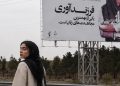
Member of the mullahs’ parliament, Fardin Farmand, said: “We face severe winter cold in these areas. Currently, some villages are covered by 9 meters of snow. It is not possible to travel by car. Tents are worthless in this cold weather and people are freezing. Electrical heaters cannot respond to the needs of people, because the power system in this village was not built for using this number of electrical heaters.” He also added that no baths had been made for the people in this village and that they are deprived of taking showers. (The state-run ILNA news agency, December 14, 2019)
Talking about the conditions of the earthquake-stricken women of Varnakesh, a villager pointed out, “A pregnant woman and two infants are living in a tent. A sick person is living in a tent. This is the condition of our lives under the snow.”
A rural woman who had just returned from chemotherapy said, “I have come back from chemotherapy and our power is out. We want food. We want a warm place to stay in. How is it possible for us to get a house in Tabriz?”

One of the earthquake-stricken women of Varnakesh said, “It is too difficult in these condition to bathe the children. It has been days that I have not been able to give them a bath. (The official IRNA news agency, December 11, 2019)
Infants and pregnant women are the most vulnerable these post-earthquake conditions. Freezing cold weather and lack of hygiene has led to various infections and illnesses caused by the difficult conditions of living in tents.
The clerical regime’s officials have time and again proven to be incompetent and irresponsible whenever there is a natural disaster. A vivid example is the case of Kermanshah Province when it was hit by a 7.3 magnitude earthquake on November 17, 2017 and suffered lots of damages. Even, after two years, the people in these areas are still living in miserable conditions in containers, suffering from various economic, physical and psychological problems.
Women and children are particularly vulnerable in such disasters, suffering the most under poverty, inadequate hygiene, and stress.