
Friday, April 17, 2026
  • English
  • Français
  • فارسی
  • عربى
PODCASTS
NCRI Women Committee Women Resistance Freedom
  • Home
  • NEWS
    • Women’s News
    • Articles
    • Statements
  • PUBLICATIONS
    • Monthlies
    • Documents
    • Reference Library
  • ABOUT US
    • The NCRI Women’s Committee
    • Gender Equality
    • Women’s Platform
  • MARYAM RAJAVI
    • Maryam Rajavi
    • Maryam Rajavi Speeches
    • The Plan on Women’s Rights and Freedoms
    • Ten-Point Plan for the future of Iran
  • VANGUARDS
    • The Fallen for Freedom
    • Heroines in Chain
    • Women of Iranian Resistance
    • Famous Women
    • Women in History
  • EVENTS
    • IWD Conferences
    • Activities
    • IWD Speeches
    • Solidarity
  • VIDEO
    • Videos
    • IWD Videos
  • PODCAST
  • DONATE
  • CONTACT US
No Result
View All Result
NCRI Women Committee Women Resistance Freedom
  • Home
  • NEWS
    • Women’s News
    • Articles
    • Statements
  • PUBLICATIONS
    • Monthlies
    • Documents
    • Reference Library
  • ABOUT US
    • The NCRI Women’s Committee
    • Gender Equality
    • Women’s Platform
  • MARYAM RAJAVI
    • Maryam Rajavi
    • Maryam Rajavi Speeches
    • The Plan on Women’s Rights and Freedoms
    • Ten-Point Plan for the future of Iran
  • VANGUARDS
    • The Fallen for Freedom
    • Heroines in Chain
    • Women of Iranian Resistance
    • Famous Women
    • Women in History
  • EVENTS
    • IWD Conferences
    • Activities
    • IWD Speeches
    • Solidarity
  • VIDEO
    • Videos
    • IWD Videos
  • PODCAST
  • DONATE
  • CONTACT US
No Result
View All Result
NCRI Women Committee
No Result
View All Result
Home The Fallen for Freedom
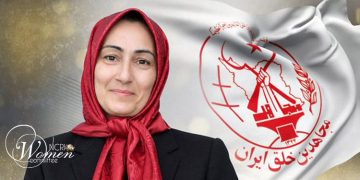
Maryam Hosseini

Maryam Hosseini

Maryam Hosseini

August 30, 2024
in The Fallen for Freedom

Resilient and Resistant

Date of birth: 1964

Place of birth: Tehran

Education: High school diploma

Political activism: 30 years

Years in prison: 4 years

Date of martyrdom: September 1, 2013

Maryam Hosseini was born in Tehran to an average family. From an early age she was acquainted with politics through her two brothers who were political prisoners.

She was a bright and an outstanding student.  She was kind and sympathetic and always tried to help those around her.  She used to volunteer her summer vacations tutoring her less competent classmates.  Maryam’s pure and modest feelings were always concerned with the suffering of impoverished people.

With the beginning of the anti-monarchic demonstrations in 1978-1979, she actively participated in the demonstrations while she was only 14 at the time.  Because of her young age and small physique, people used to pull her out of zones of conflict and take her home.  But Maryam used to rejoin the rallies within a few days again.

With the release of political prisoners from Shah’s prisons, her two brothers were also released, providing an opportunity for her to get to know the People’s Mojahedin Organization of Iran (PMOI/MEK).  Gholam-Hossein, one of her brothers, introduced Maryam Hosseini to the PMOI and its goals.

Maryam joined the PMOI/MEK supporters at the age of 15 and began to promote and sell books and newspapers at school.  Maryam Hosseini was repeatedly expelled from school due to her political activities.  However, with persistent effort, she was able to enroll in another school and continue her work even more passionately.

During a peaceful demonstration on June 23, 1981, while enduring the kicks and punches of Khomeini’s club wielders, Maryam continued to chant “down with reactionaries” until she was arrested with a broken head and wounded body.

She was subsequently taken to a stable made prison outside Karaj, west of Tehran. The torture and abuse in prison failed to break Maryam.  She did not even disclose her real name to the torturers.

Maryam Hosseini was one of the most resilient and resistant prisoners of Ghezelhesar Prison’s notorious punishment ward known as the Residential Unit. [i]  In 1984, she was transferred from the general cellblock to the Residential Unit to crush her resistance.  She persevered, however, through all the vicious tortures, tiring the interrogators and torturers, and becoming an idol for the rest of her inmates.

Maryam Hosseini was finally released after enduring four years of torture and pressure both in Ghezelhesar and Evin prisons. During these four years, Gholam-Hossein and Abbas, her two brothers, had been executed.  So, Maryam returned home to find her elderly mother left alone.  The rest of her family had either been executed, joined the resistance movement, or gone underground.

She had made great efforts to build contact with the PMOI/MEK. Eventually, she managed to leave Iran in 1988 and join the PMOI/MEK in Ashraf.

Maryam’s strength was that she accepted any responsibility wholeheartedly and accomplished it in the best and timely manner, often without having adequate resources. It was with such a high spirit that Maryam Hosseini stayed in Ashraf among the 100 residents who had to protect the residents’ properties until final disposition.

On September 1, 2013, Maryam Hosseini was killed in the attack by Maliki’s special forces. She was handcuffed and blindfolded due to her strong resistance, then shot in the head.

Maryam Hosseini and her 51 comrades thus joined the galaxy of 120,000 PMOI/MEK martyrs. Their memory and names continue to fight the clerical regime by inspiring the Iranian people and youths to rise and resist the mullahs’ dictatorship.

[i] The residential unit was a torture chamber in Ghezelhesar Prison set up specifically for PMOI women prisoners with the aim of distorting their sanity. This was called white massacre since they tortured the prisoners to the point of irreversible insanity through various sadistic mental and physical cruel treatment.  The most common method of torture was to keep the prisoner awake for many consecutive days until she completely lost sense of self, time and place and would inevitably hallucinate and suffer from delusions.

The prisoners were blindfolded throughout the day and torturers constantly surveyed the unit. Unexpected attacks on blindfolded prisoners, accompanied by kicks, beatings and banging their heads against the wall, were also a common practice.

The guards also compelled the prisoners to flog each other. If a prisoner did not comply, the guards would severely torture the other prisoner so that the former was forced to flog her inmate to reduce her suffering.

They also forced the prisoners to mimic animal sounds.  If anyone disobeyed, they would beat her inmates until she was forced to do as the guards ordered, in order to save the lives of her inmates.  The prisoners were also routinely intimidated and humiliated.

All these were done to break the prisoners. The tenor of the torturers was, “you must break down.”

Lajevardi, the head of the torturers of Evin and Ghezelhesar prisons, had told this unit, “Our intention is not to kill you so you can become heroines. There are only two ways you can get out of here, either to repent (treachery) or become insane so that you are no longer useful for the organization.”  This had given the interrogators and torturers an open hand to freely apply any form of mental and psychological torture with the intention of driving the detainees to insanity.

Only a handful of the prisoners were able to relatively recover from the Residential Unit. The majority never returned to their normal state, and despite the passage of 30 years, they are still unable to recall and express what they were exposed to on a daily basis.
Tags: Women's Leadership
ShareTweetPinShareSendShare

Related Posts

Podcast: The Day the Fortress Was Breached

April 7, 2026
Podcast: The Day the Fortress Was Breached

Fearless Women of Iran Who Took on the Regime’s Core Welcome to another episode of podcasts of the Women's Committee of the National Council of Resistance of Iran....

Read moreDetails

Mothers Who Gave Their Lives for Freedom during January 2026 Uprising in Iran

April 6, 2026
Mothers Who Gave Their Lives for Freedom during January 2026 Uprising in Iran

Among those killed during the January 2026 uprising in Iran there are mothers whose names stand out—women who took to the streets for the freedom of Iran and...

Read moreDetails

Amid the harshest trials and tribulations, your inspiring voice made my steps more steadfast

April 5, 2026
Amid the harshest trials and tribulations, your inspiring voice made my steps more steadfast

A letter from Vahid Bani Amerian to Aziz, the mother of the martyred Rezaeis Ms. Zahra Norouzi, who is known as “Aziz,” was born in 1929. She lost...

Read moreDetails

March 2026 Report: Courage Under Fire

April 3, 2026
March 2026 Report: How Iranian Women Are Shaping the Resistance

How Iranian Women Are Shaping the Resistance March 2026 Report - The struggle of Iranian women has long moved in step with the country’s broader fight for freedom....

Read moreDetails

Baroness Verma: Iranian Women Lead the Way to Democracy and Justice

March 26, 2026
Baroness Verma: Iranian Women Lead the Way to Democracy and Justice

On Thursday, March 14, 2026, the conference "Iran: Toward a Democratic Republic" was held at the British Parliament, with the participation of prominent members of both the House...

Read moreDetails
Next Post
Fatemeh Kamyab Sharifi

Fatemeh Kamyab Sharifi

Leave a Reply Cancel reply

Your email address will not be published. Required fields are marked *

Documents

A Report to CSW70: Gender-Based Discrimination Under Iranian Law

A Report to CSW70: Gender-Based Discrimination Under Iranian Law

March 8, 2026

Structural Inequality and State-Sanctioned Oppression of Women Gender-Based Discrimination Under Iranian Law” is the title of the NCRI Women’s Committee’s...

Annual Report 2026: From Protests, to Uprising, and the Role of Iranian Women

Annual Report 2026: From Protests, to Uprising, and the Role of Iranian Women

March 3, 2026

On the eve of International Women’s Day 2026, the NCRI Women’s Committee presents its Annual Report 2026, offering a recap...

Iranian women Who Lost Their Lives in Iran’s January 2026 Uprising

Iranian Women Who Lost Their Lives in Iran’s January 2026 Uprising

January 25, 2026

Names That Must Not Be Forgotten Iranian women played a central and courageous role in the January 2026 uprising, standing...

Monthlies

March 2026 Report: How Iranian Women Are Shaping the Resistance
Monthlies

March 2026 Report: Courage Under Fire

April 3, 2026
January 2026 Report: Women at the Core of the Uprising
Monthlies

January 2026 Report: Women at the Core of the Uprising

January 31, 2026
December 2025 Report: A Year in Review: Iranian Women’s Resistance Against Religious Dictatorship
Monthlies

December 2025 Report: A Year in Review: Iranian Women’s Resistance Against Religious Dictatorship

January 5, 2026
November 2025 Report: Under the Clerical Regime, Nowhere Is Safe for Women in Iran
Monthlies

November 2025 Report: Under the Clerical Regime, Nowhere Is Safe for Women in Iran

November 30, 2025

Articles

Mothers Who Gave Their Lives for Freedom during January 2026 Uprising in Iran

Mothers Who Gave Their Lives for Freedom during January 2026 Uprising in Iran

April 6, 2026

Among those killed during the January 2026 uprising in Iran there are mothers whose names stand out—women who took to...

Amid the harshest trials and tribulations, your inspiring voice made my steps more steadfast

Amid the harshest trials and tribulations, your inspiring voice made my steps more steadfast

April 5, 2026

A letter from Vahid Bani Amerian to Aziz, the mother of the martyred Rezaeis Ms. Zahra Norouzi, who is known...

Ferdows Mahboubi (Mother Mosanna): 50 Years of Dedication to PMOI

Ferdows Mahboubi (Mother Mosanna): 50 Years of Dedication to PMOI

April 2, 2026

Ferdows Mahboubi (Mother Mosanna), one of the steadfast supporters of the People's Mojahedin Organization of Iran (PMOI), passed away in...

The Fallen for Freedom

Ghazal Aghaei Lindi was killed on January 9, 2026
The Fallen for Freedom

Ghazal Aghaei Lindi

April 16, 2026
Farzaneh Tavakkoli, a resident of Arak, was killed on January 9, 2026
The Fallen for Freedom

Farzaneh Tavakkoli

April 13, 2026
Shabnam Ferdowsi was killed on January 8, 2026, during the nationwide protests
The Fallen for Freedom

Shabnam Ferdowsi

April 12, 2026
Samaneh Mirzaei, a resident of Tehran, was killed on January 9, 2026
The Fallen for Freedom

Samaneh Mirzaei

April 10, 2026

ABOUT US

NCRI Women Committee

We work extensively with Iranian women outside the country and maintain a permanent contact with women inside Iran. The Women’s Committee is actively involved with many women’s rights organizations and NGO’s and the Iranian diaspora.
The committee is a major source of much of the information received from inside Iran with regards to women. Attending UN Human Rights Council meetings and other international or regional conferences on women’s issues and engaging in a relentless battle against the Iranian regime’s misogyny are part of the activities of members and associates of the committee.

CATEGORIES

  • Activities
  • Articles
  • Documents
  • Famous Women
  • Heroines in Chain
  • IWD Conferences
  • IWD Speeches
  • IWD Videos
  • Maryam Rajavi
  • Maryam Rajavi Speeches
  • Monthlies
  • Podcast
  • Reference Library
  • Solidarity
  • Statements
  • The Fallen for Freedom
  • Videos
  • Women in History
  • Women in Leadership
  • Women of Iranian Resistance
  • Women's News

BROWSE BY TAG

Child marriage coronavirus education execution forced hijab Gender Gap Generation Equality Honor killings Iran Teachers Maryam Akbari Monfared Nurses Plan on Women's Rights and Freedoms Poverty Prisoners Protests rural women Saba Kord Afshari The girl child Violence against women Women's Leadership Women Heads of Household Zeinab Jalalian

The copyright of all the material published on this website has been registered under © 2016 the Women’s Committee of the National Council of Resistance of Iran. To obtain permission to copy, redistribute or publish the material published on this website, you should write to the NCRI Women’s Committee. Please include the link of the original article on our website, women.ncr-iran.org.

Welcome Back!

Login to your account below

Forgotten Password?

Retrieve your password

Please enter your username or email address to reset your password.

Log In

Add New Playlist

No Result
View All Result
  • Home
  • News
    • Women’s News
    • Articles
    • Statements
  • Publications
    • Monthlies
    • Documents
    • Reference Library
  • About Us
    • The NCRI Women’s Committee
    • Gender Equality
    • Women’s Platform
  • Maryam Rajavi
    • Maryam Rajavi
    • Maryam Rajavi Speeches
    • Ten Point Plan for Iran
    • The Plan on Women’s Rights and Freedoms
  • Vanguards
    • The Fallen for Freedom
    • Heroines in Chain
    • Women of Iranian Resistance
    • Famous Women
    • Women in History
  • Events
    • IWD Conferences
    • Activities
    • IWD Speeches
    • Solidarity
  • Video
    • Videos
    • IWD Videos
  • Podcast
  • Donate
  • Contact us
  • فارسی
  • عربی
  • Français

The copyright of all the material published on this website has been registered under © 2016 the Women’s Committee of the National Council of Resistance of Iran. To obtain permission to copy, redistribute or publish the material published on this website, you should write to the NCRI Women’s Committee. Please include the link of the original article on our website, women.ncr-iran.org.