
Wednesday, July 22, 2026
  • English
  • Français
  • فارسی
  • عربى
PODCASTS
NCRI Women Committee Women Resistance Freedom
  • Home
  • NEWS
    • Women’s News
    • Articles
    • Statements
  • PUBLICATIONS
    • Monthlies
    • Documents
    • Reference Library
  • ABOUT US
    • The NCRI Women’s Committee
    • Gender Equality
    • Women’s Platform
  • MARYAM RAJAVI
    • Maryam Rajavi
    • Maryam Rajavi Speeches
    • The Plan on Women’s Rights and Freedoms
    • Ten-Point Plan for the future of Iran
  • VANGUARDS
    • The Fallen for Freedom
    • Heroines in Chain
    • Women of Iranian Resistance
    • Famous Women
    • Women in History
  • EVENTS
    • IWD Conferences
    • Activities
    • IWD Speeches
    • Solidarity
  • VIDEO
    • Videos
    • IWD Videos
  • PODCAST
  • DONATE
  • CONTACT US
No Result
View All Result
NCRI Women Committee Women Resistance Freedom
  • Home
  • NEWS
    • Women’s News
    • Articles
    • Statements
  • PUBLICATIONS
    • Monthlies
    • Documents
    • Reference Library
  • ABOUT US
    • The NCRI Women’s Committee
    • Gender Equality
    • Women’s Platform
  • MARYAM RAJAVI
    • Maryam Rajavi
    • Maryam Rajavi Speeches
    • The Plan on Women’s Rights and Freedoms
    • Ten-Point Plan for the future of Iran
  • VANGUARDS
    • The Fallen for Freedom
    • Heroines in Chain
    • Women of Iranian Resistance
    • Famous Women
    • Women in History
  • EVENTS
    • IWD Conferences
    • Activities
    • IWD Speeches
    • Solidarity
  • VIDEO
    • Videos
    • IWD Videos
  • PODCAST
  • DONATE
  • CONTACT US
No Result
View All Result
NCRI Women Committee
No Result
View All Result
Home Women of Iranian Resistance
Hengameh

Hengameh Haj Hassan, a heroine in “cage”

June 21, 2019
in Women of Iranian Resistance

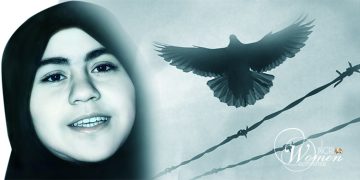
In her beautiful smile, gracious look and influential words, lie her latent strength and courage. Hengameh Haj Hassan, a former political prisoner of the 80s and one of the witnesses of Khomeini’s appalling prisons, in an influential memoir, ‘Face to Face with the Beast,” has written of her prison experience, depicting the limitless brutality of the guards and torturers and the heroism of Mojahed women, members and sympathizers of the People’s Mojahedin Organization of Iran (PMOI/MEK).

I was born in Tehran in 1956.

I completed my education in Tehran.  After receiving my diploma in 1974, I enrolled in nursing at the University of Tehran. I began working as a nurse at Sina Hospital in Tehran shortly after graduating in 1978.

My father worked in the film and movie industry, but after the mullahs came to power, he was forbidden from working unless he cooperated with the ruling regime. And since he refused to abide by their rules and to allow his reputation suffer from such a stigma, he became unemployed and home-bound. My father eventually died at the age of 60 on November 25, 1987, due to the constant harassment from the regime.

The days following the revolution and the 80s in general were a chaotic period.

One of my brothers disappeared in 1981 in the course of some street unrest.  He was 24 years old and apolitical, without any organizational affiliation. He just disappeared at once and never returned home.


Hengameh wrote in her book:

When compulsory hijab was declared, especially at the hospital where I worked, it aroused dissent.
The nursing uniform especially with that beautiful white hat which was the symbol and identity of nurses now had an intruding hand trying to transform this lovely dream into a nightmare. I must admit that as a child, the uniform was primarily what attracted me to the profession. In the interim, nurses became subject to acid attacks carried out by state guards, and we encountered harassment and accusations as they tried to eliminate women from the social scene.

Hengameh says:

I was never politically active up until the revolution. I was a student at first and then began working in my field.

But ever since the revolution, I became a supporter of the Mojahedin Organization (PMOI/MEK). We were several nurses who engaged in political activities in support of the Mojahedin both outside and inside the hospital.

I used to work at various private hospitals in Tehran. During those days, the regime’s agents used to attack the PMOI’s meetings and gatherings and beat their supporters. In such cases, it was our duty to look after the wounded.

In addition to providing essential medical care to the wounded, we were responsible for eluding them out of the hospital as well. The regime’s agents pounced on the wounded in the hospitals and abducted them, most of whom were imprisoned and tortured and later executed.

A number of my classmates and colleagues were arrested and executed in the same era solely for helping the wounded escape.

Shekar Mohammadzadeh, Tooba Rajabi-Sani, Tahmineh Rastegar Moghaddam, Kobra Alizadeh and Akram Bahador.

Tooba, Tahmineh and Kobra were executed in 1981, while Shekar and Akram in 1988.

My dear friend, Shekar, despite a not-guilty verdict was one of the 30,000 political prisoners who were executed during the 1988 massacre.

There were also doctors among us who were executed in the 80s on charges of helping and treating PMOI/MEK supporters: Sadegh Ermashieh, Ali Doroodi and Fahimeh Mir Ahmadi.

After the nationwide protests of June 20, 1981, the widespread arrests of Mojahedin supporters began, and for people like me, the possibility of working at the hospital was no longer viable as it took merely a charge of “cooperating and helping Mojahedin” to get arrested and executed.

Hence, I had to run away from work and I was no longer able to pursue my career in nursing, which I was truly passionate about.

For 5 months, I did not get a chance to go home because of ongoing arrest warrants and imprisonment. I finally decided to go home one day in November 1982. That day, the regime’s agents were busy arresting the youth all over town and so I was captured, too, guilty of being young.


In her book, Hengameh recalls the moments after her arrest:

I saw our street from far away as the guards’ car drove in the Parkway (expressway). I thought to myself what was my mother thinking and doing now? Whatever it is, she is unaware of my situation, but she will soon find out that I am missing and like everyone else will begin to search for me in prisons and cemeteries. I wished I could tell her where they were taking me…

They tightly blindfolded my eyes, punched and kicked me to the bottom of the car, and drove off into a direction which I later realized was towards Evin.

She continues describing her first torture experience in prison:

The interrogator tied me to the torture bed. He chained my hands to the top of the bed and my legs were tightened to the bottom side so that whenever I moved, my feet would remain fixed. Another guard sat on my back and threw a blanket over my face… Suddenly, something struck the bottom of my feet.  I felt a strong stream of horrible pain as if electrocuted transmitting the pain throughout my body making me shake… Other blows came down. I do not know how many! I just cried out of pain…


Hengameh is among the heroines who endured one of the hardest and longest tortures named “cage” in Khomeini’s dungeons in just a few months. She draws attention to this torture in her book:

I was wearing a thick jacket that my aunt had woven and sent to me. Haaji (the head of the prison) stood by my side and struck me with the cable he had in his hand… I was trying to figure out what it is he’s beating me with, but the heavy blows continued one after another and it was impossible to concentrate.  I became dizzy and confused and my head was pounding. When I cried out, Hajj Davoud stopped and said, “Take her away!”

They took me to the corridor which lead to the cells.  We entered a room on the left side of the hall just by the entrance and I was handed over to a woman there. She put me in the middle of two wooden boards that were perhaps around half a meter from each other, and told me to stand in between. My eyes were still blindfolded…

I was there for about a week, standing in a vertical position, forbidden from removing my chador, scarf, nor blindfold. I was not permitted to cough! Not allowed to talk, and in case of an emergency, I had to raise my hand. I stood there the whole time, as if I were in a coffin!

Sometimes I felt like I am dying due to lack of airflow.

The program was as such: we were awaken by the morning call to prayers just before dawn, between five and six and given three minutes for washing and ablution, and five minutes of prayer, and then kept inside the cage and ate breakfast there until noon when we were given another three minutes to use the bathroom and prayers, then back to the cage for lunch and sometime later during the day for the last prayer of the day we were given a few minutes until sent back to the cage to wait for prayers, dinner and finally at 12:00 AM, we could lie down and sleep.

We usually got between four and five hours of sleep and the routine continued for the following days, weeks, and months…

Nothing bothered me as much as being blindfolded; it was the most effective way of cutting off a person from the outside world, and forced one to look inside oneself. We were forbidden to sleep or even nap during the day up until 12:00 AM and were beaten abruptly if we did so, which was the worst shock.

Also, we had to sit so that our head would not surpass the height of the cage walls, which was half a meter high. If it moved beyond, what followed were kicks, punches, and cable beatings of the guards forcing you to bend over.

So, for people who were tall, like me, sitting down in a bent position all day was a lot of physical pressure to endure. Likewise, when eating, we had to make no sounds, such as the sound of a spoon against a plate, and if it happened, we were accused of communicating via Morse code with the cage near by, which lead to further beatings and torture.

As Hengameh said during the interview, this horrible period lasted up to seven months, and eventually she and other heroes of the cage, who defied their enemy with their resistance and courage, finally came out of it.

Unfortunately, many suffered immense psychological damage. Many never returned to their original state as they lost their mental balance and their touch with emotions. And many others, after enduring such hard times, were hanged in the massacre of 1988, sacrificing their lives for the freedom of their homeland.

Perhaps they anticipated that some courageous and strong people, like Hengameh, would one day narrate what happened to them and imprint their stories on the history pages of Iranian resistance.


Hengameh explains how she was released:

During the years I was in prison, one of the most controversial political issues of the day was Montazeri’s fight with the head of government. The controversy reached the point where the agents of the regime were forced to release some prisoners, which included me, as well.

Two years after my release, I was fortunate enough to reconnect with the organization. I established my communications, and eventually by the end of 1986, I left the country to join the resistance across the border.

It has been 32 years since then; 32 years of moments filled with memories of friends and loved ones… Those who have assured me of victory and taught me the meaning of life, and those whom I have always felt in every moment of the struggle, chanting of victory on my journey.

Especially today, I see all those heroes in the streets of Tehran.
ShareTweetPinShareSendShare

Related Posts

“No to Execution Tuesdays” Campaign Continues into Its 130th Week Across 59 Prisons

July 21, 2026
"No to Execution Tuesdays" Campaign Continues into Its 130th Week Across 59 Prisons

Marking its 130th week across 59 prisons, the "No to Execution Tuesdays" campaign continues its hunger strike, joined this week by Neyshabur Prison. The 130th week of the...

Read moreDetails

Iran: Evin Prison Denies In-Person Family Visits to Women Political Prisoners

July 21, 2026
Evin Prison: Hot Water Cut Off, Severe Shortages of Basic Supplies and Medication Reported

Women political prisoners held in the women's ward of Evin Prison were denied in-person family visits on Sunday, July 19. Instead, they were only permitted to communicate with...

Read moreDetails

Iran: Families of Prisoners Rally Outside Ghezel Hesar Prison to Protest Death Sentences

July 20, 2026
Iran: Families of Prisoners Rally Outside Ghezel Hesar Prison to Protest Death Sentences

As the hunger strike and sit-in by approximately 1,500 death row prisoners in Unit 2 of Ghezel Hesar Prison continue, more than 500 families of prisoners gathered outside...

Read moreDetails

Iran: Protesters Sentenced to Jail and Flogging; Prison Term Upheld on Appeal

July 20, 2026
Iran: Protesters Sentenced to Jail and Flogging; Prison Term Upheld on Appeal Two Women Face 74 Lashes and 7 Years Prison over Iran Protests

Protesters Sentenced to Jail and Flogging; Prison Term Upheld on Appeal Fariba Hosseini, a 37-year-old dentist based in Shiraz, has been sentenced by Branch 1 of the Revolutionary...

Read moreDetails

Iran: Azam Gerami, 58 and Mother of Three, Executed in Yasuj

July 19, 2026
Iran: Azam Gerami, 58 and Mother of Three, Executed in Yasuj

The clerical regime executed another woman at dawn on Saturday, July 18, 2026 at the Central Prison of Yasuj, the capital of Kohgiluyeh and Boyer-Ahmad province, southwestern Iran....

Read moreDetails
Next Post
poverty

Nargess Tarighat: The science of struggle

Leave a Reply Cancel reply

Your email address will not be published. Required fields are marked *

Documents

Call for Immediate Action to Halt the Death Sentence of Arghavan Fallahi

Sign our Statement to Halt the Death Sentence of 25-Year-Old Political Prisoner Arghavan Fallahi

July 10, 2026

Statement Calling for Immediate Action to Halt the Death Sentence of 25-Year-Old Political Prisoner Arghavan Fallahi We express our profound...

The Ineffectiveness of Population Policies in Iran: Economy, Aging, and the Overlooked Rights of Women

The Ineffectiveness of Population Policies in Iran: Economy, Aging, and the Overlooked Rights of Women

July 10, 2026

Abstract: A compilation of official data, media reports, and disclosures published in April, May, and June 2026 demonstrates that Iran...

Crushed by Design: Structural Crises and Inequitable Policies Push Female-Headed Households to the Edge

Crushed by Design: Structural Crises and Inequitable Policies Push Female-Headed Households to the Edge

May 18, 2026

Introduction Life for the Iranian people under the religious dictatorship is fraught with hardship and peril from every perspective. Whether...

Monthlies

June 2026 Report: Working Iranian Women Erased from Labor Market
Monthlies

June 2026 Report: Working Iranian Women Erased from Labor Market

July 5, 2026
May 2026 Report: The Enduring Resistance of Iranian Women
Monthlies

May 2026 Report: The Enduring Resistance of Iranian Women

May 31, 2026
April 2026 Report: Mass Arrests of Women: Targeted Repression in Time of Crisis
Monthlies

April 2026 Report: Mass Arrests of Women in Iran

April 30, 2026
March 2026 Report: How Iranian Women Are Shaping the Resistance
Monthlies

March 2026 Report: Courage Under Fire

April 3, 2026

Articles

Widows in Iran: An Analysis of Legal Challenges and the Structure of Discrimination

Widows in Iran: An Analysis of Legal Challenges and the Structure of Discrimination

July 17, 2026

Introduction: In the political and legal structure governing Iran, misogyny and gender discrimination have been institutionalized as a fundamental principle,...

Iranian Women Trapped by War, Poverty, and Domestic Abuse

Iranian Women Trapped by War, Poverty, and Domestic Abuse

July 14, 2026

The war and intensifying economic crises in recent months have exerted the greatest and most direct pressure on Iranian women,...

JINNEWS: An Account of Women Prisoners’ Resistance in Iran Amid Repression and Discrimination

JINNEWS: An Account of Women Prisoners’ Resistance in Iran Amid Repression and Discrimination

July 7, 2026

Turkey’s JINNEWS, one of the region’s well-known news outlets covering women’s issues and human rights, published a report on June...

The Fallen for Freedom

Parastou Namavar was fatally shot by Iranian regime forces
The Fallen for Freedom

Parastou Namavar

July 18, 2026
Dina Malek, a 20-year-old woman, was fatally shot by Iranian security forces during the nationwide protests in January 2026
The Fallen for Freedom

Dina Malek

July 16, 2026
Setareh Rafiei was born on June 11, 2006
The Fallen for Freedom

Setareh Rafiei

July 9, 2026
Elham Zeinali A Compassionate Nurse and the Pillar of Her Family
The Fallen for Freedom

Elham Zeinali

July 2, 2026

ABOUT US

NCRI Women Committee

We work extensively with Iranian women outside the country and maintain a permanent contact with women inside Iran. The Women’s Committee is actively involved with many women’s rights organizations and NGO’s and the Iranian diaspora.
The committee is a major source of much of the information received from inside Iran with regards to women. Attending UN Human Rights Council meetings and other international or regional conferences on women’s issues and engaging in a relentless battle against the Iranian regime’s misogyny are part of the activities of members and associates of the committee.

CATEGORIES

  • Activities
  • Articles
  • Documents
  • Famous Women
  • Heroines in Chain
  • IWD Conferences
  • IWD Speeches
  • IWD Videos
  • Maryam Rajavi
  • Maryam Rajavi Speeches
  • Monthlies
  • Podcast
  • Reference Library
  • Solidarity
  • Statements
  • The Fallen for Freedom
  • Videos
  • Women in History
  • Women in Leadership
  • Women of Iranian Resistance
  • Women's News

BROWSE BY TAG

Child marriage coronavirus education execution forced hijab Gender Gap Generation Equality Honor killings Iran Teachers Maryam Akbari Monfared Nurses Plan on Women's Rights and Freedoms Poverty Prisoners Protests rural women Saba Kord Afshari The girl child Violence against women Women's Leadership Women Heads of Household Zeinab Jalalian

The copyright of all the material published on this website has been registered under © 2016 the Women’s Committee of the National Council of Resistance of Iran. To obtain permission to copy, redistribute or publish the material published on this website, you should write to the NCRI Women’s Committee. Please include the link of the original article on our website, women.ncr-iran.org.

Welcome Back!

Login to your account below

Forgotten Password?

Retrieve your password

Please enter your username or email address to reset your password.

Log In

Add New Playlist

No Result
View All Result
  • Home
  • News
    • Women’s News
    • Articles
    • Statements
  • Publications
    • Monthlies
    • Documents
    • Reference Library
  • About Us
    • The NCRI Women’s Committee
    • Gender Equality
    • Women’s Platform
  • Maryam Rajavi
    • Maryam Rajavi
    • Maryam Rajavi Speeches
    • Ten Point Plan for Iran
    • The Plan on Women’s Rights and Freedoms
  • Vanguards
    • The Fallen for Freedom
    • Heroines in Chain
    • Women of Iranian Resistance
    • Famous Women
    • Women in History
  • Events
    • IWD Conferences
    • Activities
    • IWD Speeches
    • Solidarity
  • Video
    • Videos
    • IWD Videos
  • Podcast
  • DONATE
  • Contact us
  • فارسی
  • عربی
  • Français

The copyright of all the material published on this website has been registered under © 2016 the Women’s Committee of the National Council of Resistance of Iran. To obtain permission to copy, redistribute or publish the material published on this website, you should write to the NCRI Women’s Committee. Please include the link of the original article on our website, women.ncr-iran.org.