
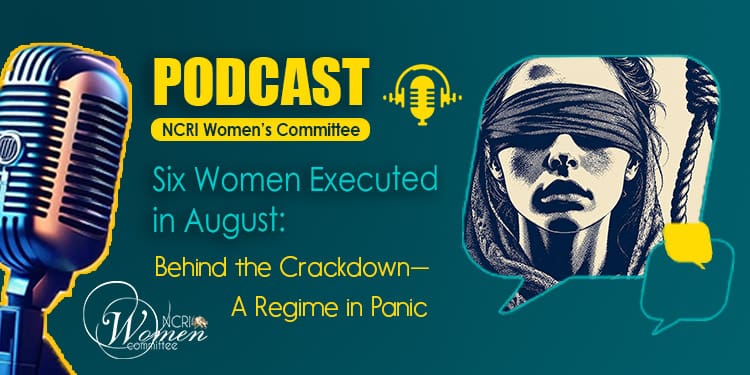
Welcome to another episode of podcasts of the Women’s Committee of the National Council of Resistance of Iran. We’re really glad you’re here with us today. Yeah, absolutely. Thanks for tuning in. Because today we’re opening up a stack of, well frankly harrowing and incredibly urgent reports out of Iran.
And they detail a really unprecedented surge in executions, some incredibly harsh sentences and just brutal prison conditions for women. Right. It’s a massive amount of data to process and it’s quite heavy. It is.
Because at first glance, reading through a catalog of mass arrests and executions, it looks like a display of absolute unchallengeable state power. It really does. It looks like an authority just flexing its muscles. Right?
Yeah. Showing that it can’t be broken.
But what if we’re misinterpreting the signal entirely? What if extreme crackdown actually signifies the exact opposite? That is the central mystery here.
Because when you stop looking at just the sheer volume of the crackdown and you start analyzing the granular mechanics, like who specifically is being targeted and for what the narrative of a secure state just shatters. Let’s ground this in the most immediate data we have, which is August 2026.
According to reports, the clerical regime executed six women in that single month. Six women in one month? Yeah.
And just to give you the baseline, that rate of executions for women in a one month span is completely unprecedented over the last twenty years. It’s a massive statistical anomaly. I mean, in any sociological analysis, when a metric like capital punishment spikes that violently, you don’t just record the number. Right. You have to ask why.
Exactly. You have to investigate what environmental trigger caused the state machinery to accelerate to that degree. And this August spike brings the total number of women executed since the start of 2026 to 24. And, you know, it’s dangerously easy when we do these deep dives for statistics to just wash over you as abstract numbers. Yeah.
They just become data points on a graph. Right. So I want to halt that right now. We need to honor the reality of these reports by actually reading the details of the six women executed this past August. I think that’s essential.
The specific demographics tell us a lot about the scope of the state’s dragnet. So on August 2, Mahtab Shir Mohammadi, who was 32 years old with one child, was executed in the prison of Yasuj. And on August 8, Marzieh Nayyeri, who was only 24, was executed in the Central Prison of Qazvin. Then on August 19, Donya Mohammadi, just 20 years old, was executed in the Central Prison of Ilam. A 20 year old, I mean someone who has essentially just entered adulthood facing the ultimate penalty of the state.
It’s just devastating. And then on August 23 Fatima Kamalzari, 30 years old executed in the central prison of Quranj. The very next day August 24 Arezou Rasdad, 23 executed in Isfahan and finally on August 25 Zahra Azizpur 43 years old and a mother of one executed in the Lakan Prison of Rasht. If you look at the spread there, Yasuj, Qazvin, Ilam, Karaj, Isfahan, Rasht. They’re all over the map.
Right. Which tells us this is not, it’s not a rogue local judge or some isolated regional crackdown. That geographical distribution proves this is a coordinated nationwide directive coming from the absolute highest levels.
But I struggle with this conclusion you’re hinting at because executing 24 women, breaking a two decade record, ignoring all the international outcry, that doesn’t look like vulnerability to me. I know it sounds counterintuitive.
It just looks like a regime that feels untouchable, right? Like, they’re acting with total impunity. Why this sudden unprecedented spike in August? It feels like reading a list of casualties from a war zone, not a functioning justice system. What is driving this sudden acceleration?
If we connect this to the bigger picture, well, we have to remember the timeline this year. These executions are not happening in a vacuum. The reports draw a direct causal line between this unprecedented wave of violence in August and the massive nationwide uprising that shook the country in January 2026.
So you’re arguing that an August execution spike is the state’s delayed shockwave response to a January protest. Precisely.
Walk me through how you see that mechanism working. Well, the January uprising proved that the population is capable of mobilizing rapidly, you know, threatening the foundational stability of the state. What we are seeing in August is the state’s machinery attempting to retroactively salt the earth. Oh, wow. Yeah.
They are trying to ensure the societal conditions that allowed January to happen can never materialize again.
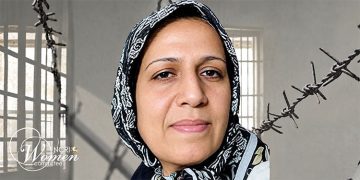
That actually brings us to the actual charges and punishments, which according to the documents, seem wildly disconnected from the alleged crimes. Very much so. Let’s look at Arghavan Fallahi. She is a 25-year-old political prisoner and a supporter of the People’s Mojahedin Organization of Iran or the PMOI.
The supreme court recently outheld her death sentence despite a massive wave of international protest. And for a listener trying to understand the context, the PMOI has been the most organized, historically deeply rooted resistance movement against the clerical regime for decades. Right. So affiliation with them triggers the state’s deepest institutional paranoia. Upholding that sentence tells us the domestic need to project terror is completely overriding any concern about international diplomatic blowback.
Okay. But then you encounter cases that defy literally all standard legal logic. Take the case of Leila Abolhassani. She’s a 43 year old mother of two teenage girls. She was sentenced to death.
It’s hard to even process that. And according to the reports, her crime was filming a store that was on fire during the protests. Yeah. Sentencing a mother to death for filming a fire. Yeah.
Mean, it’s like using a wrecking ball to squash an ant. It really is. It defies all logic. How does the regime justify this internally? Because you are looking at it through the lens of criminal justice, and this is, quite frankly asymmetrical psychological warfare.
Psychological warfare. Yeah. To this state, a 43-year-old mother with a camera is not an ant. She is an existential threat. When they use the wrecking ball of a death sentence for filming a fire, they aren’t just punishing Leila.
They’re sending a message.
Exactly. They are constructing a psychological barrier for every other citizen. If the penalty for holding a camera is death, how many people will dare to actually take to the streets? Right, they’re inflating the cost of even passive involvement to an astronomical level.
Yeah. They’re saying, If we can execute you for watching and filming, imagine what we will do if you actually participate. Precisely. And we see this wide net of terror passed again in the Shahada Square case in Isfahan. Oh, twin sisters.
Yes. The court convicted twin sisters, Taraneh and Romina Rahimi. Tarana received a death sentence plus eleven years in prison. Her twin, Romina, was sentenced to twenty five years. That’s practically a life sentence.
It is. And in that same sweeping case, Setayesh Saedi was handed five years? And the reports also document physical public degradation too. Two female protesters from the January uprising, Neda Dadehjani and Setayesh Sarabi, were recently sentenced to 31 lashes each. At the criminal court of Qorveh.
Yes. Flogging’s in 2026. It feels so medieval. What is the strategic value of an archaic punishment like that in a modern state? Well, flogging serves a very different function than a closed door prison sentence.
It is a spectacle. A violent one. A spectacle of bodily violation meant to humiliate the individual and totally strip them of their dignity within their own community. It leaves physical and psychological scars meant to serve as a walking warning sign to their neighbors. Speaking of the impact on the community, the arrests haven’t stopped at all.
The NCRI reported 11 resistance supporters arrested recently. One of them, a 38 year old woman named Ghazal Sayyadi, was taken in June 2026. And her whereabouts and condition remain completely unknown. Completely unknown. The mechanism of the forced disappearance is arguably one of the most destructive tools in a state’s arsenal.
How so? I mean it removes the person from the board, sure, but doesn’t it just leave the family in the dark? It does much more than that. When a state officially arrests you, there is a process. When they simply vanish you, they create an agonizing perpetual state of limbo.
Because you just don’t know. Right. The family can’t mourn because she might be alive. They can’t fight for her release because the state won’t acknowledge they even have her. That psychological torture radiates out from the family into the entire neighborhood.
It teaches the community that the state can simply erase you from existence without a trace. Exactly. We’ve talked about the public spectacle of executions and floggings, is meant for everyone on the outside to see. Yeah. But what happens when the prison doors actually close?
That’s a whole different level of abuse. It is because the reports show the terror doesn’t stop after the sentence is handed down. Here’s where it gets really interesting and I mean that in the most horrifying way possible. The state isn’t just using guards and batons, they are utilizing the infrastructure of the prisons themselves as a weapon. Biological and environmental neglect as an intentional policy Let’s look at Fardis Prison in Karaj.
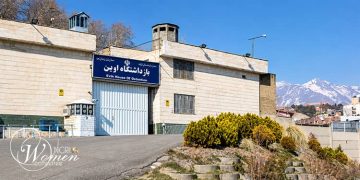
The NCRI documents describe women in Ward 1 being exposed to infectious diseases because raw sewage is literally overflowing into the recreation courtyard. We are talking about the height of summer heat and the authorities are reportedly refusing all medical care to the women who fall ill. Or look at Ahvaz Sepidar Prison. That one is notoriously bad. Over 300 women detained in severe overcrowding.
Ahvaz has some of the most brutal summer temperature and there are no functioning cooling systems and zero sanitation. Are they weaponizing the infrastructure itself? They absolutely are. When you deny basic human necessities you are enacting a deliberate extrajudicial punishment. But are we sure this isn’t just, you know, bureaucratic incompetence like an underfunded prison system falling apart?
If it were mere incompetence, you would see attempts at mitigation or at least the allowance of medical transfers when the environment causes critical illness. But the reports explicitly state that medical care is being actively denied. So it’s intentional? Completely. They are using the raw elements of the environment to break the prisoners’ bodies and spirits without having to officially sign a death warrant.
It is plausible deniability for systemic abuse. It is. And it is fatal. The documents outline the case of Toktam Ramazani, a 37-year-old woman in Vakilabad Prison. On August 11, she died.
Tragic. The reports state her death was the direct result of a total lack of medical care and the absolute refusal by authorities to transfer her to an outside hospital. That isn’t a tragic accident. It reads like a passive execution. Exactly.
And there are women currently enduring this slow motion violence right now. Shiva Esmaeli is 61 years old. She’s a retired agricultural engineer, a mother of three serving ten years in Evan Prison. Okay. She has a severe spinal condition suffering from agonizing pain and she is being flatly denied the specialized treatment she needs.
And the prisoners are fighting back with literally the only currency they have left. Mahboubeh Shabani, who was arrested during the January protest simply for helping the wounded, went on a hunger strike on August 20. Right to protest the lethal conditions at Vakilabad and her denial of medical care. But let’s pause on that. If the authorities are already engineering an environment designed to kill you, why would a hunger strike work?
Aren’t you just doing their job for them? It is the ultimate paradox of resistance in a closed system. A hunger strike is rarely about successfully bargaining with a warden. It is a desperate, profound act of reclaiming bodily autonomy. Taking back control.
Yeah. When the state controls everything you see, hear, eat, and breathe, refusing food is the one absolute statement of control a prisoner has left. Left. It forces the state to watch them choose their own terms, which disrupts the psychology of absolute domination. And that domination extends beyond the prisoner to their families.
Look at the psychological hostage tactics being used. Oh, is incredibly dark. Atefeh Hassani is at Fardis Prison. The Ministry of Intelligence explicitly told her she will not be freed until her brother, who is a political prisoner in another facility, complies with their demands. That is collective punishment.
Plain and simple. It leverages the deepest human bonds to extract political compliance. Or the case of Massoumeh Azhini. She is a 63-year-old political prisoner who has been held in a state of complete limbo for over four months seeking justice for her brother who was massacred in 1988. And for context, the 1988 massacre involved the mass execution of thousands of political prisoners.
It remains one of the darkest unresolved traumas in Iranian history. So bringing it up is a major red line for the regime. Huge. The fact that a 63-year-old woman is being punished decades later just for asking what happened to her brother shows that the state’s memory is infinitely long. Their tolerance for any challenge to their historical narrative is zero.
The last tactic detailed in these reports is perhaps the most insidious. In Dowlatabad Prison in Isfahan, authorities are intentionally mixing prison populations. Right. Political prisoners like 27-year-old journalism student Maryam Javadi and Massoumeh Sarbanzadeh, a 50-year-old mother who is also being denied medical care, are being forced to serve time alongside common convicts. Many of whom are violent offenders.
We talked about plausible deniability earlier with the medical neglect. This is the ultimate form of outsourcing violence. How does that work in practice? Like, mechanically? By placing a journalism student in a cell with violent offenders, the state doesn’t have to lay a finger on her to torture her.
They simply place her in an incredibly volatile, dangerous environment and look away. Wow. If she is assaulted or killed, the state washes its hands and blames prison dynamics, neatly avoiding the international condemnation of a formal political So if we pull all these threads together, we have a state breaking a twenty year record for executing women in August, we have death sentences handed down for holding a camera, we have twin sisters locked away for decades. It’s the evil floggings. Yeah.
Medieval floggings, raw sewage in courtyards, denial of spinal treatments, hostage taking of siblings, and the intentional outsourcing of violence to common convicts. So what does this all mean? We come back to our original debate. I argued this looks like absolute power. And the source material itself provides the counter argument explicitly stated by the regime’s own officials.
Oh, the Yazd quote. Yes. There is a deeply revealing incident documented in the central prison of Yazd. Judicial officials were addressing death row political prisoners, and I want to look closely at the exact quote from the report. Go ahead.
The official said, quote, your nature is like that of pigs. We know that if you ever gain power, you will kill us. Therefore, we will kill you first so that you never gain power. Unquote. I mean, it’s a stunning thing to say out loud.
This raises an important question about the internal psychology of the people running the system. That quote from the ASD officials is the Rosetta Stone for understanding everything we’ve discussed today. It’s an admission. It is a completely unfiltered admission of vulnerability. Help me interpret that.
They are standing in front of chained prisoners threatening to kill them. That sounds like the ultimate power dynamic. But look at the justification they offer. They don’t say, we are killing you because we are righteous, or we are killing you because you broke the law. They say, we know that if you ever gain power, we will kill you first so that you never gain power.
Oh wow. They are acknowledging that losing power is a very real imminent possibility in their minds. Exactly. That is not the language of a confident secure government. That is the language of sheer existential panic.
Yeah. The extent of these abuses, the executions, the sewage, the absurd sentences is a desperate bid to avoid another January uprising. It proves that the regime feels the ground shifting beneath its feet. They are terrified of their own citizens. It’s like the fortress guards aren’t just shooting at shadows.
They are realizing the shadows outnumber them. When consent is entirely gone and you can no longer govern through policy or legitimacy, terror is literally the only tool you have left in the box. And historical precedent is very clear on this point. When a governing body relies entirely on absolute escalating terror fueled by an explicitly stated fear of its own populace? It is a system living on borrowed time.
How long can a foundation built strictly on panic actually hold? That is something incredibly profound for you, our listener, to mull over as we wrap up this deep dive. It makes you think. It does. We discussed the state executing a mother for holding a smartphone to film a fire.
It highlights a massive vulnerability. It makes you wonder if a single 40 woman with a cell phone camera strikes so much existential fear into the heart of a heavily armed state that they feel they must hang her. What happens to that state when millions of those cameras all turn on and start recording at the exact same time? Terror is a strong weapon, but sunlight is a great disinfectant. The bravery of these women from the 20 year olds facing execution to the women launching hunger strikes in legal conditions is a testament to a resistance that the state simply cannot extinguish.
And their bravery shouldn’t happen in a void. We invite you to take action in support of the Iranian people’s resistance and its incredibly brave women. Absolutely. We strongly encourage you to donate to the NCRI Women’s Committee. Your contribution directly supports the genuine cause of the Iranian women’s struggle for basic human rights and freedom.
Because understanding the mechanics of what is happening is step one. Step two is using that knowledge to support those on the ground. Well said. To learn more about the situation, to read the full harrowing reports we unpacked today, and to find out how you can directly help, please visit our website at wncri.org. That is wncri.org.
Thanks for listening everyone. Thank you so much for joining us for this heavy, but absolutely vital deep dive bearing witness to these realities is important. Take care of yourselves, stay curious, and we will see you on the next deep dive. Goodbye until next time.