
Wednesday, June 10, 2026
  • English
  • Français
  • فارسی
  • عربى
PODCASTS
NCRI Women Committee Women Resistance Freedom
  • Home
  • NEWS
    • Women’s News
    • Articles
    • Statements
  • PUBLICATIONS
    • Monthlies
    • Documents
    • Reference Library
  • ABOUT US
    • The NCRI Women’s Committee
    • Gender Equality
    • Women’s Platform
  • MARYAM RAJAVI
    • Maryam Rajavi
    • Maryam Rajavi Speeches
    • The Plan on Women’s Rights and Freedoms
    • Ten-Point Plan for the future of Iran
  • VANGUARDS
    • The Fallen for Freedom
    • Heroines in Chain
    • Women of Iranian Resistance
    • Famous Women
    • Women in History
  • EVENTS
    • IWD Conferences
    • Activities
    • IWD Speeches
    • Solidarity
  • VIDEO
    • Videos
    • IWD Videos
  • PODCAST
  • DONATE
  • CONTACT US
No Result
View All Result
NCRI Women Committee Women Resistance Freedom
  • Home
  • NEWS
    • Women’s News
    • Articles
    • Statements
  • PUBLICATIONS
    • Monthlies
    • Documents
    • Reference Library
  • ABOUT US
    • The NCRI Women’s Committee
    • Gender Equality
    • Women’s Platform
  • MARYAM RAJAVI
    • Maryam Rajavi
    • Maryam Rajavi Speeches
    • The Plan on Women’s Rights and Freedoms
    • Ten-Point Plan for the future of Iran
  • VANGUARDS
    • The Fallen for Freedom
    • Heroines in Chain
    • Women of Iranian Resistance
    • Famous Women
    • Women in History
  • EVENTS
    • IWD Conferences
    • Activities
    • IWD Speeches
    • Solidarity
  • VIDEO
    • Videos
    • IWD Videos
  • PODCAST
  • DONATE
  • CONTACT US
No Result
View All Result
NCRI Women Committee
No Result
View All Result
Home Heroines in Chain
The Children of Evin Prison memoirs of Azam Haj Heydari, Part 10

Helen Arfaii

The Children of Evin

June 10, 2026
in Heroines in Chain

Prison Memoirs of Azam Haj Heydari from the book The Price of Being Human — Part Ten

In this tenth installment of the prison memoirs of Azam Haj Heydari, published in The Price of Being Human, the author recounts harrowing memories of the torture of young girls in Evin Prison at the hands of Khomeini’s Guards and the unwavering support that imprisoned PMOI women gave to these innocent children of Evin.

At the time, Azam was a young teacher in her early twenties who had chosen the path of resistance. She spent five years in the Temporary Judiciary Detention Center, Evin, Qezel Hesar, and Gohardasht prisons, where she endured savage torture at the hands of Khomeini’s Guards.

The Thirteen-Year-Old Girl

It was early 1982. The number of arrests had grown so large that the wards were dangerously overcrowded. Every day, several prisoners fainted from the crushing conditions and lack of air.

As a result, we were transferred to a larger ward.

One day, while I was sitting near the door of Room One, I saw a young girl who looked no older than twelve or thirteen enter the ward. Her face was drawn and anxious, her eyes red from crying. She walked toward our room but stopped at the doorway, frozen in place, staring at the people inside with bewilderment, unsure of what to do.

I recognized that expression.

New arrivals often looked like that, either because they had just been arrested or because they had spent months in solitary confinement before being brought into a general ward.

I walked over to her and said hello.

“Don’t worry,” I told her. “Come sit with me for a minute.”

“Where is this place?” she asked.

Her question surprised me.

Did she really not know she was in Evin?

“Sit down and rest for a while,” I said. “I’ll explain everything afterward.”

The girl was exhausted, thirsty, and hungry. Unfortunately, we had almost nothing to give her.

We went from room to room collecting whatever we could find. From one room we got a little bread. From another, a small portion of lentil rice—what we jokingly called slop rice. She ate a little and then said:

“I was so hungry my stomach felt stuck to my back.”

Her name was Fatemeh.

From the way she behaved, it was obvious that she was completely innocent and bewildered by everything around her. She could barely express herself. As I talked with her, I realized she was illiterate.

She was from Saveh.

She cried constantly and asked for her mother.

I asked what had happened.

She explained that her father was a member of a local Revolutionary Committee and owned a candle-making workshop where she and her brother worked.

One afternoon, when the workshop was closed, a boy from the neighborhood had come by and asked to use the workshop to make something. Since most people in the area were related and the boy was one of their relatives, she had let him in.

According to the Guards, however, the boy had been carrying explosives. They claimed that when they arrived, Fatemeh had helped him escape.

Her own father had then handed her over to the Guards.

Fatemeh continued crying.

“I want to go home to my mother,” she kept saying.

That night we did everything we could to comfort her. We found a place for her to sleep among us, and eventually she fell asleep.

The next morning her name was called over the loudspeaker for interrogation.

She was trembling with fear.

“They’re taking me somewhere,” she cried. “Where are they taking me?”

I held her head against my chest.

“Don’t be afraid,” I told her. “Be brave. Nothing will happen.”

I kissed her forehead, and she left for interrogation.

When she returned, her feet were swollen, bloody, and badly injured. She could barely walk.

As soon as she entered the ward, she collapsed face-first onto the floor.

We helped her up and made a place for her to lie down.

She had fainted from weakness.

Every so often she cried out in her sleep:

“No! No! Leave me alone!”

We searched desperately for something to give her, but there was almost nothing available.

At tea time, each prisoner received a single sugar cube as part of her ration. Ten or fifteen of the women gave up their own sugar cubes. We dissolved them in water and made sugar water for Fatemeh in the hope that it would help her recover.

Several hours later she regained consciousness.

“Where am I?” she asked.

“You’re lying in the room,” I told her.

“I’m not in the interrogation section?”

“No,” I said. “You’re safe here with us.”

Then I asked:

“Fatemeh, while you were asleep you kept shouting, ‘No! Leave me alone!’ Did something happen?”

She looked at me with tear-filled eyes.

Her throat tightened with emotion.

“They left me in a hallway,” she said. “Several men came over. They pointed at me and said, ‘That’s the one.’ Then they started laughing and (sexually) harassing me. In my dream, they came back again.”

When Fatemeh told me what had happened, I began to cry.

I thought to myself: My God, what could this little girl—who barely understands the world around her—possibly have done to deserve falling into the hands of these monsters, with no way to defend herself?

Then I caught myself.

What else should I have expected from them?

I told her:

“Don’t cry. Be brave. If they come after you again, fight back and defend yourself.”

She looked at me in surprise.

“But I’m not strong enough,” she said.

“That doesn’t matter,” I replied. “What matters is that you defend yourself.”

A smile suddenly appeared on her face.

It was as though she had understood something important.

“You learn so much in this place,” she said. “From now on, I’ll defend myself.”

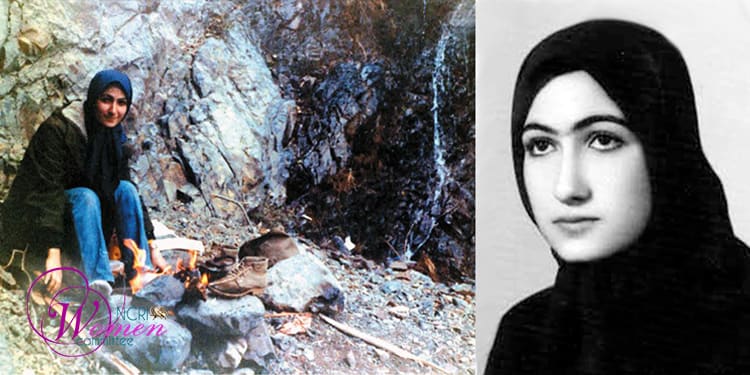
Fatemeh became close friends with Helen Arfaii.[1]¹

Helen was a young teacher in her early twenties. Her youthful appearance made her seem even younger, and she looked more like a high school student than a woman in her twenties.

Under Helen’s influence, Fatemeh grew stronger and more confident with each passing day.

The authorities eventually noticed the transformation. The frightened, illiterate child who had arrived unable even to speak for herself had become a brave and defiant young girl.

Eventually they took her before what they called a court.

There they told her:

“We’ve forgiven you because of your father, who serves Khomeini and works for the Imam’s Committee. You are being released. Go thank your father for bringing you here to be educated. The lashings you received were simply punishment for your past sins. Go thank God—and don’t tell anyone anything that could be used against Islam or the Imam.”

When Fatemeh was finally released, the wounds on her legs had still not healed.

A Mother Tortured Before Her Child

From the day I arrived in Evin, I was subjected to interrogation almost daily.

Each time I was taken to the interrogation section, I witnessed new horrors.

One day I was sitting in the hallway waiting to be questioned when I noticed a man sit down beside me.

I asked him to move farther away.

He did not respond.

I asked again.

Still nothing.

After several attempts, I became suspicious. While keeping my head down, I lifted my blindfold slightly to see who he was and why he was ignoring me.

To my shock, I realized the man was dead.

I had been sitting beside a corpse.

I looked more closely at his face.

I recognized him.

After a moment I remembered where I had seen him before. He was Reza Mashhadi, a man I had previously encountered at one of the PMOI offices.

I was still reeling from the shock of seeing his body when I realized my interrogator was standing over me.

Immediately a barrage of punches and kicks rained down on me from every direction.

Blindfolded, I could not protect myself. The blows threw me against the wall and into other prisoners sitting nearby. I lost my balance repeatedly and fell to the floor.

After the beating, as punishment for lifting my blindfold, I was handed over to my own interrogator in Branch Two.

“So,” he sneered, “you wanted to get a good look at a hypocrite who has already gone to hell? Come along. Maybe you’ll get to join him.”

As he dragged me into the interrogation room, I heard the continuous screams and cries of a little girl who could not have been more than five or six years old.

Soon I realized why she was crying.

Her mother was being whipped in front of her.

I could hear the interrogator saying:

“Tell us your mother’s name and we’ll stop torturing her.”

The little girl’s name was Fatemeh.

I never learned who her mother was.

Later, the child and her mother were transferred together to Ward 209.


[1] Helen Arfaei, a teacher, was executed in Evin Prison on December 21, 1981, at the age of twenty-three.
ShareTweetPinShareSendShare

Related Posts

Escalation of Restrictions Against Female Political Prisoners in Evin Prison

June 10, 2026
Escalation of Restrictions Against Female Political Prisoners in Evin Prison

Security pressure on female political prisoners in Evin Prison has intensified in recent days, while detention conditions for nationwide protest detainees in Ghezel Hesar Prison have severely deteriorated....

Read moreDetails

Parisa Kamali: “Executions Cannot Silence the Cry for Freedom”

June 9, 2026
Parisa Kamali: "Executions Cannot Silence the Cry for Freedom"

Parisa Kamali, a political prisoner currently serving an eight-and-a-half-year sentence in the Central Prison of Yazd, has released a powerful audio message from behind bars to condemn the...

Read moreDetails

Iran Child Abuse Crisis: Brutal Abuse of Girls Triggers Outrage

June 9, 2026
Iran Child Abuse Crisis: Brutal Abuse of Girls Triggers Outrage

A shocking new case has once again intensified the Iran child abuse crisis, following horrific reports of violence against two girls, aged 15 and 7, in Sanandaj that...

Read moreDetails

“No to Executions Tuesdays” Campaign Marks Its 124th Week Across 56 Prisons

June 9, 2026
"No to Executions Tuesdays" Campaign Marks Its 124th Week Across 56 Prisons

The "No to Executions Tuesdays" campaign continued into its 124th consecutive week on Tuesday, June 9, 2026, with political prisoners in 56 prisons across Iran participating in a...

Read moreDetails

24 International Athletes Call on the UN and Governments to Act Over Executions in Iran

June 8, 2026
23 International Athletes Call on the UN and Governments to Act Over Executions in Iran

Sport has taught us courage and the defense of freedom and human dignity Twenty-four International Athletes Champions from various disciplines have issued a statement in condemnation of the...

Read moreDetails

Documents

Crushed by Design: Structural Crises and Inequitable Policies Push Female-Headed Households to the Edge

Crushed by Design: Structural Crises and Inequitable Policies Push Female-Headed Households to the Edge

May 18, 2026

Introduction Life for the Iranian people under the religious dictatorship is fraught with hardship and peril from every perspective. Whether...

A Report to CSW70: Gender-Based Discrimination Under Iranian Law

A Report to CSW70: Gender-Based Discrimination Under Iranian Law

March 8, 2026

Structural Inequality and State-Sanctioned Oppression of Women Gender-Based Discrimination Under Iranian Law” is the title of the NCRI Women’s Committee’s...

Annual Report 2026: From Protests, to Uprising, and the Role of Iranian Women

Annual Report 2026: From Protests, to Uprising, and the Role of Iranian Women

March 3, 2026

On the eve of International Women’s Day 2026, the NCRI Women’s Committee presents its Annual Report 2026, offering a recap...

Monthlies

May 2026 Report: The Enduring Resistance of Iranian Women
Monthlies

May 2026 Report: The Enduring Resistance of Iranian Women

May 31, 2026
April 2026 Report: Mass Arrests of Women: Targeted Repression in Time of Crisis
Monthlies

April 2026 Report: Mass Arrests of Women in Iran

April 30, 2026
March 2026 Report: How Iranian Women Are Shaping the Resistance
Monthlies

March 2026 Report: Courage Under Fire

April 3, 2026
January 2026 Report: Women at the Core of the Uprising
Monthlies

January 2026 Report: Women at the Core of the Uprising

January 31, 2026

Articles

Iran Child Abuse Crisis: Brutal Abuse of Girls Triggers Outrage

Iran Child Abuse Crisis: Brutal Abuse of Girls Triggers Outrage

June 9, 2026

A shocking new case has once again intensified the Iran child abuse crisis, following horrific reports of violence against two...

23 International Athletes Call on the UN and Governments to Act Over Executions in Iran

24 International Athletes Call on the UN and Governments to Act Over Executions in Iran

June 8, 2026

Sport has taught us courage and the defense of freedom and human dignity Twenty-four International Athletes Champions from various disciplines...

Athletes Who Won Their Championship on the Battlefield for Freedom

Athletes Who Won Their Championship on the Battlefield for Freedom

June 7, 2026

In most countries, when athletes step onto national or international stages, they channel their efforts into fair competition, pursuing medals,...

The Fallen for Freedom

Nasim Pouraghaei was killed on the evening of January 8, 2026
The Fallen for Freedom

Nasim Pouraghaei

June 6, 2026
Setayesh Shafiei, The Girl Who Was the Sun
The Fallen for Freedom

Setayesh Shafiei, The Girl Who Was the Sun

June 4, 2026
White-Clad in the Line of Fire: Samin Rostami
The Fallen for Freedom

White-Clad in the Line of Fire: Samin Rostami

May 20, 2026
Killed by Two Bullets to the Heart and Leg: Fatemeh Abdollahi
The Fallen for Freedom

Killed by Two Bullets to the Heart and Leg: Fatemeh Abdollahi

May 17, 2026

ABOUT US

NCRI Women Committee

We work extensively with Iranian women outside the country and maintain a permanent contact with women inside Iran. The Women’s Committee is actively involved with many women’s rights organizations and NGO’s and the Iranian diaspora.
The committee is a major source of much of the information received from inside Iran with regards to women. Attending UN Human Rights Council meetings and other international or regional conferences on women’s issues and engaging in a relentless battle against the Iranian regime’s misogyny are part of the activities of members and associates of the committee.

CATEGORIES

  • Activities
  • Articles
  • Documents
  • Famous Women
  • Heroines in Chain
  • IWD Conferences
  • IWD Speeches
  • IWD Videos
  • Maryam Rajavi
  • Maryam Rajavi Speeches
  • Monthlies
  • Podcast
  • Reference Library
  • Solidarity
  • Statements
  • The Fallen for Freedom
  • Videos
  • Women in History
  • Women in Leadership
  • Women of Iranian Resistance
  • Women's News

BROWSE BY TAG

Child marriage coronavirus education execution forced hijab Gender Gap Generation Equality Honor killings Iran Teachers Maryam Akbari Monfared Nurses Plan on Women's Rights and Freedoms Poverty Prisoners Protests rural women Saba Kord Afshari The girl child Violence against women Women's Leadership Women Heads of Household Zeinab Jalalian

The copyright of all the material published on this website has been registered under © 2016 the Women’s Committee of the National Council of Resistance of Iran. To obtain permission to copy, redistribute or publish the material published on this website, you should write to the NCRI Women’s Committee. Please include the link of the original article on our website, women.ncr-iran.org.

Welcome Back!

Login to your account below

Forgotten Password?

Retrieve your password

Please enter your username or email address to reset your password.

Log In

Add New Playlist

No Result
View All Result
  • Home
  • News
    • Women’s News
    • Articles
    • Statements
  • Publications
    • Monthlies
    • Documents
    • Reference Library
  • About Us
    • The NCRI Women’s Committee
    • Gender Equality
    • Women’s Platform
  • Maryam Rajavi
    • Maryam Rajavi
    • Maryam Rajavi Speeches
    • Ten Point Plan for Iran
    • The Plan on Women’s Rights and Freedoms
  • Vanguards
    • The Fallen for Freedom
    • Heroines in Chain
    • Women of Iranian Resistance
    • Famous Women
    • Women in History
  • Events
    • IWD Conferences
    • Activities
    • IWD Speeches
    • Solidarity
  • Video
    • Videos
    • IWD Videos
  • Podcast
  • Donate
  • Contact us
  • فارسی
  • عربی
  • Français

The copyright of all the material published on this website has been registered under © 2016 the Women’s Committee of the National Council of Resistance of Iran. To obtain permission to copy, redistribute or publish the material published on this website, you should write to the NCRI Women’s Committee. Please include the link of the original article on our website, women.ncr-iran.org.