
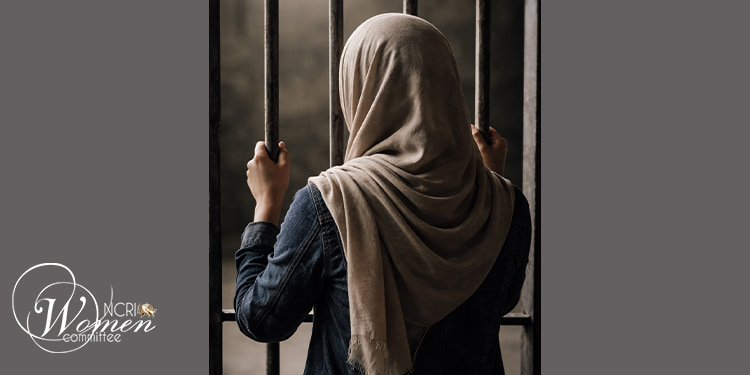
The continued detention of Maryam Javadi, a student of journalism, in Dowlatabad Women’s Prison in Isfahan has neared eight month, despite the absence of any judicial ruling or final determination of her case.
The 27-year-old, originally from Chermahin and residing in Isfahan, was arrested by security forces in July 2025 and has since remained in a state of complete legal limbo.
Prolonged Detention Without a Verdict
Since her arrest, Maryam Javadi has been held without a final court judgment. The persistence of her detention months after her arrest is widely viewed as an example of prolonged detention outside due process standards, in which the presumption of innocence and the right to a prompt and fair trial are effectively disregarded. The extended uncertainty surrounding her case is part of a broader mechanism of pressure routinely applied to political detainees.
Psychological and Physical Pressure During Interrogation
According to sources close to her family, Maryam Javadi’s interrogations have been unusually lengthy and extended beyond standard legal frameworks. Reports indicate that the continuation of interrogations has not been driven by case complexity, but rather by attempts to exert pressure and coerce her into complying with interrogators’ demands. Repeated threats, heightened anxiety, sleep deprivation, and severe psychological exhaustion have been cited as consequences of these conditions.
Security-Related Charges and Repeated Threats
Maryam Javadi faces a set of broadly defined security charges, including “insulting Khamenei,” “membership in opposition groups,” and “propaganda against the state”—allegations frequently used in cases against political activists, students, and journalists. Reports suggest that during her detention she has been repeatedly threatened, with such threats aimed at extracting forced confessions or compelling acceptance of the stated charges.
The continued detention of Maryam Javadi in Dowlatabad Women’s Prison in Isfahan without a court verdict alongside reports of psychological pressure and threats during interrogation is a clear violation of fundamental human rights principles.