
Saturday, June 6, 2026
  • English
  • Français
  • فارسی
  • عربى
PODCASTS
NCRI Women Committee Women Resistance Freedom
  • Home
  • NEWS
    • Women’s News
    • Articles
    • Statements
  • PUBLICATIONS
    • Monthlies
    • Documents
    • Reference Library
  • ABOUT US
    • The NCRI Women’s Committee
    • Gender Equality
    • Women’s Platform
  • MARYAM RAJAVI
    • Maryam Rajavi
    • Maryam Rajavi Speeches
    • The Plan on Women’s Rights and Freedoms
    • Ten-Point Plan for the future of Iran
  • VANGUARDS
    • The Fallen for Freedom
    • Heroines in Chain
    • Women of Iranian Resistance
    • Famous Women
    • Women in History
  • EVENTS
    • IWD Conferences
    • Activities
    • IWD Speeches
    • Solidarity
  • VIDEO
    • Videos
    • IWD Videos
  • PODCAST
  • DONATE
  • CONTACT US
No Result
View All Result
NCRI Women Committee Women Resistance Freedom
  • Home
  • NEWS
    • Women’s News
    • Articles
    • Statements
  • PUBLICATIONS
    • Monthlies
    • Documents
    • Reference Library
  • ABOUT US
    • The NCRI Women’s Committee
    • Gender Equality
    • Women’s Platform
  • MARYAM RAJAVI
    • Maryam Rajavi
    • Maryam Rajavi Speeches
    • The Plan on Women’s Rights and Freedoms
    • Ten-Point Plan for the future of Iran
  • VANGUARDS
    • The Fallen for Freedom
    • Heroines in Chain
    • Women of Iranian Resistance
    • Famous Women
    • Women in History
  • EVENTS
    • IWD Conferences
    • Activities
    • IWD Speeches
    • Solidarity
  • VIDEO
    • Videos
    • IWD Videos
  • PODCAST
  • DONATE
  • CONTACT US
No Result
View All Result
NCRI Women Committee
No Result
View All Result
Home Articles

Iran’s Female Workers Struggle with COVID-19, Poverty, and Oppression

April 30, 2021
in Articles

Every year, World Day for Safety and Health at Work (April 28) and International Workers Day (May 1) serve as reminders of the untold suffering of 26 million Iranian workers, particularly women. Iran’s female workers are those whose living conditions, ruled by the corrupt and misogynistic mullahs, are worsening every day.

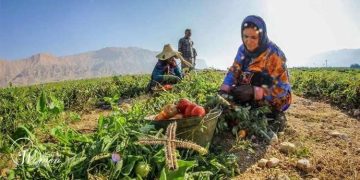
In villages, women have always done 80% of the work in agriculture, animal husbandry, and irrigation. However, these days, women are forced to take on challenging jobs as construction workers or laborers due to the lack of factories that would typically create jobs and hire workers. Moreover, terrible working conditions, the prevalence of poverty and deprivation, and the current economic situation and inflation have exacerbated women’s already difficult situations. When a woman is forced to be a kulbar (porter) or a construction worker, she is neither safe nor healthy. Nonetheless, the number of women engaging in these professions is increasing.

These hardships, along with the high number of Coronavirus-related casualties

These hardships, along with the high number of Coronavirus-related casualties, have made life even more difficult for Iran’s female workers.

The regime has set the minimum wage for Iranian workers for the Persian year 1400 (beginning 21 March) at almost four times lower than the poverty line. Meanwhile:

  • “The wealth of Khamenei’s economic institutions at his headquarters is equivalent to one trillion dollars” (The state-run Mostaghel Newspaper, June 1, 2020).
  • “In the first 6 months of the Persian year 1399 (March-September 2020), steelmakers, petrochemical professionals, and mine owners received 600,000 billion tomans in rents” (The state-run Ressalat Daily – October 15, 2020).
  • On the other hand, “about 9,800 production units” have been closed (The state-run Sharq daily – April 13, 2021).

Iran’s Female Workers Without Insurance, Deprived of Half the Labor Benefits

Iran’s female workers are hired informally to do back-breaking labor at meager wages. Their salaries do not cover even one-tenth of their living expenses. A day without work means a day without food. According to statistics compiled by government news agencies, 60% of employment in Iran is informal employment.

At a time when the Coronavirus is having a devastating effect on society, informal occupations are more at risk than formal occupations (The state-run ISNA News Agency – June 17, 2020).

In 2017, the financial institutions of the Social Security Research Organization announced that about 80% of the employees without insurance were women.

Iranian women workers are among the most vulnerable in the labor market. One million women were fired during the COVID-19 pandemic.

Iran’s Female Workers Without Insurance, Deprived of Half the Labor Benefits

Workers’ Wages

The poverty line for a family of 4 is 10 million tomans. “Last year, the workers’ living basket was set at 4,940,000 tomans,” but the minimum wage was much lower – equal to 1,835,426 tomans (The state-run Tasnim News Agency – December 28, 2020; Mohammad Shariatmadar, Minister of Labor in the Rouhani Government – April 9, 2020).

The wages of Iran’s female workers have always been significantly lower than those of men, and in this case, they also face double oppression.

Workers are no longer able to buy red meat or even white meat. These items are practically removed from their table; workers can only buy livestock and poultry bones (The state-run ILNA News Agency – November 24, 2020).

Women Porters (Kulbar)

In Kurdish areas, women have no choice but to work as kulbar (porters) and construction workers to support themselves and their families. There are no specific statistics on women porters. But the increase in their numbers in the border provinces of Kurdistan, West Azerbaijan, and Kermanshah has become commonplace (The state-run Asr-e Iran website – January 22, 2020).

Even in old age, women heads of household are forced to work as porters to support their families. Even educated women are forced to be porters, given the lack of available jobs. Here, too, women receive less money because they are less physically strong than their male counterparts.

Women Porters (Kulbar)

Iran’s Female Workers in Brick Kilns

Working in kilns is another arduous task that working women – and even children – are forced to take on to make a living, even if it means working without a contract. There are more than 500 brick kilns in West Azerbaijan province. No occupational safety standards are recognized in these areas. Smoke from burning pottery causes respiratory and digestive problems. In traditional kilns, the sludge produces an unpleasant odor. Work machines are unsafe and outdated, and endanger workers’ health. Most workers have had work-related accidents, even in a short period of time. Employers refuse to provide even basic work gear such as boots, helmets, and gloves.

Most Iranian women workers are uninsured. Their contracts are verbal, and their daily workload is not calculated correctly. Employers do not keep their verbal promises and sometimes undercount the number of bricks that the workers handle. Workers with more than 20 years of experience are also ineligible for insurance. If their insurance is covered, the cost is deducted from their wages.

To reduce their insurance costs, employers fill out a list of five workers

To reduce their insurance costs, employers fill out a list of five workers, omitting the workers’ personal details on the insurance form. If one of the workers has an accident, her details are entered to pretend that the worker was already insured! (The state-run Ettelaat Daily – November 10, 2020).

Workers’ wages are between 100,000 and 150,000 tomans per day, and they are not paid on holidays. Workers must work from 7 am to sunset. Despite the long work hours, workers cannot support themselves and their families. Workers must also bear the cost of transportation – a major issue given the long commuting distance from the city to the factory.
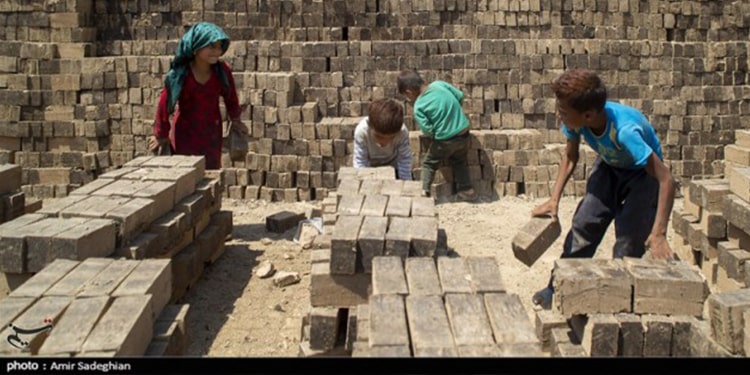
"Our salaries are very low in the face of high prices and inflation," said Nashmil, a woman working in a brick kiln workshop

“Our salaries are very low in the face of high prices and inflation,” said Nashmil, a woman working in a brick kiln workshop. “We do not have an employment contract and we come to work by [verbal] agreement…There are no jobs in our region. So, I was forced to work here. I have developed a lumbar disc condition. For 6 months of the year, we sleep in the workshop dormitories, where we are deprived of clean drinking water, clean bathing facilities, and clean restrooms. This has led to our children becoming ill” (The state-run ILNA News Agency – April 19, 2021).

Safety at Work

Given labor circumstances, one can predict workers’ safety conditions at the workplace. “With regard to workers’ job-related injuries or deaths, the reported data are lower than the real situation…Nevertheless, 898 deaths in workplace accidents were registered from March to September 2019,” wrote the state-run Hamshahrionline.ir on April 29, 2020.

The Coroner’s organization, the Labor Ministry, and even the delegations that investigate complaints of job-related injuries each present separate data. Not a single investigative agency cares to collect accurate data or resolve the complaints. Employer-worker agreements are such that many accidents are not reported at all (The state-run ILNA news agency – August 5, 2020).

On April 19, 2021, three female workers burned to death during a fire at a furniture workshop in Keresht Pardis village. Mojtaba Khaledi, the spokesman for the National Emergency Organization, announced, “The workshop’s exit door caught on fire, and the workers had no way to escape. Three women and three men were killed.” Three additional workers were injured during this accident (The state-run ILNA News Agency, April 19, 2021).

Safety at Work

Disregarding Hygiene Standards

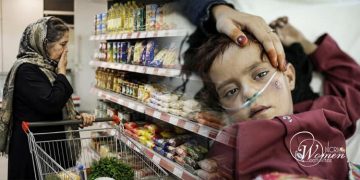
The same inhumane practice is evident in how the regime has managed the COVID-19 pandemic. A Tehran municipality worker says that the municipality does not even provide masks for its workers. If the workers get sick, the municipality does not give them any assistance. He adds that if a worker gets sick and is hospitalized, the municipality does not even pay for medication…At present, several workers are ill and resting in the trailer, but no one has come to check on them. (mojahedin.org– April 27, 2021)

Haji Deligani, a member of the mullahs’ parliament, spoke on this issue, acknowledging, “We have COVID-19 patients who did not have insurance but had to go to the hospital. They were charged 9 million Tomans for 6 days of hospitalization” (The state-run Farhang Radio, April 15, 2020).

Disregarding Hygiene Standards
Tags: coronavirusPovertyWomen Heads of Household
ShareTweetPinShareSendShare

Related Posts

How Internet Blackout in Iran Forces Women into Structural Poverty

May 30, 2026
How Internet Blackout in Iran Forces Women into Structural Poverty

The internet blackout in Iran—which is now entering a phase of drip-fed restoration after nearly three months of absolute blockage—has dealt a devastating blow to society, alongside the...

Read moreDetails

Crushed by Design: Structural Crises and Inequitable Policies Push Female-Headed Households to the Edge

May 18, 2026
Crushed by Design: Structural Crises and Inequitable Policies Push Female-Headed Households to the Edge

Introduction Life for the Iranian people under the religious dictatorship is fraught with hardship and peril from every perspective. Whether through the lens of economic deprivation, poverty, and...

Read moreDetails

Women Bear the Brunt as 1.2M Iranian Workers Lose Jobs to War

May 1, 2026
Women Bear the Brunt as 1.2M Iranian Workers Lose Jobs to War

On International Workers' Day, alarming reports reveal that women and their families are bearing the heaviest burden of a worsening economic crisis, as war and recession have left...

Read moreDetails

Annual Report 2026: From Protests, to Uprising, and the Role of Iranian Women

March 3, 2026
Annual Report 2026: From Protests, to Uprising, and the Role of Iranian Women

On the eve of International Women’s Day 2026, the NCRI Women’s Committee presents its Annual Report 2026, offering a recap of events in 2025 as related to women’s...

Read moreDetails

The Devastated Economy and Explosive Poverty: Key Drivers of Domestic Violence

November 24, 2025
The Devastated Economy and Explosive Poverty: Key Drivers of Domestic Violence

Explosive poverty and the collapse of people’s livelihoods—resulting from an exhausted and devastated economy caused by anti-people policies, plundering, and looting of national wealth by Iran’s clerical regime,...

Read moreDetails
Next Post
Iranian workers marched in 20 cities to protest “government of plunderers”

Iranian workers marched in 20 cities to protest “government of plunderers”

Documents

Crushed by Design: Structural Crises and Inequitable Policies Push Female-Headed Households to the Edge

Crushed by Design: Structural Crises and Inequitable Policies Push Female-Headed Households to the Edge

May 18, 2026

Introduction Life for the Iranian people under the religious dictatorship is fraught with hardship and peril from every perspective. Whether...

A Report to CSW70: Gender-Based Discrimination Under Iranian Law

A Report to CSW70: Gender-Based Discrimination Under Iranian Law

March 8, 2026

Structural Inequality and State-Sanctioned Oppression of Women Gender-Based Discrimination Under Iranian Law” is the title of the NCRI Women’s Committee’s...

Annual Report 2026: From Protests, to Uprising, and the Role of Iranian Women

Annual Report 2026: From Protests, to Uprising, and the Role of Iranian Women

March 3, 2026

On the eve of International Women’s Day 2026, the NCRI Women’s Committee presents its Annual Report 2026, offering a recap...

Monthlies

May 2026 Report: The Enduring Resistance of Iranian Women
Monthlies

May 2026 Report: The Enduring Resistance of Iranian Women

May 31, 2026
April 2026 Report: Mass Arrests of Women: Targeted Repression in Time of Crisis
Monthlies

April 2026 Report: Mass Arrests of Women in Iran

April 30, 2026
March 2026 Report: How Iranian Women Are Shaping the Resistance
Monthlies

March 2026 Report: Courage Under Fire

April 3, 2026
January 2026 Report: Women at the Core of the Uprising
Monthlies

January 2026 Report: Women at the Core of the Uprising

January 31, 2026

Articles

Marjane Satrapi Dies at 56 as a Defiant Voice Against the Iranian Regime

Marjane Satrapi Dies at 56 as a Defiant Voice Against the Iranian Regime

June 5, 2026

Marjane Satrapi, the prominent Iranian-French author and filmmaker, passed away in Paris at the age of 56. She was the...

In Memory of Carol Fontaine: A Steadfast Advocate for Iranian Women and the Struggle for Freedom

In Memory of Carol Fontaine: A Steadfast Advocate for Iranian Women and the Struggle for Freedom

June 2, 2026

The Iranian Resistance has lost one of its loyal friends and valued supporters. Carol Fontaine, a courageous human rights advocate...

How Internet Blackout in Iran Forces Women into Structural Poverty

How Internet Blackout in Iran Forces Women into Structural Poverty

May 30, 2026

The internet blackout in Iran—which is now entering a phase of drip-fed restoration after nearly three months of absolute blockage—has...

The Fallen for Freedom

Setayesh Shafiei, The Girl Who Was the Sun
The Fallen for Freedom

Setayesh Shafiei, The Girl Who Was the Sun

June 4, 2026
White-Clad in the Line of Fire: Samin Rostami
The Fallen for Freedom

White-Clad in the Line of Fire: Samin Rostami

May 20, 2026
Killed by Two Bullets to the Heart and Leg: Fatemeh Abdollahi
The Fallen for Freedom

Killed by Two Bullets to the Heart and Leg: Fatemeh Abdollahi

May 17, 2026
Fereshteh Azhadi: A Life of Resistance, Sacrifice, and Unyielding Commitment
The Fallen for Freedom

Fereshteh Azhadi

May 1, 2026

ABOUT US

NCRI Women Committee

We work extensively with Iranian women outside the country and maintain a permanent contact with women inside Iran. The Women’s Committee is actively involved with many women’s rights organizations and NGO’s and the Iranian diaspora.
The committee is a major source of much of the information received from inside Iran with regards to women. Attending UN Human Rights Council meetings and other international or regional conferences on women’s issues and engaging in a relentless battle against the Iranian regime’s misogyny are part of the activities of members and associates of the committee.

CATEGORIES

  • Activities
  • Articles
  • Documents
  • Famous Women
  • Heroines in Chain
  • IWD Conferences
  • IWD Speeches
  • IWD Videos
  • Maryam Rajavi
  • Maryam Rajavi Speeches
  • Monthlies
  • Podcast
  • Reference Library
  • Solidarity
  • Statements
  • The Fallen for Freedom
  • Videos
  • Women in History
  • Women in Leadership
  • Women of Iranian Resistance
  • Women's News

BROWSE BY TAG

Child marriage coronavirus education execution forced hijab Gender Gap Generation Equality Honor killings Iran Teachers Maryam Akbari Monfared Nurses Plan on Women's Rights and Freedoms Poverty Prisoners Protests rural women Saba Kord Afshari The girl child Violence against women Women's Leadership Women Heads of Household Zeinab Jalalian

The copyright of all the material published on this website has been registered under © 2016 the Women’s Committee of the National Council of Resistance of Iran. To obtain permission to copy, redistribute or publish the material published on this website, you should write to the NCRI Women’s Committee. Please include the link of the original article on our website, women.ncr-iran.org.

Welcome Back!

Login to your account below

Forgotten Password?

Retrieve your password

Please enter your username or email address to reset your password.

Log In

Add New Playlist

No Result
View All Result
  • Home
  • News
    • Women’s News
    • Articles
    • Statements
  • Publications
    • Monthlies
    • Documents
    • Reference Library
  • About Us
    • The NCRI Women’s Committee
    • Gender Equality
    • Women’s Platform
  • Maryam Rajavi
    • Maryam Rajavi
    • Maryam Rajavi Speeches
    • Ten Point Plan for Iran
    • The Plan on Women’s Rights and Freedoms
  • Vanguards
    • The Fallen for Freedom
    • Heroines in Chain
    • Women of Iranian Resistance
    • Famous Women
    • Women in History
  • Events
    • IWD Conferences
    • Activities
    • IWD Speeches
    • Solidarity
  • Video
    • Videos
    • IWD Videos
  • Podcast
  • Donate
  • Contact us
  • فارسی
  • عربی
  • Français

The copyright of all the material published on this website has been registered under © 2016 the Women’s Committee of the National Council of Resistance of Iran. To obtain permission to copy, redistribute or publish the material published on this website, you should write to the NCRI Women’s Committee. Please include the link of the original article on our website, women.ncr-iran.org.