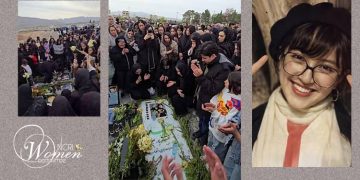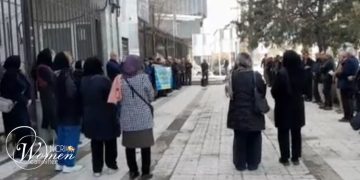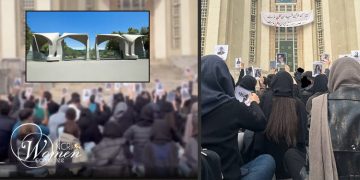

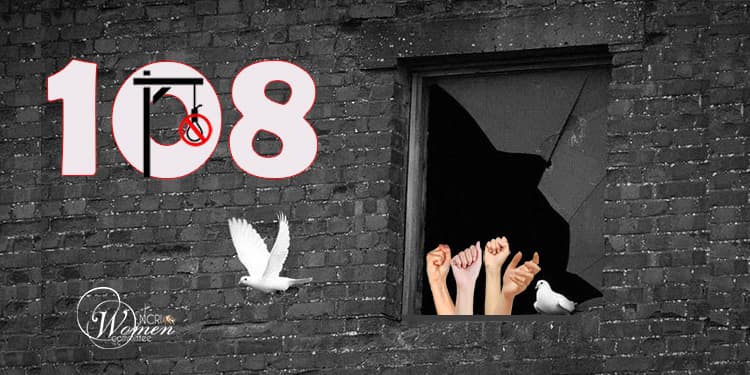
The “No to Executions Tuesdays” campaign has entered its 108th consecutive week, announcing in a newly released statement the continuation of coordinated anti–death penalty protests in 56 prisons across Iran. The statement coincides with the 40th day of commemoration for those killed during the nationwide protests of January 2026.
In their declaration, campaign members expressed “unwavering solidarity and support” for the uprising of the Iranian people and the families of those killed. They confirmed that protesting prisoners marked the day with hunger strikes, signaling their opposition to what they describe as a growing wave of executions and the issuance of harsh sentences against detainees.
The statement also conveys sympathy for families who, according to the authors, have “resolved not to remain in mourning, but to persist on the path to victory.” It reiterates a collective commitment to sustained resistance against capital punishment.
Exposing the Scope of Repression and Echoes of the 1980s
Another section of the statement references the publication of what it calls “revealing documents, videos, and images” related to the suppression of the recent protests. According to the campaign, these materials expose new dimensions of state violence.
The authors draw parallels between current policies and the repressive practices of the 1980s, including the mass executions of 1988. They argue that the present situation recalls that period of widespread political killings, noting that key aspects of those events remain unresolved and insufficiently investigated.
Growing Convergence with Nationwide Protests
Since the January 2026 nationwide protests, the scope and visibility of the “No to Executions Tuesdays” campaign have expanded significantly. The slogan “No to Executions” has emerged as a central demand among demonstrators and has been widely echoed in rallies and protest actions.
This convergence underscores the increasing integration of the abolition of the death penalty into the broader framework of social and political grievances. Recent reports indicate that the slogan has resonated in dozens of cities across the country — from southern to northern provinces and from central urban centers to border regions — reflecting the widening geographic reach of the demand.
Families at the Core of the Movement
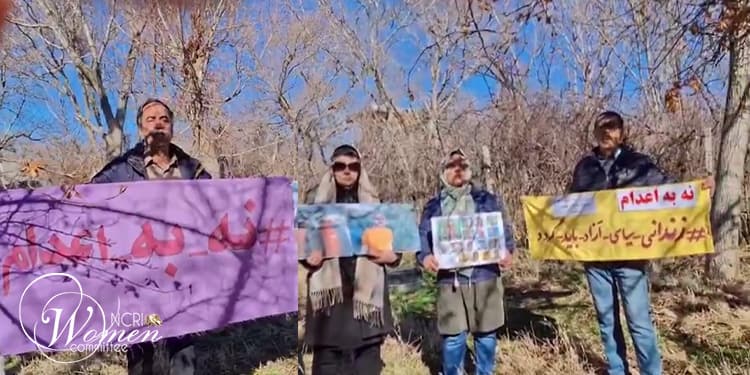
Families of death row political prisoners and those killed in protests have played a pivotal role in amplifying the campaign’s social impact. Their sustained presence at gatherings and their persistent articulation of anti-execution demands have added a deep human dimension to the movement.
By transforming personal grief into a collective call for justice, these families have embedded the campaign within the fabric of the nationwide protests. Their continued engagement has helped elevate “No to Executions” beyond a protest slogan into a structured and enduring social movement.
The campaign’s weekly continuity, now surpassing two years, signals the gradual consolidation of opposition to capital punishment within Iran’s collective political consciousness.