Friday, January 23, 2026
  • English
  • Français
  • فارسی
  • عربى
PODCASTS
NCRI Women Committee Women Resistance Freedom
  • Home
  • NEWS
    • Women’s News
    • Articles
    • Statements
  • PUBLICATIONS
    • Monthlies
    • Documents
    • Reference Library
  • ABOUT US
    • The NCRI Women’s Committee
    • Gender Equality
    • Women’s Platform
  • MARYAM RAJAVI
    • Maryam Rajavi
    • Maryam Rajavi Speeches
    • The Plan on Women’s Rights and Freedoms
    • Ten-Point Plan for the future of Iran
  • VANGUARDS
    • The Fallen for Freedom
    • Heroines in Chain
    • Women of Iranian Resistance
    • Famous Women
    • Women in History
  • EVENTS
    • IWD Conferences
    • Activities
    • IWD Speeches
    • Solidarity
  • VIDEO
    • Videos
    • IWD Videos
  • PODCAST
  • DONATE
  • CONTACT US
No Result
View All Result
NCRI Women Committee Women Resistance Freedom
  • Home
  • NEWS
    • Women’s News
    • Articles
    • Statements
  • PUBLICATIONS
    • Monthlies
    • Documents
    • Reference Library
  • ABOUT US
    • The NCRI Women’s Committee
    • Gender Equality
    • Women’s Platform
  • MARYAM RAJAVI
    • Maryam Rajavi
    • Maryam Rajavi Speeches
    • The Plan on Women’s Rights and Freedoms
    • Ten-Point Plan for the future of Iran
  • VANGUARDS
    • The Fallen for Freedom
    • Heroines in Chain
    • Women of Iranian Resistance
    • Famous Women
    • Women in History
  • EVENTS
    • IWD Conferences
    • Activities
    • IWD Speeches
    • Solidarity
  • VIDEO
    • Videos
    • IWD Videos
  • PODCAST
  • DONATE
  • CONTACT US
No Result
View All Result
NCRI Women Committee
No Result
View All Result
Home Articles
Organized Massacre of Protesters: Evidence of Crimes Against Humanity

Organized Massacre of Protesters: Evidence of Crimes Against Humanity

January 22, 2026
in Articles, Women's News
Share on FacebookShare on Twitter

Reports trickling out of Iran, under conditions of total internet blackout, reveal a systematic and organized massacre of protesters across multiple cities.

Accounts describe deliberate arson of gathering places, trapping civilians in smoke and fire, direct shooting of unarmed individuals, and execution-style killings of the wounded. These incidents provide clear evidence of crimes against humanity carried out by the clerical regime in its brutal crackdown on nationwide uprisings.

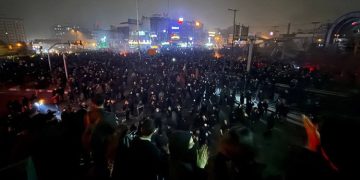
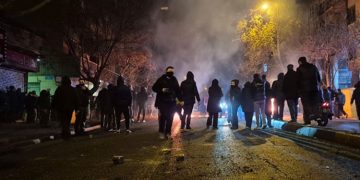
Meanwhile, reports indicate ongoing clashes between rebellious youths and special security units in the heart of Tehran and other cities, which are effectively under a state of undeclared martial law.

This is the resolve of a nation that, despite severe repression and suffocating restrictions, has risen for the fourth time in eight years to break free from the grip of a tyrannical regime and claim freedom. This latest uprising, braver than ever, has met with the deadliest and most savage response from the authorities. As the regime’s deputy head of the armed forces’ cultural office, Abolfazl Shekarchi, bluntly admitted: “Even a few minutes, even a few hours of delay, and the situation would have been different.” (Student News Agency, January 20, 2026)

In line with this narrative, the regime’s Security Council attempted to manipulate public perception by publishing fabricated casualty statistics, obscuring the direct responsibility of the authorities and their security forces.
Organized Massacre of Protesters: Evidence of Crimes Against Humanity
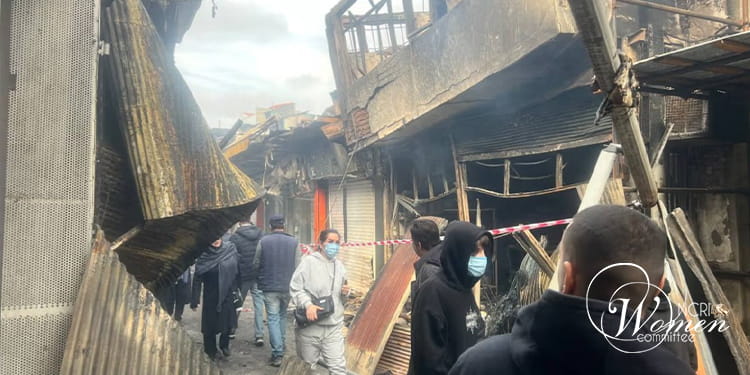
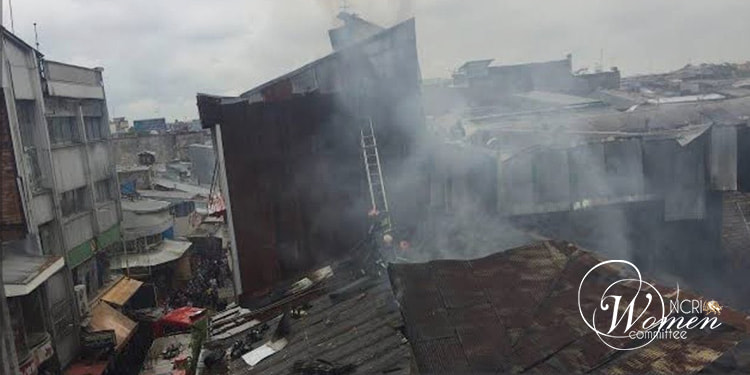
Bazaar of Rasht after arson by state security forces

Deliberate Arson of the Historic Bazaar of Rasht

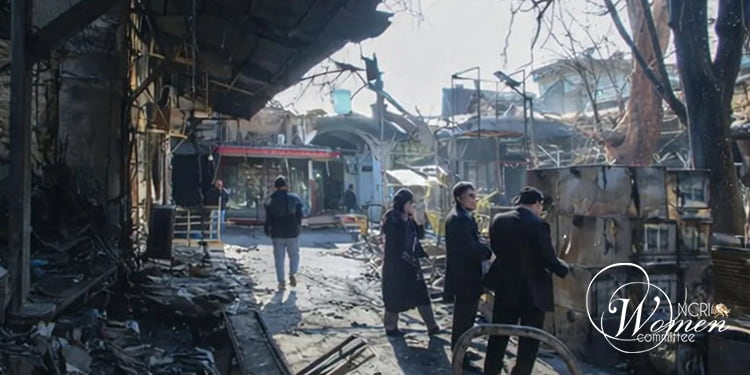
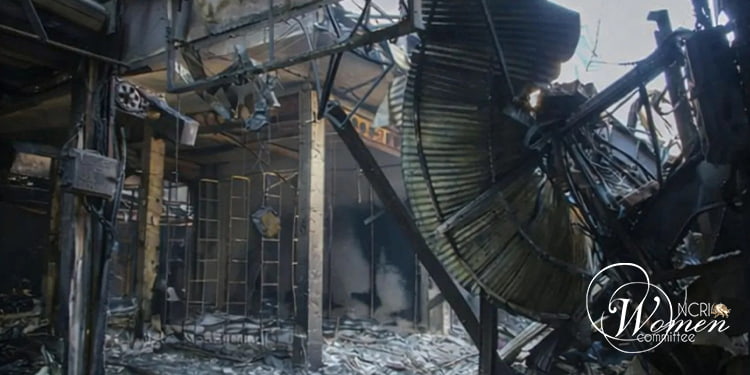
Eyewitnesses report that on the evening of January 8, 2026, security forces deliberately set fire to the historic bazaar of Rasht, where many protesters had sought refuge. As people tried to escape, forces opened fire, killing some through smoke and burns and shooting others as they fled.

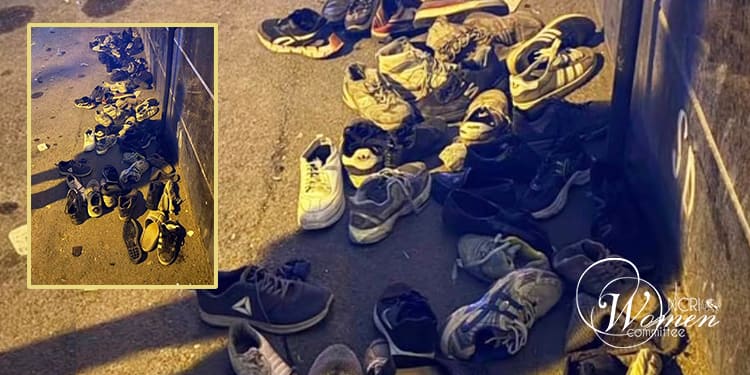
A haunting photograph of abandoned shoes in the bazaar of Rasht has come to symbolize the regime’s horrific attempt to crush dissent. Many have compared it to the display of victims’ shoes at the U.S. Holocaust Museum, a similarity that is more than symbolic, reflecting a pattern of systematic civilian annihilation.

Soren Edgar, vice president of the Australian-Iranian community alliance, wrote on X (formerly Twitter): “If this isn’t a crime against humanity, then what is?”
Organized Massacre of Protesters: Evidence of Crimes Against Humanity
Scene from Bazaar of Rasht

Massacre of Protesters in Mashhad

An eyewitness in Mashhad described the events of the night of January 8: large crowds had gathered in neighborhoods including Daneshjoo, Sayyad Shirazi Street, Vakilabad Boulevard, Haft-e Tir Street, and Chaharrah Pirouzi. Security forces, stationed near the Basij base in Haft-e Tir, opened fire with live ammunition. Plainclothes officers and special units led the crackdown.

In other areas, such as Mellat Park and Shandiz, the slaughter was even more severe. Armed forces violently stormed homes sheltering protesters, arresting those inside.

Witnesses reported that, despite efforts by authorities to erase evidence, blood remained on pavements the next morning, anti-regime slogans were blackened and destroyed bus stops bore witness to the previous night’s clashes.

Bloodbath in Fardis Streets

The city of Fardis, near Karaj, was also a major center of protest and lethal repression. An eyewitness recounted the heavy presence of people in the streets, intense clashes with security forces, and what they described as a “bloodbath.”

According to the witness, at Fardis Third Square, security forces suddenly attacked civilians with machine guns. The massacre lasted from 8:00 PM on January 9 until 9:30 PM, with skirmishes continuing until midnight. By 3:30 AM, when the witness emerged from hiding, authorities had already collected the bodies of the dead. Among the wounded were the elderly, young adults, and even children; many had been executed at close range.

On the night of January 8, in the Siah-Nush area of Fardis, government forces also opened fire on civilians.
Organized Massacre of Protesters: Evidence of Crimes Against Humanity
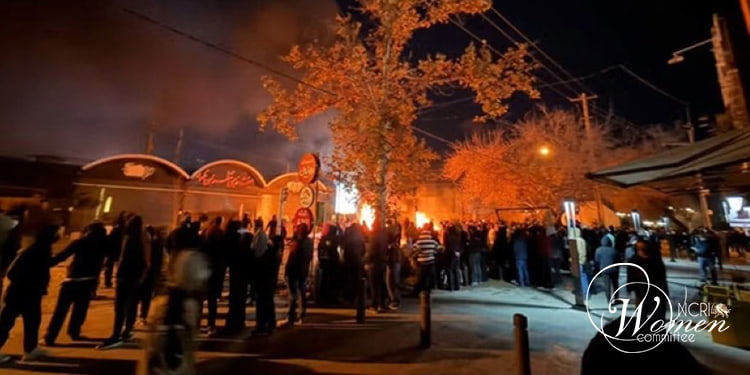
Iran protests

Systematic Repression and Organized Massacre

Reports from multiple cities indicate a coordinated pattern of repression: use of military-grade weapons, targeting the head and chest of protesters, execution of the wounded, collection of corpses, and internet shutdowns. Deliberate arson of protest sites, shooting unarmed civilians, trapping people in smoke and fire, and obstructing medical aid all demonstrate an organized campaign of lethal repression and ongoing crimes against humanity during the nationwide uprising.

Government Falsification of Casualty Figures

Nearly two weeks after one of the deadliest crackdowns in Iranian history, the regime’s Security Council claimed in a so-called “analytical” statement that 3,117 people were killed during the 8–9 January uprising. According to the statement, 2,427 were “innocent civilians and law enforcement personnel” and 690 were “terrorists and rioters.” This clear attempt to downplay the regime’s direct responsibility contrasts sharply with independent reports:

CBS News, on January 13, citing medical personnel and treatment centers inside Iran who transmitted information under extreme difficulty, reported at least 12,000 deaths, with the total possibly reaching 20,000.

Ali Akbar Pourjamshidian, secretary of the Security Council, justified the delay in releasing figures as a matter of “accuracy in distinguishing the deceased.” He claimed that many of those killed were shot at close range, asserting: “Since police maintain a distance from the crowd, being shot at close range indicates that others among the rioters fired on civilians.” (Tasnim News, January 21, 2026)

Witnesses, however, consistently report that it was the government forces who executed wounded protesters and even collected corpses to conceal the scale of the massacre.
Organized Massacre of Protesters: Evidence of Crimes Against Humanity
Scene from Bazaar of Rasht

Identification of Martyrs, Mass Graves, and Extortion

The People’s Mojahedin Organization of Iran (PMOI/MEK) announced on January 20 that it had confirmed the identities of 103 additional martyrs of the nationwide uprising. To date, 321 martyrs have been identified, including 37 women.

The PMOI announced on January 12, that the death toll during the nationwide uprising between December 28, 2025, and January 11, 2026, had exceeded 3,000 across Iran.

Simultaneously, reports from cities such as Kerman and Rasht indicate the creation of mass graves and secret burials by the regime. Security agencies reportedly pressured families into silence, and in some cases demanded up to 800 million tomans to release the bodies—a further sign of a systematic effort to conceal the crimes.

Ongoing Uprising and Street Clashes

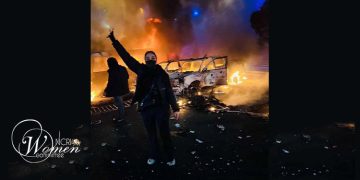
Reports leaking despite the internet blackout indicate continuing confrontations between young protesters and special security units across cities. On the night of January 19, youths in Tehran attacked a Basij base in the Atabak district, which had killed many young demonstrators, and set it ablaze.

Clashes also erupted in Rasht, Kermanshah, and Mashhad, with ongoing street battles. In Zahedan, brave young people blocked key government routes with fire, chanting: “Death to the oppressor, be it the Shah or the mullahs’ leader.”

On January 18, Tehran, Tabriz, and Izeh witnessed heavy confrontations with security forces.
Organized Massacre of Protesters: Evidence of Crimes Against Humanity
Scene from Bazaar of Rasht

In the Regime’s Dead End, the Uprising Continues

Together, these reports paint a stark picture of Iran today: a regime that resorts to organized killing, arson, data manipulation, secret burials, and open repression to maintain power. Yet the continuation of protests and street clashes, on Day 26 of the uprising, demonstrates that violence and crimes have not stopped the uprising. On the contrary, they have only strengthened the people’s resolve to end a regime built on oppression.

Tags: Protests
ShareTweetPinShareSendShare

Related Posts

The European Parliament Stands with the Iranian People’s Uprising; Condemning Repression and Executions

January 22, 2026
The European Parliament Stands with the Iranian People’s Uprising

At the height of the continuing nationwide uprising in Iran, coinciding with intensified bloody repression, executions, and the systematic shutdown of the internet, the European Parliament adopted a...

Read moreDetails

Massacre of Protesters in Iran: A Crime Against Humanity with Organized Impunity

January 19, 2026
Massacre of Protesters in Iran: A Crime Against Humanity with Organized Impunity

When the regime’s Supreme Leader is forced to confess, it means the scale of the crime has exceeded all attempts at concealment. In a speech on January 17,...

Read moreDetails

Iran Uprising Enters Day 20 as Resistance Persists Despite Brutal Crackdown

January 16, 2026
Iran Uprising Enters Day 20 as Resistance Persists Despite Brutal Crackdown

The Iran uprising enters its 20th day on Friday, January 16, 2026, with protests, night-time hit-and-run clashes, and acts of resistance continuing across the country despite an undeclared...

Read moreDetails

Why Iran’s Nationwide Uprising Continues Despite Brutal Repression

January 14, 2026
Why Iran’s Nationwide Uprising Continues Despite Brutal Repression

Uprising Enters 17th Day Across Iran On Tuesday, January 13, 2026, Iran’s nationwide uprising entered its 17th consecutive day, with protests and clashes reported across Tehran and numerous...

Read moreDetails

Nationwide Iran Uprising Expands to 207 Cities; Protesters’ Morale Remains High Despite Bloody Crackdown

January 13, 2026
Nationwide Iran Uprising Expands to 207 Cities

On Tuesday, January 13, 2026, the nationwide Iran uprising entered its third week, spreading to at least 207 cities and 413 locations across the country. Despite a bloody...

Read moreDetails
Next Post
The European Parliament Stands with the Iranian People’s Uprising

The European Parliament Stands with the Iranian People’s Uprising; Condemning Repression and Executions

Documents

More than 400 Prominent Women Demand Halt to Iran Execution of Political Prisoner Zahra Tabari

More than 400 Prominent Women Demand Halt to Iran Execution of Political Prisoner Zahra Tabari

December 25, 2025

More than 400 prominent women from across the globe, among them Nobel Prize winners, former presidents and prime ministers, parliamentarians,...

The Gendered Dimensions of the Water Crisis in Iran: Impacts on Women’s Health, Livelihoods, and Security

The Gendered Dimensions of the Water Crisis in Iran: Impacts on Women’s Health, Livelihoods, and Security

October 12, 2025

How Iranian Women Shoulder the Heavy Burden of a Deepening Crisis Download Italian Version The water crisis in Iran has...

The Failure of Iran's Population Growth Law Despite the Repression of Women A Glance at a Costly and Ineffective Policy

The Failure of Iran’s Population Growth Law Despite the Repression of Women

August 24, 2025

A Glance at a Costly and Ineffective Policy The “Youthful Population Law” in Iran vs. Women’s Human Rights Following a...

Monthlies

December 2025 Report: A Year in Review: Iranian Women’s Resistance Against Religious Dictatorship
Monthlies

December 2025 Report: A Year in Review: Iranian Women’s Resistance Against Religious Dictatorship

January 5, 2026
November 2025 Report: Under the Clerical Regime, Nowhere Is Safe for Women in Iran
Monthlies

November 2025 Report: Under the Clerical Regime, Nowhere Is Safe for Women in Iran

November 30, 2025
October 2025 Report: Death Sentence for a Female Political Prisoner The Resistance of Female Political Prisoners Inspires Iranian Women and Girls in Their Struggle Against the Regime of Executions and Massacre
Monthlies

October 2025 Report: Death Sentence for a Female Political Prisoner

October 31, 2025
September 2025 Report: One Woman Executed Every 4 Days in Iran
Monthlies

September 2025 Report: One Woman Executed Every 4 Days in Iran

September 30, 2025

Articles

Organized Massacre of Protesters: Evidence of Crimes Against Humanity

Organized Massacre of Protesters: Evidence of Crimes Against Humanity

January 22, 2026

Reports trickling out of Iran, under conditions of total internet blackout, reveal a systematic and organized massacre of protesters across...

Massacre of Protesters in Iran: A Crime Against Humanity with Organized Impunity

Massacre of Protesters in Iran: A Crime Against Humanity with Organized Impunity

January 19, 2026

When the regime’s Supreme Leader is forced to confess, it means the scale of the crime has exceeded all attempts...

Iran Uprising Enters Day 20 as Resistance Persists Despite Brutal Crackdown

Iran Uprising Enters Day 20 as Resistance Persists Despite Brutal Crackdown

January 16, 2026

The Iran uprising enters its 20th day on Friday, January 16, 2026, with protests, night-time hit-and-run clashes, and acts of...

The Fallen for Freedom

Zahra Bani Amerian, 48, a mother and a retired employee
The Fallen for Freedom

Zahra Bani Amerian

January 16, 2026
Golaleh Mahmoudi Azar, 26, from Mahabad, was killed alongside her husband
The Fallen for Freedom

Golaleh Mahmoudi Azar

January 16, 2026
Zahra Moradi, a native of the village of Hesar in the city of Bukan
The Fallen for Freedom

Zahra Moradi

January 16, 2026
Mansoureh Heydari was a nurse at the Social Security Hospital in Bushehr.
The Fallen for Freedom

Mansoureh Heydari

January 16, 2026

ABOUT US

NCRI Women Committee

We work extensively with Iranian women outside the country and maintain a permanent contact with women inside Iran. The Women’s Committee is actively involved with many women’s rights organizations and NGO’s and the Iranian diaspora.
The committee is a major source of much of the information received from inside Iran with regards to women. Attending UN Human Rights Council meetings and other international or regional conferences on women’s issues and engaging in a relentless battle against the Iranian regime’s misogyny are part of the activities of members and associates of the committee.

CATEGORIES

  • Activities
  • Articles
  • Documents
  • Famous Women
  • Heroines in Chain
  • IWD Conferences
  • IWD Speeches
  • IWD Videos
  • Maryam Rajavi
  • Maryam Rajavi Speeches
  • Monthlies
  • Podcast
  • Reference Library
  • Solidarity
  • Statements
  • The Fallen for Freedom
  • Videos
  • Women in History
  • Women in Leadership
  • Women of Iranian Resistance
  • Women's News

BROWSE BY TAG

Child marriage coronavirus education execution forced hijab Gender Gap Generation Equality Honor killings Iran Teachers Maryam Akbari Monfared Nurses Plan on Women's Rights and Freedoms Poverty Prisoners Protests rural women Saba Kord Afshari The girl child Violence against women Women's Leadership Women Heads of Household Zeinab Jalalian

The copyright of all the material published on this website has been registered under © 2016 the Women’s Committee of the National Council of Resistance of Iran. To obtain permission to copy, redistribute or publish the material published on this website, you should write to the NCRI Women’s Committee. Please include the link of the original article on our website, women.ncr-iran.org.

Welcome Back!

Login to your account below

Forgotten Password?

Retrieve your password

Please enter your username or email address to reset your password.

Log In

Add New Playlist

No Result
View All Result
  • Home
  • News
    • Women’s News
    • Articles
    • Statements
  • Publications
    • Monthlies
    • Documents
    • Reference Library
  • About Us
    • The NCRI Women’s Committee
    • Gender Equality
    • Women’s Platform
  • Maryam Rajavi
    • Maryam Rajavi
    • Maryam Rajavi Speeches
    • Ten Point Plan for Iran
    • The Plan on Women’s Rights and Freedoms
  • Vanguards
    • The Fallen for Freedom
    • Heroines in Chain
    • Women of Iranian Resistance
    • Famous Women
    • Women in History
  • Events
    • IWD Conferences
    • Activities
    • IWD Speeches
    • Solidarity
  • Video
    • Videos
    • IWD Videos
  • Podcast
  • Donate
  • Contact us
  • فارسی
  • عربی
  • Français

The copyright of all the material published on this website has been registered under © 2016 the Women’s Committee of the National Council of Resistance of Iran. To obtain permission to copy, redistribute or publish the material published on this website, you should write to the NCRI Women’s Committee. Please include the link of the original article on our website, women.ncr-iran.org.