
Monday, December 8, 2025
  • English
  • Français
  • فارسی
  • عربى
PODCASTS
NCRI Women Committee Women Resistance Freedom
  • Home
  • NEWS
    • Women’s News
    • Articles
    • Statements
  • PUBLICATIONS
    • Monthlies
    • Documents
    • Reference Library
  • ABOUT US
    • The NCRI Women’s Committee
    • Gender Equality
    • Women’s Platform
  • MARYAM RAJAVI
    • Maryam Rajavi
    • Maryam Rajavi Speeches
    • The Plan on Women’s Rights and Freedoms
    • Ten-Point Plan for the future of Iran
  • VANGUARDS
    • The Fallen for Freedom
    • Heroines in Chain
    • Women of Iranian Resistance
    • Famous Women
    • Women in History
  • EVENTS
    • IWD Conferences
    • Activities
    • IWD Speeches
    • Solidarity
  • VIDEO
    • Videos
    • IWD Videos
  • PODCAST
  • DONATE
  • CONTACT US
No Result
View All Result
NCRI Women Committee Women Resistance Freedom
  • Home
  • NEWS
    • Women’s News
    • Articles
    • Statements
  • PUBLICATIONS
    • Monthlies
    • Documents
    • Reference Library
  • ABOUT US
    • The NCRI Women’s Committee
    • Gender Equality
    • Women’s Platform
  • MARYAM RAJAVI
    • Maryam Rajavi
    • Maryam Rajavi Speeches
    • The Plan on Women’s Rights and Freedoms
    • Ten-Point Plan for the future of Iran
  • VANGUARDS
    • The Fallen for Freedom
    • Heroines in Chain
    • Women of Iranian Resistance
    • Famous Women
    • Women in History
  • EVENTS
    • IWD Conferences
    • Activities
    • IWD Speeches
    • Solidarity
  • VIDEO
    • Videos
    • IWD Videos
  • PODCAST
  • DONATE
  • CONTACT US
No Result
View All Result
NCRI Women Committee
No Result
View All Result
Home Heroines in Chain
Mother Abi: Faces of Resilient Women in Captivity

Mother Abi: Faces of Resilient Women in Captivity

Mother Abi: Faces of Resilient Women in Captivity

November 29, 2025
in Heroines in Chain
Share on FacebookShare on Twitter

Memoirs of Mehri Hajinejad from “The Last Laughter of Leila”— Part Ten

In the previous section, Mehri Hajinejad introduced more of the resilient women whose courage shaped her early life in prison, young detainees who, despite relentless torture, held on to dignity, faith, and the belief that their struggle mattered. With each story, she revealed not only the brutality of the regime’s interrogators but also the unbreakable quiet strength that lived inside these women.

In this new part, she turns to the memory of a woman everyone in the ward called “Mother Abi” (Blue-Eyed Mother), a towering figure of tenderness and defiance whose presence became a refuge for the younger prisoners. Through her eyes, we meet another generation of women, mothers who lost everything yet remained standing.

“Mother Abi,” the Blue-Eyed Mother of the Resistance

After the departure of Asef, Zahra, Farah, and the others, it feels right to remember someone who quietly held us together, “Mother Abi,” who fluttered around the girls like a protective butterfly, praying for them and sheltering her “little daughters.” In captivity she was the gentlest of mothers, a big woman from south Tehran, tall and sturdy, with striking blue eyes. Since almost everyone in the ward used nicknames, we called her Mother Abi because of those beautiful eyes.

The girls from south Tehran already knew her well. Honestly, the whole time she was in our ward, I never learned her real name. Only once, I heard someone say she was the mother of two PMOI martyrs, Ali and Morteza Mosanna, who were executed by firing squad one week apart in September 1981. They said the regime was still hunting the remaining members of their family.

And indeed, another of her sons and his wife were executed in July 1982. In total, Mother Mosanna (Ferdows Mahboubi) [1] gave four martyrs in the struggle for freedom. “Mother Abi” was a strong, dignified lioness. Every time I looked at her, her sheer resilience filled me with pride. We were only in the same ward for a few months, but those months were enough to see everything that defined a brave PMOI woman reflected in her. Even her gaze radiated serenity, sacrifice, and a quiet farewell to worldly comforts, all for the sake of freedom. Just looking at her inspired both respect and admiration.

I first met her in Room 6 of Ward 240 Infirmary. Later she was transferred with us to upper Ward 240 (known as 4-UP) and stayed in Room 4. She was moved again around Nowruz (March 1982). She was always warm, kind, and smiling. Sometimes I wondered: Do the interrogators feel no shame torturing a mother like her? And then I would remember that I still hadn’t fully grasped the depth of the regime’s cruelty. In the logic of Khomeini’s torturers, there are no limits—not age, no gender, no motherhood. Like predators, they understand only one thing: destroy the PMOI supporter,[2] tear them apart as much as possible.

When our cell doors were first unlocked for short walks, “Mother Abi” came with us. In that dim, narrow hallway, she taught us how to make kafshak[3]—little footpads to protect our cable-beaten soles when we walked.

The day Asef, Sima, Farah, Zahra, and others were taken toward the execution yard, I saw her more unsettled than ever. Many of those being executed were from her own room, and she circled them anxiously like a restless butterfly. While the girls packed what little they had and whispered their last requests to us, she performed ablution, stood for prayer, and prayed for several cycles. After the prayer she seemed calmer, though still whispering supplications under her breath. Rage simmered beneath her quiet exterior. She kept asking, “Do you think they’ll call another name today?”

After the girls left, she prayed until the hour of their execution.

A few days later, walking with her again, I asked, “Mother, why did you pray so much that day?”

She said, “I prayed for the honor of my little girls… and I sought refuge in God from all this cruelty. Didn’t you see how pure and innocent their eyes were?”

She was so selfless that although I lived with her for months, I had no idea she had lost three sons, a daughter-in-law, and had spent years in prison herself.
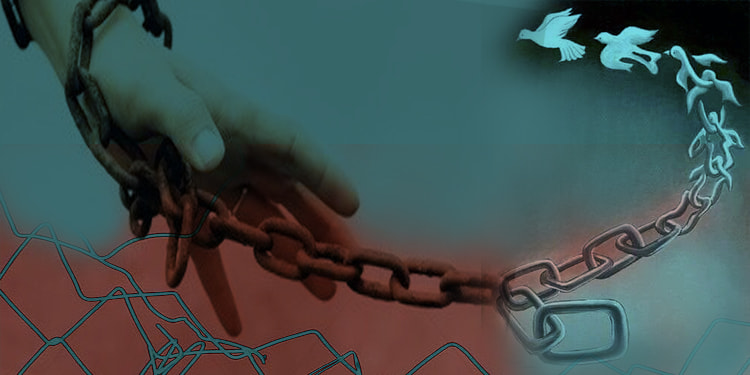
Mother Abi: Faces of Resilient Women in Captivity

“They Walked Away So Quietly…”

One day in February 1982, the ward door opened, and two extremely thin girls were shoved inside. From the first glance, you could tell they were twins, Nahid and Haydeh, students from Qazvin. I knew both. I had seen them around Sharif University and liked them very much.

In the days when I was desperately searching for my “missing home”—the PMOI—they were my only refuge at Sharif. Haydeh and Nahid guided me and encouraged me. On my way to school each morning, I always hoped I’d run into one of them. Their smiles energized me. They felt like my older sisters, people I could lean on. They secretly gave me the biographies of martyrs and helped me understand the movement better.

For the two weeks they were in our ward, they were interrogated daily. Each day, the guards cable-whipped their already-mutilated feet. With every step they took, blood and pus stained the floor behind them.

Despite all this, Nahid and Haydeh remained patient, calm, and dignified. Not once, not even once, did I hear a groan or a cry from them. Their only “crime” was supporting the PMOI.

On the morning of February 9, 1982, they were called in for interrogation together. But unlike before, they returned unusually fast, each only about half an hour apart. I went to them and asked what had happened.

Nahid said, “Today they took us to the bodies of Ashraf and Moussa[4] and told us to insult them. I refused. The interrogator said, ‘Go think about it; Either request to come for a televised confession by this afternoon or be ready for your execution tonight.’ They told the same thing to Haydeh.”

As soon as they returned to the ward, they calmly gathered their single set of clothes, washed, prayed, and waited. They told no one but me.

Around six in the evening, the female guard entered, laughing in that repulsive way of hers. She whispered: “Call Nahid from Room Three.” When Nahid came out, she said, “Pick up your things and come.”

When Nahid left, the same woman said, “Call Haydeh as well!” — and she told Haydeh the same thing.

When she returned for a moment to gather her belongings, I felt my heart stop. Was it possible? Two innocent, pure souls being taken from right beside me to be shot, and I could do nothing?

I stood there. It didn’t take even five minutes. Nahid came to the door of the ward. She looked at me. We held each other tightly. I’ll never forget that moment. Words vanished from my mind. Finally, I managed to whisper, “Nahid… may God protect you.”

Then Haydeh came, and our farewell was the same.

What a strange day it was. Both Nahid and Haydeh had been fasting[5] that day in honor of Ashraf and Moussa, and now the torturer wanted them to insult the very leaders they loved.

That night, the two sisters kept their promise—to their beliefs, to the PMOI, and to themselves.

With all their purity, they walked into martyrdom, in fact, joining Ashraf, Moussa, and other martyrs of February 8, 1982.


[1] Mother Mosanna — Ferdows Mahboubi, mother of four PMOI martyrs: Ali, Morteza, another son, and his wife.

[2] PMOI — People’s Mojahedin Organization of Iran; the main Iranian opposition movement targeted by the clerical regime since 1981.

[3] Kafshak — Small handmade cloth footpads prisoners made to protect their soles after cable-whipping torture.

[4] Ashraf and Moussa — PMOI leaders Ashraf Rajavi and Moussa Khiabani, both killed by the regime in February 1982.

[5] Fasting for martyrs — A common act of mourning and solidarity among political prisoners at the time.
ShareTweetPinShareSendShare

Related Posts

State Violence in Iran: Women Face Execution and White Torture

December 7, 2025
State Violence in Iran: Women Face Execution and White Torture

As we approach International Human Rights Day and the final days of the 16 Days of Activism Against Gender-Based Violence, the NCRI Women’s Committee Podcast presents a stark...

Read moreDetails

The Fate of a Child in Prison

December 7, 2025
The Fate of a Child in Prison

Memoirs of Mehri Hajinejad from “The Last Laughter of Leila”— Part Twelve In the previous part, we followed Mehri Hajinejad through the tightening fear inside the prison as...

Read moreDetails

Evin Prison: Female Political Prisoners Transferred to a Filthy Basement

December 6, 2025
Female Political Prisoners in Evin Prison Express Solidarity with Qezel Hesar Hunger Strike Against Executions

The living conditions of female political prisoners in Evin Prison have worsened after they were moved to a damp and contaminated basement, a place overrun by rats, insects,...

Read moreDetails

Rana Faraj Oghli, 24, A Child Marriage Victim, Executed in the Central Prison of Tabriz

December 5, 2025
Rana Faraj Oghli, 24, A Child Marriage Victim, Executed in the Central Prison of Tabriz

Rana Faraj Oghli, 24 years old Turk woman and victim of child marriage, was executed at dawn on Wednesday, December 3, 2025, in the Central Prison of Tabriz....

Read moreDetails

55% of Child Abuse Cases in Iran Involve Young Girls

December 5, 2025
55% of Child Abuse Cases in Iran Involve Young Girls A Disturbing Rise in Child Abuse and the Vulnerability of Young Girls

A Disturbing Rise in Child Abuse and the Vulnerability of Young Girls A largely overlooked aspect of systemic violence in Iran is the growing trend of child abuse,...

Read moreDetails
Next Post
Zahra Tabari Zahra Shahbaz Tabari, Electrical Engineer, 67, Sentenced to Death

Zahra Tabari: Facing Execution Over “a Piece of Cloth and a Voice Note”

Documents

The Gendered Dimensions of the Water Crisis in Iran: Impacts on Women’s Health, Livelihoods, and Security

The Gendered Dimensions of the Water Crisis in Iran: Impacts on Women’s Health, Livelihoods, and Security

October 12, 2025

How Iranian Women Shoulder the Heavy Burden of a Deepening Crisis Download Italian Version The water crisis in Iran has...

The Failure of Iran's Population Growth Law Despite the Repression of Women A Glance at a Costly and Ineffective Policy

The Failure of Iran’s Population Growth Law Despite the Repression of Women

August 24, 2025

A Glance at a Costly and Ineffective Policy The “Youthful Population Law” in Iran vs. Women’s Human Rights Following a...

Widowed Women in Iran: Main Problems and Challenges

Widowed Women in Iran: Main Problems and Challenges

June 22, 2025

Widowed Women in Iran, Alone and Oppressed in the Shadow of Discrimination In the Iranian legal system, where gender-based discrimination...

Monthlies

November 2025 Report: Under the Clerical Regime, Nowhere Is Safe for Women in Iran
Monthlies

November 2025 Report: Under the Clerical Regime, Nowhere Is Safe for Women in Iran

November 30, 2025
October 2025 Report: Death Sentence for a Female Political Prisoner The Resistance of Female Political Prisoners Inspires Iranian Women and Girls in Their Struggle Against the Regime of Executions and Massacre
Monthlies

October 2025 Report: Death Sentence for a Female Political Prisoner

October 31, 2025
September 2025 Report: One Woman Executed Every 4 Days in Iran
Monthlies

September 2025 Report: One Woman Executed Every 4 Days in Iran

September 30, 2025
AUGUST 2025 Report: Dual Repression of Political Prisoners and Their Families
Monthlies

August 2025 Report: Dual Repression of Political Prisoners and Their Families

August 31, 2025

Articles

55% of Child Abuse Cases in Iran Involve Young Girls A Disturbing Rise in Child Abuse and the Vulnerability of Young Girls

55% of Child Abuse Cases in Iran Involve Young Girls

December 5, 2025

A Disturbing Rise in Child Abuse and the Vulnerability of Young Girls A largely overlooked aspect of systemic violence in...

Child Marriage in Iran: An Institutionalized Violence Against the Girl Child

Child Marriage in Iran: An Institutionalized Violence Against the Girl Child

December 3, 2025

Child marriage in Iran remains legal and widespread. The forced and early marriage of girls is one of the most...

Safe Shelters: The Deep Gap Between the Reality of Domestic Violence and Support Services for Abused Women in Iran

Safe Shelters: The Deep Gap Between the Reality of Domestic Violence and Support Services for Abused Women in Iran

November 27, 2025

Safe Shelters in Iran are temporary passages that, although seemingly symbols of refuge and support, in practice reflect the inefficiency...

The Fallen for Freedom

In Memory of Zohreh Bani Jamali
The Fallen for Freedom

In Memory of Zohreh Bani Jamali

November 20, 2025
Fatemeh Farshchian
The Fallen for Freedom

Fatemeh Farshchian

September 11, 2025
Nosrat Ramezani
The Fallen for Freedom

Nosrat Ramezani

May 1, 2025
Sussan Mirzaei: A Trailblazer in Iran’s Struggle for Freedom and Democracy
The Fallen for Freedom

Sussan Mirzaei

May 1, 2025

ABOUT US

NCRI Women Committee

We work extensively with Iranian women outside the country and maintain a permanent contact with women inside Iran. The Women’s Committee is actively involved with many women’s rights organizations and NGO’s and the Iranian diaspora.
The committee is a major source of much of the information received from inside Iran with regards to women. Attending UN Human Rights Council meetings and other international or regional conferences on women’s issues and engaging in a relentless battle against the Iranian regime’s misogyny are part of the activities of members and associates of the committee.

CATEGORIES

  • Activities
  • Articles
  • Documents
  • Famous Women
  • Heroines in Chain
  • IWD Conferences
  • IWD Speeches
  • IWD Videos
  • Maryam Rajavi
  • Maryam Rajavi Speeches
  • Monthlies
  • Podcast
  • Reference Library
  • Solidarity
  • Statements
  • The Fallen for Freedom
  • Videos
  • Women in History
  • Women in Leadership
  • Women of Iranian Resistance
  • Women's News

BROWSE BY TAG

Child marriage coronavirus education execution forced hijab Gender Gap Generation Equality Honor killings Iran Teachers Maryam Akbari Monfared Nurses Plan on Women's Rights and Freedoms Poverty Prisoners Protests rural women Saba Kord Afshari The girl child Violence against women Women's Leadership Women Heads of Household Zeinab Jalalian

The copyright of all the material published on this website has been registered under © 2016 the Women’s Committee of the National Council of Resistance of Iran. To obtain permission to copy, redistribute or publish the material published on this website, you should write to the NCRI Women’s Committee. Please include the link of the original article on our website, women.ncr-iran.org.

Welcome Back!

Login to your account below

Forgotten Password?

Retrieve your password

Please enter your username or email address to reset your password.

Log In

Add New Playlist

No Result
View All Result
  • Home
  • News
    • Women’s News
    • Articles
    • Statements
  • Publications
    • Monthlies
    • Documents
    • Reference Library
  • About Us
    • The NCRI Women’s Committee
    • Gender Equality
    • Women’s Platform
  • Maryam Rajavi
    • Maryam Rajavi
    • Maryam Rajavi Speeches
    • Ten Point Plan for Iran
    • The Plan on Women’s Rights and Freedoms
  • Vanguards
    • The Fallen for Freedom
    • Heroines in Chain
    • Women of Iranian Resistance
    • Famous Women
    • Women in History
  • Events
    • IWD Conferences
    • Activities
    • IWD Speeches
    • Solidarity
  • Video
    • Videos
    • IWD Videos
  • Podcast
  • Donate
  • Contact us
  • فارسی
  • عربی
  • Français

The copyright of all the material published on this website has been registered under © 2016 the Women’s Committee of the National Council of Resistance of Iran. To obtain permission to copy, redistribute or publish the material published on this website, you should write to the NCRI Women’s Committee. Please include the link of the original article on our website, women.ncr-iran.org.