
What are PMOI/MEK Resistance Units?
The PMOI/MEK Resistance Units are a network of activists associated with the People’s Mojahedin Organization of Iran (PMOI/MEK), the main opposition force that the clerical regime does not tolerate at all.
The regime has executed more than 120,000 members and supporters of the PMIO/MEK since the 1980s, including a mass killing of 30,000 political prisoners during the summer of 1988.
Beginning in 2017, the PMOI/MEK started organizing the Resistance Units inside Iran. While affiliated with the organization, the Resistance Units are ordinary citizens with regular ties and communication with others around them, in the workplace, in offices, hospitals, and in society in general.
One of the essential features of Resistance Units is that their members are integrated into the broader society. Most are students, employees, workers, or have other occupations. They are not covert forces.
In the past few years, thousands of members of Resistance Units and thousands of other people have been arrested due to their connection with Resistance Units. Some have been subjected to the most severe forms of torture, sentenced to death or long-term prison sentences. Nine members of the Resistance Units were executed in 2026.
Despite the severe repression and widespread arrests, the regime has not been able to eradicate the Resistance Units.
On the contrary, the trend of the formation of Resistance Units has seen a rise throughout the country.
Expansion of PMOI Resistance Units
Throughout 2025 and 2026, PMOI Resistance Units carried out hundreds of documented anti-repression actions in all 31 provinces.
During nationwide campaigns marking the anniversary of the November 2019 uprising, these units carried out over 160 coordinated actions in a single day, even with tens of thousands of security forces deployed in Tehran alone.
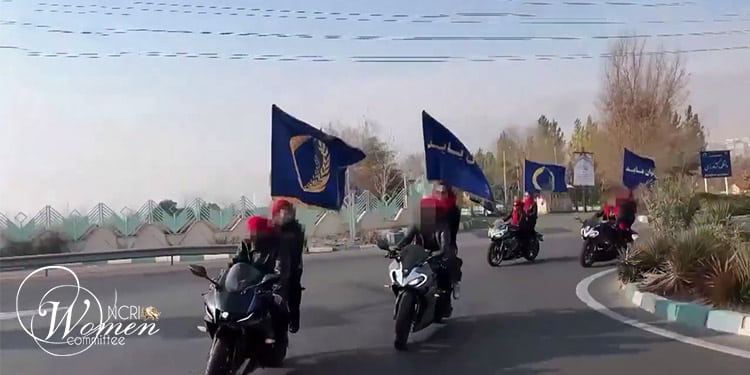
A key development was the open presence of units in groups of 10–20 members or more, signaling a transition from isolated cells to interconnected networks capable of coordinated action.
The nationwide uprising that erupted on December 28, 2025, and continued through January 2026 marked the moment when social protest and organized resistance fully converged.

Breaking the Silence
The PMOI Resistance Units underwent a qualitative transformation in 2025; one the regime was forced to acknowledge.
For years, the clerical regime sought to deny or downplay these units; that policy collapsed in 2025, and the regime falsely claimed it had arrested members of Resistance Units.
On August 4, 2025, state-run media reported the “arrest of three members of the Resistance Units” in Pakdasht. On December 8, 2025, regime-affiliated outlets announced the arrest of a 44-year-old man and a 43-year-old woman in Langrud, claiming they had confessed to “cooperation with the PMOI,” during “technical and specialized interrogations,” a phrase widely recognized as a euphemism for torture.
After eight years of silence since the emergence of these units in 2017, the regime was compelled to publicly acknowledge the existence of organized resistance networks across the country, a clear admission of failure.
The organizational character of the January 2026 uprising was also openly acknowledged by regime-affiliated media.
On December 29, 2025, Fars News Agency, linked to the IRGC, reported: “Eyewitnesses said that within crowds of around 200 people, there were cells of five to ten individuals present with slogans going beyond economic demands. Simultaneously, Maryam Rajavi called for a “chain of protests.”
These admissions confirmed that the uprising was not spontaneous or chaotic. It was the product of sustained social resistance and the active role of organized networks that linked local protests into a nationwide movement.

Central Role of Women in PMOI Resistance Units
Women members of the PMOI Resistance Units were pivotal in this expansion, from students and workers to professionals and homemakers, embodying the political and strategic ethos of the movement, summarized by the slogan: “Women, Resistance, Freedom.”
The role of Resistance Units in the uprisings
The role and functions of Resistance Units in recent protests are multifaceted.
Resistance Units have been actively present in the protests and played a leading role in many areas.
In particular, the role of women in the PMOI Resistance Units has been vital. Iranian women have long played a central role in the country’s struggle for freedom, and their participation in the Resistance Units has been critical to the success of the resistance movement.
Women have been actively involved in the organization and leadership of the PMOI Resistance Units, working alongside men to mobilize and educate young people and to engage in acts of civil disobedience against the regime.
The slogans of the 2022 protests, which were fundamentally unified throughout the country, are an indication of the uprising’s organized nature. Such organization is one of the primary functions of Resistance Units.
Another function of PMOI Resistance Units was to confront the oppressive forces of the regime, specifically the “plainclothes” agents who played a crucial role in suppressing the protests of 2019 and 2017. By engaging the agents of repression, these Resistance Units, in addition to repelling the forces of repression in many cases, raised the spirit of defiance in protesters.
Burning and targeting the regime’s centers of repression, which are highly despised in society, provided an inspiration and a practical model for many young people during the recent protests.
The Resistance Units’ activities have thus triggered and spread the spirit of Resistance and the ability to stand up to the regime and its repressive forces among the younger generations.
Resistance Units ensure that protests are sustained and organized. They have become role models for the younger generations, showing them the viable way forward in challenging the regime.