
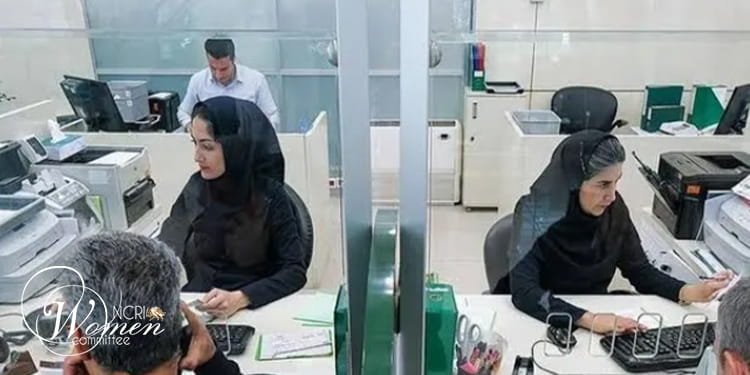
While women’s participation in the labor market in Iran remains severely limited, women have constituted a significant portion of the country’s university students and graduates over the past decades. (Rouydad24, November 9, 2026)
Official statistics indicate a profound gap between women’s educational investment and their employment opportunities, a gap that not only affects the lives of millions of women under the Iranian regime but also constricts the country’s economic growth potential.
An examination of data from the Statistical Center of Iran between the years 2021 and 2025 shows that women’s economic participation rate has effectively stagnated. This rate rose from 13.3 percent in 2021 to a mere 13.4 percent in 2025. In contrast, men’s economic participation rate during the same period consistently remained around 68 percent, leaving the gender gap in the labor market at over 54 percent.
Educated Women as Underutilized Human Capital
One of the most significant contradictions within the clerical regime’s economy is that women have a widespread presence in higher education, but this presence does not translate into sustainable employment.
Over past years, women have held an equal or even greater share than men in many academic disciplines, yet they encounter numerous barriers upon entering the labor market. This situation indicates that the problem is not merely limited to a shortage of job opportunities.
If economic recession were the sole determining factor, women and men would be expected to be affected in a similar manner. However, the profound gap between the economic participation rates of the two genders shows that other barriers are at play, barriers that are structural and discriminatory in nature.
Pre-Employment Discrimination in Hiring Processes
An important part of women’s challenges begins even before hiring. In many work environments, women face questions and judgments that men do not typically experience, inquiries regarding their marital status, wedding plans, likelihood of pregnancy, or family responsibilities. Such an attitude pushes women’s capabilities, expertise, and professional experience to the sidelines, basing hiring decisions on gender stereotypes.
As a result, young women, especially those of marriageable and childbearing age, face a higher probability of rejection during the recruitment process right from the start of their career path.
This type of discrimination also places the cost of inadequate support policies squarely on the shoulders of women. While the development of daycare centers, childcare services, and social support should be part of the responsibility of the government and employers, in practice, many businesses prefer to avoid hiring women altogether.
Precarious Employment and Fragile Job Security
Even women who enter the labor market in Iran face numerous challenges. Short-term contracts, the fear of dismissal following pregnancy or maternity leave, and the difficulty of pursuing discrimination cases diminish women’s job security. In many organizations, women remain at expert levels, and fewer managerial opportunities are made available to them.
This phenomenon, known as the “glass ceiling,” prevents women’s career advancement from matching their education level and professional experience. The consequence of such conditions is not merely a reduction in women’s income. Job insecurity can drive women toward dropping out of the labor market, informal employment, or accepting low-paying jobs, a trend that increases their economic dependence and limits their financial independence.

High Disparity in Female Unemployment Rates
An examination of official statistics shows that the unemployment rate for women has been noticeably higher than that of men across all years under review. In 2025, the women’s unemployment rate reached 15 percent, while this figure for men was around 6 percent.
Such disparity indicates that even women who manage to enter the labor market face greater difficulty in finding employment. In other words, women encounter compounding barriers both at the stage of entering the labor market and at the stage of finding a suitable job.
Economic Costs of Female Workforce Exclusion
Limiting women’s presence in the labor market is not merely an individual or gender issue, but rather a national economic concern managed poorly under the Iranian regime.
The greater the share of the population participating in economic activities, the more production capacity, innovation, and productivity increase. Under conditions where the economy is grappling with problems such as declining investment, the migration of specialized labor, and the plummeting purchasing power of households, sidelining a large portion of the educated workforce can further decelerate the development process.
In addition to generating independent income for women, increasing female employment also elevates household welfare. International studies have repeatedly shown that boosting women’s income is typically accompanied by improvements in the education, health, and well-being of families.

Global Perspectives on Women’s Labor Participation
An examination of the experience of various countries shows that increasing women’s economic participation can play a decisive role in economic growth.
Countries such as Vietnam and Bangladesh have been able to expand their export capacities by extensively integrating women into manufacturing sectors. In recent years, Japan has also implemented numerous incentive policies for greater participation of women in the labor market to counter the workforce decline resulting from an aging population.
Of course, these experiences demonstrate that merely increasing the number of employed women is not sufficient. Employment quality, fair wages, job security, and equal access to advancement opportunities are also of fundamental importance within the broader scope of the Iranian women labor market.
Breaking the Deadlock
Bridging the gender gap in the labor market requires structural changes. Measures such as countering employment discrimination, expanding childcare services, supporting working mothers, ensuring the implementation of maternity leave laws, enhancing the transparency of labor contracts, and providing equal opportunities for career advancement can strengthen women’s presence in the economy.
The reality is that the issue of women’s employment does not pertain solely to women. An economy that fails to utilize the capabilities, knowledge, and expertise of half its population forfeits part of its growth and development potential. Statistics from recent years reveal that Iranian women continue to face structural barriers preventing them from attaining equal economic opportunities. Until these obstacles are removed, the gap between women’s educational achievements and their position in the labor market will remain intact.