
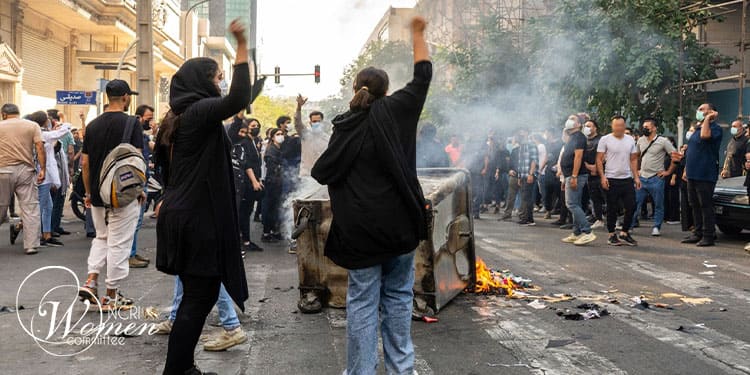
The Iranian people’s uprising was one of the world’s most significant events of the year 2022. One of the most prominent features of the 2022 Iran uprising that inspired the world was women’s bravery and leadership role.
Women’s leading role in the uprising was deeply rooted in the Iranian women’s long history of struggle for their democratic rights. The role of women in the vanguard opposition force has exerted its impact on women’s social struggles. The world saw Iranian women playing a more prominent role in the protests since 2009 to 2019, 2018, and finally in 2022. Under the mullahs’ misogynistic rule, women have turned into compressed coils, leaping forward when conditions allow.
It is against such a backdrop, that the cold-hearted murder of an innocent woman by the Morality Police set alight the powder keg of social discontent and economic grievances and gave rise to conditions where women could play their courageous role in confronting the security forces and leading the movement.
Started on September 16, the 2022 Iran uprising lasted six months despite the regime’s brutal attempts to suppress it.

A prominent feature of the uprising was that it was spearheaded by college and high school students. An average of 100 universities across the country were scenes of protests by young women and men every day.
To quell the student protests, plainclothes agents opened fire on students, even on the university premises.
Plainclothes agents also abducted students from dormitories without legal warrants at midnight or in the early morning as they were leaving the building.
The security forces’ surrounding of Sharif University of Technology on October 2, trapping its students inside, is emblematic. They trapped students inside the parking lot of Tehran’s prestigious Sharif University of Technology and fired live ammunition, rounding up at least 60 students, according to semi-official media.
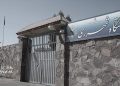
The arrested protesters were unyielding even inside prisons. To silence them, the regime launched an attack on Evin Prison on October 15, burning down the compound. Between 30 to 40 prisoners are believed to have died during the attack, and dozens more were badly wounded but were abandoned without medical care.

Excessive brute force used to confront audacious protesters
The clerical regime’s security forces killed at least 750 protesters, including at least 92 women and 70 children. They arrested and detained around 90,000 protesters and subjected them to the most brutal tortures, including sexual assault and gang rapes.
The regime also handed down death sentences for many detained protesters, including teenagers and juveniles, in unfair trials where they had no access to legal representation. Some of these trials were held online and lasted less than five minutes, without allowing the defendants to defend themselves. The regime executed six protesters during the uprising.
Nevertheless, the protests continued, focused on a single slogan, “Death to Khamenei,” indicating the protesters’ desire for the regime’s overthrow. Protesters also chanted, “With Hijab or Without Hijab, let’s go for a revolution,” reflecting the demand for freedom of choice for women and unity against the religious dictatorship.
Another frequently chanted slogan was “Death to the oppressor, be it the shah or the [mullahs’ supreme] leader,” indicating the people of Iran’s rejection of all forms of dictatorship and yearning for a democratic, pluralistic society founded on the separation of religion and state and gender equality.