
Last week, JINNEWS Ankara published an article by Melek Avcı, a veteran journalist and member of the outlet’s editorial team, titled “Their Story Did Not Begin at the Gallows, and They Will Not End There.”
The piece, published on September 18, 2026, examines the execution system in Iran through the lens of women’s experiences—focusing both on women facing execution for “their struggles for freedom and their people” and those sent to the gallows for “defending themselves against forced marriages and male violence.”
Reflecting on the four years since the death of Jina Amini, the article notes, “These four years have been a period in Iran not only of the great social transformation…, but also of the increasingly brutal apparatus of violence used by the government to suppress this transformation.”
It continues: “The government, however, detained and arrested people who were shouting demands for democracy, freedom, and equality in the streets, on charges of “espionage.” Many were executed in prisons. In this context, the death penalty became not only a state policy to punish dissidents, but also one of the tools of a patriarchal system targeting women. The death penalty did not only target female political prisoners. Women who defended themselves against male violence, child and forced marriages, domestic violence, and rape were also executed and murdered within the same system.”
Where male violence is not prevented, women’s self-defense is criminalized
In another part of her article, Melek Avci writes: “A significant portion of the women sentenced to death are said to have been subjected to domestic violence and child marriage. This data reveals a cycle where women are first pushed into domestic violence, marriage, and male violence, and when they defend themselves against this violence, they then face the state’s punitive mechanisms. Where male violence is not prevented, women’s self-defense is criminalized, and the system of retaliation, as the final link in this cycle, eliminates women’s right to life.”
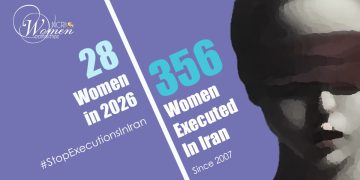
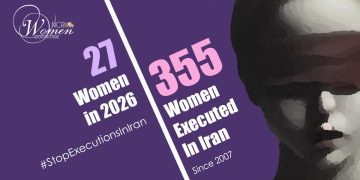
She adds, “As far as can be determined, at least 181 political prisoners in Iran, including 27 women, have been sentenced to death and are currently at risk of execution. Behind these numbers are women whose lives, struggles, and political identities are intertwined.”
Death Sentence for a Banner Reading “Woman, Resistance, Freedom”
In another section of this article by Ms. Melek Avci we read, “According to available information, the women currently facing the death penalty were tried in cases related to participation in public protests and political activities. For example, Zahra Tabari was sentenced to death on charges including allegations of possessing a banner that read ‘Woman, Resistance, Freedom.’
“It is unknown whether direct contact has been made with the families of all the women executed or sentenced to death. However, reports concerning political prisoners generally indicate that families face obstacles in visiting, accessing information, following legal proceedings, and mourning.”
The Intersection of State Violence and Male Violence
The picture that emerged four years after Jina Amini’s murder shows that the women’s struggle in Iran and the death penalty regime cannot be considered independently. On one side are women threatened with execution for their political activities, participation in protests, struggles for women’s and workers’ rights, or alleged organizational affiliations; on the other side are women who are married off as children, subjected to domestic violence and sexual assault, and executed under the retaliatory system when they engage in self-defense.”
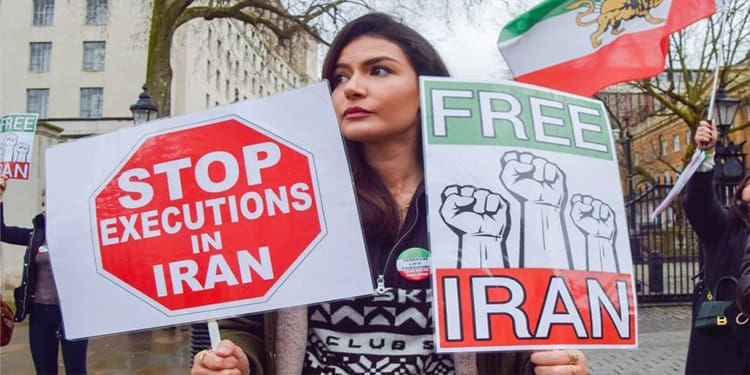
“Today, the stories of women threatened with execution, political prisoners in jails, and women defending themselves against male violence show why this protest continues.”