
The nursing crisis in Iran has deepened significantly in recent years, with the country’s nursing workforce and broader healthcare system facing increasingly difficult conditions. Reports and documented data published by state-affiliated media reveal a troubling reality: healthcare workers are struggling under severe financial pressure, major disparities in pay, mandatory overtime, and chronic workplace exhaustion.
The crisis cannot simply be attributed to temporary budget shortfalls or administrative shortcomings. It is closely tied to the way the healthcare system is governed and managed. The authorities cannot be separated from responsibility for these conditions, as their failure to address the basic rights and needs of healthcare workers has been a major factor behind the emergence and continuation of the crisis.
Low Wages and Delayed Payments
One of the clearest signs of the nursing crisis and the deteriorating conditions faced by healthcare workers is the widening gap between soaring inflation and their low incomes.
On September 22, 2026, Jahan-e Sanat reported that, amid a broader crisis in the healthcare sector, many nurses earn less than 30 million tomans a month. Given the soaring cost of living, this effectively leaves many of them struggling below the poverty line.
The problem of delayed payments, however, extends beyond nurses and affects the healthcare system as a whole.
Mohammad Sharif-Moghaddam, a nursing organization official, told Jahan-e Sanat that low pay for nurses has been an issue for more than 20 years. He said salaries, take-home pay, and performance-based payments remain low, adding that this is not a new problem but a longstanding and chronic one.
“Nurses have tried every possible avenue over the past 20 years. There is no path they have not taken—from raising their demands and holding rallies to protests and even the unprecedented nationwide strike two years ago,” he said.
Aziz Tahaei-Motlagh, a health economics expert, has warned that various groups of healthcare workers—including general practitioners, physicians completing mandatory service, residents, and young specialists—are facing long and exhausting delays in receiving payments owed to them.
According to him, while larger universities have relatively regular payment schedules, in less-served regions the gap between providing a service and receiving performance-based payments can stretch to several months or even around a year.
A report in Shargh on September 16, 2026, found chronic delays of several months to a year in performance-based payments at medical centers in cities including Ahvaz, Yasuj, Kermanshah, Shahrekord, Kashan, and Qom.
In an inflationary environment, such lengthy delays effectively erode the purchasing power and real value of healthcare workers’ incomes.
Nasrollah Pejmanfar, who chairs a parliamentary committee, also referred to efforts to address the issue, saying: “It is unacceptable for performance-based payments to be made in Tehran after one or two months, while in a province such as Razavi Khorasan, the delay reaches six or seven months.” (Shahraranews, September 20, 2026)

Staff Shortages, Heavy Workloads, and Nurse Burnout
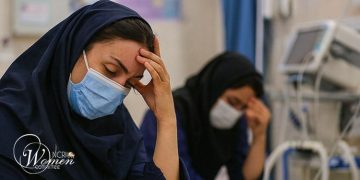
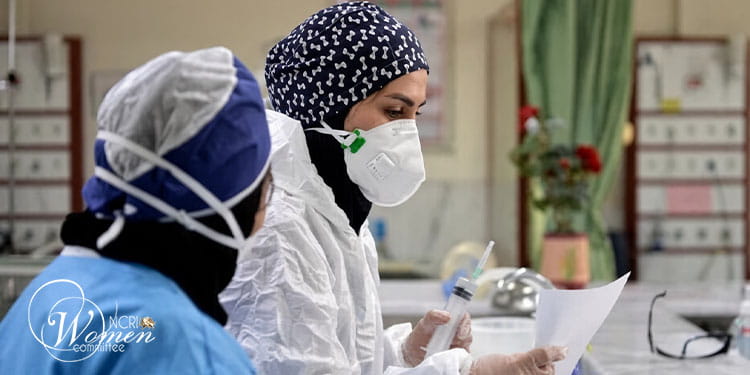
Heavy workloads are one of the most serious aspects of the nursing crisis and are directly linked to the severe shortage of nurses.
According to figures presented by Ahmad Nejatian, head of Iran’s nursing organization, the country is short of between 100,000 and 120,000 nurses. The average nurse-to-hospital-bed ratio is around one, falling to 0.8 in Tehran, while the desired standard is around 1.8 and the ratio in other countries in the region ranges from 2 to 3.5. (Jahan-e Sanat, September 22, 2026)
This structural shortage has made as much as 80 hours of mandatory overtime per month routine, with nurses sometimes forced to care for eight or nine patients at the same time.
Parvin Kazemi, a nursing system official, has said that nurses’ mandatory working hours exceed 140 hours a month. Unlike many government employees, nurses also do not have access to benefits such as remote work or Thursdays off.
The scale of this exhaustion becomes even clearer when considering that a large part of the nursing workforce consists of women and mothers who, in addition to working demanding night shifts, also carry responsibility for running their households.
These conditions have contributed to declining quality of care and staff departures. Abbas Ebadi, Deputy Minister of Nursing at the Ministry of Health, said that more than 2,150 nurses had left the healthcare system over the previous four years because of heavy workloads and inequalities.
The problem is even more severe in underserved areas, where the nurse-to-population ratio falls to as low as 0.4 in some places, making it increasingly difficult to recruit and retain staff. (Tasnim, August 24, 2025)
Conclusion
The nursing crisis and deteriorating conditions for healthcare workers in Iran are neither isolated incidents nor simply the result of temporary budget shortages. They are the outcome of years of neglect in the healthcare sector and the continued failure to address problems affecting healthcare workers’ livelihoods, working conditions, and job security.
Low wages, lengthy delays in payments, severe staff shortages, and heavy workloads have deepened the nursing crisis and placed increasing pressure on nurses, residents, and other healthcare workers.
The continuation of these conditions has also contributed to growing burnout and the departure of healthcare workers from the system.
Nurses have continued to protest and press for their demands. Across different parts of the country, they have held rallies and gone on strike over low wages, unpaid and delayed payments, staff shortages, and excessive workloads. In some cases, however, these protests have been followed by summonses, contract cancellations, legal proceedings, and administrative or security measures.
In August 2026, a number of nurses at Fayazbakhsh Hospital in Tehran faced such consequences following labor protests.
Despite these pressures, nurses continue to protest, with their main demands ranging from improved economic conditions and timely payment of outstanding wages to reduced workloads and adequate staffing.
The continuation of these protests reflects the persistence of problems that nurses have been warning about for years—and that remain unresolved.