

Sunday, August 2, 2026
  • English
  • Français
  • فارسی
  • عربى
PODCASTS
NCRI Women Committee Women Resistance Freedom
  • Home
  • NEWS
    • Women’s News
    • Articles
    • Statements
  • PUBLICATIONS
    • Monthlies
    • Documents
    • Reference Library
  • ABOUT US
    • The NCRI Women’s Committee
    • Gender Equality
    • Women’s Platform
  • MARYAM RAJAVI
    • Maryam Rajavi
    • Maryam Rajavi Speeches
    • The Plan on Women’s Rights and Freedoms
    • Ten-Point Plan for the future of Iran
  • VANGUARDS
    • The Fallen for Freedom
    • Heroines in Chain
    • Women of Iranian Resistance
    • Famous Women
    • Women in History
  • EVENTS
    • IWD Conferences
    • Activities
    • IWD Speeches
    • Solidarity
  • VIDEO
    • Videos
    • IWD Videos
  • PODCAST
  • DONATE
  • CONTACT US
No Result
View All Result
NCRI Women Committee Women Resistance Freedom
  • Home
  • NEWS
    • Women’s News
    • Articles
    • Statements
  • PUBLICATIONS
    • Monthlies
    • Documents
    • Reference Library
  • ABOUT US
    • The NCRI Women’s Committee
    • Gender Equality
    • Women’s Platform
  • MARYAM RAJAVI
    • Maryam Rajavi
    • Maryam Rajavi Speeches
    • The Plan on Women’s Rights and Freedoms
    • Ten-Point Plan for the future of Iran
  • VANGUARDS
    • The Fallen for Freedom
    • Heroines in Chain
    • Women of Iranian Resistance
    • Famous Women
    • Women in History
  • EVENTS
    • IWD Conferences
    • Activities
    • IWD Speeches
    • Solidarity
  • VIDEO
    • Videos
    • IWD Videos
  • PODCAST
  • DONATE
  • CONTACT US
No Result
View All Result
NCRI Women Committee
No Result
View All Result
Home Articles
Iranian nurses’ defiance in January 2026 uprising

Iranian Nurses Braved Fire with Defiance During January 2026 Uprising

May 3, 2026
in Articles

In the blood-stained annals of the January 2026 uprising, Iran’s healthcare professionals stood witness to a stark battle between human dignity and sheer depravity. As the clerical regime, with chilling defiance, sought to turn medical centers into extensions of their detention cells—redefining crimes against humanity by sabotaging life-support systems and seizing the wounded from the very midst of surgery—the medical community, and most notably the female Iranian nurses, stood as a resolute fortress of self-sacrifice.

Those who were trained to sustain the flicker of life within the confines of Intensive Care Units, instead found themselves in the “ICU of the Streets,” shielding the people with their own chests against a hail of bullets.

The Stars in White: A Chronicle of Nurses Who Forged Remedies from Their Own Blood

The epic saga of nursing during the January 2026 uprising was written through the defiance of women who honored their healing oath even at the cost of their lives. The luminescent stars of this struggle stand as a living testament to this truth:

Samin Rostami: The Awakened Conscience of Karaj

A 42-year-old mother of two and a dedicated nurse at Aram Hospital of Karaj, west of Tehran. Samin transformed January 8, 2026, into a defining milestone of her commitment to saving lives.

Samin, whose very hands carried the scent of healing, could not stand by as she witnessed a young girl being subjected to the brutal assault of security forces. She stepped into the line of fire, and with empty hands, offered her own life as a ransom for another’s survival, ensuring that the beating heart of resistance in Karaj would not falter. On the evening of Friday, January 9, 2026, while rushing to the aid of another woman during the protests, she was struck by live ammunition fired by security forces, falling alongside her sisters-in-arms.

Her body was finally released to her family four days later.

Mansoureh Heidari: A Symphony of Love and Sacrifice in the Coastal City of Bushehr

The story of Mansoureh and her husband, Behrouz, is a harrowing chronicle of devotion. On January 8, 2026, as Ashouri Street in Bushehr came under heavy fire from forces stationed near the mosque, Mansoureh did not merely react as a wife; she charged toward the danger with the stature of a healer. While desperately administering aid to her husband’s fallen body, she was struck down by live ammunition, her blood mingling with his in a final act of courage.
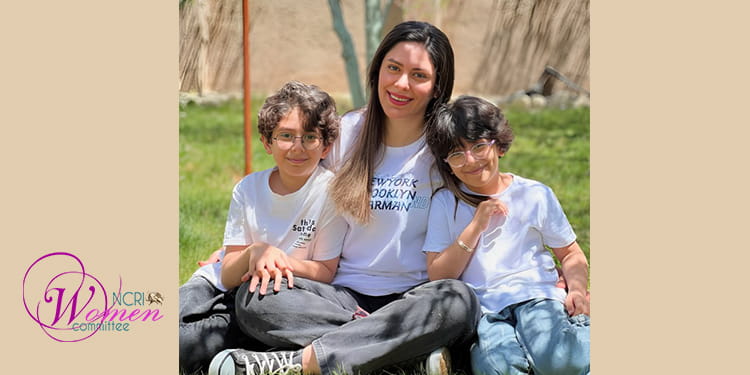
Mansoureh Heydari was a nurse at the Social Security Hospital in Bushehr.
Mansoureh Heydari and her two children.

Parvin Azizi: Resilience in the Heart of Andisheh

A 51-year-old Kurdish Yarsani woman originally from Qasr-e Shirin, Parvin became a living symbol of Iran’s ethnic solidarity. On January 8, 2026, in the city of Andisheh, her life was cut short by live ammunition. In the wake of her martyrdom, reports emerged of intense security crackdowns on her funeral rites and relentless pressure exerted upon her grieving family.

Hospitals as Occupied Zones: When Operating Rooms Became Frontlines of Repression

The regime did not confine its assault to the streets; it waged an asymmetric war against the “White Coats” within the very corridors of hospitals. The brutal raid on Khomeini Hospital in Ilam on January 3, 2026—characterized by the siege of inpatient wards and the discharge of tear gas through the hallways—was but a single chapter in this campaign of repression. Security forces, through the physical assault of medical staff, sought to abduct wounded protesters directly from their hospital beds. In the wake of these incursions, doctors and nurses who fulfilled their oath to treat the injured have been subjected to threats, interrogations, and arbitrary detention.

Additionally, on January 6, special units and plainclothes agents launched a violent incursion into Sina Hospital in Tehran. The deployment of tear gas canisters within the wards caused severe respiratory distress for hospitalized patients and the medical staff attending to the wounded of the uprising. Despite the immediate threats to their own safety, nurses fought to shield the injured from arbitrary arrest. The images of their bravery, emerging through the haze of smoke and chemical gas, have become an enduring symbol of the medical community’s defiance during the January 2026 Uprising.

Security forces pressured female medical staff to log the national ID numbers and personal details of gunshot victims into online government databases. However, numerous reports have surfaced of female nurses systematically sabotaging registration systems or documenting cases under pseudonyms. These acts of digital defiance were a desperate measure to shield the identities of protesters from plainclothes agents and prevent their imminent arrest.

Consequently, many of these women were hauled before disciplinary committees, facing charges of “disrupting hospital order” and “collusion with rioters.” These accusations served as a pretext for their summary dismissal, stripping these dedicated professionals of their livelihoods as retribution for their integrity.

Furthermore, during the January 2026 uprising, the resistance of female nurses at emergency room entrances was profoundly striking. They stood their ground to block security forces who, in a chilling violation of medical neutrality, attempted to use ambulances as “Trojan horses” to abduct the wounded. In cities across the country, such as Rasht and Shiraz, many Iranian nurses faced immediate suspension and the freezing of their salaries for refusing to collaborate with hospital “Herasat” (security) in identifying protesters.

Following these events, female medical professionals took to the streets in protest, raising their voices with slogans that resonated as a direct indictment of the regime’s tactics: “The Hospital is a Sanctuary, Not a Dungeon,” “Our Oath is Honor; Your Answer is Crime,” and “Ambulances are for Saving Lives, Not Transporting Oppressors.” Through these cries, they sent a definitive message: they would not succumb to threats or intimidation.

Underground Hospitals: The Secret Medical Network Led by Female Health Professionals

The martyrdom of nurses during the uprising, along with the systematic arrests and threats against medical staff, was not the end of the road. Instead, it became a pivotal turning point, transforming these “Angels in White” into the architects of an organized resistance structure.

In this uprising, female healthcare workers utilized encrypted social networks to organize a network of “safe houses” dedicated to performing emergency outpatient surgeries and providing critical care away from the regime’s watchful eyes.

By pooling their expertise, nurses and doctors established “Clandestine Relief Networks” within the heart of private homes, specifically designed to prevent the abduction of protesters from hospital emergency rooms. They transformed ordinary living rooms into makeshift operating theaters, treating wounded protesters by covertly transporting medicine and surgical supplies. At the constant risk of dismissal and imprisonment, these professionals smuggled critical equipment—including dressing kits, IV fluids, and anesthetics—out of hospitals to sustain these hidden lifelines.

Security forces eventually began identifying these makeshift clinics, launching violent raids on civilian sanctuaries. In Ardabil, an assault on the home of a medic who had sheltered 20 wounded protesters—resulting in the total destruction of medical equipment—revealed the depth of the regime’s malice toward “expertise in the service of the uprising.”

One such healthcare professional, a nurse from a hospital in Karaj identified as “Raha A.”, was arrested in mid-January 2026. She was charged with the “illegal removal of blood bags and life-saving medications.” Reports indicate that she was subjected to intense psychological torture during interrogation to force her to reveal the locations of the “safe houses” where the wounded were being hidden. Despite the immense pressure, she refused to break her silence, maintaining her defiance until the moment she was transferred to the women’s ward of Kachoui Prison.

The resilience of women like Mansoureh and Parvin, alongside the selfless sacrifices of those like Samin, proved that during the January 2026 Uprising, the white medical coat was no longer merely a symbol of healing. It became a scarlet banner of resistance against tyranny—a defiance whose pulse will continue to throb in every home and on every street until the ultimate liberation of Iran.
Tags: Protests
ShareTweetPinShareSendShare

Related Posts

July 2026 Report: Death Sentences for Women Rising Up to Overthrow the Mullahs’ Regime

July 31, 2026
July 2026 Report: Death Sentences for Women Rising Up to Overthrow the Mullahs' Regime

Religious Fascism Terrified of Women’s Vanguard Role in Uprisings From Death Sentences on Charges of "Armed Rebellion" to the Execution of Mothers with Multiple Children July 2026 Report:...

Read moreDetails

Iran: 131st Week of “No to Execution Tuesdays” Hunger Strike in 59 Prisons

July 28, 2026
Iran: 131st Week of “No to Execution Tuesdays” Hunger Strike in 59 Prisons

The “No to Execution Tuesdays” campaign continued into its 131st week on Tuesday, July 28, 2026, with prisoners and political prisoners in 59 prisons across Iran participating in...

Read moreDetails

“No to Execution Tuesdays” Campaign Continues into Its 130th Week Across 59 Prisons

July 21, 2026
"No to Execution Tuesdays" Campaign Continues into Its 130th Week Across 59 Prisons

Marking its 130th week across 59 prisons, the "No to Execution Tuesdays" campaign continues its hunger strike, joined this week by Neyshabur Prison. The 130th week of the...

Read moreDetails

Iran: Families of Prisoners Rally Outside Ghezel Hesar Prison to Protest Death Sentences

July 20, 2026
Iran: Families of Prisoners Rally Outside Ghezel Hesar Prison to Protest Death Sentences

As the hunger strike and sit-in by approximately 1,500 death row prisoners in Unit 2 of Ghezel Hesar Prison continue, more than 500 families of prisoners gathered outside...

Read moreDetails

Week 129: No to Execution Tuesdays Expands to 58 Prisons Across Iran

July 14, 2026
Week 129: No to Execution Tuesdays Expands to 58 Prisons Across Iran

In the 129th week of the No to Execution Tuesdays campaign, political prisoners in 58 prisons across Iran staged a hunger strike on Tuesday, July 14, 2026, once...

Read moreDetails
Next Post
Iran: Baluch Woman Dies After Brutal Domestic Assault and Burning

Iran: Baluch Woman Dies After Brutal Domestic Assault and Burning

Documents

Call for Immediate Action to Halt the Death Sentence of Arghavan Fallahi

Sign our Statement to Halt the Death Sentence of 25-Year-Old Political Prisoner Arghavan Fallahi

July 10, 2026

Statement Calling for Immediate Action to Halt the Death Sentence of 25-Year-Old Political Prisoner Arghavan Fallahi We express our profound...

The Ineffectiveness of Population Policies in Iran: Economy, Aging, and the Overlooked Rights of Women

The Ineffectiveness of Population Policies in Iran: Economy, Aging, and the Overlooked Rights of Women

July 10, 2026

Abstract: A compilation of official data, media reports, and disclosures published in April, May, and June 2026 demonstrates that Iran...

Crushed by Design: Structural Crises and Inequitable Policies Push Female-Headed Households to the Edge

Crushed by Design: Structural Crises and Inequitable Policies Push Female-Headed Households to the Edge

May 18, 2026

Introduction Life for the Iranian people under the religious dictatorship is fraught with hardship and peril from every perspective. Whether...

Monthlies

July 2026 Report: Death Sentences for Women Rising Up to Overthrow the Mullahs' Regime
Monthlies

July 2026 Report: Death Sentences for Women Rising Up to Overthrow the Mullahs’ Regime

July 31, 2026
June 2026 Report: Working Iranian Women Erased from Labor Market
Monthlies

June 2026 Report: Working Iranian Women Erased from Labor Market

July 5, 2026
May 2026 Report: The Enduring Resistance of Iranian Women
Monthlies

May 2026 Report: The Enduring Resistance of Iranian Women

May 31, 2026
April 2026 Report: Mass Arrests of Women: Targeted Repression in Time of Crisis
Monthlies

April 2026 Report: Mass Arrests of Women in Iran

April 30, 2026

Articles

The 1988 Massacre: The Greatest Unpunished Crime Against Humanity

The 1988 Massacre: The Greatest Unpunished Crime Against Humanity

July 28, 2026

The Glorious Epic of Resistance by PMOI Women in the Anti-Human Clerical Regime's Prisons The massacre of over 30,000 political...

The Hidden Victimization and Exploitation of Widows in Iran

The Hidden Victimization and Exploitation of Widows in Iran

July 23, 2026

Exploitation of widows in Iran Introduction: The survival of the mullahs' regime rests on two fundamental pillars: overt suppression in...

Widows in Iran: An Analysis of Legal Challenges and the Structure of Discrimination

Widows in Iran: An Analysis of Legal Challenges and the Structure of Discrimination

July 17, 2026

Introduction: In the political and legal structure governing Iran, misogyny and gender discrimination have been institutionalized as a fundamental principle,...

The Fallen for Freedom

Fatemeh Alizadeh, a 28-year-old pregnant woman
The Fallen for Freedom

Fatemeh Alizadeh

July 29, 2026
Sahar Bayat was killed on January 8, 2026
The Fallen for Freedom

Sahar Bayat

July 23, 2026
Saba Negahban, known as "Venus," was killed on Friday, January 9, 2026, by direct fire from the regime’s suppressive forces
The Fallen for Freedom

Saba Negahban

July 22, 2026
Parastou Namavar was fatally shot by Iranian regime forces
The Fallen for Freedom

Parastou Namavar

July 18, 2026

ABOUT US

NCRI Women Committee

We work extensively with Iranian women outside the country and maintain a permanent contact with women inside Iran. The Women’s Committee is actively involved with many women’s rights organizations and NGO’s and the Iranian diaspora.
The committee is a major source of much of the information received from inside Iran with regards to women. Attending UN Human Rights Council meetings and other international or regional conferences on women’s issues and engaging in a relentless battle against the Iranian regime’s misogyny are part of the activities of members and associates of the committee.

CATEGORIES

  • Activities
  • Articles
  • Documents
  • Famous Women
  • Heroines in Chain
  • IWD Conferences
  • IWD Speeches
  • IWD Videos
  • Maryam Rajavi
  • Maryam Rajavi Speeches
  • Monthlies
  • Podcast
  • Reference Library
  • Solidarity
  • Statements
  • The Fallen for Freedom
  • Videos
  • Women in History
  • Women in Leadership
  • Women of Iranian Resistance
  • Women's News

BROWSE BY TAG

Child marriage coronavirus education execution forced hijab Gender Gap Generation Equality Honor killings Iran Teachers Maryam Akbari Monfared Nurses Plan on Women's Rights and Freedoms Poverty Prisoners Protests rural women Saba Kord Afshari The girl child Violence against women Women's Leadership Women Heads of Household Zeinab Jalalian

The copyright of all the material published on this website has been registered under © 2016 the Women’s Committee of the National Council of Resistance of Iran. To obtain permission to copy, redistribute or publish the material published on this website, you should write to the NCRI Women’s Committee. Please include the link of the original article on our website, women.ncr-iran.org.

Welcome Back!

Login to your account below

Forgotten Password?

Retrieve your password

Please enter your username or email address to reset your password.

Log In

Add New Playlist

No Result
View All Result
  • Home
  • News
    • Women’s News
    • Articles
    • Statements
  • Publications
    • Monthlies
    • Documents
    • Reference Library
  • About Us
    • The NCRI Women’s Committee
    • Gender Equality
    • Women’s Platform
  • Maryam Rajavi
    • Maryam Rajavi
    • Maryam Rajavi Speeches
    • Ten Point Plan for Iran
    • The Plan on Women’s Rights and Freedoms
  • Vanguards
    • The Fallen for Freedom
    • Heroines in Chain
    • Women of Iranian Resistance
    • Famous Women
    • Women in History
  • Events
    • IWD Conferences
    • Activities
    • IWD Speeches
    • Solidarity
  • Video
    • Videos
    • IWD Videos
  • Podcast
  • DONATE
  • Contact us
  • فارسی
  • عربی
  • Français

The copyright of all the material published on this website has been registered under © 2016 the Women’s Committee of the National Council of Resistance of Iran. To obtain permission to copy, redistribute or publish the material published on this website, you should write to the NCRI Women’s Committee. Please include the link of the original article on our website, women.ncr-iran.org.