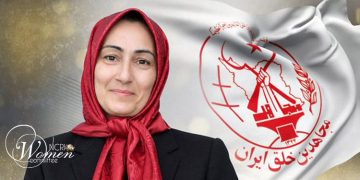


Mrs. Maryam Rajavi: Without women’s leadership, neither is a democratic transformation possible, nor can a peaceful, orderly, and democratic transition of power be envisioned. Without it, there will be no trace of true democracy, justice, or progress.
Speakers praise Iranian women’s courage, endorse Mrs. Rajavi’s Ten-Point Plan, and reject all forms of dictatorship, whether religious or monarchical
The international conference “Women’s Leadership: An Imperative for A Free Iran and A Democratic Republic” was held on the eve of International Women’s Day. The event featured a keynote speech by Mrs. Maryam Rajavi, President-elect of the National Council of Resistance of Iran (NCRI), and was attended by dozens of prominent political and parliamentary figures from various countries.
Addressing the session, Mrs. Rajavi stated: “In the January uprising, women have once again proven that they are not powerless victims, but the very force of change. The rebellious young women who galvanized the people, rushing to aid the detained and the wounded. The great uprising of January has sealed the reality that Iran stands on the brink of a profound transformation. We have always maintained that the overthrow of the religious tyranny ruling Iran is impossible unless women are the primary force of change. Furthermore, freedom and democracy can only be attained through the presence of women in the political leadership of society.
By presenting specific programs and plans, the NCRI insists upon the principle that human rights are women’s rights, and they must be recognized in every sphere. This includes the freedom to elect and be elected; the right to choose one’s attire freely; freedom of employment and the right to engage in political, social, and economic activities; the right to non-discriminatory access to all artistic and athletic opportunities; equal pay for equal work; the freedom to choose one’s spouse and an equal right to divorce; and the prohibition of any form of sexual exploitation of women under any pretext. We categorically reject any form of compulsion or imposition: No to compulsory hijab, no to compulsory religion, and no to compulsory governance.”
She noted that the leadership of women is a definitive benchmark for evaluating those political claimants who masquerade as an alternative, while in reality, they are merely another version of the patriarchal system—a continuation of tyranny and the strangulation of liberty. Mrs. Rajavi added: “Apply this benchmark to the neo-fascist remnants of the monarchy. They pose as opponents of the ruling regime, yet in their misogynistic and repressive ideology; they are the twins of this reactionary regime—only without the turban.”
Mrs. Rajavi emphasized: “Over the past three decades, the People’s Mojahedin Organization (PMOI/MEK) with the presence of one thousand Mojahed women in the organization’s Central Council— representing various generations and cities across Iran — alongside several generations of women stands as the definitive benchmark of women’s vanguard role in the struggle against religious tyranny. The era of regimes that impose oppression upon the women of Iran has come to an end, whether it be the monarchical dictatorship or the religious one. The women and the people of Iran demand freedom. They demand democracy. They demand justice and equality, and they will fight for them until the very end.”
Mrs. Rajavi further stated that without women’s leadership, neither is a democratic transformation possible, nor can a peaceful, orderly, and democratic transition of power be envisioned after the regime’s overthrow. Without it, there will be no trace of true democracy, justice, or progress. In the wake of the regime’s collapse, Iran will need a unifying force. One of the most vital capacities of the Iranian Resistance to meet this need is its reliance on the vanguard force of women.
Prominent female political figures from Europe, North America, and Latin America addressed the conference, including: Michèle Alliot-Marie (former French Minister of Foreign Affairs, Justice, Interior, and Defense); Rosalía Arteaga Serrano (former President of Ecuador); Anneli Jäätteenmäki (former Prime Minister of Finland); Ana Helena Chacón Echeverría (former Vice President of Costa Rica); Carla Sands (former US Ambassador to Denmark); Ingrid Betancourt (former Senator and Presidential candidate of Colombia); Judy Sgro (Member of the Canadian Parliament and former Minister of Citizenship and Immigration); Naike Gruppioni (Member of the Foreign Affairs Commission of the Italian Parliament); Elisa Pirro (Member of the Italian Senate);
Linda Chavez (former White House Director of Public Liaison); Dominique Attias (Chair of the Board of Directors of the European Lawyers Federation); Pilar Rojo (Chair of the Foreign Affairs Committee of the Spanish Senate); Rosa Romero (Chair of the Equality Commission of the Spanish Senate); Helena Carreiras (former Minister of Defense of Portugal); Fiona O’Loughlin (Deputy Leader of the Irish Senate); Donna Hughes (Professor of Gender and Women’s Studies, United States);
Helen Goodman (former UK MP); Eve Borg Bonello (Member of the Parliament of Malta); Elly van Wijk (Member of the Dutch Senate); Dorien Rookmaker (former Member of the European Parliament from the Netherlands); Karen Smith (former Special Adviser to the UN Secretary-General on the “Responsibility to Protect”); and Elisabetta Zamparutti (Hands Off Cain association).
Other speakers included Ms. Sarvnaz Chitsaz (Chair of the NCRI Women’s Committee), Ms. Zinat Mirhashemi (Editor-in-Chief of Nabard-e Khalq and member of the Central Committee of the People’s Fedayeen Organization of Iran), several PMOI members from Ashraf, and representatives of Iranian women’s associations abroad.
The speakers praised the courage of Iranian women in recent uprisings, emphasizing that they are not merely victims of repression but activists who have transformed the price paid in confronting religious tyranny into organization and hope. They regarded Mrs. Rajavi’s Ten-Point Plan as the framework and roadmap for a future democratic Iran, urging support from all democrats worldwide. The speakers declared their opposition to any form of dictatorship, whether religious or monarchical, stating that Iran’s future lies neither in the status quo nor in a return to the authoritarianism of the Shah.
Carla Sands, former US Ambassador to Denmark, stated, “There’s a persistent misperception that women had rights under the Shah and enjoyed equality. And this claim is false.” Referring to the Shah’s interviews and misogynistic remarks, she concluded that dictatorship inherently cannot offer gender equality, adding, “Iranian women have reached the understanding that their personal freedom is inseparable from the freedom of the entire nation. This realization transformed them from victims into leaders of the national resistance movement.”
Michèle Alliot-Marie, former French Foreign Minister, remarked, “This Women’s Day is an opportunity to express our solidarity, support, and affection for the Iranian women and men standing with unparalleled courage and determination against one of the most patriarchal and ruthless regimes on the planet.”
Rejecting any form of dictatorship, monarchical or religious, Ingrid Betancourt noted that tyranny, in any ideological guise, is antithetical to equality. She stated, “Under the Shah’s dictatorship, equality without democracy was merely cosmetic, conditional, fragile, and reversible. Under the current theocratic regime, discrimination became law, misogyny became policy, and violence became institutionalized. But across both regimes, one truth has remained constant: Iranian despotism, no matter what ideology it wears, cannot coexist with gender equality.”
Judy Sgro, Member of the Canadian Parliament, described women’s leadership in the Iranian Resistance as a transnational achievement for the global equality movement. Addressing Mrs. Rajavi, she said, “What you have done was not only to the benefit of the Iranian people, it was to the benefit of women around the world. You have shown such leadership around the world. You have done more in the last several years to ensure women’s equality than any of us have done.”
The Paris conference demonstrated that Iranian women are at the center of the equation for change. The speakers concluded that Iran’s democratic future depends on rejecting all forms of tyranny—whether religious or monarchical—and relying on clear principles of freedom, equality, and the separation of religion and state. Global solidarity with the Iranian people must move beyond empathy and translate into effective political and human rights support for their right to struggle against religious fascism.
National Council of Resistance of Iran (NCRI) – Women’s Committee
22 February 2026