One Month into an Uprising Under Total Blackout
Iran’s Fight for Freedom: Mass Killings, Mass Resistance, and the Role of Women
Welcome to another episode of the NCRI Women’s Committee Podcasts. As this deep dive begins, the uprising in Iran is nearly one month old. For anyone watching from the outside, there is a shared frustration: something historic is unfolding, yet the picture remains deeply fragmented.
That fragmentation is no accident. Since January 8, the regime has imposed a near-total internet shutdown, making verification and communication from inside the country extraordinarily difficult. Today’s mission is to push past that blackout and piece together what the regime is trying to hide.
Two Forces Collide: Brutality Versus a Nation’s Courage
What emerges from eyewitness reports, medical testimonies, and smuggled evidence is a stark confrontation between two opposing forces. On one side stands the regime’s calculated brutality—actions that go far beyond crowd control and point directly to crimes against humanity. On the other, stands a nation willing to pay any price for freedom.
The Pattern of Killing: The “Head and Heart” Strategy
Medical records and verified videos reveal a chilling pattern. Victims are not being injured to disperse protests—they are being shot to kill. Fatal gunshot wounds to the head, heart, and lungs appear repeatedly.
One verified video shows at least ten women and girls lying on the ground in a single location, all killed by targeted gunfire to vital organs. As one source stated plainly: “These shots were not accidental. They intended to kill.”
This is no longer policing. It is systematic assassination.
Snipers on Rooftops: Orders to Eliminate, Not Disperse
Eyewitnesses confirm snipers positioned on rooftops, firing with precision. No one is shot in the legs. No one is warned. The orders are clear: eliminate, not disperse.
This marks a terrifying escalation and signals a deliberate policy of lethal force against civilians.
Imported Repression: The Fatemiyoun Brigade
The violence intensifies further with the deployment of outside forces. Reports repeatedly name the Fatemiyoun Brigade, a militia of Afghan fighters trained, commanded, and paid by the IRGC.
Used previously in Syria, these mercenaries have no social or emotional ties to the Iranian population. Witnesses say their arrival coincided with a sharp rise in brutality, including the use of military-grade weapons against unarmed civilians.
Iranian cities are being treated like foreign battlefields.
Hospitals as Frontlines: Mass Death in Real Time
The scale of killing is overwhelming medical facilities. At Arash Hospital alone, one source reported receiving 120 bodies in a single hour, two bodies per minute.
Many victims arrive dead on arrival due to targeted gunshot wounds, leaving doctors powerless to save them.
Scorched Earth Tactics: Fire, Fear, and Vanishing People
The regime’s strategy goes beyond killing individuals, it seeks to terrorize the population. In Rasht, security forces reportedly set fire to the historic bazaar on January 8, with people still inside.
In the aftermath, hundreds of abandoned shoes were left behind, silent evidence of panic and disappearance. One witness compared the scene to exhibits at the U.S. Holocaust Museum.
Hidden Bodies: Mass Graves and Extortion
Official figures claim around 3,000 deaths. Independent sources report far higher numbers. Where are the bodies?
Sources describe secret nighttime burials in mass graves. Families, who locate loved ones, face extortion, sometimes demanded to pay up to 800 million tomans to retrieve a body. Even in death, the regime seeks silence.
Information as a Weapon: Months Without Internet
The blackout is not temporary. A government spokesperson has indicated the internet may not return until Nowruz 1405—March—effectively erasing evidence and isolating the population for months.
Allegations of Chemical Weapons Use
Even more alarming are reports, cited by Newsweek and former UK officials, alleging the use of toxic chemical substances. Kurdish sources report victims dying days later from complications.
If verified, this would constitute the use of weapons of mass destruction against civilians.
A Regime in Panic: Money Fleeing, Narratives Cracking
Despite its brutality, the regime shows signs of fear. U.S. Treasury officials report senior figures moving millions of dollars out of the country—classic behavior of elites preparing for collapse.
State TV itself revealed cracks when an official from Kahrizak morgue admitted they were overwhelmed, with body bags piling up and families desperately searching for loved ones.
Women at the Front: The Heart of the Uprising
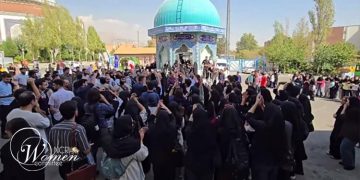
Against all of this, the people remain in the streets, and women are leading from the front. They are targeted, yet they organize, chant, and confront security forces.
This is not limited to students. Mothers, elderly women, and entire families participate. One report describes a woman pushing her husband in a wheelchair to a protest—an image that shatters the regime’s narrative.
Beyond Reform: A Clear Democratic Vision
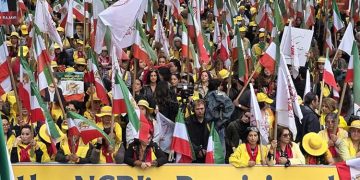
The slogans reveal political maturity. Protesters chant: “Death to the oppressor, be it the shah or the mullahs.” They reject all forms of dictatorship and demand a democratic republic.
The uprising has spread to at least 207 cities, supported by organized resistance units affiliated with the PMOI/MEK. Despite 50,000 arrests, fear is no longer working.
International Law and Crimes Against Humanity
Global language is shifting. Amnesty International now speaks of unlawful mass killings. The UN High Commissioner calls for investigations. European leaders recognize the Iranian people’s right to resist tyranny.
Under the Rome Statute, the systematic targeting of civilians constitutes crimes against humanity—crimes with no statute of limitations.
Freedom Under Fire
One month in, Iran faces a bloodbath. Yet the protests continue. You can shut down the internet. You can deploy snipers. But once the desire for freedom is awakened, it cannot be killed.
This is where listeners matter. The people of Iran must know they are seen, heard, and supported. We invite you to take action—stand with the Iranian people and the brave women leading this resistance.
To learn more or to support this struggle, visit wncri.org.
Thank you for listening, for bearing witness, and for looking behind the curtain of this blackout. Until next time, stay informed and stay engaged.