
Friday, February 20, 2026
  • English
  • Français
  • فارسی
  • عربى
PODCASTS
NCRI Women Committee Women Resistance Freedom
  • Home
  • NEWS
    • Women’s News
    • Articles
    • Statements
  • PUBLICATIONS
    • Monthlies
    • Documents
    • Reference Library
  • ABOUT US
    • The NCRI Women’s Committee
    • Gender Equality
    • Women’s Platform
  • MARYAM RAJAVI
    • Maryam Rajavi
    • Maryam Rajavi Speeches
    • The Plan on Women’s Rights and Freedoms
    • Ten-Point Plan for the future of Iran
  • VANGUARDS
    • The Fallen for Freedom
    • Heroines in Chain
    • Women of Iranian Resistance
    • Famous Women
    • Women in History
  • EVENTS
    • IWD Conferences
    • Activities
    • IWD Speeches
    • Solidarity
  • VIDEO
    • Videos
    • IWD Videos
  • PODCAST
  • DONATE
  • CONTACT US
No Result
View All Result
NCRI Women Committee Women Resistance Freedom
  • Home
  • NEWS
    • Women’s News
    • Articles
    • Statements
  • PUBLICATIONS
    • Monthlies
    • Documents
    • Reference Library
  • ABOUT US
    • The NCRI Women’s Committee
    • Gender Equality
    • Women’s Platform
  • MARYAM RAJAVI
    • Maryam Rajavi
    • Maryam Rajavi Speeches
    • The Plan on Women’s Rights and Freedoms
    • Ten-Point Plan for the future of Iran
  • VANGUARDS
    • The Fallen for Freedom
    • Heroines in Chain
    • Women of Iranian Resistance
    • Famous Women
    • Women in History
  • EVENTS
    • IWD Conferences
    • Activities
    • IWD Speeches
    • Solidarity
  • VIDEO
    • Videos
    • IWD Videos
  • PODCAST
  • DONATE
  • CONTACT US
No Result
View All Result
NCRI Women Committee
No Result
View All Result
Home Heroines in Chain
Sexual Assault on Female Prisoners – Prison Memoirs Part 16

Sexual Assault of a Female Prisoner

December 25, 2025
in Heroines in Chain

From the memoir “The Last Laughter of Leila” by Mehri Hajinejad — Part Sixteen

In this sixteenth installment of Mehri Hajinejad’s prison memoirs from “The Last Laughter of Leila” by Mehri Hajinejad, the author, who was a teenage schoolgirl at the time, reveals a harrowing case of psychological collapse following the sexual assault of a female prisoner. She then recounts the story of another woman who endured prolonged torture solely because she was the sister of a member of the PMOI.[1]

A Wound That Burns the Human Soul

In late 1981, I was being held in Ward 240 (Upper) when one day the door of our cell opened, and a new prisoner was brought in. Her name was Roya. She was disheveled, filthy, and completely unkempt—utterly agitated and broken. As was customary with every new arrival, we approached her with water and tea, hoping to help her calm down. But very quickly we realized we were dealing with something different.

From her reactions, it became clear that she had lost her psychological balance. From what she said, we learned that she had been kept for fifteen consecutive days in an interrogation unit, subjected nonstop to interrogation and torture. What we couldn’t understand was why she had broken down so completely.

Roya, whose eyes were filled with helplessness, said she had been arrested on charges of sympathizing with leftist groups, yet insisted she had committed no crime and had done nothing at all. She tried to rebel against everything around her. Sometimes she would cry without saying a word; other times she would rush to the bars, scream at the interrogators and prison guards, hurling curses at them, until she was exhausted, returned to a corner, and collapsed into tears again.

We tried to take care of her appearance but rarely succeeded. It was as if she had given up on everything. That was what made us wonder even more: what had happened to her that had reduced her to this state?

Roya never harmed us, but she herself was suffering terribly. She had become like a small child, throwing tantrums over everything. She barely ate, avoided bathing, and was in very poor condition.

One day, together with Shahnaz Ehsanian, a PMOI martyr,[2] we went to her and insisted that she come walking with us. That day we told her jokes, nonsense and meaningful alike, anything to pull her out of her mental state, even briefly. We made her promise that when the water was warm, she would take a bath, and that she would walk with us every day. She didn’t keep the walking promise except once or twice, but eventually she did agree to bathe.
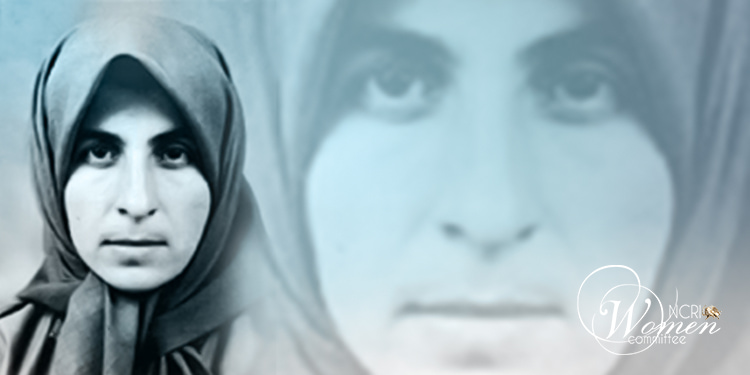
In Memory of Shahnaz Ehsanian, a Comrade from the Prison Years
Shahnaz Ehsanian

We kept visiting her with different excuses, making prayer beads, reciting poetry, and so on, and she gradually improved. One day, while we were walking and talking in the corridor, we asked her why she was so distressed. Had someone in her family been executed? Why wouldn’t she eat? Why did she cry so much?

As she listened, she suddenly became serious; no longer the unstable Roya we knew. Then I saw a flash of rage and hatred deep in her eyes. She said:

“You don’t know what they’ve done to me. I’ve done nothing, but these gorillas think I have information and won’t give it up. They beat me. They destroyed my life.”

Suddenly, as if her pain had been reopened, Roya broke away from us and ran toward the ward’s iron bars. She began pounding on them, trying to rip them loose, screaming at the top of her lungs, cursing, shouting:

“Kill me! Why did you destroy my life?! Murderers!”

The entire ward was thrown into chaos by her screams. Shahnaz and I were terrified; we couldn’t even get close to her. Roya had become frighteningly strong and was nearly tearing the bars apart. Female IRGC guards[3] arrived, took her away, and I never learned where they transferred her or what became of her.

After Roya was taken, Minoo, a supporter of one of the leftist groups, told us the truth: Roya had, in fact, done nothing at all and was completely innocent. No one even knew why she had been arrested. She had no political activity whatsoever. But the brutal interrogators, imagining that she was resisting, raped her in order to break her.

Guilty Only for Being a Sister

Golnaz was the sister of Mostafa Ma’dan-Pisheh, a member of the PMOI,[4] and that alone was the reason for her arrest.

In the autumn of 1982, I was in Room 1 of Ward 240 (Upper) when Golnaz was brought into our cell. Her arrest had happened this way: one night, Mostafa had gone to her home seeking refuge. The guards raided the house, but she managed to help her brother escape. The guards arrested Golnaz instead.

They had beaten her so badly that her body was swollen to twice its normal size. Her legs were blackened, covered in wounds and infected sores. Golnaz was illiterate, but extraordinarily brave and kind-hearted. When she entered the room, she introduced herself with warmth and dignity:

“My name is Golnaz. They brought me here because of Mostafa. I have three children; they took them too, but I don’t know where they are now. I don’t have a husband. I work in a brick kiln.”

A few minutes after she arrived, Zahra and I went to her, sat beside her, and began massaging her feet. With every touch, pus and blood seeped out. We cried out in pain for her, but Golnaz said, “It feels good—this way the pain eases.”

As we massaged her feet, we told her not to speak to anyone about Mostafa. At that time, the authorities had placed collaborators and informers—so-called “repenters”—in our cell to extract information.

Golnaz was a simple village woman with a heart full of compassion. For days on end, they flogged her with cables, demanding information about Mostafa’s whereabouts. She answered only: “I don’t know. I don’t know.”

That level of patience, calm, and resistance remains etched in my mind as part of the epic of the PMOI.

After several days, Golnaz’s three children were also brought into the ward and handed over to us. Mahmoud, her eldest son, about five years old, was extremely agitated and uncontrollable. He had witnessed repeated scenes of his mother and other prisoners being tortured and could not comprehend how he had suddenly ended up in this hell.

Everything frightened him. He screamed, ran out of the room, behaved erratically. It was clear that this innocent child had seen things no child ever should.

Even his games were reenactments of interrogation. I saw him line up the younger children, blindfold them, hand them a rope, and say: “Come on, you’re going to interrogation.” He would walk beside them, imitating a prison guard.

Once, I saw him seat a child facing the wall and shout: “Write! You have until this hour to write!”

Day after day, Golnaz was taken for interrogation. Each time, they flogged her again on those same wounded legs. She returned to the ward again and again. She truly knew nothing about Mostafa, but out of sheer hatred for him, the executioners would not leave her alone.

Caring for three children under these conditions inside prison was another layer of torment for Golnaz. She had no one outside the prison to take them. She remained in our ward for over a year, and these scenes repeated themselves countless times.

In 1983, news reached us that Mostafa had been killed in a clash. We did not tell Golnaz. I don’t know when she learned the truth. That same year, she was transferred out of our ward. I never learned where she was sent, and to this day, I do not know what became of her or her children.


[1] PMOI (People’s Mojahedin Organization of Iran) — The Iranian opposition movement founded in 1965, violently repressed after the 1979 revolution.

[2] Shahnaz Ehsanian — A PMOI member who later joined the National Liberation Army of Iran and was killed in Operation Eternal Light (1988).

[3] IRGC guards (Sepah) — Members of the Revolutionary Guard Corps, who also serve as prison guards in political detention centers.

[4] Mostafa Ma’dan-Pisheh — A PMOI member killed by Iranian security forces in October 1982.
ShareTweetPinShareSendShare

Related Posts

Fortieth Day Commemorations of the Uprising’s Fallen Turn into Protest with Anti-Government Slogans

February 19, 2026
Fortieth Day Commemorations of the Uprising’s Fallen Turn into Protest with Anti-Government Slogans

Fortieth day commemorations of uprising victims was held on February 16 and 17 with large memorial ceremonies and protest gatherings across multiple cities. Far from being solely acts...

Read moreDetails

Maryam Javadi Remains in Dowlatabad Women’s Prison Without a Judicial Ruling

February 18, 2026
Maryam Javadi Remains in Dowlatabad Women’s Prison Without a Judicial Ruling

The continued detention of Maryam Javadi, a student of journalism, in Dowlatabad Women’s Prison in Isfahan has neared eight month, despite the absence of any judicial ruling or...

Read moreDetails

Maryam Manouchehri: Both monarchical and religious dictatorships mean repression, lack of freedom, and exploitation

February 18, 2026
Maryam Manouchehri: Both monarchical and religious dictatorships mean repression, lack of freedom, and exploitation

The large demonstration of freedom-loving Iranians took place in Munich on Friday, February 13, 2026, at Odeon Square, coinciding with the Munich Security Conference. The main slogan of...

Read moreDetails

Parisa Kamali: Political Prisoner Sends Message Honoring the Fallen in the January 2026 Uprising

February 17, 2026
Parisa Kamali: Political Prisoner Sends Message Honoring the Fallen in the January 2026 Uprising

Parisa Kamali, a political prisoner currently held in Yazd Prison, has sent a message from behind bars marking the fortieth day of remembrance for those killed in the...

Read moreDetails

Mina Nasirpour, A Female Prisoner, Executed at Tabriz Central Prison

February 17, 2026
Mina Nasirpour, A Female Prisoner, Executed at Tabriz Central Prison

On Monday, February 16, 2026, a female prisoner identified as Mina Nasirpour was executed at Tabriz Central Prison. Mina Nasirpour, approximately 40 years old and originally from Ardabil,...

Read moreDetails
Next Post
Conditions of Female Political Prisoners in Evin: Severe Unsanitary Conditions

Deteriorating Conditions of Female Political Prisoners in Evin: Severe Unsanitary Conditions, Illness, and Medical Deprivation

Documents

Iranian women Who Lost Their Lives in Iran’s January 2026 Uprising

Iranian Women Who Lost Their Lives in Iran’s January 2026 Uprising

January 25, 2026

Names That Must Not Be Forgotten Iranian women played a central and courageous role in the January 2026 uprising, standing...

More than 400 Prominent Women Demand Halt to Iran Execution of Political Prisoner Zahra Tabari

More than 400 Prominent Women Demand Halt to Iran Execution of Political Prisoner Zahra Tabari

December 25, 2025

More than 400 prominent women from across the globe, among them Nobel Prize winners, former presidents and prime ministers, parliamentarians,...

The Gendered Dimensions of the Water Crisis in Iran: Impacts on Women’s Health, Livelihoods, and Security

The Gendered Dimensions of the Water Crisis in Iran: Impacts on Women’s Health, Livelihoods, and Security

October 12, 2025

How Iranian Women Shoulder the Heavy Burden of a Deepening Crisis Download Italian Version The water crisis in Iran has...

Monthlies

January 2026 Report: Women at the Core of the Uprising
Monthlies

January 2026 Report: Women at the Core of the Uprising

January 31, 2026
December 2025 Report: A Year in Review: Iranian Women’s Resistance Against Religious Dictatorship
Monthlies

December 2025 Report: A Year in Review: Iranian Women’s Resistance Against Religious Dictatorship

January 5, 2026
November 2025 Report: Under the Clerical Regime, Nowhere Is Safe for Women in Iran
Monthlies

November 2025 Report: Under the Clerical Regime, Nowhere Is Safe for Women in Iran

November 30, 2025
October 2025 Report: Death Sentence for a Female Political Prisoner The Resistance of Female Political Prisoners Inspires Iranian Women and Girls in Their Struggle Against the Regime of Executions and Massacre
Monthlies

October 2025 Report: Death Sentence for a Female Political Prisoner

October 31, 2025

Articles

Death of Robabeh Masouri, Mother of Prominent Political Prisoner Saeed Masouri

Death of Robabeh Masouri, Mother of Prominent Political Prisoner Saeed Masouri

February 16, 2026

Systematic Denial of Basic Rights to Supporters of the PMOI On Sunday, February 14, 2026, Mrs. Robabeh Masouri, mother of...

Medical Staff Face Ongoing Detention for Treating Uprising Injuries

Medical Staff Face Ongoing Detention for Treating Uprising Injuries

February 12, 2026

Amid a continuing crackdown following Iran’s nationwide protests, reports indicate that numerous medical staff and members of the medical community...

Iranians March and Rally in Berlin, Calling for Democracy and Rejecting All Forms of Dictatorship

Iranians March and Rally in Berlin, Calling for Democracy and Rejecting All Forms of Dictatorship

February 7, 2026

Iranians March and Rally in Berlin - On Saturday, February 7, 2026, marking the anniversary of the 1979 anti-monarchical revolution,...

The Fallen for Freedom

Sonya Salehi-Rad was killed on January 8, 2026, during the nationwide popular protests in Shiraz
The Fallen for Freedom

Sonya Salehi-Rad

February 10, 2026
Arezoo Abedi was killed on January 9, 2026, during the nationwide popular protests
The Fallen for Freedom

Arezoo Abedi

February 10, 2026
Arnika Dabbagh, from Gorgan, was killed on January 9, 2026
The Fallen for Freedom

Arnika Dabbagh

February 7, 2026
Maedeh Moradi Kia, a resident of Tehran, was killed on January 9, 2026
The Fallen for Freedom

Maedeh Moradi Kia

February 7, 2026

ABOUT US

NCRI Women Committee

We work extensively with Iranian women outside the country and maintain a permanent contact with women inside Iran. The Women’s Committee is actively involved with many women’s rights organizations and NGO’s and the Iranian diaspora.
The committee is a major source of much of the information received from inside Iran with regards to women. Attending UN Human Rights Council meetings and other international or regional conferences on women’s issues and engaging in a relentless battle against the Iranian regime’s misogyny are part of the activities of members and associates of the committee.

CATEGORIES

  • Activities
  • Articles
  • Documents
  • Famous Women
  • Heroines in Chain
  • IWD Conferences
  • IWD Speeches
  • IWD Videos
  • Maryam Rajavi
  • Maryam Rajavi Speeches
  • Monthlies
  • Podcast
  • Reference Library
  • Solidarity
  • Statements
  • The Fallen for Freedom
  • Videos
  • Women in History
  • Women in Leadership
  • Women of Iranian Resistance
  • Women's News

BROWSE BY TAG

Child marriage coronavirus education execution forced hijab Gender Gap Generation Equality Honor killings Iran Teachers Maryam Akbari Monfared Nurses Plan on Women's Rights and Freedoms Poverty Prisoners Protests rural women Saba Kord Afshari The girl child Violence against women Women's Leadership Women Heads of Household Zeinab Jalalian

The copyright of all the material published on this website has been registered under © 2016 the Women’s Committee of the National Council of Resistance of Iran. To obtain permission to copy, redistribute or publish the material published on this website, you should write to the NCRI Women’s Committee. Please include the link of the original article on our website, women.ncr-iran.org.

Welcome Back!

Login to your account below

Forgotten Password?

Retrieve your password

Please enter your username or email address to reset your password.

Log In

Add New Playlist

No Result
View All Result
  • Home
  • News
    • Women’s News
    • Articles
    • Statements
  • Publications
    • Monthlies
    • Documents
    • Reference Library
  • About Us
    • The NCRI Women’s Committee
    • Gender Equality
    • Women’s Platform
  • Maryam Rajavi
    • Maryam Rajavi
    • Maryam Rajavi Speeches
    • Ten Point Plan for Iran
    • The Plan on Women’s Rights and Freedoms
  • Vanguards
    • The Fallen for Freedom
    • Heroines in Chain
    • Women of Iranian Resistance
    • Famous Women
    • Women in History
  • Events
    • IWD Conferences
    • Activities
    • IWD Speeches
    • Solidarity
  • Video
    • Videos
    • IWD Videos
  • Podcast
  • Donate
  • Contact us
  • فارسی
  • عربی
  • Français

The copyright of all the material published on this website has been registered under © 2016 the Women’s Committee of the National Council of Resistance of Iran. To obtain permission to copy, redistribute or publish the material published on this website, you should write to the NCRI Women’s Committee. Please include the link of the original article on our website, women.ncr-iran.org.