
Saturday, August 8, 2026
  • English
  • Français
  • فارسی
  • عربى
PODCASTS
NCRI Women Committee Women Resistance Freedom
  • Home
  • NEWS
    • Women’s News
    • Articles
    • Statements
  • PUBLICATIONS
    • Monthlies
    • Documents
    • Reference Library
  • ABOUT US
    • The NCRI Women’s Committee
    • Gender Equality
    • Women’s Platform
  • MARYAM RAJAVI
    • Maryam Rajavi
    • Maryam Rajavi Speeches
    • The Plan on Women’s Rights and Freedoms
    • Ten-Point Plan for the future of Iran
  • VANGUARDS
    • The Fallen for Freedom
    • Heroines in Chain
    • Women of Iranian Resistance
    • Famous Women
    • Women in History
  • EVENTS
    • IWD Conferences
    • Activities
    • IWD Speeches
    • Solidarity
  • VIDEO
    • Videos
    • IWD Videos
  • PODCAST
  • DONATE
  • CONTACT US
No Result
View All Result
NCRI Women Committee Women Resistance Freedom
  • Home
  • NEWS
    • Women’s News
    • Articles
    • Statements
  • PUBLICATIONS
    • Monthlies
    • Documents
    • Reference Library
  • ABOUT US
    • The NCRI Women’s Committee
    • Gender Equality
    • Women’s Platform
  • MARYAM RAJAVI
    • Maryam Rajavi
    • Maryam Rajavi Speeches
    • The Plan on Women’s Rights and Freedoms
    • Ten-Point Plan for the future of Iran
  • VANGUARDS
    • The Fallen for Freedom
    • Heroines in Chain
    • Women of Iranian Resistance
    • Famous Women
    • Women in History
  • EVENTS
    • IWD Conferences
    • Activities
    • IWD Speeches
    • Solidarity
  • VIDEO
    • Videos
    • IWD Videos
  • PODCAST
  • DONATE
  • CONTACT US
No Result
View All Result
NCRI Women Committee
No Result
View All Result
Home Podcast
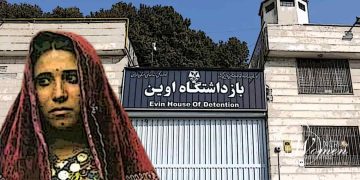
Psychological torture of political prisoners forced divorce

Forced Divorce, A Tool of Psychological Torture of Political Prisoners in Iran

September 21, 2024
in Podcast

In this episode, we’re going to discuss a subject that doesn’t get enough attention: the emotional and psychological torture inflicted on political prisoners in Iran, especially through forced divorces.

Let’s start with some background. The clerical regime in Iran has been using forced divorce as a psychological weapon against political prisoners. Why is it such a prevalent method?

Compelling political prisoners or their spouses to divorce is a common method of psychological torture used as a tool to weaken and break political prisoners by tearing apart their families. It’s also a message to others who might be pondering opposition to the regime.

I suppose this tactic isn’t just about the prisoner; it’s about exerting control over every aspect of their life, including their relationships.

You’re right. One of these political prisoners, a Baloch man, said, “From the first day, the interrogator started cursing my wife, mother, and sister. He constantly claimed my wife was involved with my friends. The false accusations about my wife were much harder to endure than the physical torture.”

The situation got to a point where the man’s wife got a divorce. This former political prisoner said, and I quote, “My wife’s divorce shattered me. I attempted suicide in prison.”

But after he was released, he found out that the interrogator’s lies about his wife had been spread in his hometown. And that was why his honorable wife couldn’t bear the accusations and had to move away with her family.

That’s very sad, to hear what this inhuman regime does to the lives of people whose only demand is freedom. But is forced divorce the only method? What other methods does the Iranian regime use against their political opponents?

Yes! We had the case of a Baloch woman who was arrested and detained without a warrant. The security forces set a condition for her release and that was for her to reveal the whereabouts of her husband. Something that she might not even know, and her case remains uncertain as of today.

We also had the case of a couple, who were beaten and tortured in front of each other to make forced confessions. Then, the security agencies set a heavy bail for the woman but said she could only be released if she divorced her husband who was also a political prisoner.

I’ve also read about Sunni prisoners in Mashhad who said they faced threats of divorce and rape for years against their families.

Yes, that’s true. These cases have happened in different forms all across Iran, in Khuzestan, in Kurdistan, in Sistan and Baluchistan, and virtually everywhere and in all provinces.

Now, one of the political prisoners, whose wife was forced to divorce him was Alireza Golipour. He was an electrical engineer who passed away earlier this month after years of torture and mistreatment. What can you tell us about his story?

Well, the story of Alireza Golipour is truly heartbreaking. As you said, he was an electrical engineer who was studying in Germany on scholarship, before returning home and getting arrested in 2012. He was a supporter of the opposition PMOI, the People’s Mojahedin Organization of Iran, and he was accused of leaking information about the regime’s nuclear program. Therefore, he had been subjected to extreme physical and psychological torture, leading to severe health issues. He passed away a few weeks ago due to heart disease.

In his case, too, the intelligence ministry agencies put intense pressure on his wife and forced her to divorce him.

But couldn’t one argue that these divorces are more about personal choices? How can we be sure that they are forced?

That’s a valid question. While divorce might seem like a personal choice, the evidence shows it’s far from voluntary in these cases.

Iranian intelligence officers often threaten or manipulate family members to file for divorce. In Golipour’s case, the regime spread false reports about him to pressure his wife into ending the marriage. This wasn’t a situation where the wife had agency—it was a coercive act orchestrated by the authorities.

Let me challenge that. Some may argue that this tactic is a necessary part of a larger security strategy. The Iranian regime might view these prisoners as genuine threats to national stability. Doesn’t a government have the right to take extreme measures to protect itself?

Understandably, a government would take security measures, but these actions cross a line. We’re not talking about national security here; we’re talking about punishing people for their political beliefs, often without fair trials or legitimate charges. The use of family destruction as a tool of oppression is a human rights violation, not a legitimate security measure.

How has the international community responded to these cases? Is there enough attention on this issue?

Unfortunately, not enough. While international human rights organizations have documented cases of forced divorce and other forms of psychological torture, there hasn’t been significant action. The regime continues these practices with impunity. There’s a real need for more consistent international pressure to hold the Iranian government accountable.

And one last question before we wrap up. Has the Iranian regime been successful in silencing political prisoners through such inhuman measures, forcing them to give up their resistance? 

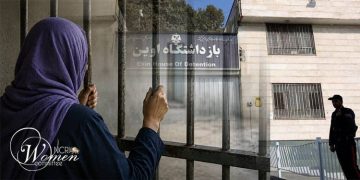
The answer is no, not at all. Today, political prisoners are stronger than ever. For 34 weeks now, they have been holding nationwide hunger strikes every Tuesday in 21 prisons, protesting the regime’s spree of executions. This campaign, called “No to Executions Tuesdays,” has garnered significant domestic and international support. Just this past week, they courageously commemorated the second anniversary of the 2022 uprising and honored its victims in many prisons, including the women’s ward of Evin.


Well, that’s all for today’s episode. The courageous political prisoners in Iran need your attention and support. These women and men have risked their lives for the universal cause of freedom. Thank you for tuning in. For more information, please visit our website: wncri.org.

Until next time, don’t forget to subscribe and stay informed on the issues that matter most.

Tags: PrisonersViolence against women
ShareTweetPinShareSendShareShare

Related Posts

Sexual Apartheid in the Laws of Iran’s Clerical Regime – part 1

August 6, 2026
Sexual Apartheid in the Laws of Iran’s Clerical Regime – part 1

Sexual Apartheid in the Medieval Laws of the Clerical Regime At a time when the world is moving toward the abolition of the death penalty, and when the...

Read moreDetails

Iran: Parisa Kamali, A Political Prisoner: “We Have Moved Beyond Fear”

August 5, 2026
Iran: Political Prisoner Parisa Kamali Denied Medical Care in Yazd Prison

Parisa Kamali, a female political prisoner held in Yazd Central Prison, has sent out an audio message condemning the continued use of executions and state repression in Iran....

Read moreDetails

July 2026 Report: Death Sentences for Women Rising Up to Overthrow the Mullahs’ Regime

July 31, 2026
July 2026 Report: Death Sentences for Women Rising Up to Overthrow the Mullahs' Regime

Religious Fascism Terrified of Women’s Vanguard Role in Uprisings From Death Sentences on Charges of "Armed Rebellion" to the Execution of Mothers with Multiple Children July 2026 Report:...

Read moreDetails

State Killing in Iran: 3 Members of a Family Killed in Arbitrary Shooting

July 29, 2026
State Killing in Iran: 3 Members of a Family Killed in Arbitrary Shooting

Maryam Aslani, Somayeh Tavakkoli, and Mehdi Tavakkoli were killed in state killing, after being directly targeted in an arbitrary shooting carried out by intelligence forces of the Revolutionary...

Read moreDetails

Iran: Women Arrested in the January 2026 Uprising Face Prison Terms and Detentions

July 27, 2026
Iran: Women Arrested in the January 2026 Uprising Face Prison Terms and Detentions

As Iranian authorities continue to prosecute women arrested during the January 2026 uprising and other detainees, several women have faced prison sentences, prolonged detention, or continued legal uncertainty....

Read moreDetails
Next Post
Hananeh Kia Kajouri: A Life Ended Too Soon

Hannaneh Kia Kajouri

Documents

Call for Immediate Action to Halt the Death Sentence of Arghavan Fallahi

Sign our Statement to Halt the Death Sentence of 25-Year-Old Political Prisoner Arghavan Fallahi

July 10, 2026

Statement Calling for Immediate Action to Halt the Death Sentence of 25-Year-Old Political Prisoner Arghavan Fallahi We express our profound...

The Ineffectiveness of Population Policies in Iran: Economy, Aging, and the Overlooked Rights of Women

The Ineffectiveness of Population Policies in Iran: Economy, Aging, and the Overlooked Rights of Women

July 10, 2026

Abstract: A compilation of official data, media reports, and disclosures published in April, May, and June 2026 demonstrates that Iran...

Crushed by Design: Structural Crises and Inequitable Policies Push Female-Headed Households to the Edge

Crushed by Design: Structural Crises and Inequitable Policies Push Female-Headed Households to the Edge

May 18, 2026

Introduction Life for the Iranian people under the religious dictatorship is fraught with hardship and peril from every perspective. Whether...

Monthlies

July 2026 Report: Death Sentences for Women Rising Up to Overthrow the Mullahs' Regime
Monthlies

July 2026 Report: Death Sentences for Women Rising Up to Overthrow the Mullahs’ Regime

July 31, 2026
June 2026 Report: Working Iranian Women Erased from Labor Market
Monthlies

June 2026 Report: Working Iranian Women Erased from Labor Market

July 5, 2026
May 2026 Report: The Enduring Resistance of Iranian Women
Monthlies

May 2026 Report: The Enduring Resistance of Iranian Women

May 31, 2026
April 2026 Report: Mass Arrests of Women: Targeted Repression in Time of Crisis
Monthlies

April 2026 Report: Mass Arrests of Women in Iran

April 30, 2026

Articles

Sexual Apartheid in the Laws of Iran’s Clerical Regime – part 1

Sexual Apartheid in the Laws of Iran’s Clerical Regime – part 1

August 6, 2026

Sexual Apartheid in the Medieval Laws of the Clerical Regime At a time when the world is moving toward the...

Women's Sports Clubs Sealed amid the Unemployment Crisis in Iran

Women’s Sports Clubs Sealed amid the Unemployment Crisis in Iran

August 5, 2026

Four women's sports clubs in the city of Yazd have been sealed off by the Public Places Supervision Police. This...

The 1988 Massacre: The Greatest Unpunished Crime Against Humanity

The 1988 Massacre: The Greatest Unpunished Crime Against Humanity

July 28, 2026

The Glorious Epic of Resistance by PMOI Women in the Anti-Human Clerical Regime's Prisons The massacre of over 30,000 political...

The Fallen for Freedom

Shiva Bordbar Javid
The Fallen for Freedom

Shiva Bordbar Javid

August 4, 2026
Fatemeh Alizadeh, a 28-year-old pregnant woman
The Fallen for Freedom

Fatemeh Alizadeh

July 29, 2026
Sahar Bayat was killed on January 8, 2026
The Fallen for Freedom

Sahar Bayat

July 23, 2026
Saba Negahban, known as "Venus," was killed on Friday, January 9, 2026, by direct fire from the regime’s suppressive forces
The Fallen for Freedom

Saba Negahban

July 22, 2026

ABOUT US

NCRI Women Committee

We work extensively with Iranian women outside the country and maintain a permanent contact with women inside Iran. The Women’s Committee is actively involved with many women’s rights organizations and NGO’s and the Iranian diaspora.
The committee is a major source of much of the information received from inside Iran with regards to women. Attending UN Human Rights Council meetings and other international or regional conferences on women’s issues and engaging in a relentless battle against the Iranian regime’s misogyny are part of the activities of members and associates of the committee.

CATEGORIES

  • Activities
  • Articles
  • Documents
  • Famous Women
  • Heroines in Chain
  • IWD Conferences
  • IWD Speeches
  • IWD Videos
  • Maryam Rajavi
  • Maryam Rajavi Speeches
  • Monthlies
  • Podcast
  • Reference Library
  • Solidarity
  • Statements
  • The Fallen for Freedom
  • Videos
  • Women in History
  • Women in Leadership
  • Women of Iranian Resistance
  • Women's News

BROWSE BY TAG

Child marriage coronavirus education execution forced hijab Gender Gap Generation Equality Honor killings Iran Teachers Maryam Akbari Monfared Nurses Plan on Women's Rights and Freedoms Poverty Prisoners Protests rural women Saba Kord Afshari The girl child Violence against women Women's Leadership Women Heads of Household Zeinab Jalalian

The copyright of all the material published on this website has been registered under © 2016 the Women’s Committee of the National Council of Resistance of Iran. To obtain permission to copy, redistribute or publish the material published on this website, you should write to the NCRI Women’s Committee. Please include the link of the original article on our website, women.ncr-iran.org.

Welcome Back!

Login to your account below

Forgotten Password?

Retrieve your password

Please enter your username or email address to reset your password.

Log In

Add New Playlist

No Result
View All Result
  • Home
  • News
    • Women’s News
    • Articles
    • Statements
  • Publications
    • Monthlies
    • Documents
    • Reference Library
  • About Us
    • The NCRI Women’s Committee
    • Gender Equality
    • Women’s Platform
  • Maryam Rajavi
    • Maryam Rajavi
    • Maryam Rajavi Speeches
    • Ten Point Plan for Iran
    • The Plan on Women’s Rights and Freedoms
  • Vanguards
    • The Fallen for Freedom
    • Heroines in Chain
    • Women of Iranian Resistance
    • Famous Women
    • Women in History
  • Events
    • IWD Conferences
    • Activities
    • IWD Speeches
    • Solidarity
  • Video
    • Videos
    • IWD Videos
  • Podcast
  • DONATE
  • Contact us
  • فارسی
  • عربی
  • Français

The copyright of all the material published on this website has been registered under © 2016 the Women’s Committee of the National Council of Resistance of Iran. To obtain permission to copy, redistribute or publish the material published on this website, you should write to the NCRI Women’s Committee. Please include the link of the original article on our website, women.ncr-iran.org.