
Friday, December 19, 2025
  • English
  • Français
  • فارسی
  • عربى
PODCASTS
NCRI Women Committee Women Resistance Freedom
  • Home
  • NEWS
    • Women’s News
    • Articles
    • Statements
  • PUBLICATIONS
    • Monthlies
    • Documents
    • Reference Library
  • ABOUT US
    • The NCRI Women’s Committee
    • Gender Equality
    • Women’s Platform
  • MARYAM RAJAVI
    • Maryam Rajavi
    • Maryam Rajavi Speeches
    • The Plan on Women’s Rights and Freedoms
    • Ten-Point Plan for the future of Iran
  • VANGUARDS
    • The Fallen for Freedom
    • Heroines in Chain
    • Women of Iranian Resistance
    • Famous Women
    • Women in History
  • EVENTS
    • IWD Conferences
    • Activities
    • IWD Speeches
    • Solidarity
  • VIDEO
    • Videos
    • IWD Videos
  • PODCAST
  • DONATE
  • CONTACT US
No Result
View All Result
NCRI Women Committee Women Resistance Freedom
  • Home
  • NEWS
    • Women’s News
    • Articles
    • Statements
  • PUBLICATIONS
    • Monthlies
    • Documents
    • Reference Library
  • ABOUT US
    • The NCRI Women’s Committee
    • Gender Equality
    • Women’s Platform
  • MARYAM RAJAVI
    • Maryam Rajavi
    • Maryam Rajavi Speeches
    • The Plan on Women’s Rights and Freedoms
    • Ten-Point Plan for the future of Iran
  • VANGUARDS
    • The Fallen for Freedom
    • Heroines in Chain
    • Women of Iranian Resistance
    • Famous Women
    • Women in History
  • EVENTS
    • IWD Conferences
    • Activities
    • IWD Speeches
    • Solidarity
  • VIDEO
    • Videos
    • IWD Videos
  • PODCAST
  • DONATE
  • CONTACT US
No Result
View All Result
NCRI Women Committee
No Result
View All Result
Home Heroines in Chain
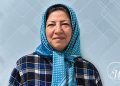
Fatemeh (Razieh) Ayatollah-Zadeh Shirazi, a victim of 1988 massacre

Fatemeh (Razieh) Ayatollah-Zadeh Shirazi, a victim of 1988 massacre

January 12, 2021
in Heroines in Chain
Share on FacebookShare on Twitter

A brave, determined and cheerful revolutionary woman, with a heart filled with hope, a face filled with cheer, and a presence firm and resilient

Stories of women’s resistance – The 1988 massacre

The third part of our conversation with Mrs. Fereshteh Akhlaghi goes to Fatemeh (Razieh) Ayatollah-Zadeh Shirazi, a 36-year-old, bachelor of physics from the University of Tehran, and married with a child, who was executed during 1988 massacre.

Razieh Ayatollah-Zadeh Shirazi became acquainted with the People’s Mojahedin Organization of Iran (PMOI/MEK) before the 1979 Revolution, when she was 24 years old. She actively took part in different political activities and protests. Those who know Razieh closely, describe her as an eager and brave individual, someone whose kindness and cheerfulness lifted the spirits of those around her.

She was an avid mountain climber, who with strong determination and high spirits encouraged others to accompany her. In difficult situations when one couldn’t find a way out, Razieh always volunteered to help find a solution. Although she was very tiny and slim, she had a strong spirit and no one could stop her from performing her duties.

As political activities were banned during the Shah’s era,[1] Razieh began to live a clandestine life in 1975 and continued her efforts under these circumstances up to 1979. 

After Khomeini seized power in Iran in 1979, political groups and organizations especially activist women and girls faced growing pressure building up against them. This trend continued until 1981, when all political activities in Iran were banned.

A turning point was on June 20, 1981, when the revolutionary guards opened fires at the behest of Khomeini on peaceful protesters in the streets of Tehran and many other cities across Iran. Hundreds were killed and thousands more arrested. The reign of terror started.

Razieh, pregnant at the time, was arrested during this protest and subjected to the most severe tortures in Evin and Gohardasht prisons until 1988.

Razieh was two months pregnant at the time of her arrest, said one of her cellmates, who had been with her in ward 311 of Evin Prison for some time. She said that throughout her pregnancy which lasted until February 1982, Razieh Ayatollah-Zadeh Shirazi lived in a cold solitary cell without a window. As the cell door was opened twice or sometimes only once a day, her kidneys became dysfunctional. Her body had swollen and she could hardly walk.

Stories of women’s resistance – The 1988 massacre

The day she went into labor, she was taken to a hospital after hours of delay. Fearing that she would run away or that people would find out about her condition, the guards returned her immediately to prison right after delivery. She said that she had heard the cries of her baby girl after she was born, but she was told that her baby had died.

Razieh’s cellmate continued: After we got closer, she told me her story and said that her father and grandfather were both clergymen, but her husband, Sadegh Hashemzadeh Sabet, and two of her brothers were members of the opposition PMOI/MEK.

I realized then that it was not without reason that Razieh faced so much pressure. It was intolerable for the regime to see her, her brothers and husband being members of PMOI/MEK while her father and grandfather were clergymen. The regime could not tolerate that she, her two brothers, and her husband and brother in laws were all members of the Mojahedin.[2]

The regime put Razieh under maximum pressure during a period of time. She was interrogated and beaten every day. One day, when Razieh returned from interrogation, her whole body had been bruised. When we lifted her dress, we saw her back as if a black wax had been applied to her shoulders, and there was no intact area on her back. From her condition and the fact that she was vomiting blood, and from my medical experiences, I knew that her medical condition would lead to dialysis.

She laid unconscious in a corner … That night she bled excessively and was taken to the prison’s medical center.  We did not hear from her until twenty days later. Once she did return there was nothing left of her. She had lost more than twenty kilos. Her face was withered and thin. “But her spirit was still the same.”

One of her cellmate said they were together with Razieh in one of the cells of Gohardasht Prison in Karaj in 1988.

She was always looking for new initiatives and creative solutions. During the nights the guards did not turn off the lights so that the prisoners could not rest and get their sleep. To solve this problem, Razieh had made a cover for the cell light by recycling newspaper and nylon thread. Each night, we would cover the light after the guards left the ward after checking the cells. And in the mornings before the guards entered the room we would remove it. We did this as if we were raising and lowering a flag, while singing an anthem. This in itself created a ritual for us, one that we looked forward to, and made the time bearable.

Stories of women’s resistance

Razieh Ayatollah-Zadeh Shirazi was a symbol of resistance and endurance. Her brilliance impressed everyone. She was a selfless PMOI woman who had a lasting impact on others. She chose to stand against the ruling religious and misogynist regime and defeat their cruel torturers and interrogators. She ultimately sacrificed her life for what she believed in. Although she was hanged on September 25, 1988 in front of other prisoners during the massacre of 30,000 political prisoners, her lovely smiling face will be with us forever.

The day will come when Iran will be free and all perpetrators of the 1988 massacre and all the torture and executions under the mullahs’ inhuman regime will face justice.


[1] Repression and the threat of arrest, torture and imprisonment by the Shah’ secret police (SAVAK) brought excessive pressure on political activists in those days. There was no freedom of expression, opinion or political activities. Therefore, all members and supporters of the opposition People’s Mojahedin Organization of Iran had to live a clandestine life.

[2] In addition to Razieh, a number of other members of her family also sacrificed their lives in the struggle for the liberation of Iran: Morteza Ayatollah-Zadeh Shirazi (brother); Ahmad Ayatollah-Zadeh Shirazi (brother); Sadegh Hashemzadeh Sabet (husband); Qadir Hashemzadeh Sabet (brother-in-law); and Nayyereh Shafii (sister-in-law)
Tags: executionProtestsViolence against women
ShareTweetPinShareSendShare

Related Posts

Razieh Abbasi Hanged in Qezel Hesar Prison, Karaj

December 17, 2025
Razieh Abbasi Hanged in Qezel Hesar Prison, Karaj

Women’s Executions in Iran Surge Over 80% from Last Year On Wednesday morning, December 17, 2025, the death sentence of female prisoner Razieh Abbasi was carried out at...

Read moreDetails

99th Week of the No to Executions Tuesdays Campaign Held Across 55 Prisons and Dozens of Cities in Iran

December 16, 2025
99th Week of the No to Executions Tuesdays Campaign

On Tuesday, December 16, 2025, the 99th consecutive week of the No to Executions Tuesdays campaign was marked by hunger strikes staged by prisoners in 55 prisons across...

Read moreDetails

State Violence and Torture Against Women Political Prisoners in Iran

December 16, 2025
State Violence and Torture Against Women Political Prisoners in Iran

Thousands of women in Iran remain out of sight jailed, tortured, and denied the most basic medical care simply for demanding freedom. They are teachers, workers, students, women...

Read moreDetails

Hamideh Jabbari, 41, Executed at Qom Central Prison

December 14, 2025
Hamideh Jabbari, 41, Executed at Qom Central Prison

The death sentence of a female prisoner identified as Hamideh Jabbari, 41, from the city of Saveh, was carried out at dawn on Saturday, December 13, 2025, at...

Read moreDetails

Sediqeh Ghorbani Hanged in Urmia Central Prison; 59th Execution of a Woman in 2025

December 13, 2025
Sediqeh Ghorbani Hanged in Urmia Central Prison; 59th Execution of a Woman in 2025

At dawn on Saturday, December 13, 2025, a woman identified as Sediqeh Ghorbani was hanged in Urmia Central Prison. The Chief Justice of Urmia announced the execution without...

Read moreDetails
Next Post
Political prisoner Massoumeh Senobari protest leader

Political prisoner suspected of cancer denied medical treatment

Documents

The Gendered Dimensions of the Water Crisis in Iran: Impacts on Women’s Health, Livelihoods, and Security

The Gendered Dimensions of the Water Crisis in Iran: Impacts on Women’s Health, Livelihoods, and Security

October 12, 2025

How Iranian Women Shoulder the Heavy Burden of a Deepening Crisis Download Italian Version The water crisis in Iran has...

The Failure of Iran's Population Growth Law Despite the Repression of Women A Glance at a Costly and Ineffective Policy

The Failure of Iran’s Population Growth Law Despite the Repression of Women

August 24, 2025

A Glance at a Costly and Ineffective Policy The “Youthful Population Law” in Iran vs. Women’s Human Rights Following a...

Widowed Women in Iran: Main Problems and Challenges

Widowed Women in Iran: Main Problems and Challenges

June 22, 2025

Widowed Women in Iran, Alone and Oppressed in the Shadow of Discrimination In the Iranian legal system, where gender-based discrimination...

Monthlies

November 2025 Report: Under the Clerical Regime, Nowhere Is Safe for Women in Iran
Monthlies

November 2025 Report: Under the Clerical Regime, Nowhere Is Safe for Women in Iran

November 30, 2025
October 2025 Report: Death Sentence for a Female Political Prisoner The Resistance of Female Political Prisoners Inspires Iranian Women and Girls in Their Struggle Against the Regime of Executions and Massacre
Monthlies

October 2025 Report: Death Sentence for a Female Political Prisoner

October 31, 2025
September 2025 Report: One Woman Executed Every 4 Days in Iran
Monthlies

September 2025 Report: One Woman Executed Every 4 Days in Iran

September 30, 2025
AUGUST 2025 Report: Dual Repression of Political Prisoners and Their Families
Monthlies

August 2025 Report: Dual Repression of Political Prisoners and Their Families

August 31, 2025

Articles

State Violence and Torture Against Women Political Prisoners in Iran

State Violence and Torture Against Women Political Prisoners in Iran: Medical Denial and an Engineered Health Crisis

December 10, 2025

As the two-week global campaign to end violence against women concludes, and on the International Human Rights Day, we turn...

Execution of Women in Iran Soars: 70% Increase in Just One Year

Execution of Women in Iran Soars: 70% Increase in Just One Year

December 8, 2025

Execution, the regime’s tool for intimidating a discontented society Execution of Women in Iran: A State-Sponsored Violence The execution of...

55% of Child Abuse Cases in Iran Involve Young Girls A Disturbing Rise in Child Abuse and the Vulnerability of Young Girls

55% of Child Abuse Cases in Iran Involve Young Girls

December 5, 2025

A Disturbing Rise in Child Abuse and the Vulnerability of Young Girls A largely overlooked aspect of systemic violence in...

The Fallen for Freedom

In Memory of Zohreh Bani Jamali
The Fallen for Freedom

In Memory of Zohreh Bani Jamali

November 20, 2025
Fatemeh Farshchian
The Fallen for Freedom

Fatemeh Farshchian

September 11, 2025
Nosrat Ramezani
The Fallen for Freedom

Nosrat Ramezani

May 1, 2025
Sussan Mirzaei: A Trailblazer in Iran’s Struggle for Freedom and Democracy
The Fallen for Freedom

Sussan Mirzaei

May 1, 2025

ABOUT US

NCRI Women Committee

We work extensively with Iranian women outside the country and maintain a permanent contact with women inside Iran. The Women’s Committee is actively involved with many women’s rights organizations and NGO’s and the Iranian diaspora.
The committee is a major source of much of the information received from inside Iran with regards to women. Attending UN Human Rights Council meetings and other international or regional conferences on women’s issues and engaging in a relentless battle against the Iranian regime’s misogyny are part of the activities of members and associates of the committee.

CATEGORIES

  • Activities
  • Articles
  • Documents
  • Famous Women
  • Heroines in Chain
  • IWD Conferences
  • IWD Speeches
  • IWD Videos
  • Maryam Rajavi
  • Maryam Rajavi Speeches
  • Monthlies
  • Podcast
  • Reference Library
  • Solidarity
  • Statements
  • The Fallen for Freedom
  • Videos
  • Women in History
  • Women in Leadership
  • Women of Iranian Resistance
  • Women's News

BROWSE BY TAG

Child marriage coronavirus education execution forced hijab Gender Gap Generation Equality Honor killings Iran Teachers Maryam Akbari Monfared Nurses Plan on Women's Rights and Freedoms Poverty Prisoners Protests rural women Saba Kord Afshari The girl child Violence against women Women's Leadership Women Heads of Household Zeinab Jalalian

The copyright of all the material published on this website has been registered under © 2016 the Women’s Committee of the National Council of Resistance of Iran. To obtain permission to copy, redistribute or publish the material published on this website, you should write to the NCRI Women’s Committee. Please include the link of the original article on our website, women.ncr-iran.org.

Welcome Back!

Login to your account below

Forgotten Password?

Retrieve your password

Please enter your username or email address to reset your password.

Log In

Add New Playlist

No Result
View All Result
  • Home
  • News
    • Women’s News
    • Articles
    • Statements
  • Publications
    • Monthlies
    • Documents
    • Reference Library
  • About Us
    • The NCRI Women’s Committee
    • Gender Equality
    • Women’s Platform
  • Maryam Rajavi
    • Maryam Rajavi
    • Maryam Rajavi Speeches
    • Ten Point Plan for Iran
    • The Plan on Women’s Rights and Freedoms
  • Vanguards
    • The Fallen for Freedom
    • Heroines in Chain
    • Women of Iranian Resistance
    • Famous Women
    • Women in History
  • Events
    • IWD Conferences
    • Activities
    • IWD Speeches
    • Solidarity
  • Video
    • Videos
    • IWD Videos
  • Podcast
  • Donate
  • Contact us
  • فارسی
  • عربی
  • Français

The copyright of all the material published on this website has been registered under © 2016 the Women’s Committee of the National Council of Resistance of Iran. To obtain permission to copy, redistribute or publish the material published on this website, you should write to the NCRI Women’s Committee. Please include the link of the original article on our website, women.ncr-iran.org.