
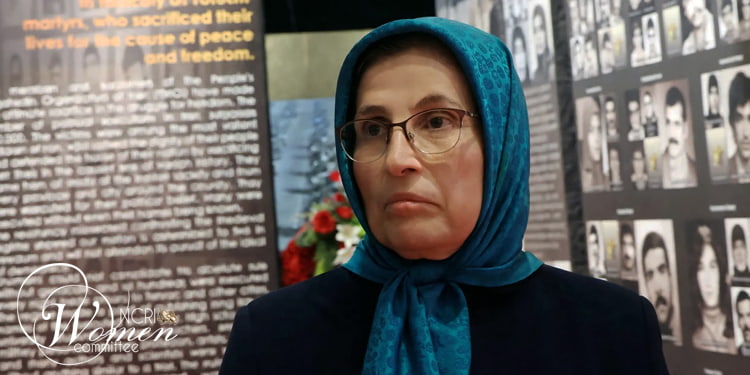
Prison Memoirs of Robabeh Haghgoo— Part One
Robabeh Haghgoo Mardakhi, a member of the People’s Mojahedin Organization of Iran (PMOI), spent six years in the prisons of Khomeini’s regime, from 1981 to 1987, enduring imprisonment and torture in facilities in Rasht, Rudbar, Evin, Qezel-Hesar, and Tabriz. She first became acquainted with the PMOI in 1978 through her brother and began working with the organization full-time in July 1980.
In this account, Robabeh Haghgoo describes her arrest, interrogation, and the experiences she shared with her fellow PMOI members in prison. She was arrested during a wave of mass detentions launched by the Khomeini regime in late June 1981.
After her release on September 27, 1987, Robabeh re-established contact with the PMOI and left Iran to continue the struggle of her comrades who had been killed by the regime and to fight for the liberation of her country from the rule of the clerical regime.
Arrest and Transfer to Prison
In late June 1981, the regime’s security apparatus was in complete disarray. Revolutionary Guards and regime thugs flooded the streets, hunting for PMOI members and young supporters. They were looking for people on whom to vent their anger and frustration.
In one of those days, I was identified by one of the regime’s agents, known by the nickname “Sāturi” (the Butcher). He was consumed by hatred for the organization’s supporters and was always roaming around with a cleaver in his hand, looking for PMOI members to beat and attack. He knew me, too.
That day, although I had tried to disguise my appearance by wearing a chador and taking off my glasses, he recognized me from a distance by the way I moved. I was riding in a taxi. He followed it into the city center and, before I realized what was happening, suddenly brought it to a halt. Regime thugs and agents rushed toward the taxi from every direction, trying to drag me out.
I resisted with all my strength, but it was no use. They pulled me out, threw me to the ground, and beat me with fists and kicks as hard as they could. I was lying on the ground, and whenever I managed to raise my head, I saw that I was surrounded by regime thugs who kept striking me without stopping. They were taking out all their anger on me. By then, my chador and headscarf had been torn away. All they did was keep hitting me.
Eventually, three or four of them grabbed me, threw me into a Revolutionary Guards pickup truck, and took me to the detention center at the Guards’ headquarters. As soon as we arrived, they took me into the office of the head of the Revolutionary Guards. That was where the interrogation began.
The officers were agitated and out of control. All they wanted was to vent their anger and beat me. From ten in the morning until eight that evening, I was interrogated and repeatedly beaten, punched, and kicked.
Before my arrest, I had attended a meeting and had some notes in my pocket. My main concern throughout the ordeal was finding a way to destroy them before the guards discovered them. Since my head and face were covered in blood, I said, “At least give me a tissue so I can clean my face and head.”
They brought me a box of tissues. I seized the opportunity. I put the notes in my mouth, pretended I was wiping my lips, and swallowed them. After that, at least I no longer had to worry about the notes falling into the guards’ hands.
The wave of mass arrests was only just beginning. At that stage, the torture consisted mainly of punches, kicks, and slaps. The slaps were so forceful that they left you dizzy and dazed for several minutes, unable to concentrate. They slapped me seven or eight times, in addition to punching and kicking me.
That same evening, at eight o’clock, they transferred me to the women’s general ward at the Officers’ Club prison.
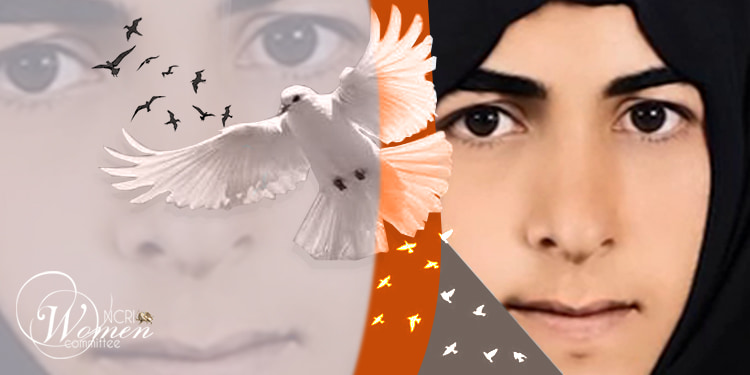
That evening, while I was still at the Revolutionary Guards’ detention center, before I was transferred to the general ward, they brought in a young PMOI supporter named Mina Shabanpour. She was sixteen years old. She was dignified, composed, and remarkably resolute. In fact, Mina was the first young woman to be executed in Rasht. She had even refused to reveal her real name until the very end.
One day, Mina Shabanpour was summoned. Her mother had been brought to a room for a visit. The moment she saw Mina, her mother embraced her, kissed her, and breathed in her scent. But Mina calmly told her: “Dear Mother, I know you’re looking for your daughter, but you must have mistaken me for someone else. I’m not your daughter.”
Her mother seemed overcome. Through her tears, she replied: “Well, perhaps you’re right. Maybe I have made a mistake. But you smell so much like my Mina, and you look so much like my daughter.”
Despite how heartbreaking the moment was, Mina remained completely composed and did not break her silence. Her mother, too, understood that she must not say anything that could expose her daughter.
At the end of the visit, her mother said, “Then let me hold you and kiss you one more time, because you smell so much like my Mina.”
Mina and I spent some time together in prison. She suggested that we organize our days so we could make the best possible use of our time. From morning until night, we read the Quran together, memorized passages, and discussed various subjects.
Mina had an extensive knowledge of Quranic interpretation and a range of other subjects, including Tabyin-e Jahan (An Explanation of the Universe), a work by Massoud Rajavi.[1] She passed on what she knew to me. At that time, there were still various books available in the prison; the authorities had not yet confiscated them. We studied them together.
Mina would explain the material to me and teach me which verses of the Quran to memorize and how to draw on them in our lives and in our struggle.
One night, Mina was summoned again. She said to me: “I’m going to be executed. But remember to keep doing what I’ve taught you. Make the most of every moment.”
Then they took her away and executed her.
To be continued…
[1] Tabyin-e Jahan: or An Explanation of the Universe refers to a work by Massoud Rajavi.