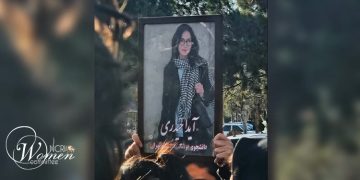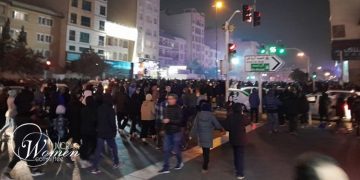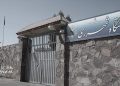


Qarchak Prison has once again become one of the primary detention centers for women protesters arrested in Tehran
According to a report published today, January 29, by the state-run Sharq newspaper, women protesters arrested during the January 2026 uprising in Tehran are being detained in harsh conditions in Qarchak Prison, while the men have been jailed in the Greater Tehran Penitentiary, also known as Fashfuyeh, a prison notorious for its horrible conditions and violent circumstances threatening prisoners’ lives.
The following report has been extracted from two reports published today by Sharq newspaper.
According to Sharq, there is no official figure on the number of protesters detained during the recent uprising. Qarchak Prison has once again become one of the primary detention centers for women arrested during protests.
The prison, long criticized for inhumane conditions and severe overcrowding, is now holding dozens of women and girls detained in recent demonstrations in Tehran, alongside its general inmate population. Many of these detainees are reportedly being kept in the quarantine ward.
What has exacerbated the crisis is the issuance of one-month, and in many cases longer, pretrial detention orders on the one hand, and the imposition of multi-billion-toman bail amounts on the other.
These measures have effectively made temporary release unattainable for many detainees and their families.
Girls and young women from Pakdasht, Qoheh, Mamazan, Hasanabad, Varamin, Baharestan, Eslamshahr, and Robat Karim are now spending their days and nights in the quarantine ward of Qarchak Prison.
“I Spent 12 Days Trying to Free My Daughter”
A mother’s account of scrambling to secure a multi-billion-toman bail
A mother, still middle-aged yet visibly worn down in both face and gaze, describes days spent traveling back and forth between Pakdasht, Tehran, and Qarchak. Her husband passed away years ago, and she now bears full weight of supporting her family and safeguarding the future of her three daughters. Her eldest daughter, the family’s breadwinner, was arrested 12 days ago.
“When they told us bail was required, we thought we could put up our own house,” she says. “But it wasn’t worth several billion tomans, and the deed wasn’t even free. Our house is mortgaged. My brother stepped in and put up the deed to his own home.”
She adds that many other detainees do not even have that option. “My daughter told me that for some women they’ve set bail at eight billion tomans. Many families have absolutely no way to provide that.”
Although she is relieved that her daughter has been temporarily released, the looming trial continues to haunt her. “They said she’s free until the court hearing. I’m terrified they’ll issue a sentence and send her back to prison. She is the pillar of our lives. She doesn’t deserve to spend her youth behind bars.”
Protest Is Not a Crime
The sister of a 19-year-old detainee asks why her future must be put on hold
A young woman who introduces herself as “S” speaks about the arrest of her 19-year-old sister from Shahr-e Rey. According to the family, the teenager was detained simply for protesting Iran’s economic conditions.
“My sister did nothing wrong. She hurt no one. She only raised her voice,” she says. “She’s young, with dreams and plans, but she sees no future ahead of her. Does this kind of protest deserve all this imprisonment? They could release her with a simple pledge. Why should she have to remain in prison for so long?”
Lost Between Prison and Court
Families under compounded pressure amid internet shutdowns
A father who has spent the past 18 days shuttling between his home, Qarchak Prison, the prosecutor’s office, and the Revolutionary Court describes the exhaustion families are facing.
“From the moment of arrest, pressure comes from both sides, on the detainee and on the family,” he says. “Just finding the prison, which is kilometers outside the city, without internet or navigation apps, is torture in itself. One day we calculated that we had walked a distance equivalent to the road from Tehran to the north of the country.”
According to him, internet disruptions and the disabling of navigation tools have multiplied this pressure.
Families From Other Cities: Stranded in Tehran
Detained students and parents with nowhere to stay
A significant number of those arrested are university students who came to Tehran from other cities to study. Their families have now been forced to travel to the capital to follow their cases. Some have found temporary shelter with relatives, while others remain homeless and disoriented, spending entire days outside prosecutor’s offices and courts. This situation has placed severe additional economic and psychological strain on families.
The report published by this state-run newspaper reflects only a small fragment of the suffering endured by detained protesters and their families, just enough to create a limited outlet for public discontent and to contain a potential eruption. Yet the scale of the crisis is so severe and unmistakable that even the regime itself can no longer conceal it.