Every year, October 5 is marked as World Teachers’ Day in UNESCO’s calendar — a day established in 1994 to honor the efforts, social standing, and professional rights of teachers worldwide. It is a reminder of a global commitment to defend teachers’ rights, enhance the quality of education, and highlight their indispensable role in shaping the future of society.
In Iran, teachers have always been at the heart of social and cultural transformations, playing a major role in raising informed generations. Among them, women teachers, in addition to carrying the heavy responsibility of education, have also borne the burden of gender discrimination and social pressures.
Systematic Violations of Teachers’ Rights
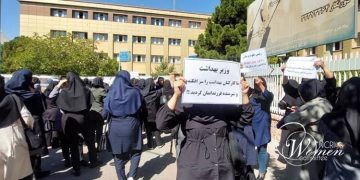
On the eve of World Teachers’ Day, Iran’s education system resembles more of a security apparatus than an institution for learning. The identification, arrest, and harsh repression of teachers’ union activists who demand their rights have become defining features of this system.
Administrative disciplinary boards and the Education Ministry’s security offices have effectively turned into executive arms of the intelligence services. Dismissals, forced buyouts, and suspensions are among the tools used to silence teachers’ voices.
Iran’s judiciary and security agencies routinely classify teachers’ union activities as “crimes against national security”, handing down heavy sentences. At least 45 teachers and union activists were arrested, summoned, or interrogated in the summer of 2025, without the most basic guarantees of a fair trial.
Between mid-June and September 19, 2025, repression against teachers and union members intensified across multiple provinces — from Kerman and Kurdistan to Gilan, West Azerbaijan, Isfahan, and Tehran. Behind this crackdown lies the regime’s fear of continued protests, especially in the wake of the nationwide uprising of 2022.

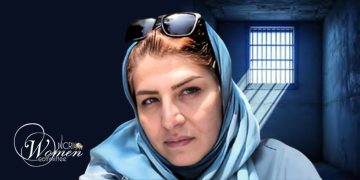
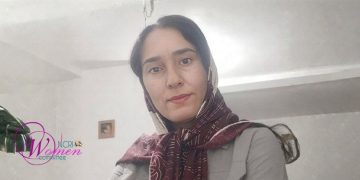
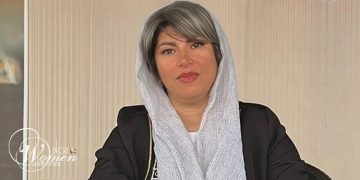
On August 4, 2025, five women teachers in Kerman, along with three other union activists, were sentenced to a total of eight and a half years in prison on security-related charges and “propaganda against the regime.”
Fatemeh Yazdani, Mitra Nikpour, Zahra Azizi, Leila Afshar, and Shahnaz Rezaei Sharifabadi were each sentenced by the clerical judiciary to 10 months in prison on charges of “membership in an opposition group with the intent to disrupt security” and “propaganda against the system.” In appeals court, these sentences were commuted to a fine of 700 million rials each.
The clerical regime deliberately employs financial penalties as a tool of economic oppression against women teachers, directly targeting family livelihoods and imposing added pressure on working women.
In June 2025, Sakineh Maleki Hedak, a high school teacher in Bandar Anzali with 28 years of service in the Ministry of Education, was forced into mandatory retirement by a final ruling of the Administrative Justice Court.
On August 20, 2025, the Appeals Board for Administrative Violations in Sanandaj issued final rulings of mandatory retirement, dismissal, and suspension against seven teachers, including two women teachers. According to the verdicts, Nasrin Karimi (with a master’s degree in sociology and 27 years of service) was sentenced to forced retirement with a two-rank job demotion, and Leila Zarei (with a bachelor’s degree in elementary education and 30 years of service) was demoted from her position as assistant principal and forced into retirement with a one-rank demotion.

Public Schools Facing a Teacher Shortage
The dismissals and structural pressures against teachers come at a time when Iran’s public schools are facing a severe human resource crisis.
Iran is facing a shortage of more than 176,000 teachers, while over 85 percent of the country’s students are enrolled in public schools. Many schools have either been forced to close due to the lack of teachers or have seen a dramatic decline in the quality of education. (Eghtesad24 – March 20, 2024)
Tejarat News also reported:
“Public schools have always faced teacher shortages, but the mass dismissals have made this crisis worse. The quality of education in public schools has plummeted, and educational equity has practically vanished.” (Tejarat News – September 14, 2024)
The regime not only suppresses teachers’ labor rights, but through misguided policies and the dismissal of qualified staff, it also deprives students — and society as a whole — of the right to equal education.
Chronic Livelihood Crisis and Job Uncertainty
The incomplete implementation of the teacher ranking law has turned into a serious crisis. Retirees, particularly those who retired in 2022, have lost a significant portion of their legal entitlements. This violation of rights is, in effect, a form of economic repression through bureaucratic formulas.
On the other hand, job insecurity among informal teachers continues. This group—including freelance instructors, preschool teachers, and literacy movement trainers—is predominantly made up of women, who have taught for years under the harshest conditions without insurance or job security.
According to Eghtesad Online (August 15, 2025), despite occasional pay increases, teachers’ salaries in Iran remain far below the global average. Monthly salaries for Iranian teachers range from 15 to 30 million tomans (approximately 150 to 300 USD), while teachers in Germany earn $3,500 to $5,000, in the United States $3,000 to $5,500, in Japan around $4,000, and in Finland close to $3,500. Even in neighboring Turkey, the average teacher salary is $800 to $1,200 per month.
This comparison demonstrates that Iranian teachers live in conditions far below global standards, effectively pushed into a state of structural poverty.

Discrimination and Double Burden on Women Teachers
In addition to general repression, women teachers face specific forms of discrimination:
- Although women make up 60 to 64% of the education workforce, their share in management positions is only about 7%.
- Low salaries, delayed payments, and psychological pressure have caused widespread depression and burnout among women teachers.
- Forced teaching assignments in remote areas and high commuting costs.
- Lack of public childcare and mismatched working hours for teacher-mothers.
- Cultural and disciplinary pressures, including strict enforcement of dress codes at work.
These conditions place women teachers in a position where they must fight not only for labor rights, but also for their most basic human rights.
The Way Forward
World Teachers’ Day in Iran presents a picture of teachers under systematic, economic, and security pressures. Women teachers, who form the backbone of the country’s education system, are the most affected, facing economic repression, structural discrimination, and cultural pressures.
Celebrating this day in Iran will only have meaning when teachers’ labor rights, job security, and gender equality—especially for women—are guaranteed. Under the misogynistic clerical education system, this promise remains nothing but a mirage.
For Iranian teachers, World Teachers’ Day is, until the fall of the mullahs’ regime, not a reminder of appreciation, but a symbol of struggle and resistance.
In a free Iran of tomorrow, Iranian resistance will establish an education system based on freedom, democracy, and equality.