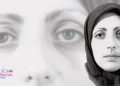


From a book by Hengameh Haj Hassan, Part 3
In the previous section of Hengameh Haj Hassan’s prison memoir — Face to Face with the Beast — we read about her first interrogation after being arrested in 1981 while working as a nurse at Sina Hospital in Tehran.
In this part, she recounts her first experience of torture at the hands of Khomeini’s Revolutionary Guards.
The First Experience of Torture
When the interrogator realized I wasn’t going to give in, they took Shahnaz away and strapped me down — face down — on the torture bed. My hands were chained to the top, and my feet tied tightly to the lower end of the frame. No matter how much I struggled, I couldn’t move an inch. Then another one of Khomeini’s thugs — another Pasdar — climbed onto my back and threw a blanket over my head.
The moment I had been dreading — the thing I had thought about for days and mentally prepared for — was now just seconds away. I was still caught in a whirlwind of thoughts and questions when suddenly a sharp, brutal strike landed square on the soles of my feet.
In an instant, an electric current of pain surged through every nerve in my body. I jolted violently.
That’s when I realized what that awful thwack sound — the one I kept hearing in the distance like wood hitting a carpet — actually was.
The lashes kept coming, one after another. I lost count. I screamed in pain.

Eventually, they unchained me from the bed. But in just a few short minutes, I was so drained, so broken, I felt like I’d been digging through mountains for hours.
The interrogator said, “I don’t want to punish you — if you just tell us what we need to hear.”
They didn’t call it torture. They used the Islamic term “Ta’zir” — a euphemism meant to cloak brutality in religious justification. But the reality was the same old carrots-and-sticks tactic.
Time became meaningless. I had no idea what time of night it was.
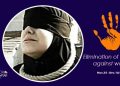
They made me sit up again and said, “Only speak when I tell you. For now, take off your blindfold — but not a word, not a sound.”
Then, after a pause, he tapped my head lightly with a pencil, leaned in close to my ear, and whispered: “Now.”
I removed the blindfold — and there she was.
Tahmineh.
She stood there blindfolded, wearing her usual outfit — a brown-and-beige plaid jumper.

My heart stopped. My temples throbbed. It felt like the world had crashed down on me.
The pain from the lashes vanished from memory. But the emotional shock was worse — a kind of soul-deep exhaustion, like I hadn’t slept in a hundred years.
How had they arrested her?
How did they find out about our connection?
The interrogator said, “Put your blindfold back on.” Then they took her away.
Tahmineh had no idea I had been there, that I had seen her.
Now what was I supposed to do?
What if they questioned her and her answers didn’t match mine? They’d torture both of us.
God — if only I could speak to her somehow. Just once. Just a word.
My mind was in turmoil. I was praying, thinking, panicking.
That night — I don’t know why — the interrogator didn’t continue. Maybe he had something else to do. But it helped me.
They transferred me to a room where dozens of other women were lying or sitting on the floor. Some were asleep. Others moaned softly.
Many had their legs bandaged from the knees down. The blood had soaked through the gauze and dried there, stiff and crusted. Clearly, these wounds hadn’t been dressed in days.
The air was thick with the stench of blood and sweat.
As soon as we entered, the wounded women — blindfolded — started crying out, “When are you going to change my bandages?”
The female guards just gave them dismissive, sarcastic replies.
Two of them — women working for the regime — came up to me and pulled off my blindfold to do a full body search.
I asked, “What happened to their legs?”
I genuinely thought they must’ve been shot during arrest.
Because honestly, I couldn’t imagine that Khomeini’s enforcers had done this just with cable lashes.
One of the female guards looked me straight in the eye and laughed — a cold, mocking laugh.
“You’ll find out soon enough,” she said.
Her eyes were empty. No soul behind them. Just cruelty and contempt. She looked like someone without a heart.
Dear God, what has Khomeini done to these people? How has he warped them like this?
This was the torture waiting room — every woman here had either been interrogated or was waiting to be.
Just sitting in that space, breathing the same air, was its own form of psychological torture. In some ways, even worse than the physical kind.
Face to Face with the Beast by Hengameh Haj Hassan
To be continued…