1981-1988: Prisons and the Unyielding Struggle
1981-1988: Prisons and the Unyielding Struggle This decade stands as the bloodiest chapter in Iranian history—a ...
Read moreDetails

Women’s Leadership differentiates Iranian opposition from its foe
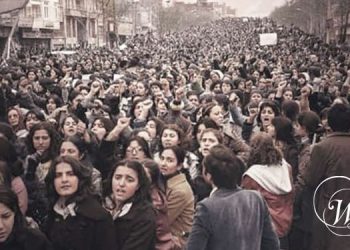
With the overthrow of the Shah’s regime in the 1979 revolution in Iran, the people of Iran, especially the Iranian women, sought to enjoy their human rights and freedoms to establish a new society. But Khomeini usurped the leadership of the revolution and deviated its goals.
Only a week after the 1979 Revolution, Khomeini began his onslaught on women’s freedoms with a clampdown on women’s rights.
The mullahs’ religious dictatorship is founded on gender discrimination, and therefore, women needed to participate in the leadership of the anti-dictatorial movement against the mullahs’ regime.
Vanguard women in the PMOI such as Ashraf Rajavi opened the way for women to join the struggle. And Iranian women and girls widely joined the ranks of the struggle against the mullahs.
The Iranian Resistance and the People’s Mojahedin Organization of Iran experienced a major overhaul in thinking and practice by investing all their assets on women’s leadership.
Maryam Rajavi’s rise to the leadership of the PMOI/MEK in 1985 was a response to the sacrifices made by tens of thousands of brave PMOI women who had taken great risks, withstood horrendous tortures, and given their lives to defend their people’s rights. At the same time, it was a declaration of war on the mullahs’ misogynous culture and fundamentalist vision and practices.
On August 5, 1993, 24 women were voted to the PMOI’s Leadership Council which marked a milestone in the struggles of Iranian women, and the Iranian opposition. This was an all-women council which took the helm of all affairs in the PMOI and in subsequent years evolved to a Central Council made up of 1,000 heroic women members of the PMOI.
Women’s leadership in all arenas differentiates the Iranian opposition from its main foe, the mullahs’ regime which finds its existence in the suppression of women.
Women’s leadership in the nationwide uprisings in Iran is an outcome of this historic struggle and by vanguard women of the Iranian opposition becoming a role model for all women of Iran.
1981-1988: Prisons and the Unyielding Struggle This decade stands as the bloodiest chapter in Iranian history—a ...
Read moreDetailsOn June 20, 1981, the Iranian people embarked on a righteous resistance—a pivotal moment etched in ...
Read moreDetails1981: The Mothers’ Protest On April 27, 1981, the Muslim Mothers’ Association, staunch supporters of the ...
Read moreDetailsDefying Repression: Iranian Women in the Opposition Movements (1979-1981) Amidst the tumultuous aftermath of the 1979 ...
Read moreDetailsMandatory Hijab: PMOI Stands Against Imposing the Veil On March 12, 1979, the People’s Mojahedin Organization ...
Read moreDetailsChallenging Misogynistic Dictatorship: Women in post-Shah Iran In the wake of the Shah’s regime collapse in ...
Read moreDetailsWomen at the Vanguard: Iran’s 1979 Anti-Monarchy Revolution and the Shah’s Downfall In the tumultuous 1960s ...
Read moreDetailsEmpowering Women in Iran: The Struggle for National Sovereignty (1951-1953) In the early 1950s, Iran witnessed ...
Read moreDetailsThe Pioneering Role of Iranian Women in the Tobacco Movement (1889-1891) The Tobacco Movement of 1889 ...
Read moreDetailsOver the course of 150 years, the courageous women of Iran have etched a profound legacy—a ...
Read moreDetails