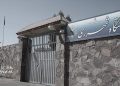


Dowlatabad Women’s Prison in Isfahan is the facility where women are held in this major city. The prison is located on Farzanegan Boulevard in Isfahan, adjacent to the juvenile correction and rehabilitation center. Following the closure of the women’s ward at Dastgerd Prison, a large portion of the province’s female inmates were transferred here. The administration of this facility includes a section controlled by the Revolutionary Guard Corps (IRGC), while a larger portion operates under the oversight of Faraja and the Morality Police. Reports emerging from the facility point to a critical situation inside the prison.
600 Women Held in Dowlatabad Prison
At least 600 women are imprisoned in Isfahan’s Dowlatabad Prison. The facility consists of nine rooms or wards, with sections allocated to mothers and children, elderly women, drug-related offenders, financial debtors and convicts, a health ward, and political prisoners and protest detainees. The principle of separating crimes is not effectively observed in this prison, and female political prisoners are held alongside offenders of ordinary and violent crimes.
The interior space of the prison comprises four main sections:
- General ward
- Quarantine ward
- IRGC solitary confinement cells
- The dark room (Tarik-khaneh)
Each room in this ward was originally designed for 24 people, but currently, more than 60 prisoners are crammed into each room. According to reports from inside the prison, the population in one of the rooms has reached 67.
In such a room, only 24 female prisoners can use a bed, forcing at least 40 others to sleep on the floor.
In every room housing at least 60 to 67 prisoners, there are only two toilets and one sink.
Bathing is also restricted, with women only allowed to use the showers two days a week. Some prisoners use the restroom area to wash themselves, but this is considered a violation by the guards.
Severe overcrowding, lack of space to sleep, poor ventilation, and limited access to sanitation facilities are among the physical and psychological strains prisoners grapple with daily.
General and Quarantine Wards
The quarantine ward of this prison is where newly arrived women are held. The general ward, meanwhile, houses women serving final sentences as well as detainees whose interrogation phase has ended. In the political prisoners’ section, there is no clear separation between pre-trial detainees and those with finalized sentences.
Every month, approximately 10 to 15 prisoners leave the quarantine ward, and roughly the same number are added to it.
Solitary Confinement and Torture
The IRGC solitary confinement cells in Isfahan’s Dowlatabad Prison are used for interrogations. The layout of these cells is such that the sounds of beating and women’s screams echo through the air vents into adjacent cells.
An individual held in solitary confinement hears the torture of others without knowing the fate of the prisoner being interrogated, a tactic designed to inflict severe psychological pressure and break the women’s resistance.
Interrogation methods used by the Guards include kicking sensitive parts of the body, striking legs with chair legs, kicking ribs with boots, and breaking jaws.
Furthermore, detainees are hung by their feet and kept in this position for 24 hours. These methods are used to coerce prisoners into making forced confessions or accepting statements dictated by interrogators.
The Dark Room: Deprivation and Abuse
The dark room (Tarik-khaneh) is another section of Isfahan’s Dowlatabad Prison, located completely separately.
In this area, women’s hands are bound behind their backs to another person, forcing them to sit on the floor and hold their knees against their chest for hours or even days at a time. This agonizing position deprives them of the ability to move.
Women held in the dark room have no access to food, water, or sanitation facilities. They are forced to relieve themselves right there in that confined space, inside their clothes.
Due to the lack of restrooms and the ban on moving about, the floor of this area becomes severely contaminated.
In one instance, after prisoners spent hours begging for food, the Guards merely tossed a few sugar cubes onto the floor. The starving women were forced to pick the sugar cubes up from the contaminated floor with their mouths.
Upon returning the women from the dark room or solitary confinement cells, the Guards place a written statement in front of them, requiring them to confirm that they were not tortured and that no physical violence was used against them.
Prison guards and interrogators rely on this as an attempt to deny the evidence of torture and evade accountability.
Family Members as Tools of Torture
One form of psychological pressure involves torturing family members or loved ones in front of detained women.
In one instance, a family member of a prisoner detained during the 2026 uprising fainted because of torture. Interrogators led the prisoner to believe that her family member had died.
She remained in this psychological state for 12 hours before being told that the tortured relative was alive.
Somayeh Afshar, the mother of Alireza Sepahi, is among the prisoners who have been subjected to pressure in this prison.
Officers tortured Somayeh Afshar in front of her son’s eyes, while Alireza Sepahi was also tortured in front of his mother to extract confessions from both.
Alireza Sepahi was one of the defendants in the so-called “Alikhani Square” case who was sentenced to death four times, and his sentence was executed on October 5, 2026.
Somayeh Afshar was also sentenced to five years in prison in connection with the same case.
In addition to using the life and well-being of family members to extract confessions, interrogators also turn the family itself into a tool of psychological torture against female prisoners.

The Case of Taraneh and Romina Rahimi
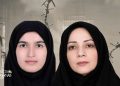
Taraneh and Romina Rahimi, two sisters detained during the January 2026 uprising, are being held in Isfahan’s Dowlatabad Prison.
Taraneh Rahimi has been sentenced to death, and Romina Rahimi has received a 25-year prison sentence.
The two sisters have been subjected to severe physical and psychological torture in the dark room and solitary confinement cells.
According to newly received information from inside the prison, intense pressure exerted on them has been confirmed.
The marks of beating on their faces were so severe that family members were unable to recognize them in the initial moments of their visit.
According to information received from inside the prison, Fatemeh Asgarian, the head of the women’s section, threatened Taraneh Rahimi with execution, telling her: “We will string you up on the gallows.