Tuesday, September 22, 2026
  • English
  • Français
  • فارسی
  • عربى
PODCASTS
NCRI Women Committee Women Resistance Freedom
  • Home
  • NEWS
    • Women’s News
    • Articles
    • Statements
  • PUBLICATIONS
    • Monthlies
    • Documents
    • Reference Library
  • ABOUT US
    • The NCRI Women’s Committee
    • Gender Equality
    • Women’s Platform
  • MARYAM RAJAVI
    • Maryam Rajavi
    • Maryam Rajavi Speeches
    • The Plan on Women’s Rights and Freedoms
    • Ten-Point Plan for the future of Iran
  • VANGUARDS
    • Fallen Trailblazers of Iran’s Freedom
    • Fallen Heroes of Iran Uprisings
    • Heroines in Chain
    • Women of Iranian Resistance
    • Famous Women
    • Women in History
  • EVENTS
    • IWD Conferences
    • Activities
    • IWD Speeches
    • Solidarity
  • VIDEO
    • Videos
    • IWD Videos
  • PODCAST
  • DONATE
  • CONTACT US
No Result
View All Result
NCRI Women Committee Women Resistance Freedom
  • Home
  • NEWS
    • Women’s News
    • Articles
    • Statements
  • PUBLICATIONS
    • Monthlies
    • Documents
    • Reference Library
  • ABOUT US
    • The NCRI Women’s Committee
    • Gender Equality
    • Women’s Platform
  • MARYAM RAJAVI
    • Maryam Rajavi
    • Maryam Rajavi Speeches
    • The Plan on Women’s Rights and Freedoms
    • Ten-Point Plan for the future of Iran
  • VANGUARDS
    • Fallen Trailblazers of Iran’s Freedom
    • Fallen Heroes of Iran Uprisings
    • Heroines in Chain
    • Women of Iranian Resistance
    • Famous Women
    • Women in History
  • EVENTS
    • IWD Conferences
    • Activities
    • IWD Speeches
    • Solidarity
  • VIDEO
    • Videos
    • IWD Videos
  • PODCAST
  • DONATE
  • CONTACT US
No Result
View All Result
NCRI Women Committee
No Result
View All Result
Home IWD Speeches
Ingrid Betancourt at IWD2026: Any vision of Iran’s future that postpones women’s leadership is not liberation

Ingrid Betancourt at IWD2026: Any vision of Iran’s future that postpones women’s leadership is not liberation

February 26, 2026
in IWD Speeches

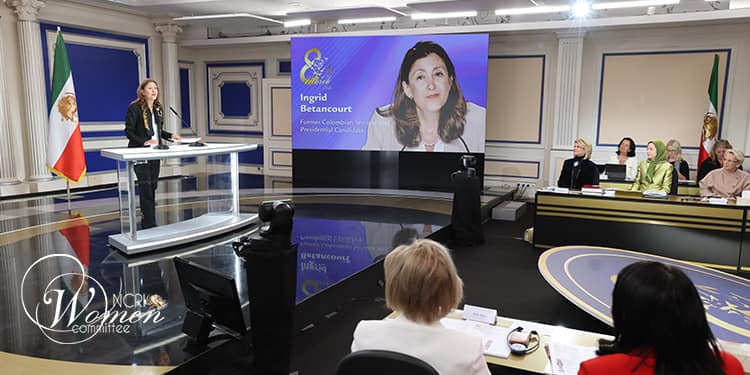
On Saturday, February 21, 2026, on the eve of International Women’s Day, the NCRI Women’s Committee hosted an international conference in Paris entitled “Women’s Leadership: An Imperative for a Free Iran and a Democratic Republic.”

The conference, attended by women legislators, academics, thinkers, and prominent political figures, focused on women’s political participation and leadership as a decisive element in a democratic society.

Ingrid Betancourt, former Senator and Presidential candidate of Colombia, delivered a speech at this session.
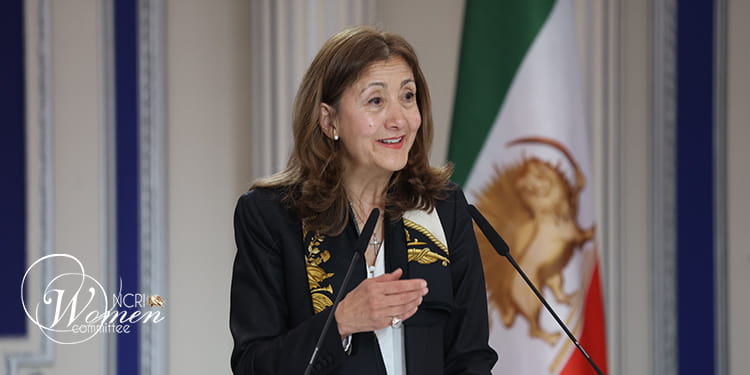
Ingrid Betancourt at IWD2026: Any vision of Iran’s future that postpones women’s leadership is not liberation

Ingrid Betancourt: As long as the religious dictatorship remains in power, structural equality between women and men is impossible

Today we gather not only to celebrate International Women’s Day, but to honor a resistance forged in fire. We stand with the women of Iran, women who have turned pain into power, repression into resolve, and silence into a cry that echoes across the world.

The struggle for gender equality in Iran has never been a side issue. It has never been a second-class demand, something to be negotiated after political change. From the earliest chapters of modern Iranian history, women’s rights have been inseparable from the Iranian people’s fight for freedom, dignity, and national independence.

Under the Shah’s dictatorship, women were showcased as symbols of modernization while political freedoms were ruthlessly suppressed. Equality without democracy was merely cosmetic, conditional, fragile, and reversible. It served as little more than a tool of propaganda, a mask for corruption and political violence aimed at securing the favor of Western democracies.

Under the current theocratic regime, repression took on an even darker form. The state claimed authority over women’s bodies, their dress, their voices, their choices, and their lives. Discrimination became law. Misogyny became policy. Violence became institutionalized.

But across both regimes, one truth has remained constant: Iranian despotism, no matter what ideology it wears, cannot coexist with gender equality.

And yet, Iranian women did not retreat. They rose.

The nationwide uprising in January brought this reality into sharp focus. Women were not merely participants; they were catalysts. They were organizers. They were leaders. Their courage on the front lines was not symbolic. It was politically and morally transformative.

The world will never, never forget the rows of black body bags piled in vast warehouses. Thousands of women’s corpses were consigned to anonymity, a haunting symbol of gender-based genocide. This was the deadly fruit of a misogynistic ideology that has plunged Iran into bloodshed.

Women’s presence on the front lines demonstrated a critical lesson: gender equality in Iran is not a future reform to be negotiated after change. It is the precondition for genuine freedom and the recovery of human rights.

Thank you.
Ingrid Betancourt at IWD2026: Any vision of Iran’s future that postpones women’s leadership is not liberation

Women on the Frontlines: From Resistance to Future Leadership

When young women stood unbowed before armed forces, a new Tiananmen Square moment unfolded before our eyes. It revealed not only women’s central role in the fight to topple the Iranian regime, but also the failings of our so-called Western progressive opinion leaders. There were no rallies. There were no calls to end the genocide. There were no marches in the streets of our capitals. It was as if witnessing women warriors was too radical, too revolutionary for the bounds of political correctness. Or perhaps it revealed with brutal clarity that today money and economic interests wield more power to move the world than our democratic principles and values.

In this new era of drones and artificial intelligence, Iranian women have demonstrated that, more than ever, women’s ethics must serve as humanity’s guiding compass. When Iranian women face death without hesitation, they declare something profoundly clear: gender equality in Iran is not just a reform to be postponed until after political change. Even more, the fight of Iranian women for their independence is the very foundation of a humanistic revolution of the new millennium.

The preservation of human dignity, and with it the survival of our freedom, our pursuit of truth and justice, and the protection of our family values, depends on heeding the lessons inscribed in the martyrdom of Iranian women.

Iranian women showed the world that as long as religious dictatorship remains in power, equality between women and men is structurally impossible. A system built on control of women cannot deliver freedom to anyone.

From this reality emerges a clear and uncompromising conclusion: two elements are indispensable, not optional and not negotiable. First, the overthrow of the religious dictatorship. Second, the establishment of a democratic republic in which women are not decorative participants, not symbolic ministers, not token representatives, but decision-makers at the highest levels of political power.

Any vision of Iran’s future that postpones women’s leadership is not liberation. It is simply domination recycled under a new name.

This is why the Iranian people’s demand for political change and women’s demand for equality are not parallel struggles; they are one and the same struggle.

Iranian women are not asking for men’s protection. They are not seeking charity. They are not asking to be included in someone else’s struggle or folded into a rebranded patriarchal vision of the future. Through their martyrdom, they assert their right to shape that future not only for Iran, but for all of us, for the world, and for the new era taking form before our very eyes.

And this is why the question of political alternatives matters deeply.

In recent years, some outside Iran have tried to promote the son of the former Shah as the solution to Iran’s crisis. Really? But lineage is not legitimacy. Inheritance is not a democratic credential, as Carla Sands demonstrated before our eyes so powerfully.

The dictatorship that Iranians overthrew in 1979 was a one-party, corrupt system that denied political freedom. We cannot replace one form of dictatorship nostalgia with another.

More importantly, for us today, any political platform that does not clearly, specifically, and enforceably guarantee women’s rights cannot claim to represent Iran’s future. When women are mentioned, as in the propaganda and plan of the Shah’s son, only in passing and buried in vague references to societal forces, that is not equality. It is deliberate omission. And in the case of Iran, after what we have lived, seen, and witnessed, it is an outright erasure of the legacy of women in Iran.

On this International Women’s Day, we must be unequivocal: women’s rights cannot be a footnote, not in Iran and not anywhere in the world. They must be the central pillar of any political platform, any project, and any vision for the 21st century.

And this is why the movement within Iran’s resistance, led by Maryam Rajavi, carries such profound significance. That is what her 10-point plan means. It is grounded in her unique experience because her movement did not discover gender equality as a fashionable slogan. It built equality into its structure, something we can see here, decades before the world began speaking widely about women’s empowerment.

This movement elevated women into senior leadership not as an exception or a token, but as a norm.

Under the harshest conditions, including imprisonment, exile, rape, assassination attempts, and relentless and infamous propaganda, women in this resistance did not step back. They stepped forward.

Maryam Rajavi’s vision is explicit: full legal, political, economic, and social equality between women and men. Abolition of discriminatory laws. Equal participation in leadership. Freedom of dress. Freedom of expression. Freedom of choice. Zero tolerance for gender-based violence. These are things we take for granted in our Western world, yet we know they are fragile.

And this is why we are here. And this is why we are speaking up.

Maryam Rajavi has no abstract promises. Her principles have been tested in practice, and they are our claim as women of the world. This is what makes this movement unique. It has proven that women’s leadership is not only morally right; it is strategically indispensable.

Women’s leadership strengthens resistance. Women’s leadership deepens legitimacy. Women’s leadership anchors democracy in lived experience, not empty rhetoric.

Transformation is woven into women’s very being. Change is etched into our history. Moving forward is what we do as women. That is why women’s power has always been feared and so often repressed.

The fight against religious tyranny and the fight for women’s liberation are inseparable because they confront the same structure of domination, a system that fears women precisely because it fears change, truth, and justice.

Let us be honest about something else. The future of Iran will not be built by nostalgia. It will not be built by dynastic claims. It will not be negotiated behind closed doors among elites disconnected from the sacrifices of the people.

Ingrid Betancourt at IWD2026: Any vision of Iran’s future that postpones women’s leadership is not liberation

It will be built by women who have paid the price of resistance and by men who recognize that fight. Because together we will stand up and make the changes.

No group has paid that price more consistently or more courageously than the Iranian resistance led by Maryam Rajavi. From mothers who mourn their executed daughters and still demand truth and justice, to students who risk expulsion, beatings, rape, and imprisonment, to activists who endure torture and refuse to lie, to exiled women who continue protesting and organizing the resistance across continents, they have shown us what women’s leadership truly looks like. It is unyielding, unbending, and uncorruptible.

No surrender. No betrayal. No compromise.

This is why a democratic Iran without gender equality is not just inadequate; it is impossible. And gender equality without democracy is nothing more than an illusion.

Today, the choice before us is clear. Supporting women’s leadership is not symbolic. It is strategic. It is essential.

It is the path to a republic where power does not rest on fear, but on consent. Where law protects rather than punishes. Where faith is chosen and personal, not imposed. Where daughters grow up knowing that their dreams are not a crime.

On this Women’s Day, let us commit not only to admiration, but to action. Let us amplify the voices of the Iranian resistance. Let us challenge narratives that sideline them. Let us insist that any future for Iran must be built with women at the center of decision-making and power, not at its margins.

Because when Maryam Rajavi speaks, Iran gains in freedom. When Iranian women rise, Iran as a nation rises with them. And when Iranian women are free, women around the world will rise with them.

Thank you.
Tags: Women's Leadership
ShareTweetPinShareSendShareShare

Related Posts

NCRI Delegation Attends Major Youth Conference of Italy’s Governing Party; Sarvnaz Chitsaz Receives Courage Award

September 19, 2026
NCRI Delegation Attends Major Youth Conference of Italy's Governing Party; Sarvnaz Chitsaz Receives Courage Award

Rome, Italy – In a significant political event reflecting growing international attention to the Iranian people's struggle for freedom, the youth organization of the governing Brothers of Italy...

Read moreDetails

Equal Participation of Women in Political Leadership: An Imperative for True Democracy

September 14, 2026
Equal Participation of Women in Political Leadership: An Imperative for True Democracy

September 15, International Day of Democracy, offers a vital moment to evaluate the true benchmarks of freedom, human rights, and popular governance. In any society, the ultimate measure...

Read moreDetails

EU Reporter: PMOI Asserts Its Resilience in Election of New Secretary-General

September 11, 2026
EU Reporter: PMOI Asserts Its Resilience in Election of New Secretary-General

At a critical juncture for the Iranian resistance movement, the People’s Mojahedin Organization of Iran (PMOI/MEK) has chosen Mahnaz Maimanat as its new Secretary-General in an internal vote...

Read moreDetails

Mahnaz Maimanat Elected as New Secretary General of the People’s Mojahedin Organization of Iran (PMOI/MEK)

September 6, 2026
Mahnaz Maimanat Elected as New Secretary General of the People’s Mojahedin Organization of Iran (PMOI/MEK)

Elections Held Across Seven Countries in Three-Stage Voting On the eve of the 62nd anniversary of the founding of the People’s Mojahedin Organization of Iran (PMOI/MEK), the organization's...

Read moreDetails

Women’s Leadership in the PMOI

September 5, 2026
Women’s Leadership in the PMOI

For Nearly Four Decades, Competent Women of the People's Mojahedin Organization of Iran (PMOI/MEK) Have Led the Fight Against the Clerical Regime's Misogynistic Dictatorship. The People's Mojahedin Organization...

Read moreDetails
Next Post
Iran: Protesters Sentenced to Jail and Flogging; Prison Term Upheld on Appeal Two Women Face 74 Lashes and 7 Years Prison over Iran Protests

Maryam Deris and Fariba Hosseini Continue Their Hunger Strike; Lives of Two Political Prisoners at Risk

Documents

Sign the Petition: Demand Urgent International Action to Protect Women Prisoners in Iran Iran: Political Prisoner Used as Leverage Against Her Imprisoned Brother

Sign the Petition: Demand Urgent International Action to Protect Women Prisoners in Iran

September 20, 2026

Iran's Women Prisoners: A Human Rights Emergency Demanding Immediate International Action September 2026 To: The UN High Commissioner for Human...

Call for Immediate Action to Halt the Death Sentence of Arghavan Fallahi

Sign our Statement to Halt the Death Sentence of 25-Year-Old Political Prisoner Arghavan Fallahi

July 10, 2026

Statement Calling for Immediate Action to Halt the Death Sentence of 25-Year-Old Political Prisoner Arghavan Fallahi We express our profound...

The Ineffectiveness of Population Policies in Iran: Economy, Aging, and the Overlooked Rights of Women

The Ineffectiveness of Population Policies in Iran: Economy, Aging, and the Overlooked Rights of Women

July 10, 2026

Abstract: A compilation of official data, media reports, and disclosures published in April, May, and June 2026 demonstrates that Iran...

Monthlies

August 2026 Report: The Epic of Women Who Said 'No' to the Executioners!
Monthlies

August 2026 Report: The Epic of Women Who Said ‘No’ to the Executioners!

September 1, 2026
July 2026 Report: Death Sentences for Women Rising Up to Overthrow the Mullahs' Regime
Monthlies

July 2026 Report: Death Sentences for Women Rising Up to Overthrow the Mullahs’ Regime

July 31, 2026
June 2026 Report: Working Iranian Women Erased from Labor Market
Monthlies

June 2026 Report: Working Iranian Women Erased from Labor Market

July 5, 2026
May 2026 Report: The Enduring Resistance of Iranian Women
Monthlies

May 2026 Report: The Enduring Resistance of Iranian Women

May 31, 2026

Articles

Equal Participation of Women in Political Leadership: An Imperative for True Democracy

Equal Participation of Women in Political Leadership: An Imperative for True Democracy

September 14, 2026

September 15, International Day of Democracy, offers a vital moment to evaluate the true benchmarks of freedom, human rights, and...

The Massacre of 1988: An Account by Batoul Majani

The Massacre of 1988: An Account by Batoul Majani

September 12, 2026

The massacre of 1988 remains a secret whose full truth has yet to be revealed. In that massacre, which primarily...

EU Reporter: PMOI Asserts Its Resilience in Election of New Secretary-General

EU Reporter: PMOI Asserts Its Resilience in Election of New Secretary-General

September 11, 2026

At a critical juncture for the Iranian resistance movement, the People’s Mojahedin Organization of Iran (PMOI/MEK) has chosen Mahnaz Maimanat...

The Fallen for Freedom

Mojgan Mahdavi: From U.S. Academia to the Frontlines of the Iranian Resistance
Fallen Trailblazers of Iran’s Freedom

Mojgan Mahdavi: From U.S. Academia to the Frontlines of the Iranian Resistance

August 21, 2026
Nasrin Shahrabi: A Lifetime Dedicated to Fighting Religious Fascism in Iran
Fallen Trailblazers of Iran’s Freedom

Nasrin Shahrabi: A Lifetime Dedicated to Fighting Religious Fascism in Iran

August 19, 2026
The Unbroken Smile: How Sara Mokhtar, a Former Airline Executive Became the Vanguard of the Iranian Resistance
Fallen Trailblazers of Iran’s Freedom

The Unbroken Smile: How a Former Airline Executive Became the Vanguard of the Iranian Resistance

June 28, 2026
Fereshteh Azhadi: A Life of Resistance, Sacrifice, and Unyielding Commitment
Fallen Trailblazers of Iran’s Freedom

Fereshteh Azhadi

May 1, 2026

ABOUT US

NCRI Women Committee

We work extensively with Iranian women outside the country and maintain a permanent contact with women inside Iran. The Women’s Committee is actively involved with many women’s rights organizations and NGO’s and the Iranian diaspora.
The committee is a major source of much of the information received from inside Iran with regards to women. Attending UN Human Rights Council meetings and other international or regional conferences on women’s issues and engaging in a relentless battle against the Iranian regime’s misogyny are part of the activities of members and associates of the committee.

CATEGORIES

  • Activities
  • Articles
  • Documents
  • Fallen Heroes of Iran Uprisings
  • Fallen Trailblazers of Iran’s Freedom
  • Famous Women
  • Heroines in Chain
  • IWD Conferences
  • IWD Speeches
  • IWD Videos
  • Maryam Rajavi
  • Maryam Rajavi Speeches
  • Monthlies
  • Podcast
  • Reference Library
  • Solidarity
  • Statements
  • Videos
  • Women in History
  • Women in Leadership
  • Women of Iranian Resistance
  • Women's News

BROWSE BY TAG

Child marriage coronavirus education execution forced hijab Gender Gap Generation Equality Honor killings Iran Teachers Maryam Akbari Monfared Nurses Plan on Women's Rights and Freedoms Poverty Prisoners Protests rural women Saba Kord Afshari The girl child Violence against women Women's Leadership Women Heads of Household Zeinab Jalalian

The copyright of all the material published on this website has been registered under © 2016 the Women’s Committee of the National Council of Resistance of Iran. To obtain permission to copy, redistribute or publish the material published on this website, you should write to the NCRI Women’s Committee. Please include the link of the original article on our website, women.ncr-iran.org.

Welcome Back!

Login to your account below

Forgotten Password?

Retrieve your password

Please enter your username or email address to reset your password.

Log In

Add New Playlist

No Result
View All Result
  • Home
  • News
    • Women’s News
    • Articles
    • Statements
  • Publications
    • Monthlies
    • Documents
    • Reference Library
  • About Us
    • The NCRI Women’s Committee
    • Gender Equality
    • Women’s Platform
  • Maryam Rajavi
    • Maryam Rajavi
    • Maryam Rajavi Speeches
    • Ten Point Plan for Iran
    • The Plan on Women’s Rights and Freedoms
  • Vanguards
    • Fallen Trailblazers of Iran’s Freedom
    • Fallen Heroes of Iran Uprisings
    • Heroines in Chain
    • Women of Iranian Resistance
    • Famous Women
    • Women in History
  • Events
    • IWD Conferences
    • Activities
    • IWD Speeches
    • Solidarity
  • Video
    • Videos
    • IWD Videos
  • Podcast
  • DONATE
  • Contact us
  • فارسی
  • عربی
  • Français

The copyright of all the material published on this website has been registered under © 2016 the Women’s Committee of the National Council of Resistance of Iran. To obtain permission to copy, redistribute or publish the material published on this website, you should write to the NCRI Women’s Committee. Please include the link of the original article on our website, women.ncr-iran.org.