Friday, July 31, 2026
  • English
  • Français
  • فارسی
  • عربى
PODCASTS
NCRI Women Committee Women Resistance Freedom
  • Home
  • NEWS
    • Women’s News
    • Articles
    • Statements
  • PUBLICATIONS
    • Monthlies
    • Documents
    • Reference Library
  • ABOUT US
    • The NCRI Women’s Committee
    • Gender Equality
    • Women’s Platform
  • MARYAM RAJAVI
    • Maryam Rajavi
    • Maryam Rajavi Speeches
    • The Plan on Women’s Rights and Freedoms
    • Ten-Point Plan for the future of Iran
  • VANGUARDS
    • The Fallen for Freedom
    • Heroines in Chain
    • Women of Iranian Resistance
    • Famous Women
    • Women in History
  • EVENTS
    • IWD Conferences
    • Activities
    • IWD Speeches
    • Solidarity
  • VIDEO
    • Videos
    • IWD Videos
  • PODCAST
  • DONATE
  • CONTACT US
No Result
View All Result
NCRI Women Committee Women Resistance Freedom
  • Home
  • NEWS
    • Women’s News
    • Articles
    • Statements
  • PUBLICATIONS
    • Monthlies
    • Documents
    • Reference Library
  • ABOUT US
    • The NCRI Women’s Committee
    • Gender Equality
    • Women’s Platform
  • MARYAM RAJAVI
    • Maryam Rajavi
    • Maryam Rajavi Speeches
    • The Plan on Women’s Rights and Freedoms
    • Ten-Point Plan for the future of Iran
  • VANGUARDS
    • The Fallen for Freedom
    • Heroines in Chain
    • Women of Iranian Resistance
    • Famous Women
    • Women in History
  • EVENTS
    • IWD Conferences
    • Activities
    • IWD Speeches
    • Solidarity
  • VIDEO
    • Videos
    • IWD Videos
  • PODCAST
  • DONATE
  • CONTACT US
No Result
View All Result
NCRI Women Committee
No Result
View All Result
Home Heroines in Chain
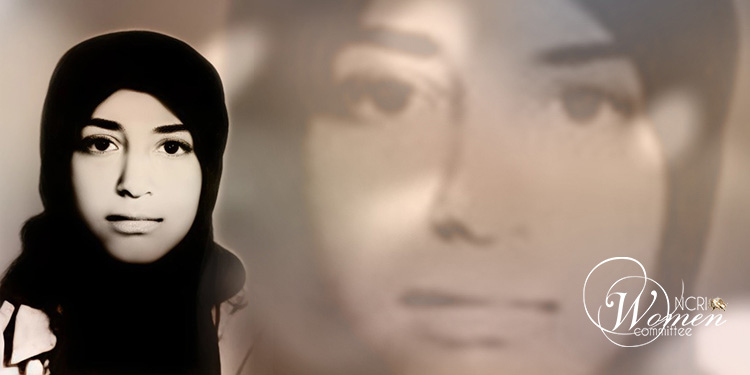
Farewell to Asef and her comrades on death row

Fatemeh Mahmoud Hakimi (Asef)

Farewell to Asef and her comrades on death row

November 13, 2025
in Heroines in Chain

From the memoir “The Last Laughter of Leila” by Mehri Hajinejad – Part six

In this part of Mehri Hajinejad’s prison memoirs, as recorded in “The Last Laughter of Leila,” we read of the author’s farewell to Asef and her other comrades who were taken away for execution. We also encounter the faces of brave and defiant women who mocked death and remained faithful to their pledge for freedom until the very end.

Content advisory: contains eyewitness descriptions of executions, violence, and grief.

She slipped away from my hands like a bird taking flight

That year, 1981, was the height of the executions. In Evin, night after night, groups of young men and women, many barely adults, were led before the firing squads. After the first burst of gunfire the ward would fall into absolute silence, and we’d count silently: 1, 2, 3, 4… 50, 60… that counting became the rhythm of the shots. Each volley was like seeing myself standing beside my comrades, and then the sequence would continue: 70, 80, 90…

During executions the ward would remain for a long time in a quiet that trembled with pain and anger; the jailers, terrified of our reaction, would withdraw and lock the doors, hiding from our eyes.

From four in the afternoon onward we waited to hear that first volley. Our ward sat closest to the execution ground; the firing line was literally behind us.

The memories of that December are unbearably heavy. The guards had lately started opening the cell doors, and we could see, all over the ward, faces we’d last seen on the street, at a meeting, or at a demonstration, and then never again. Now, strangely, we were reunited for a last time. We hugged and asked quickly, as if there wasn’t time: what’s your name? What’s your case like?

Most of us used aliases, so we had to learn each other’s names on the spot. Often that was all we knew about one another.

One December day, just as we’d started clearing away the lunch dishes, the ward loudspeaker emitted that hideous voice of the female guard calling out about fifteen names and asking those people to report to the ward office. Hearts leapt. This public reading of a list was a new practice; were they going to move them? Were they going to send them away for execution without our knowing?

Those called were almost all from our ward. I saw Asef,[1] Zahra, Farah and others, smiling, lively, heading toward the door. We watched them go, still unwilling to say goodbye; deep down we hoped they’d return. A few minutes later they were back. The guard had called them early by mistake and told them: pack your things; come at four in the afternoon.

By then it was clear to everyone that these were the last hours we’d spend with our dear comrades. We clustered around them; some kissed them, some asked them to send greetings to the others, to those already shot, and we kept wondering if this was a nightmare we’d wake from. But it was all too real.

The prisoners packed small keepsakes to leave with mothers or sisters; some handed items to roommates for safekeeping. Those leaving were calm, even cheerful. It was we who carried the choking grief. Trying to change the mood, we began to sing:

“Sing — this long road
at last will end.
Winter will pass, yes,
and spring will come at last…”
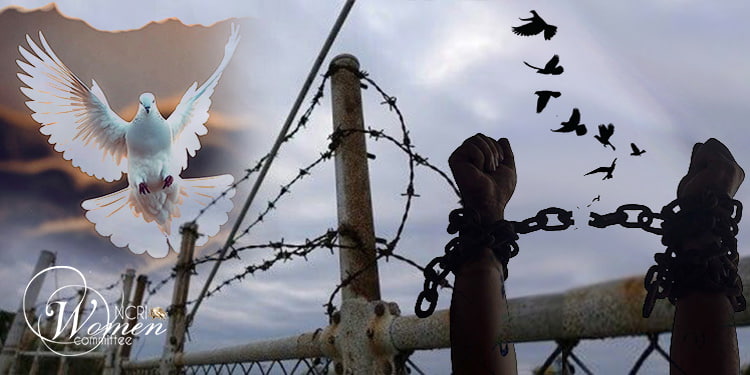
Farewell to Asef and her comrades on death row

I can still hear that song twenty-two years later. Along with the chorus, Asef’s whistle rang clearly; she always added her whistle to the singing. From three in the afternoon we formed two long, tight lines along the dark, narrow corridor — a compact, ordered farewell to the light-footed travelers.

Those faces and that look of faith in the future — I will never forget them. I wanted to be the last to say goodbye. I could not tire of watching them: a caravan of iron-willed heroes.

Asef, a name whose true identity I never learned while I was there, marched like a commander at the front. She’d shout: “Hurry up, kids! The plane is about to fly.” When she reached the door, she whistled the farewell song. I will never forget that last look.

Her dark eyes, restless like a fish in a bowl. When I hugged her for the last time and kissed her, I felt her give me all her strength; then, like a dove, she slipped from my hands and was gone.

Next came Zahra, walking behind Asef. I never learned her real name; because of her small frame we had nicknamed her “Mouse” — a lion in a mouse’s body. We had sung pledges and freedom songs together in the ward corridor countless times.

Her last words to me were: “My dear Mahboubeh, be strong… When you reach the organization again give Massoud my greeting, and tell him I didn’t even give my name. Just know I was from Semnan; my family doesn’t even know what happened to me.”

When we parted, she began to sing aloud:

“O Freedom, I passed through your path from these prisons,
I scattered my heart like a flower in the squares
so your anthem might bloom on people’s lips…”

Then it was Farah’s turn. Her face flushed and pale in the same instant, and her sea-blue eyes met mine. She was in a hurry; she said she had little time and did not look back as she said goodbye.

The line flowed like a river, each one pushing through the crowd toward the door. I did not want that line to reach the end, did not want to hear the final shots and count. I wanted time to stop. I wanted to go with them; I wanted to do something, though I did not know what.

When they left, a heavy silence fell over the ward; a ward used to the noise of 600 prisoners now kept silent; each of us wept inside and vowed to carry on their work.

At about 19:00 we heard the terrible sound of a fusillade, mingled with two different cries: one chorus shouting “Death to the hypocrites!” (the regime’s slur for the PMOI) and beneath that, a strong countercry: “Hail the Mojahed… Hail…” Then the fusillade filled the air and single shots followed. With every shot a face rose before my eyes and I pictured their last stand.

That night the number was 65; some said 67, but most agreed on 65. After the last volley, our song rose again. The ward remained so still that even until midnight the female guards did not appear; they had cowered away like foxes, terrified of our angry cries of “Death to the oppressors.”


[1] Fatemeh Mahmoud Hakimi (known as Asef) was executed by firing squad in Evin prison at the age of 21 for her support of the PMOI. Asef refused to give the executioner her real name; she was known by the surname of her mother, who loved her dearly. In a brief courtroom statement, after being sentenced (the record says the judge imposed a 15-year sentence), Fatemeh boldly told the clerical judge: “I am a PMOI fighter and my leader is Rajavi — 15 years is nothing; even if I spend a hundred years in prison, I will never stop my fight.”
ShareTweetPinShareSendShare

Related Posts

Gohardasht Prison Conditions

July 30, 2026
Gohardasht Prison Conditions Prison Memoirs of Azam Haj-Heydari

Prison Memoirs of Azam Haj-Heydari from the book The Price of Being Human – Part Sixteen In this installment of The Price of Being Human, Azam Haj-Heydari recounts her transfer...

Read moreDetails

State Killing in Iran: 3 Members of a Family Killed in Arbitrary Shooting

July 29, 2026
State Killing in Iran: 3 Members of a Family Killed in Arbitrary Shooting

Maryam Aslani, Somayeh Tavakkoli, and Mehdi Tavakkoli were killed in state killing, after being directly targeted in an arbitrary shooting carried out by intelligence forces of the Revolutionary...

Read moreDetails

Fatemeh Alizadeh

July 29, 2026
Fatemeh Alizadeh, a 28-year-old pregnant woman

Fatemeh Alizadeh, 28, was a resident of Hashtpar (Talesh) in Gilan Province, northern Iran. During the nationwide uprising in January 2026, she was directly shot by the clerical...

Read moreDetails

Iran: 131st Week of “No to Execution Tuesdays” Hunger Strike in 59 Prisons

July 28, 2026
Iran: 131st Week of “No to Execution Tuesdays” Hunger Strike in 59 Prisons

The “No to Execution Tuesdays” campaign continued into its 131st week on Tuesday, July 28, 2026, with prisoners and political prisoners in 59 prisons across Iran participating in...

Read moreDetails

The 1988 Massacre: The Greatest Unpunished Crime Against Humanity

July 28, 2026
The 1988 Massacre: The Greatest Unpunished Crime Against Humanity

The Glorious Epic of Resistance by PMOI Women in the Anti-Human Clerical Regime's Prisons The massacre of over 30,000 political prisoners in the summer of 1988 is recorded...

Read moreDetails
Next Post
Sahar Shahbazian Dies in Suspicious Circumstances in Fardis Prison

Sahar Shahbazian Dies in Suspicious Circumstances in Fardis Prison

Documents

Call for Immediate Action to Halt the Death Sentence of Arghavan Fallahi

Sign our Statement to Halt the Death Sentence of 25-Year-Old Political Prisoner Arghavan Fallahi

July 10, 2026

Statement Calling for Immediate Action to Halt the Death Sentence of 25-Year-Old Political Prisoner Arghavan Fallahi We express our profound...

The Ineffectiveness of Population Policies in Iran: Economy, Aging, and the Overlooked Rights of Women

The Ineffectiveness of Population Policies in Iran: Economy, Aging, and the Overlooked Rights of Women

July 10, 2026

Abstract: A compilation of official data, media reports, and disclosures published in April, May, and June 2026 demonstrates that Iran...

Crushed by Design: Structural Crises and Inequitable Policies Push Female-Headed Households to the Edge

Crushed by Design: Structural Crises and Inequitable Policies Push Female-Headed Households to the Edge

May 18, 2026

Introduction Life for the Iranian people under the religious dictatorship is fraught with hardship and peril from every perspective. Whether...

Monthlies

June 2026 Report: Working Iranian Women Erased from Labor Market
Monthlies

June 2026 Report: Working Iranian Women Erased from Labor Market

July 5, 2026
May 2026 Report: The Enduring Resistance of Iranian Women
Monthlies

May 2026 Report: The Enduring Resistance of Iranian Women

May 31, 2026
April 2026 Report: Mass Arrests of Women: Targeted Repression in Time of Crisis
Monthlies

April 2026 Report: Mass Arrests of Women in Iran

April 30, 2026
March 2026 Report: How Iranian Women Are Shaping the Resistance
Monthlies

March 2026 Report: Courage Under Fire

April 3, 2026

Articles

The 1988 Massacre: The Greatest Unpunished Crime Against Humanity

The 1988 Massacre: The Greatest Unpunished Crime Against Humanity

July 28, 2026

The Glorious Epic of Resistance by PMOI Women in the Anti-Human Clerical Regime's Prisons The massacre of over 30,000 political...

The Hidden Victimization and Exploitation of Widows in Iran

The Hidden Victimization and Exploitation of Widows in Iran

July 23, 2026

Exploitation of widows in Iran Introduction: The survival of the mullahs' regime rests on two fundamental pillars: overt suppression in...

Widows in Iran: An Analysis of Legal Challenges and the Structure of Discrimination

Widows in Iran: An Analysis of Legal Challenges and the Structure of Discrimination

July 17, 2026

Introduction: In the political and legal structure governing Iran, misogyny and gender discrimination have been institutionalized as a fundamental principle,...

The Fallen for Freedom

Fatemeh Alizadeh, a 28-year-old pregnant woman
The Fallen for Freedom

Fatemeh Alizadeh

July 29, 2026
Sahar Bayat was killed on January 8, 2026
The Fallen for Freedom

Sahar Bayat

July 23, 2026
Saba Negahban, known as "Venus," was killed on Friday, January 9, 2026, by direct fire from the regime’s suppressive forces
The Fallen for Freedom

Saba Negahban

July 22, 2026
Parastou Namavar was fatally shot by Iranian regime forces
The Fallen for Freedom

Parastou Namavar

July 18, 2026

ABOUT US

NCRI Women Committee

We work extensively with Iranian women outside the country and maintain a permanent contact with women inside Iran. The Women’s Committee is actively involved with many women’s rights organizations and NGO’s and the Iranian diaspora.
The committee is a major source of much of the information received from inside Iran with regards to women. Attending UN Human Rights Council meetings and other international or regional conferences on women’s issues and engaging in a relentless battle against the Iranian regime’s misogyny are part of the activities of members and associates of the committee.

CATEGORIES

  • Activities
  • Articles
  • Documents
  • Famous Women
  • Heroines in Chain
  • IWD Conferences
  • IWD Speeches
  • IWD Videos
  • Maryam Rajavi
  • Maryam Rajavi Speeches
  • Monthlies
  • Podcast
  • Reference Library
  • Solidarity
  • Statements
  • The Fallen for Freedom
  • Videos
  • Women in History
  • Women in Leadership
  • Women of Iranian Resistance
  • Women's News

BROWSE BY TAG

Child marriage coronavirus education execution forced hijab Gender Gap Generation Equality Honor killings Iran Teachers Maryam Akbari Monfared Nurses Plan on Women's Rights and Freedoms Poverty Prisoners Protests rural women Saba Kord Afshari The girl child Violence against women Women's Leadership Women Heads of Household Zeinab Jalalian

The copyright of all the material published on this website has been registered under © 2016 the Women’s Committee of the National Council of Resistance of Iran. To obtain permission to copy, redistribute or publish the material published on this website, you should write to the NCRI Women’s Committee. Please include the link of the original article on our website, women.ncr-iran.org.

Welcome Back!

Login to your account below

Forgotten Password?

Retrieve your password

Please enter your username or email address to reset your password.

Log In

Add New Playlist

No Result
View All Result
  • Home
  • News
    • Women’s News
    • Articles
    • Statements
  • Publications
    • Monthlies
    • Documents
    • Reference Library
  • About Us
    • The NCRI Women’s Committee
    • Gender Equality
    • Women’s Platform
  • Maryam Rajavi
    • Maryam Rajavi
    • Maryam Rajavi Speeches
    • Ten Point Plan for Iran
    • The Plan on Women’s Rights and Freedoms
  • Vanguards
    • The Fallen for Freedom
    • Heroines in Chain
    • Women of Iranian Resistance
    • Famous Women
    • Women in History
  • Events
    • IWD Conferences
    • Activities
    • IWD Speeches
    • Solidarity
  • Video
    • Videos
    • IWD Videos
  • Podcast
  • DONATE
  • Contact us
  • فارسی
  • عربی
  • Français

The copyright of all the material published on this website has been registered under © 2016 the Women’s Committee of the National Council of Resistance of Iran. To obtain permission to copy, redistribute or publish the material published on this website, you should write to the NCRI Women’s Committee. Please include the link of the original article on our website, women.ncr-iran.org.